Cookie Consent by Privacy Policies website
Cannabis SeedsAutoflower SeedsOutdoorseedsCBD SeedsRegular Weed SeedsAccessories
20+ Years Experience
Discreet Shipping
Bonus Seeds
Canna Wiki

Cannabis Plant Problems & Diseases

Cannabis Deficiencies, Pests & Diseases

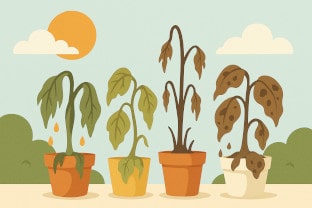
Problems with cannabis plants are a normal part of almost every grow. Even experienced growers eventually deal with yellow leaves, slow growth, discoloration, pests or other unusual symptoms. Often, small changes in the plant are early signs that something is missing or that growing conditions are no longer ideal. In the Cannapot Canna Wiki, you will find practical help for cannabis plant problems, diseases, nutrient deficiencies, mold, overfeeding, light stress, pests and many other common grow issues. We explain how to identify symptoms correctly, what causes may be behind them and how many problems can be solved before they become serious. Whether your cannabis leaves are turning yellow, curling, developing spots or your plants suddenly stop growing: this category helps you understand problems faster and keep your cannabis plants healthy throughout the grow.

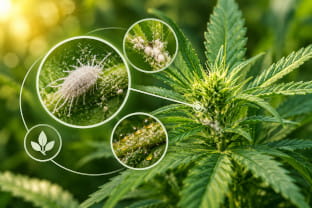
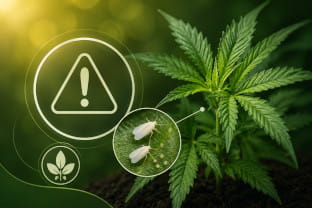
Whiteflies: Infestation and Control Measures

You move a cannabis plant and suddenly several tiny white insects fly up from the leaves. On closer inspection, more insects are sitting on the undersides of the leaves, or individual leaves feel noticeably sticky. These are typical signs of whiteflies, which actually belong to the whitefly family. The adults are relatively easy to spot, whereas their eggs and young developmental stages are much less conspicuous.

Read more

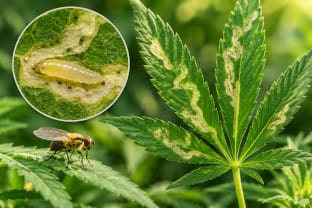
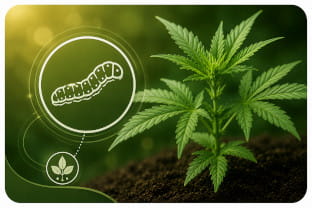
Caterpillars: Stopping damage caused by feeding

Suddenly, holes appear in the cannabis leaves, individual leaf edges are missing, or a plant looks as though someone has bitten out small pieces. Especially when growing outdoors this type of damage is not uncommon. One possible cause is caterpillars – the larvae of butterflies and moths, various species of which may feed on leaves, shoots or other parts of the plant.

Read more

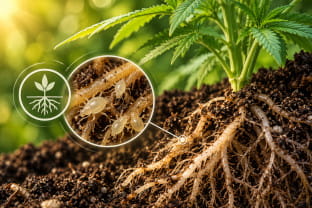
Fungus gnats: identifying and controlling an infestation

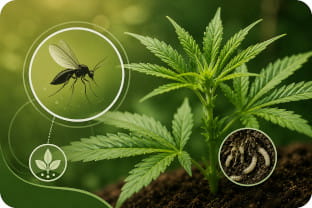
Small black flies that rise from the soil when watering or walk around just above the substrate surface are among the most typical signs of fungus gnats. Many growers initially notice only the adult insects. However, most of the activity actually takes place inside the pot: eggs, larvae and pupae develop there, while the flying gnats merely represent the final stage of the life cycle. For successful control, it is therefore not enough to catch only the visible gnats. The key is to target the larvae in the substrate at the same time and improve the conditions that encourage their continued reproduction.

Read more

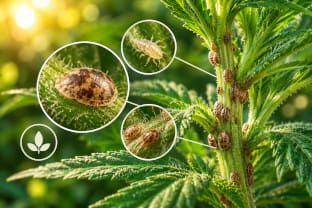
Aphid: assessing the situation correctly & controlling

Sticky leaves, tiny green or dark insects and an unusually high number of ants are among the classic signs of aphids on cannabis. Especially in the early stages, however, an aphid infestation can easily be overlooked: the insects prefer sheltered areas, reproduce quickly and can vary so much in color that they are not always immediately recognized as aphids. For a reliable diagnosis, you should therefore not look only for the insects themselves. The combination of visible colonies, honeydew, white shed skins and changes in young plant tissue is particularly informative.

Read more

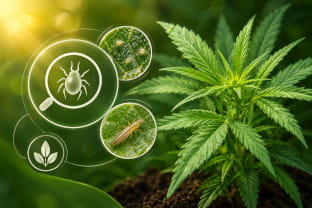
Thrips on cannabis – recognising the damage

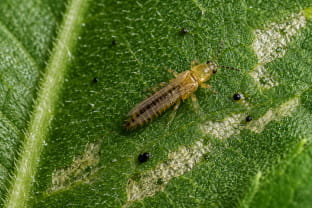
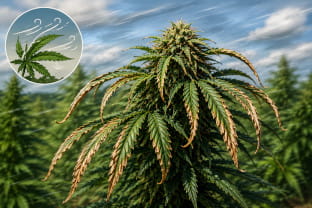
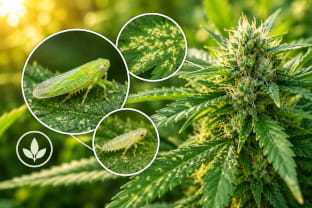
Silvery or dull-looking areas on cannabis leaves can at first glance resemble a nutrient deficiency in cannabis, mechanical damage or the beginning of a spider mite infestation. However, if tiny elongated animals, pale larvae or small black dots are also present on the affected leaves, you should specifically check for thrips. These fringed-wing insects can occur both indoors and outdoors and, under favorable conditions, persist through several generations within a plant population.

Read more

Root rot in cannabis: identify, treat and prevent

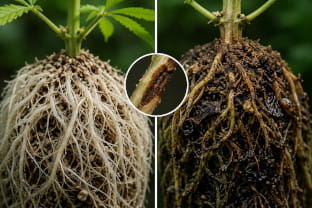
A cannabis plant can suddenly look wilted, pale and weak above the substrate even though the soil is still moist or there is sufficient water in the hydro system. This apparent contradiction is an important indication of problems in the root zone. If the roots are damaged, the plant can no longer absorb water and nutrients normally. Watering more often makes the situation worse rather than better.

Read more

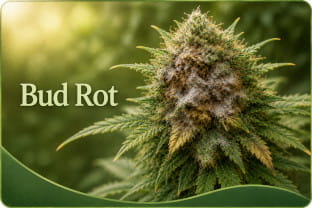
Spotting bud rot in cannabis – preventing flower rot

A compact cannabis flower that looks vigorous from the outside may already be damaged inside even though almost nothing is initially visible on its surface. This is precisely what makes bud rot so problematic: a distinct microclimate develops between tightly packed flower structures, allowing moisture to persist longer than in the surrounding air. When fungal spores encounter susceptible tissue and suitable conditions, rot can develop unnoticed inside the flower.

Read more

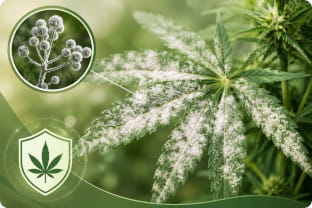
Mildew on Cannabis: Identify & Prevent

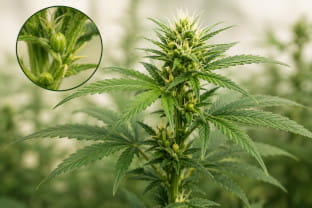
Cannabis is naturally dioecious. This means that male and female flowers normally grow on separate plants. Nevertheless, sex expression can be influenced by genetic factors, plant hormones, developmental stage, and various environmental conditions. Under certain circumstances, male flowers can therefore also develop on a predominantly female plant.

Read more

Hermaphrodite Cannabis: Identify & Prevent

White spots on the leaves are warning signs that should never be ignored when growing plants from the right cannabis seeds. What initially looks like a harmless coating is often mildew, a plant disease that can spread to large parts of a plant or even an entire crop within only a few days when conditions are favourable. One particular problem is that the pathogen may already be developing before obvious damage becomes visible.

Read more

HPLVD in cannabis: recognising symptoms, preventing transmission

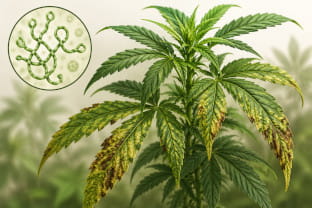
HPLVD has now become one of the very important problems in cannabis cultivation and should definitely not be underestimated. Many other problems in a grow can be recognized easily and quickly: for example an incorrect pH value, too much fertilizer, air humidity that is too dry, a pest infestation, or diseases. HPLVD is different and insidious. A plant can look stable on the outside, produce cuttings, and still carry an infectious viroid inside.

Read more

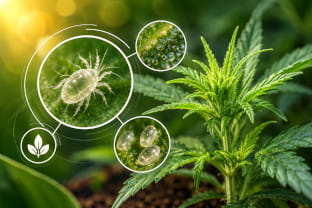
Spider mites on plants – successfully combating an infestation

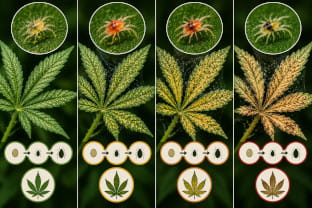
Spider mites are a major problem when growing plants – they are barely larger than a speck of dust, tend to settle on the underside of leaves, and damage the plant not by making holes in the leaves but by sucking the sap from individual plant cells. At first, the leaves appear only slightly speckled; later, they lose their colour, vitality and ability to photosynthesise. The later you spot them, the harder it becomes to get rid of them.

Read more

Cannabis Wind Burn: Identify, Treat and Prevent

Wind is normally always a good thing when growing. A light breeze moves the leaves, strengthens the stems, distributes fresh air, prevents stagnant air, and helps transport moisture out of the canopy. Without air movement, the grow room quickly becomes musty, humid, and naturally more susceptible to mold.

Read more

Mould in Cannabis: causes, risks and prevention

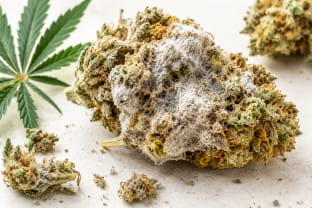
Mold on cannabis is a frustrating but very important topic that many growers unfortunately only think about when it is already too late. A flower may still look good from the outside, perhaps smell a little musty, and when it is broken open, a gray, brown, or whitish coating suddenly appears – and the most important question immediately arises: Is the rest of the plant still usable, or does everything have to go?

Read more

Outdoor Cannabis Pests: How to Protect Your Plants

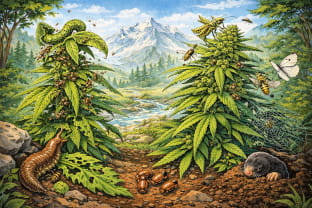
Anyone who grows cannabis outdoors usually realizes pretty quickly that it’s not just sun, rain, and temperature that play a role. Eventually, almost without fail, something else shows up: pests. Sometimes it's small bite marks on young leaves, sometimes something is suddenly sticking to the shoots, and sometimes the plant simply doesn't look as vital as it did a few days prior. That is exactly where the real problem begins. Not every grow fails because of major mistakes. Often, it's the little things that are noticed too late...

Read more

Identify Nutrient Deficiencies

Growing cannabis can be incredibly rewarding, especially when plants grow healthy, strong and full of life. But sometimes leaves suddenly change color, growth slows down or plants begin to look weak, even when everything seems to be done correctly.

This guide focuses on identifying nutrient deficiencies in cannabis plants early. Yellow leaves, brown spots, discoloration or curled leaf tips can all be signs of missing nutrients or growing problems. The article explains the most common symptoms, possible causes and practical solutions for maintaining healthy cannabis plants.

Read more

Info

Party Monzter by Dark Horse

🔥 A true monster from Dark Horse Genetics with seriously powerful genetics: 🔥

Party Monzter by Dark Horse Genetics

💚 available as a regular version!