Cannabis Outdoor Pests – Protect the Plants
Cannabis Outdoor Pests – The Most Common Pests and How to Protect Your Plants
Updated: March 2026 | Outdoor Cannabis Pests: How to Protect Your Plants | Cannapot
Author: Cannapot Grow Team | Reading time: approximately eleven minutes
The Most Important Things At A Glance
✓
Outdoor cannabis plants are commonly affected by spider mites, thrips, aphids, slugs, caterpillars and fungus gnats.
✓
Early detection is essential — sticky leaves, bite marks, silvery spots or fine webs are often the first warning signs.
✓
Good airflow, balanced watering, proper spacing and strong genetics significantly reduce outdoor pest pressure.
✓
Most infestations can be controlled early with regular inspections, natural prevention methods and fast targeted action.
Anyone who grows cannabis outdoors usually realizes pretty quickly that it’s not just sun, rain, and temperature that play a role. Eventually, almost without fail, something else shows up: pests. Sometimes it's small bite marks on young leaves, sometimes something is suddenly sticking to the shoots, and sometimes the plant simply doesn't look as vital as it did a few days prior. That is exactly where the real problem begins. Not every grow fails because of major mistakes. Often, it's the little things that are noticed too late.
At Cannapot, we see this all the time: Outdoor grows often run smoothly for a long time until weather, humidity, and pest pressure collide. When that happens, just checking in occasionally is no longer enough. Anyone growing outdoors really has to learn to read their plants. That sounds more complicated than it is. Mostly, it's just about looking regularly, knowing the typical warning signs, and not waiting to act until the infestation is clearly visible. If you want to improve your overall setup, it's highly recommended to check out our guide on growing cannabis outdoors, because location, air circulation, and care directly influence how susceptible your plants become.
Which pests are most common with outdoor cannabis?
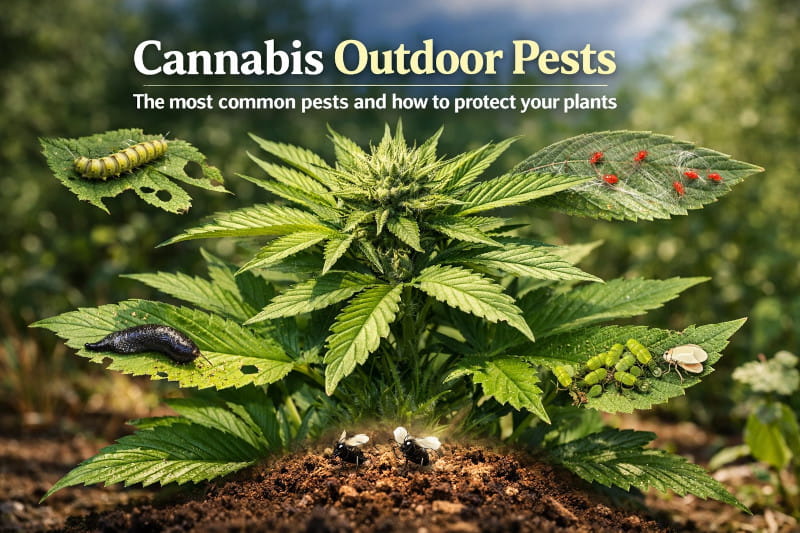
Outdoors, we most frequently see spider mites, thrips, aphids, fungus gnats, whiteflies, snails/slugs, and caterpillars. Some hide under the leaves, others go straight for young shoots, and some emerge from overly wet soil. The tricky part isn't just the pest itself, but the fact that many problems look harmless at first. A few spots, a little bit of chewing, a few small flies. That is exactly why early detection is so important.
Quick Check: What could be infesting your plant right now?
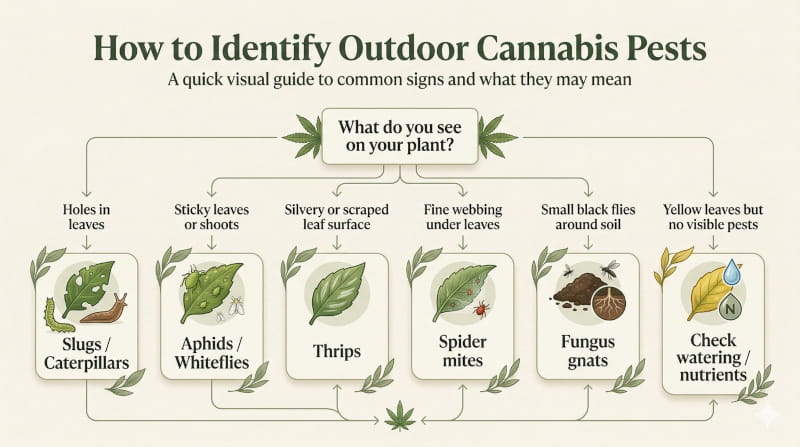
Holes in leaves or chewed edges
In this case, your first thought should be snails, slugs, or caterpillars. Young outdoor plants, in particular, can be heavily damaged in a short time once these pests become active.
Sticky spots on leaves or shoots
This often points to aphids or whiteflies. If it's sticky, there is usually already something living on the plant that doesn't belong there.
Silvery, dull, or scraped leaf surfaces
This is often what thrips damage looks like. The marks don't look like classic holes, but rather like fine surface damage.
Fine webs under the leaves
This is almost always a warning sign for spider mites. If you also see tiny light dots on the leaves, you should take a very close look.
Small black flies rising from the soil
This usually indicates fungus gnats. The actual problem isn't at the top of the plant, but down in the damp substrate.
Yellow leaves or weak growth without a clear pest
Something else could be behind this. Not every symptom has to do with insects. Sometimes it's watering mistakes, nutrient issues, or stress. If you want to properly diagnose this, our guide on identifying cannabis nutrient deficiencies will help.
Why outdoor plants deal with pests more often
Outdoors, everything is simply more exposed. The wind carries insects, neighboring plants play a role, rain keeps the soil damp longer, and warm days alternate with humid nights. For the plant, this is normal. Unfortunately, it's normal for pests, too. Especially when the location has poor air circulation or the foliage becomes very dense, pests quickly find quiet zones to establish themselves.
That's why prevention doesn't just start with a spray or an emergency measure. It starts earlier. A good location, proper spacing between plants, avoiding constantly wet substrate, and selecting the right genetics take a lot of pressure off the grow later on. If you are still in the planning phase, check out our guide on choosing the right cannabis seeds. Robust genetics make a real difference outdoors.
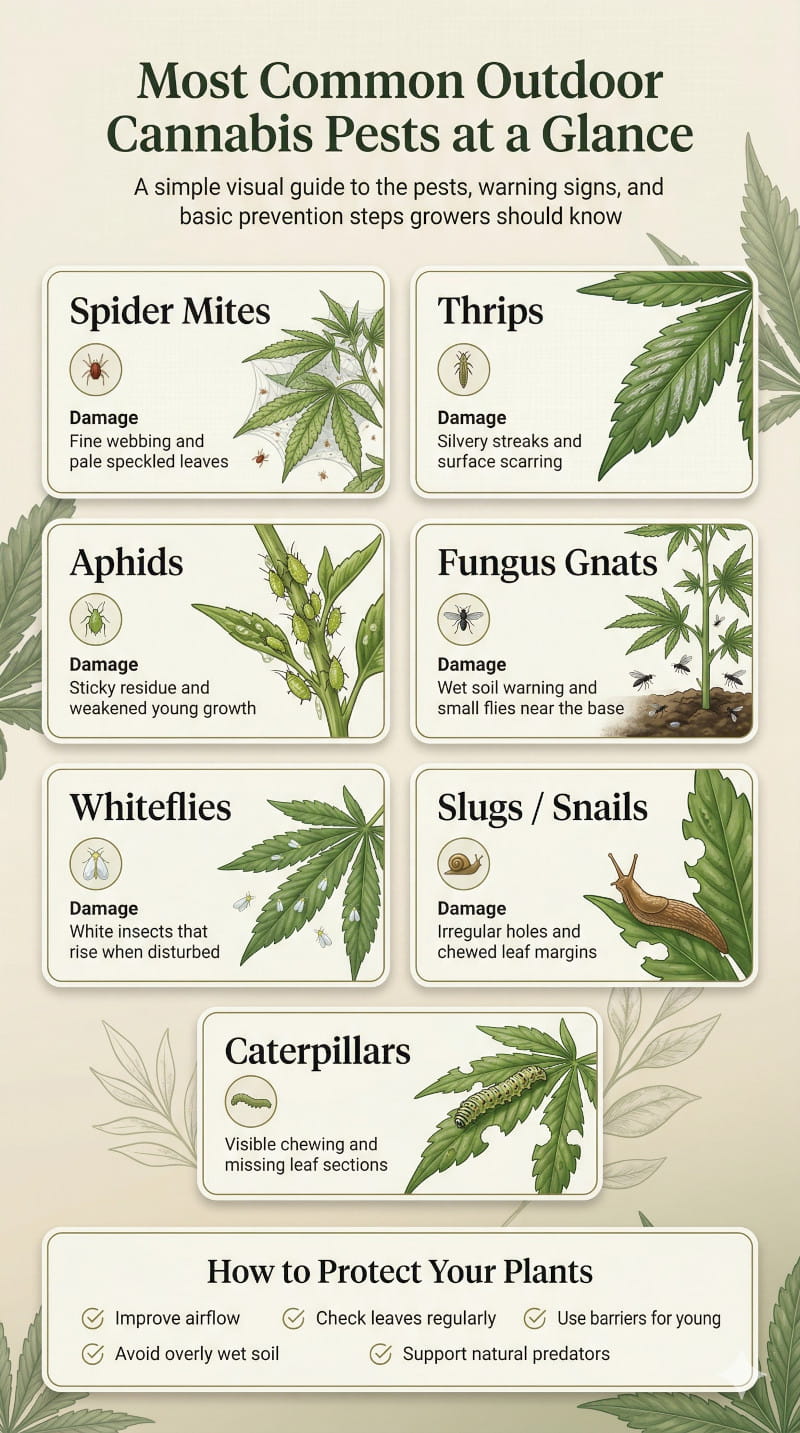
The Most Common Outdoor Cannabis Pests at a Glance
Spider Mites
Spider mites are tiny, fast, and unfortunately often spotted too late. Many growers first notice an infestation by the light speckles on the leaves. Later, fine webs appear, mostly on the undersides of leaves or in denser areas. They can multiply quite rapidly, especially during warm, dry periods.
Catching spider mites early is a huge advantage. Check the undersides of the leaves, remove heavily affected plant parts, and ensure the plant gets more airflow again. If you wait too long, things will get much more unpleasant. Learn how to identify an infestation and which measures can help in our detailed guide to spider mites on cannabis.
Thrips
Thrips often leave silvery or dull spots that don't look dramatic at first. That's exactly what makes them so deceptive. The plant doesn't immediately look destroyed, but the damage adds up. Outdoors, they often appear during warmer phases and are easily overlooked if you only do a quick scan from above.
Panic won't help here, but attentiveness will. Check the leaves regularly, especially the fresh growth, and react at the first clear signs. The earlier, the better. Learn how to identify thrips, their larvae, and typical feeding damage and which measures can help in our detailed guide to thrips on cannabis.
Aphids
Aphids love to gather on young shoots, soft new growth, and under the leaves. They suck the plant's sap and often leave sticky residue behind. This not only looks unsightly but noticeably weakens the plant over time.
With a light infestation, a lot can still be saved if you step in early. Simply removing individual heavily infested leaves or shoot tips can help before they spread further. Learn how to identify an infestation and which measures are really effective in our detailed guide to aphids on cannabis.
Fungus Gnats
Fungus gnats look almost harmless at first glance. These little black flies are annoying, but the real problem lies deeper in the growing medium: this is where the larvae develop and can cause problems, especially for young or weakened plants. An infestation often occurs when the soil remains too wet for extended periods. Learn how to reliably identify the small flies and their larvae and which measures really help in our detailed guide to fungus gnats on cannabis.
If this sounds familiar, the first thing you should do is check your watering habits. Our guide on watering cannabis correctly is a great resource here, because many fungus gnat problems are ultimately linked to substrate that is constantly too wet.
Whiteflies
Whiteflies often sit inconspicuously under the leaves and only flutter up when the plant is moved. They also suck on the plant and leave sticky trails. The problem isn't so much the individual pest, but their numbers over time. If you ignore them for too long, the plant will continuously lose its strength.
The rule applies here too: don't just look roughly from the top, make a conscious effort to look under the leaves. That's often where the real infestation takes place.
Snails and Slugs
For outdoor grows, snails and slugs are often one of the most annoying issues of all. Small plants or freshly planted seedlings, in particular, can be severely damaged in a short amount of time. They are especially active after it rains or during damp nights. Many growers see the typical bite marks right away, but by then, the damage is already done.
If you have young plants outside, early precautions are truly worth it here. Protective rings, barriers, or a clean perimeter around the stem often accomplish more than you might think.
Caterpillars
Caterpillars are often underestimated because they don't look like much at first. A few bite marks here, a little chewing there. But that can shift rapidly. Their damage becomes significantly more unpleasant later on, especially when more leaf mass or the first buds form.
If you see bite marks, small crumbs, or damaged spots in dense plant material, you should inspect the plant very carefully. Caterpillars rarely stop at just one little corner.
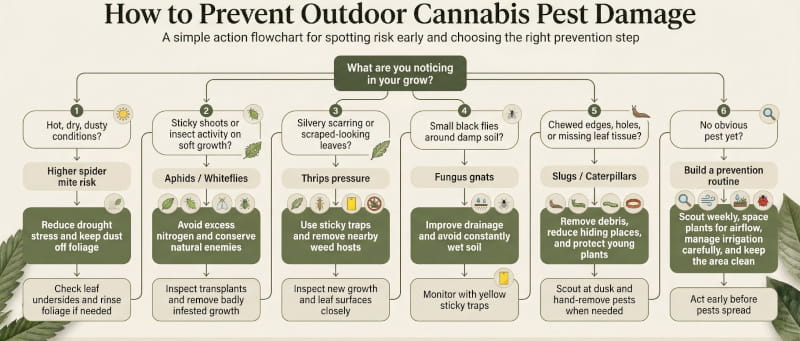
How to naturally protect your outdoor plants
Ensure an airy location
A good location is often half the battle. Plants that aren't constantly sitting in stagnant humidity and get enough airflow are less likely to fall into the typical downward spiral of stress, pest pressure, and fungal risk.
Don't keep them constantly wet
Overly wet soil is a classic outdoor mistake. It doesn't just attract fungus gnats; it weakens the plant as a whole. Moisture is important, waterlogging is not. That's a distinction many realize too late.
Work early with simple barriers
Especially for snails or sensitive young plants, simple measures are often enough. Protective rings, small barriers, or keeping the area directly around the plant clear aren't spectacular, but they are often surprisingly effective.
Support natural predators
Growing outdoors isn't about keeping all life away from the grow. It's more about maintaining a balance. The earlier you spot an infestation, the more effective natural measures and beneficial insects will be.
Better to look briefly and regularly than rarely and long
At Cannapot, we recommend short, consistent check-up routines. A quick glance under the leaves, at fresh shoots, and the soil surface doesn't take long. But exactly this routine is what prevents a minor warning sign from turning into a full-blown infestation.
What to do if an infestation is already present?
Light Infestation
If you catch it early, it's often enough to just remove the affected leaves, work cleanly, and observe the plant more closely over the next few days. Many problems can still be easily managed in this phase.
Moderate Infestation
Now you need to work systematically. Don't just randomly combine treatments; first accurately identify the pest, and then choose the appropriate measures. Reducing moisture, increasing airflow, mechanical removal, or natural helpers can make a lot of sense here.
Severe Infestation
If a plant is heavily affected, you sometimes have to be more aggressive. Remove the damaged areas, protect what is left, and honestly assess whether the plant can still be stabilized. That isn't the prettiest solution, but sometimes it's the most sensible one.
Prevention by Grow Phase
Right after planting
This is when snails, stress, and sudden damage are highly critical. Young plants need extra attention and protection during this time.
During the vegetative phase
This is mainly about rhythm. Water well, don't let it grow too dense, and check regularly. A stable vegetative phase takes a lot of pressure off later on.
Shortly before flowering
By this point at the latest, you should check areas where pests can hide unnoticed. Dense lower growth, hidden leaf zones, and weak plant parts deserve a bit more attention here.
During flowering
As buds get denser, humidity and pest damage become much more precarious. In this phase, our guide to the cannabis flowering stage is very useful, as it explains well why air circulation and regular checks are even more crucial now.
After rain or damp weeks
This is one of those moments where many problems are overlooked. After wet days, you should actively inspect your plants and not just judge from a distance whether everything still looks healthy.
Pests or a nutrient problem?
Sometimes a plant looks bad without insects being the cause. Yellow leaves, weak growth, or spots can also stem from overwatering, nutrient deficiencies, or general stress. That is exactly why diagnosis is so important. If the symptoms don't clearly point to a pest infestation, our guide on identifying nutrient deficiencies will help you figure it out.
Strain selection can also prevent issues
When growers think of pests, they usually only think of defense. We see it a bit broader. Genetics also play a part. Robust outdoor strains, a suitable flowering time, and plants that match your climate make things much easier. For shorter seasons or a more straightforward process, taking a look at autoflowering cannabis can also be a smart move.
FAQs
Q: What are the most common pests on outdoor cannabis?
A: We most commonly see spider mites, thrips, aphids, fungus gnats, whiteflies, snails, and caterpillars. Which ones show up for you depends heavily on the weather, location, and care.
Q: How do I best protect my plants?
A: With regular checks, an airy location, proper watering, and early, targeted measures. Outdoors, paying attention often helps more than any late-stage emergency solution.
Q: Why do fungus gnats keep coming back?
A: Usually because the soil stays wet for too long. As long as the substrate isn't allowed to dry out properly, the problem often won't go away permanently.
Q: What should I do at the first sign of bite marks?
A: First, look calmly; don't treat everything right away. Check whether snails, caterpillars, or other pests are responsible, and then make a targeted decision.
Outdoor pests can never be completely ruled out. That's simply part of reality outside. But you can do a lot to ensure that a small problem doesn't turn into a major infestation. That's why at Cannapot, we rely heavily on one thing above all: look early, stay calm, and keep the conditions for the plant as stable as possible.
If you want to build a stronger outdoor grow overall, take a look at our guide on outdoor cannabis cultivation, our article on proper watering, and our guide on choosing the right strain. A stable setup often eliminates a pest's biggest advantage early on.