Cannabis Ernten: Wann man ernten sollte - der richtige Zeitpunkt
Cannabis Ernten: Wann man ernten sollte - der richtige Zeitpunkt - ein Leitfaden zu Trichomen und wie du das Beste aus den Pflanzen rausholst
Aktualisiert: Juni 2026 | Wann soll man Cannabis ernten – der richtige Zeitpunkt für die Cannabis Ernte
Autor: Cannapot Grow Team | Lesezeit: ungefähr sechzehn Minuten
Das Wichtigste auf einen Blick
✓ Die Farbe der Trichome ist das einzige wirklich zuverlässige Erntesignal – Blütenfäden und vergilbende Blätter sind nur zusätzliche Hinweise, nicht der entscheidende Faktor.
✓ Das optimale Erntefenster für die meisten Grower: 80–90 % milchig-weiße Trichome mit 10–20 % bernsteinfarbenen Trichomen an den Blütenkelchen.
✓ Zu frühes Ernten kostet Potenz und Ertrag. Zu spätes Ernten wandelt THC zunehmend in CBN um und verschiebt die Wirkung in Richtung schwerer Sedierung.
✓ Eine 48–72-stündige Dunkelphase direkt vor der Ernte wird häufig genutzt, um die Harzproduktion zum Zeitpunkt der Ernte zu maximieren.
✓ Autoflowering-, feminisierte, reguläre und CBD-Samen haben jeweils eigene Besonderheiten beim Erntezeitpunkt – alle werden hier im Canna Wiki Artikel ausführlich behandelt.
✓ Trocknen bei 20°C / 60 % RH für 7–14 Tage, gefolgt von einer 4–8-wöchigen Reifung im Glas, verbessert die Qualität deiner Ernte deutlich.
Warum der Erntezeitpunkt die wichtigste Entscheidung in deinem Grow ist
Du kannst perfekte Genetik wählen, deine Nährstoffe exakt einstellen, zwölf Wochen lang ideale Temperatur und Luftfeuchtigkeit halten – und am Ende trotzdem einen großen Teil dieser Arbeit ruinieren, wenn du zum falschen Zeitpunkt erntest. Der Erntezeitpunkt ist kein kleines Detail, er ist extrem wichtig für die Qualität deiner Arbeit. Er ist die letzte, entscheidende Variable deines Grows: die Potenz, der Geschmack, das Aroma und die Gesamtwirkung von allem, was du für deine Pflanzen getan hast.
Die Cannabispflanze folgt in ihren letzten Wochen einer biologischen Uhr. In den Trichomen – den kleinen, pilzförmigen Harzdrüsen auf den Blüten – produziert und speichert die Pflanze Cannabinoide, vor allem THC (Tetrahydrocannabinol) und CBD (Cannabidiol), zusammen mit den Terpenen, die Aroma und Geschmack prägen. Dieser Biosyntheseprozess läuft bis zu einem Höhepunkt weiter und kehrt sich danach langsam um. THC baut sich schrittweise zu CBN (Cannabinol) ab, einer eher sedierenden Verbindung mit deutlich geringerer psychoaktiver Stärke. Terpene – hochflüchtige organische Verbindungen – verdampfen ebenfalls zunehmend, wenn die Pflanze überreif geerntet wird.
Untersuchungen zur Cannabis-Biosynthese zeigen, dass THCA, die saure Vorstufe von THC, in den gestielten Trichomköpfen während der späten Blüte sein Maximum erreicht und danach langsam abnimmt. Genau diese Veränderung liest du ab, wenn du Trichome kontrollierst: Die Farbveränderung spiegelt echte chemische Prozesse im Harzkopf wider. Zu verstehen, in welchem Zeitraum dieses Fenster bei deinen Pflanzen, deiner Genetik und deiner Umgebung liegt, trennt eine gute Ernte von einer wirklich großartigen. Die Pflanze zeigt dir, wann sie bereit ist – du musst nur wissen, worauf du achten musst.
Um die Ernte im Gesamtbild richtig einzuordnen, hilft es, den vollständigen Cannabis Wachstumszyklus und besonders die späten Phasen der Cannabis Blütephase zu kennen, in denen die Endreife der Pflanze stattfindet.
Die drei visuellen Signale, auf die du achten solltest
Es gibt keinen einzigen Moment, in dem eine Cannabispflanze die Hand hebt und dir sagt, dass sie bereit ist. Stattdessen liefert sie mehrere sich überschneidende Signale. Wenn du sie gemeinsam beobachtest, bekommst du Sicherheit. Wer nur auf ein Signal vertraut, macht leicht unnötige Fehler.
Die drei visuellen Signale – nach Zuverlässigkeit geordnet:
- Trichomfarbe – der einzige wirklich zuverlässige und wissenschaftlich sinnvolle Indikator. Erfordert Vergrößerung. Eine Lupe ist dabei unverzichtbar.
- Farbe und Einrollen der Blütenfäden – ein gutes unterstützendes Signal, sichtbar ohne Vergrößerung. Gegenprüfen, aber niemals allein nur wegen diesen Eigenschaften ernten - Trichomfarbe unbedingt beachten.
- Vergilben der Fächerblätter und allgemeines Ausreifen der Pflanze – ein Kontextsignal, das zeigt, dass die Pflanze ihren Lebenszyklus abschließt.
Der Grundsatz lautet: Niemals nur aufgrund eines einzelnen Signals deine Pflanzen schneiden. Wenn alle drei zusammenpassen – milchige Trichome mit etwas Bernstein, überwiegend dunkle und eingerollte Blütenfäden, ausbleichende Fächerblätter – bist du zuverlässig im Erntefenster. Wenn sie sich widersprechen, vertraue immer den Trichomen.
Trichome beobachten: Die zuverlässigste Methode
Trichome sind die winzigen, kristallartigen Auswüchse, die deine Blüten und die umliegenden Zuckerblätter bedecken. Unter Vergrößerung sehen sie wie kleine Pilze aus: ein Stiel mit einem runden Kopf. In diesen Köpfen – den gestielten Drüsentrichomen – konzentriert die Pflanze THCA, CBDA, Terpene und weitere Cannabinoide. Die Stiele selbst enthalten deutlich weniger.
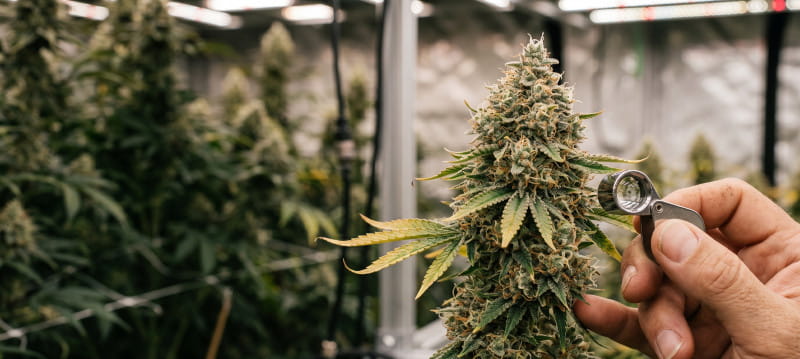
Für eine korrekte Kontrolle brauchst du eine Vergrößerung. Mit bloßem Auge erkennst du die Farbdetails nicht zuverlässig genug. Eine Juwelierlupe mit 30–60-facher Vergrößerung ist das praktischste Werkzeug: günstig, mobil und effektiv direkt an der Pflanze. Ein digitales Mikroskop mit 60–100-facher Vergrößerung, idealerweise fürs Smartphone, liefert bessere Schärfe und ermöglicht Fotos, mit denen du die Entwicklung über mehrere Tage verfolgen kannst. Eine einfache 20-fache Lupe reicht übrigens meistens nicht aus.
Die drei Trichomstadien
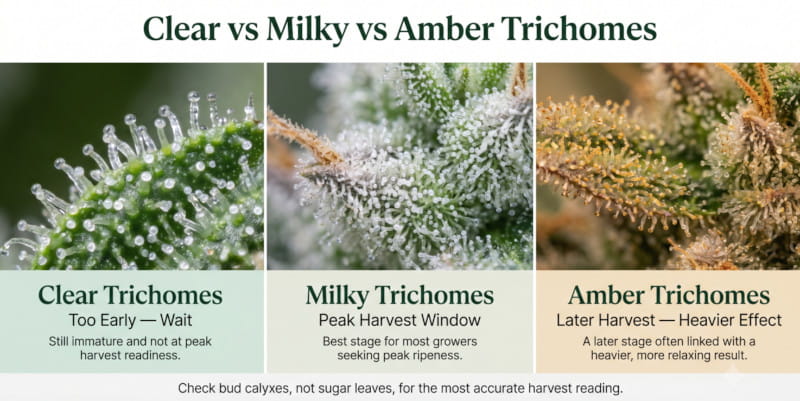
Klar / transparent
Der Trichomkopf ist glasig und durchsichtig. Die Pflanze synthetisiert noch aktiv Cannabinoide. Der THCA Gehalt ist unreif und steigt weiter. Eine Ernte in diesem Stadium führt zu schwacher, nervöser, unruhiger Wirkung und deutlich geringerem Ertrag.
Noch nicht bereit – warten
Milchig / wolkig weiß
Der Trichomkopf wird undurchsichtig – wie mattiertes Glas. THCA hat seine höchste Konzentration erreicht. Die Cannabinoiddichte ist maximal. Die Wirkung ist energetisch, zerebral und euphorisch. Hier beginnt für die meisten Grower der Sweet Spot.
Maximale Potenz
Bernsteinfarben / golden
THCA baut sich zu CBN ab. Das Harz nimmt einen warmen goldbraunen Ton an. Die Wirkung verschiebt sich in Richtung stärkerer Körperentspannung und Sedierung. Wer dieses Stadium bewusst anpeilt, erhält eine sehr entspannende Couchlock Wirkung.
Schwerer, sedierender
Welche Prozentwerte solltest du anpeilen?
Das genaue Verhältnis hängt vollständig davon ab, welche Wirkung du erreichen möchtest. Die drei praktischsten Richtwerte:
- Alles milchig, 0 % Bernstein – maximales THCA/THC, aktivierend, zerebral, energetisch. Ideal für Tageswirkung, maximale psychoaktive Intensität und sativadominante Sorten wie Special Original Haze, Western Winds oder Headbanger.
- 80–90 % milchig, 10–20 % Bernstein – der beliebteste Sweet Spot. Ausgewogene Potenz mit leicht entspannender Abrundung. Zielbereich für die meisten indica dominanten und hybriden Sorten, darunter Bruce Banner #3, White Widow und Critical Varianten.
- 50–60 % milchig, 40–50 % Bernstein – stärkere Körperwirkung, tiefere Entspannung, stärkere Sedierung. Geeignet für körperliches Wohlbefinden, Schlafunterstützung oder eine sehr beruhigende Wirkung. Häufig bei Indica-Schwergewichten wie Northern Lights oder Granddaddy Purple gewählt.
Die Wissenschaft hinter der Trichomfarbe
Die Farbveränderung der Trichomköpfe steht für reale biochemische Veränderungen. Klare Trichome bauen über den MEP-Biosyntheseweg der Pflanze noch THCA auf. Wenn der Kopf vollständig mit Harz gefüllt ist, wird er milchig weiß; die Undurchsichtigkeit entsteht durch die dichte Packung von Cannabinoiden und Terpenoiden. Bernstein entsteht, wenn THCA oxidativ zu CBN abgebaut wird. Deshalb ist diese Farbverschiebung das zuverlässigste Signal, das einem Grower ohne Laborausrüstung zur Verfügung steht.
So kontrollierst du richtig
Nimm ein kleines Stück Blüte, ein Zuckerblatt oder eine Seitentriebspitze und halte es unter die Lupe oder unter das Mikroskop bei gutem natürlichem Licht oder LED Licht. Stelle scharf, bis die Trichome klar sichtbar sind. Du beurteilst speziell die runden Köpfe, nicht die Stiele. Zähle oder schätze das Verhältnis aus klaren, milchigen und bernsteinfarbenen Köpfen über mindestens 20–30 Trichome und vergleiche es mit den oben genannten Prozentwerten. Kontrolliere in den letzten zwei bis drei Blütewochen alle zwei bis drei Tage – die Entwicklung verläuft schneller, als Anfänger oft erwarten.
Cannapot Grow Tipp
Kontrolliere Trichome immer direkt an den Blütenkelchen, nicht an den Zuckerblättern. Trichome auf Zuckerblättern reifen und verfärben sich deutlich früher. Wer Blätter prüft, glaubt oft, die Pflanze sei fertig, obwohl die Blüten noch eine Woche oder länger benötigen. Setze die Lupe direkt auf das Kelchgewebe.
Blütenfäden: Das unterstützende Signal
Pistillen sind feine, haarartige Strukturen, die während der Blüte aus den Blütenständen wachsen. Anfangs sind sie hellweiß und stehen nach außen. Ihre biologische Aufgabe ist es, Pollen männlicher Pflanzen aufzufangen. Bei einem Sinsemilla Grow ohne männliche Pflanzen werden sie nicht bestäubt und reifen mit der Zeit: Sie rollen sich ein und verfärben sich über Orange und Rot bis Braun.
Die Veränderung der Pistillen ist ohne Vergrößerung sichtbar und daher ein einfacher erster Hinweis. So siehst du sie:
- Überwiegend weiß, nach außen stehend – frühe bis mittlere Blüte. Nicht bereit. Noch mehrere Wochen.
- 50–60 % dunkel verfärbt (orange, rot oder braun) – die Pflanze nähert sich dem Erntefenster. Viele Grower warten noch etwas länger, außer sie suchen bewusst eine leichtere, aktivierende Wirkung.
- 70–80 % dunkel und nach innen eingerollt – bei den meisten Sorten klar im optimalen Erntefenster. Vor der Ernte immer mit Trichomen gegenprüfen.
- 90 %+ dunkel – späte Ernte. Sind die Trichome ebenfalls überwiegend bernsteinfarben, liegt die Pflanze bereits hinter ihrem Potenzmaximum. Noch nutzbar, aber THC wurde bereits abgebaut, gut für Couch Lock.
Wichtige Einschränkung – unbedingt lesen
Verlasse dich nie allein auf Pistillen als Erntesignal. Sativadominante Sorten wie zum Beispiel Colombian Thai und Haze Genetik produzieren oft weiterhin frische weiße Fäden, obwohl die Trichome bereits voll ausgereift sind und anfangen, bernsteinfarben zu werden. Wer bei diesen Sorten nur nach Pistillen erntet, schneidet häufig zu spät. Pistillen sind eine hilfreiche Gegenkontrolle – nie das letzte Wort. Bestätige immer über die Trichome.
Vergilbende Fächerblätter und weitere Zeichen
Wenn die Cannabispflanze die letzten Wochen ihres Lebenszyklus erreicht, zieht sie gespeicherte Nährstoffe aus älteren Blättern ab, um die finale Blütenentwicklung zu versorgen. Große Fächerblätter werden nicht mehr priorisiert und vergilben von unten nach oben, weil Stickstoff mobilisiert und umverteilt wird. Grower nennen das „Fade“. Es ist natürlich, erwartet und ein Zeichen einer gesunden, ausreifenden Pflanze – kein Mangel, der mit mehr Stickstoff korrigiert werden sollte. Achte zusätzlich auf diese Signale:
- Geschwollene Kelche – die kleinen tropfenförmigen Hochblätter der Blütenstruktur werden bei voller Reife sichtbar dicker und runder.
- Weniger Wasseraufnahme – in den letzten ein bis zwei Wochen trinkt die Pflanze merklich weniger; das Substrat bleibt länger feucht.
- Intensiveres Aroma – die Terpenproduktion erreicht ihren Höhepunkt. Ein plötzlicher, schärferer Duftanstieg ist ein positives Reifesignal.
- Farbveränderungen in der Blüte – Genetiken mit Anthocyanen zeigen Purpur-, Rot- oder Rosatöne oft in den letzten zwei Wochen besonders stark.
- Sichtbares Harz auf Außenflächen – bei harzreichen Sorten werden die Blüten so frostig und klebrig, dass es auch aus Entfernung sichtbar ist. Ein gutes Beispiel ist dafür die Sorte Jealousy.
Zusammen mit Trichom- und Pistillenkontrolle ergeben diese Hinweise ein vollständiges Bild. Kein Signal allein reicht aus – zeigen aber alle in dieselbe Richtung, kannst du sicher deine fantastische Ernte einfahren.
Erntezeitpunkt und gewünschte Wirkung
Ein oft unterschätzter Punkt: Du kannst das Wirkungsprofil deines Endprodukts durch den Schnittzeitpunkt tatsächlich beeinflussen. Die Frage lautet nicht nur „Ist die Pflanze bereit?“, sondern auch „Bereit für welche Wirkung?“. Der Unterschied zwischen einer Ernte bei komplett milchigen Trichomen und einer Ernte mit 50 % Bernstein kann bei derselben Genetik deutlich spürbar sein.
|
Trichomprofil |
Hauptwirkung |
Am besten für |
|
Alles klar (zu früh) |
Unruhig, nervös, schwach, wenig THC |
Für keinen Zweck empfohlen |
|
Alles milchig, 0 % Bernstein |
Euphorisch, zerebral, energetisch, maximales THC |
Tagesgebrauch, Kreativität, soziale Situationen, Sativa-Sorten |
|
80–90 % milchig, 10–20 % Bernstein |
Ausgewogen, potent, leicht entspannende Körperkomponente |
Die meisten Grower – bester Allround-Erntepunkt für Hybride und Indicas |
|
50 % milchig, 50 % Bernstein |
Starke Körperwirkung, tiefe Entspannung, weniger Kopfwirkung |
Abend, Stressabbau, Muskelspannung, körperliches Unwohlsein |
|
Überwiegend Bernstein (überreif) |
Sedierend, Couch-Lock, schläfrig, viel CBN |
Schlafunterstützung, gezielt schwere Sedierung |
Dieser Zusammenhang zwischen Trichomreife und Wirkung beruht auf echter Chemie. THC, das bei der Decarboxylierung aus THCA entsteht, erzeugt bei Spitzenkonzentration die klassische euphorische und energetische Cannabiswirkung. Wenn THC oxidativ zu CBN abgebaut wird, verschiebt sich das Erlebnis Schritt für Schritt in Richtung Sedierung und körperlicher Schwere. CBN hat seinen Wert, besonders im Kontext von Schlaf, aber wer eine Sorte wegen ihrer klaren, aktiven Kopfwirkung anbaut, verliert durch Überreife einen Teil dessen, was die Genetik eigentlich leisten kann.
Erntezeitpunkt nach Samen- und Pflanzentyp
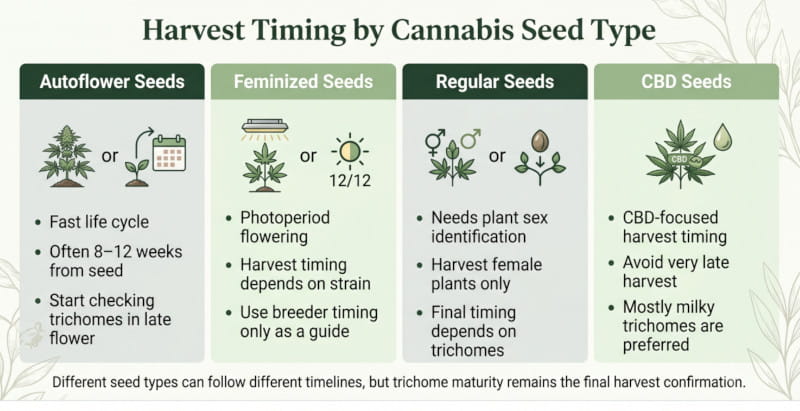
Die Trichommethode gilt grundsätzlich immer. Trotzdem unterscheiden sich Vorzeichen, Zeitlinien und praktische Überlegungen je nach Art der Genetik deutlich. Cannapot arbeitet seit 2004 mit Cannabisgenetik, und eine der klarsten Lehren aus mehr als zwei Jahrzehnten Erfahrung lautet: Der Samentyp beeinflusst alles – auch die Ernte.
|
Samentyp |
Erntesignal |
Typische Zeitlinie |
Wichtigste Besonderheit |
Shop |
|
Autoflower |
Interne biologische Uhr – Trichome sind dein einzig zuverlässiges Signal |
8–12 Wochen vom Samen bis zur Ernte |
Keine Lichtumstellung notwendig. Fester Ablauf. Ab Woche 7 Trichome kontrollieren. Nicht über volle Bernsteinreife hinaus verzögern. |
|
|
Feminisiert (photoperiodisch) |
12/12-Lichtzyklus löst die Blüte aus. Die Herstellerangabe ist nur ein Startpunkt. |
7–14 Wochen Blüte (oder mehr), je nach Sorte |
Herstellerzeiten entstehen unter Idealbedingungen. Deine Umgebung variiert. In den letzten zwei Wochen Trichome prüfen, nicht nach festem Kalender schneiden. Sativa-Genetik läuft oft ein paar Wochen länger. |
|
|
Reguläre Samen |
Wie photoperiodische feminisierte Pflanzen – abhängig vom 12/12-Lichtzyklus |
Ähnlich wie feminisiert – sortenabhängig |
Männliche Pflanzen in der frühen Blüte identifizieren und entfernen, bevor Pollensäcke aufgehen. Ein übersehenes Männchen kann die ganze Ernte bestäuben. Siehe hierzu die Erkennung des Geschlechts bei Cannabis. |
|
|
CBD-Samen |
Gleiche visuellen Signale – aber ein früheres Trichomfenster als bei THC-reichen Sorten anpeilen |
Sortenabhängig, meist ähnlich wie feminisierte Photoperioden |
Für maximal CBD und minimal THC überwiegend milchige Trichome mit sehr wenig Bernstein anpeilen. Spätere Ernten bauen CBD und THC ab. |
Ein besonderer Hinweis zu Autoflowers
Autoflowering Sorten verdienen besondere Aufmerksamkeit, weil sie nach einem anderen Modell funktionieren. Anders als photoperiodische Pflanzen beginnen Autoflowers aufgrund ihrer genetischen Programmierung mit der Blüte – meist etwa drei bis vier Wochen nach der Keimung, unabhängig vom Lichtplan. Du kannst sie daher über den gesamten Zyklus mit 18/6 oder sogar 20/4 beleuchten. Für die Ernte bedeutet das: Du kannst die vegetative Phase nicht verlängern und die Blüte nicht verschieben, um mehr Masse aufzubauen. Jede Woche zählt. Das Erntefenster kommt schneller, als Anfänger erwarten, und wenn eine Autoflower fertig ist, ist sie fertig. Ab etwa Woche 7 sollte die Trichomkontrolle fest eingeplant werden. Manche schnelle Sorten sind in Woche 8–9 wirklich bereit, andere brauchen 11–12 Wochen.
Für eine vollständige Woche-für-Woche-Übersicht findest du im Autoflowering Cannabis Grow Guide alle Details.
Erntefenster beliebter Sorten
Allgemeine Grundsätze sind hilfreich, aber konkrete Sorten verhalten sich in der Praxis unterschiedlich. Die Beispiele unten beruhen auf häufig berichteten Erfahrungen mit bekannten Sortenfamilien. Dein Phänotyp und deine Bedingungen beeinflussen das genaue Fenster – nutze diese Angaben als Startpunkt für Trichomkontrollen, nicht als feste Schnitttermine.
Indica dominanter Hybrid
OG Kush
Läuft meist 8–9 Wochen in der Blüte. In den letzten zwei Wochen entwickeln sich die Trichome schnell. 80 % milchig / 20 % Bernstein bringt das klassische Fuel-und-Erde-Aroma mit schwerer Entspannung. Mehr Bernstein macht die Wirkung deutlich couch-lockiger.
Trichome prüfen: ab Woche 7
Sativa dominant
Special Original Haze
Eine langblühende Haze-Genetik mit 12–13 Wochen Blüte. Bildet bis spät in die Blüte frische weiße Pistillen – hier nicht auf Pistillen verlassen. Trichome sind das einzige zuverlässige Signal. Für die klarste, zerebralste Wirkung komplett milchig ernten.
Trichome prüfen: ab Woche 10
Indica Klassiker
Northern Lights
Einer der schnellsten Indica-Klassiker mit 7–8 Wochen Blüte. Die Trichome werden in der letzten Woche schnell bernsteinfarben. Viele Grower peilen 70 % milchig / 30 % Bernstein an, um die volle körperlastige Entspannung herauszuholen.
Trichome prüfen: ab Woche 6
Autoflower
Girl Scout Cookies Auto
Eine moderne, potente Autoflower mit 9–10 Wochen vom Samen bis zur Ernte. Die Harzproduktion ist dicht, deshalb hilft ein digitales Mikroskop. Prüfe die Blütenkelche, nicht die Zuckerblätter. Ziel: etwa 85 % milchige Trichome.
Trichome prüfen: ab Woche 7
CBD-dominant
CBG Kush / CBD Therapy
CBD-dominante Sorten sollten früher im Trichomfenster geerntet werden als THC-reiche Genetik: komplett milchig oder maximal 5–10 % Bernstein. Überreife baut CBD und THC ab und schwächt das therapeutische Cannabinoidprofil.
Trichome prüfen: ab Woche 7
Indica dominanter Hybrid
White Widow
Ein klassischer, harzreicher Hybrid mit 8–9 Wochen Blüte. Wegen der dichten Trichomproduktion vergleichsweise leicht zu kontrollieren. 80 % milchig / 20 % Bernstein liefert die ausgewogene, potente Wirkung, für die diese Sorte bekannt ist.
Trichome prüfen: ab Woche 7
Cannapot Grow Tipp
Behandle die vom Breeder angegebene Blütezeit nie als Erntedatum. Diese Zeiten entstehen unter kontrollierten Idealbedingungen mit optimalen Nährstoffen, CO2 und Lichtintensität. Reale Grows laufen fast immer 1–2 Wochen länger. Nutze die Angabe als Hinweis, wann du mit der Trichomkontrolle beginnst – ernte erst, wenn die Trichome es zeigen.
Unterschiede zwischen Indoor- und Outdoor Ernte
Indoor Ernte
Indoor Grower haben einen großen Vorteil: vollständige Kontrolle über Temperatur, Luftfeuchtigkeit, Licht und Luftbewegung. Siehe dazu auch unseren Canna Wiki Guide "Cannabis drinnen anbauen". Das Erntefenster ist dadurch planbarer. Der beste Zeitpunkt zum Ernten ist früh am Morgen, bevor das Licht angeht. Während der Dunkelphase sind Terpene am besten erhalten, weil die Pflanze noch keiner Lampenwärme und keinem Licht ausgesetzt war. Indoorgrows ermöglichen außerdem mehrere Ernten pro Jahr, besonders mit Autoflowers, die sich in der Zeit eines photoperiodischen Komplettzyklus mehrfach durchlaufen lassen.
Outdoor Ernte
Outdoorgärtner arbeiten mit anderen Grenzen. Auf der Nordhalbkugel liegt das Erntefenster photoperiodischer Sorten meist zwischen Ende September und Anfang November – oft „Croptober“ genannt. Ausgelöst wird die Blüte durch kürzer werdende Tage, abgeschlossen wird sie im Herbst.
Die größte Gefahr draußen ist das Wetter. Sinkende Temperaturen und steigende Luftfeuchtigkeit begünstigen Botrytis cinerea (Grauschimmel / Bud Rot) in dichten Blüten. Bud Rot zeigt sich als grau-braune Verfärbung im Inneren der Blüte mit watteartigem Schimmel. Befallene Blüten müssen entfernt und entsorgt werden; retten lassen sie sich nicht. In den letzten Wochen täglich zu kontrollieren ist Pflicht – ein unbemerkter Schimmelausbruch kann eine Ernte in 48–72 Stunden zerstören.
Wichtige Outdoor Regeln:
- An einem trockenen Tag ernten – ideal nach mindestens zwei trockenen Tagen.
- Morgens schneiden, nachdem der Tau verdunstet ist und bevor Mittagshitze Terpene verflüchtigt.
- Nicht direkt vor oder nach starkem Regen ernten; nasse Blüten erhöhen das Schimmelrisiko für 24–48 Stunden.
- Bei angekündigtem hartem Frost lieber etwas früher ernten als Schäden an Trichomen und Zellgewebe riskieren.
- Outdoor-Autoflowers ermöglichen zwei Erntefenster in einer Saison: frühe Sommerernte und frühe Herbsternte.
Für europäische Outdoorgrower bietet unser Outdoor Cannabis Grow Guide weitere Details zu regionalem Timing, Sortenwahl und Balkon-Grows mit Autoflower Genetik.
Die 48-Stunden Dunkelphase vor der Ernte
Eine verbreitete Technik erfahrener Grower ist, Pflanzen direkt vor der Ernte für 48 bis 72 Stunden in vollständige, ununterbrochene Dunkelheit zu stellen. Das geschieht nach dem Flush und ohne zusätzliches Gießen während dieser Dunkelphase.
Die Theorie: Cannabis reagiert auf Lichtentzug mit gesteigerter Harzproduktion als Schutzreaktion. Viele Grower berichten außerdem von stärkerem Aroma und höherem Terpengehalt nach einer längeren Dunkelphase im Vergleich zum Schnitt mitten im Lichtzyklus.
Was die Hinweise nahelegen
Kontrollierte Studien speziell zur 48-Stunden-Dunkelphase sind begrenzt. Die Praxis passt jedoch zu dem, was über Terpene bekannt ist: Sie sind flüchtig und gehen unter Wärme und Licht schneller verloren. Die Ernte vor Beginn der Lichtphase ist die unstrittigste Variante dieses Prinzips. Die verlängerte Dunkelphase ist stärker erfahrungsbasiert, aber risikoarm. Bei Cannapot betrachten wir sie als sinnvolle Ergänzung – vorausgesetzt, die Trichome sind bereits im Zielbereich.
So machst du es richtig
1. Trichome im Zielbereich bestätigen
Beginne erst, wenn die Trichome bereits nahe am gewünschten Erntefenster sind. Dunkelheit ersetzt kein korrektes Timing.
2. Finalen Flush vorher abschließen
Spüle mit klarem, pH-angepasstem Wasser, bevor die Dunkelphase beginnt. Während der 48–72 Stunden nicht gießen.
3. Absolute Lichtdichtheit sicherstellen
Die Dunkelheit muss vollständig sein. Selbst kurze Lichtlecks können Stress verursachen und den Zweck der Technik schwächen.
4. Direkt nach Ende der Dunkelphase ernten
Schneide die Pflanze am Ende der Dunkelphase, bevor Licht auf sie fällt. So bleiben flüchtige Terpene bestmöglich erhalten. Diese Technik eignet sich für photoperiodische Indoorpflanzen und Autoflowers. Outdoor ist sie theoretisch mit lichtdichten Abdeckungen möglich, aber schwerer zuverlässig umzusetzen.
Cannabis Schritt für Schritt ernten
Benötigte Werkzeuge
- Scharfe Gartenschere oder Schere – vor Gebrauch mit Isopropylalkohol sterilisieren.
- Feine Trimm-Schere – gefederte Modelle reduzieren Ermüdung bei langen Sessions.
- Nitrilhandschuhe – schützen Trichome vor Hautfett und halten Hände sauberer.
- Trockennetz oder Aufhängeschnüre – für ganze Pflanzen, Äste oder einzelne Buds.
- Hygrometer und Thermometer – unverzichtbar zur Kontrolle der Trocknungsumgebung.
- Weithals Gläser – für das Curing. Glas ist ideal, Plastik kann Geruch und Geschmack beeinflussen.
- Feuchtigkeitspacks mit 62 % – etwa Boveda oder Integra Boost zur Stabilisierung im Glas.
- Isopropylalkohol und Wattepads – zum regelmäßigen Reinigen verklebter Scheren.
1. Finaler Flush (1–2 Wochen vor der Ernte)
Gib in den letzten ein bis zwei Wochen nur klares, pH-angepasstes Wasser (pH 6,0–6,5 in Erde; 5,8–6,0 in Coco oder Hydro). Ziel ist, gespeicherte Mineralsalze im Pflanzengewebe zu reduzieren. Spätestens eine Woche vor der Ernte sollten keine Nährstoffe mehr gegeben werden, besser jedoch schon zwei Wochen vorher mit Dünger aufhören.
2. 48-Stunden-Dunkelphase (optional, aber empfohlen)
Wenn Flush und Trichomfenster passen, stelle die Pflanze 48–72 Stunden komplett dunkel. Nicht gießen. Am Ende der Dunkelphase ernten.
3. Letzte Trichomkontrolle an mehreren Stellen
Prüfe vor dem Schnitt mehrere Blütenbereiche. Obere Colas reifen oft früher, untere Buds können 5–10 Tage hinterherhinken, oder auch umgekehrt. Bei Bedarf gestaffelt ernten.
4. Früh am Morgen schneiden
Schneide die Pflanze am Hauptstamm oder Ast für Ast. Ganze Pflanzen trocknen langsamer und gleichmäßiger, einzelne Äste geben mehr Kontrolle.
5. Große Fächerblätter entfernen
Entferne große Fächerblätter von Hand oder mit der Schere. Sie tragen kaum Trichome und verzögern die Trocknung. Zuckerblätter bleiben je nach Trimmmethode zunächst dran.
6. Nass- oder Trockentrimm wählen
Entscheide, ob du Zuckerblätter frisch entfernst oder erst nach dem Trocknen. Die richtige Wahl hängt von Luftfeuchtigkeit, Platz und gewünschter Qualität ab.
7. Aufhängen oder auf Racks trocknen
Hänge Pflanzen oder Äste kopfüber in den vorbereiteten Trockenraum. Nass getrimmte Einzelbuds kommen mit Abstand auf ein Netz. Buds sollten sich dabei nicht berühren. Ziel: 20°C / 60 % RH, Dunkelheit und sanfte indirekte Luftbewegung.
Nass trimmen oder trocken trimmen?
Nass trimmen
Vorteile
- Leichter zu schneiden, weil die Blätter weich sind.
- Buds trocknen schneller, was in feuchten Umgebungen Schimmelrisiko senkt.
- Der Arbeitsplatz ist nach Beginn der Trocknung sauberer.
Nachteile
- Schnelleres Trocknen erhöht das Risiko ungleichmäßiger Feuchteverteilung.
- Terpenverlust kann durch schnelle Oberflächentrocknung steigen.
- Sehr klebrig – Scheren setzen schnell Harz an.
Trocken trimmen
Vorteile
- Langsamere, gleichmäßigere Trocknung erhält mehr Terpene.
- Zuckerblätter rollen sich weg und lassen sich sauberer entfernen.
- Gilt allgemein als Methode für die höchste Endqualität.
Nachteile
- Höheres Schimmelrisiko, wenn die Luftfeuchtigkeit während der längeren Trocknung über 65 % liegt.
- Benötigt mehr Trockenplatz für ganze Pflanzen oder Äste.
- Getrocknete Blätter sind härter zu schneiden.
Allgemeine Empfehlung: Trockentrimm liefert die bessere Qualität, wenn du die Trocknung unter 60 % Luftfeuchtigkeit stabil kontrollieren kannst. Wähle Nasstrimm, wenn deine Umgebung feucht ist, du schneller trocknen musst oder wenig Platz hast.
Ernte Kurzreferenz
Trichomziel für die meisten Grower: 80–90 % milchig, 10–20 % Bernstein an den Blütenkelchen
Bester Erntezeitpunk indoor: Früh am Morgen, bevor das Licht angeht
Bester Erntezeitpunkt outdoor: Morgens nach verdunstetem Tau, an einem trockenen Tag
Dunkelphase vor der Ernte: 48–72 Stunden, kein Gießen, komplett lichtdicht
Trocknungsbedingungen: 20°C / 60 % RH, dunkel, sanfte Luftbewegung, 7–14 Tage
Bereit fürs Glas (Snap Test): Kleine Stiele brechen sauber, statt sich nur zu biegen
Trocknen und Curing: Die Grundlagen
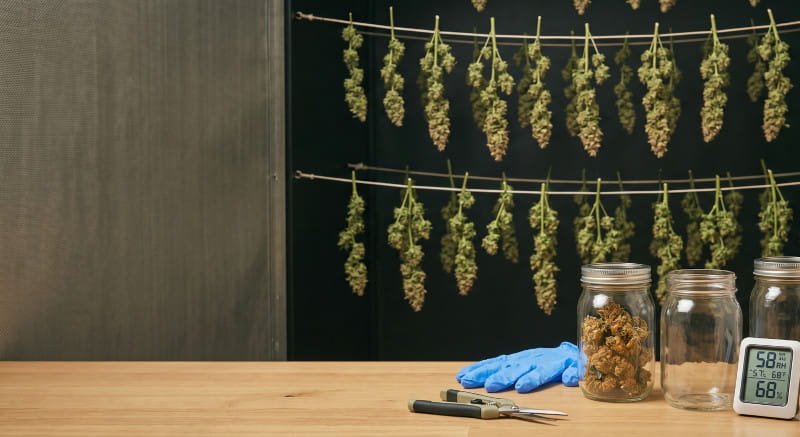
Die Ernte ist erst der Anfang. Die Qualität von Rauch, Dampf oder Extrakt wird stark davon geprägt, was während Trocknung und Curing passiert. Hier entwickeln sich Geschmack und Aroma, Chlorophyll baut sich enzymatisch ab, und Restfeuchte verteilt sich gleichmäßig in jeder Blüte. Wer diese Phase überstürzt, ruiniert häufig eine ansonsten sehr gute Ernte, Geduld ist angebracht!
Trocknen: Die 20/60-Regel
Die zuverlässigste Richtlinie ist die 20/60-Regel: ungefähr 20°C und 60 % relative Luftfeuchtigkeit während der gesamten Trocknung. Das ermöglicht eine langsame, gleichmäßige Trocknung über 7–14 Tage – langsam genug für Terpenerhalt und Chlorophyllabbau, schnell genug gegen Schimmel.
Weitere Anforderungen an den Trockenraum:
- Vollständige Dunkelheit – UV-Licht baut THC ab und zerstört Terpene.
- Sanfter, indirekter Luftstrom – ein kleiner Ventilator im Raum. Wichtig: nicht direkt auf die Buds gerichtet.
- Konstante Bedingungen – Schwankungen sind schädlicher als leicht unperfekte, aber stabile Werte.
- Ausreichend Abstand – Buds und Äste dürfen sich nicht berühren.
So erkennst du, ob Buds bereit fürs Curing sind: Biege einen kleinen Ast. Wenn er gummiartig nachgibt, braucht er mehr Zeit. Wenn er sauber und knackig bricht, stimmt die Feuchte. Außen sollten Buds trocken wirken, innen aber noch leicht elastisch sein – nicht bröselig.
Curing: Wo echte Qualität entsteht
Curing bedeutet, getrocknete Buds in luftdichte Glasbehälter zu geben und die Restfeuchte über Wochen langsam ausgleichen zu lassen. Dabei baut sich Chlorophyll weiter ab, Terpenprofile gewinnen an Tiefe, und der Rauch wird deutlich milder. Der Unterschied zwischen uncuriertem und sauber gecuriertem Cannabis derselben Pflanze ist enorm.
Grundprotokoll fürs Curing:
- Weithalsgläser etwa zu drei Vierteln füllen – niemals fest stopfen.
- In den ersten zwei Wochen Gläser täglich ein- bis zweimal 10–15 Minuten öffnen, um Feuchte abzulassen und Sauerstoff zuzuführen. Danach alle 2–3 Tage.
- Ziel: 58–62 % relative Luftfeuchtigkeit im Glas. Kleine Hygrometer oder 62-%-Packs helfen enorm.
- Gläser kühl und dunkel lagern. Schrank, Schublade oder Keller sind ideal. Kühlschränke vermeiden, weil Kondensation entstehen kann.
- Mindestens sinnvoll sind 2–4 Wochen. Die besten Ergebnisse kommen meist nach 6–8 Wochen. Manche Genetiken verbessern sich über 3–4 Monate stetig weiter.
Warnung: Ammoniakgeruch im Glas
Wenn du Ammoniak oder Gärgeruch bemerkst, waren die Buds vor dem Einlagern nicht trocken genug. Lege sie sofort für 24–48 Stunden zurück auf ein Trockennetz und fülle sie erst danach wieder ein. Sichtbar verschimmelte Buds sind nicht zu retten.
Cannapot Grow Tipp: Langes Curing lohnt sich
Viele Grower rauchen ihre Ernte schon nach 2–3 Wochen im Glas. Verständlich – aber der Unterschied zwischen drei und acht Wochen Curing bei derselben Genetik ist groß genug, dass es sich lohnt, einen Teil länger zu lagern. Beschrifte die Gläser mit Erntedatum und vergleiche verschiedene Cure-Zeiten.
Die häufigsten Fehler bei der Ernte
1. Zu früh aus Ungeduld ernten
Der häufigste Fehler. Die Buds sehen gut aus, der Geruch ist stark, und die Versuchung ist groß. Doch die letzten zwei Blütewochen bringen oft die stärkste Kelchschwellung, Trichomreife und Harzbildung. Wer eine Pflanze in Woche 7 schneidet, obwohl sie 9 Wochen braucht, verschenkt eine enorme Potenz und natürlich auch Ertrag.
2. Die Breeder Blütezeit als Erntedatum behandeln
Samenbanken geben Zeiten unter Idealbedingungen an. Dein Grow kann abweichen. Nutze die Angabe als Startsignal für die Kontrolle, nicht als festen Schnitttermin.
3. Nur Pistillen als Erntesignal nutzen
Pistillen sind hilfreich, aber nicht zuverlässig genug als Hauptsignal. Besonders Sativa- und Hazesorten bilden oft weiter weiße Fäden, obwohl Trichome reif sind.
4. Trichome an Zuckerblättern statt Blütenkelchen lesen
Zuckerblätter reifen schneller. Prüfe immer die Trichome direkt am Blütenkelch, sonst erntest du leicht zu früh.
5. Trocknung mit Hitze oder direktem Luftstrom erzwingen
Heizungen, starke Entfeuchter oder Ventilatoren direkt auf Buds trocknen Cannabis zwar schnell, führen aber zu kratzigem, heuigem, terpenschwachem Material.
6. Curing überspringen oder verkürzen
Frisch getrocknetes Cannabis ist oft grasig, rau und unausgewogen. Schon zwei Wochen Curing verbessern es deutlich; sechs bis acht Wochen bringen echte Qualität.
7. Die ganze Pflanze ernten, obwohl obere und untere Buds unterschiedlich reif sind
Große Pflanzen reifen nicht gleichmäßig. Obere Colas sind oft 5–14 Tage früher fertig, manchmal auch umgekehrt. Eine gestaffelte Ernte kann Qualität und Ertrag verbessern.
Häufig gestellte Fragen
Soll ich Cannabis ernten, wenn die Trichome noch klar sind?
Nein. Klare Trichome zeigen, dass die Pflanze noch Cannabinoide aufbaut. Der THCA-Gehalt ist unreif und deutlich unter dem Maximum. Warte, bis die Mehrheit milchig ist.
Was passiert, wenn ich Cannabis zu spät ernte?
Wenn alle Trichome bernsteinfarben sind, wurde ein großer Teil des THC zu CBN abgebaut. Die Wirkung wird schwer, sedierend und körperlastig; Aroma und Geschmack verlieren oft an Komplexität.
Wann ernte ich Autoflowers im Vergleich zu Photoperioden?
Autoflowers sind schneller fertig, meist 8–12 Wochen ab der Keimung der Samen. Photoperiodische Sorten brauchen inklusive Vegi-Phase oft 4–6 Monate, manchmal sogar länger. Die Trichomsignale sind gleich, aber bei Autoflowers solltest du ab Woche 7 gut prüfen.
Wie lange dauert korrektes Trocknen?
Unter idealen Bedingungen, also 20°C / 60 % RH mit indirekter Luftbewegung und Dunkelheit, dauert es meist 7–14 Tage. Der Snap-Test entscheidet.
Kann ich zuerst die oberen Colas ernten und die unteren weiterreifen lassen?
Ja. Das nennt man gestaffelte Ernte. Obere Colas reifen oft 5–14 Tage früher. Schneide nur die reifen Bereiche und prüfe die unteren Buds später erneut.
Beeinflusst der Samentyp, wann und wie ich ernte?
Ja. Autoflowers folgen einer festen genetischen Zeitlinie, Photoperiodische Sorten reagieren auf 12/12-Licht, reguläre Samen erfordern das Entfernen männlicher Pflanzen, und CBD-Sorten sollten früher im Trichomfenster geerntet werden.
Sollte ich Cannabis vor der Ernte spülen?
Flushen mit klarem, pH-angepasstem Wasser in den letzten 1–2 Wochen ist weit verbreitet und soll einen saubereren Geschmack fördern. Die wissenschaftliche Evidenz ist gemischt, aber mindestens eine Woche vor der Ernte keine Nährstoffe mehr zu geben, ist sinnvoll, besser sogar schon 2 Wochen vor der Ernte keinen Dünger mehr zufügen.
Funktioniert die 48-Stunden-Dunkelphase wirklich?
Sie ist weit verbreitet und wird von vielen Growern positiv bewertet. Kontrollierte Studien sind begrenzt, aber die Technik ist risikoarm und passt zum Wissen über Terpenverluste durch Licht und Wärme. Sie ersetzt keine Trichomkontrolle.
Welche Vergrößerung brauche ich für Trichome?
Mindestens 30-fach. Eine 30–60-fache Juwelierlupe ist praktisch; ein 60–100-faches digitales Mikroskop ist noch genauer.
Wie lange sollte Cannabis für beste Ergebnisse curen?
Mindestens sinnvoll sind 2–4 Wochen. Sehr gute Ergebnisse entstehen meist nach 6–8 Wochen bei 58–62 % RH im Glas. Einige Sorten profitieren von 3–4 Monaten Curing.
Bereit für deine nächste Ernte?
Die richtige Genetik ist der Anfang jedes erfolgreichen Grows. Cannapot bezieht und versendet seit 2004 hochwertige Cannabissamen in Europa – von schnell blühenden Autoflowers über klassische feminisierte Sorten bis zu seltenen Regulären Strains und natürlich auch CBD-Genetik.
Autoflower Samen
Feminisierte Samen
Outdoor Samen
CBD Samen
Verwandte Guides
Der Cannabis-Wachstumszyklus: Vom Samen bis zur Ernte
Cannabis Blütephase Woche für Woche
Autoflowering Cannabis anbauen: Kompletter Guide
Cannabis Outdoor in Europa anbauen