Hermaphrodite Cannabis: Identify & Prevent
Hermaphrodite Cannabis Plant – How to Identify It, Understand the Causes, and Prevent Pollination
Updated: July 2026 | Identify hermaphrodite cannabis early, hermaphroditism, male flowers, pollen sacs, stamens, bananas, self-pollination, stress factors, and prevention.
Author: Cannapot Grow Team | Reading time: approximately twenty-five minutes
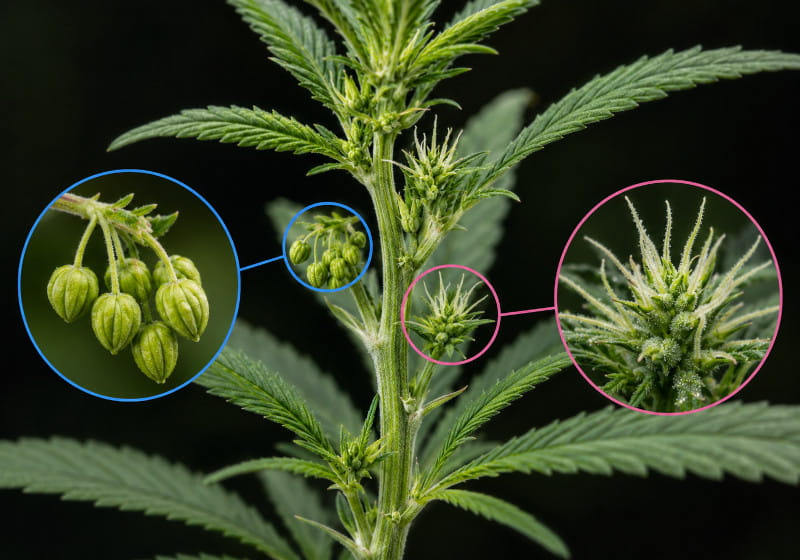
The Most Important Points at a Glance
✓ A hermaphrodite cannabis plant develops both female and male flowers on the same plant. As a result, it can pollinate itself as well as nearby cannabis plants.
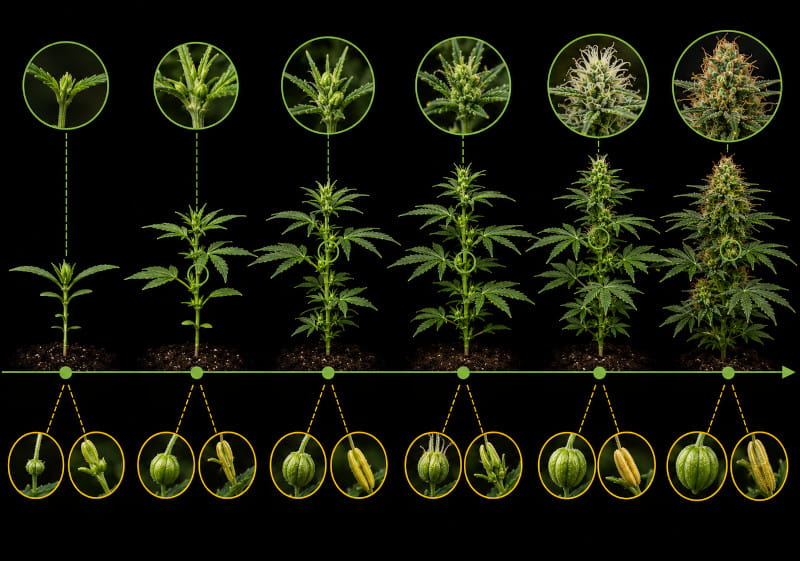
✓ Round pollen sacs usually grow on small stalks and later open into star-shaped flowers. Yellowish, elongated stamens (“bananas”), by contrast, can protrude directly from a female flower.
✓ The development of hermaphroditic flowers is determined by both genetic factors and external influences. Environmental stress, interrupted dark periods, injuries, and unfavorable growing conditions in particular can promote the formation of male flowers on female plants.
✓ When a hermaphrodite plant is discovered, fast but measured action is important: the affected plant should be isolated immediately, open pollen sources removed, and the entire crop inspected carefully and regularly over several days.
What Is a Hermaphrodite Cannabis Plant?
A hermaphrodite cannabis plant develops both female and male flowers, either simultaneously or one after the other. This allows it to release pollen and pollinate itself as well as nearby cannabis plants, even though it appears predominantly female.
Cannabis is naturally dioecious. This means that male and female flowers normally grow on separate plants. Nevertheless, sex expression can be influenced by genetic factors, plant hormones, developmental stage, and various environmental conditions. Under certain circumstances, male flowers can therefore also develop on a predominantly female plant.
In everyday growing, almost any female cannabis plant with individual pollen sacs or exposed stamens is called a “hermaphrodite.” Botanically, however, a more precise distinction is made: a plant may carry separate male and female flowers, or it may develop individual male floral organs within an originally female flower. For the risk of pollination, however, this distinction makes little difference, because both forms can produce viable pollen.
What Is the Difference Between a Hermaphrodite, a Monoecious Plant, and a True Hermaphroditic Flower?
The difference lies in whether male and female organs occur in separate flowers on the same plant or together within a single flower.
In a monoecious plant, separate male and female flowers grow on the same plant. This sexual system is deliberately used in some industrial hemp varieties and is not considered a breeding defect there. One example is the variety Green Sakura CBD. It was originally based on hermaphroditic genetics, but through targeted breeding work by Nativcanna it was further developed so that the proportion of female flowers could be significantly increased. In flower varieties bred to be predominantly female, however, male flowers or stamens are undesirable because they can lead to pollination and seed formation.
A true hermaphroditic individual flower combines male and female reproductive organs in the same flower. In practice, however, individual male flowers or stamens occur more frequently within an otherwise female inflorescence. Scientific publications often use more precise terms for this, such as “co-sexual,” “monoecious expression,” or “hermaphroditic inflorescence.”
| Term | Characteristic | Meaning in Cultivation |
|---|---|---|
| Dioecious | Male and female flowers occur on different plants. | The natural sexual system of cannabis varieties. Male and female plants grow separately and occur with regular weed seeds . |
| Monoecious | Separate male and female flowers occur on the same plant. | Deliberately selected in some fiber and seed varieties , but usually problematic in flower production. |
| Hermaphroditic Individual Flower | A single flower contains male and female reproductive organs. | Can produce pollen and lead to self-pollination. |
| Sex Reversal | A genetically female plant develops male flowers. | Can occur spontaneously, be associated with stress, or be deliberately induced in a professional breeding context. |
How Can You Identify a Hermaphrodite Cannabis Plant Early?
You can identify a hermaphrodite cannabis plant by male pollen sacs or yellowish stamens appearing among otherwise female flowers.
First inspect the nodes where the side branches emerge from the main stem. This is where the first pre-flowers develop. Female pre-flowers usually have a small, teardrop-shaped calyx from which two fine white stigmas emerge. Male pre-flowers, by contrast, are rounder, often sit on a short stalk, and do not form white stigmas.
As flowering progresses, male structures can remain hidden deep inside the inflorescence. Therefore, inspect not only the outside of the colas, but also smaller side shoots, the transitions between stem and flower, and the lower flower sites. Use bright, neutral light whenever possible and move the flowers only carefully. When you are unsure how a healthy flower normally develops, our Canna Wiki article on the cannabis flowering stage provides an overview of the normal progression week by week.
What Do Pollen Sacs on Cannabis Look Like?
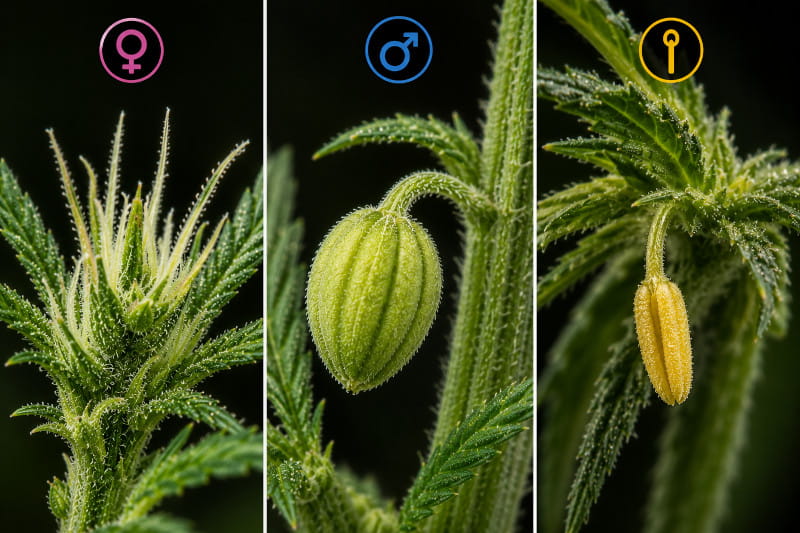
At first, pollen sacs look like small round to oval balls without white hairs and often hang from a short stalk.
A single closed pollen sac can easily be confused with a swollen flower calyx. Shape and surroundings are decisive: a female calyx is usually more pointed, tightly integrated into the flower structure, and often carries stigmas. A male floral organ appears smoother and more spherical. Several sacs may develop into small clusters.
Shortly before opening, distinct longitudinal seams become visible. The male flower then unfolds into several segments from which the anthers emerge. At this stage, even slight contact can distribute pollen.
What Are Yellow “Bananas” in a Cannabis Flower?
The yellow “bananas” are exposed anthers or stamen structures that grow directly out of a female flower and can release pollen.
They are usually narrow, yellowish to light green, and slightly curved. Unlike closed pollen sacs, they have no protective covering and lie exposed in the flower. This means pollen can be released directly. For this reason, so-called “bananas” are particularly treacherous, because they are easy to overlook among the stigmas and swollen flower calyxes.
A single yellow stamen does not mean that the entire plant is affected. It does show, however, that the plant is capable of developing male floral organs and therefore poses a pollination risk. For this reason, the plant should be inspected carefully and regularly over the following days.
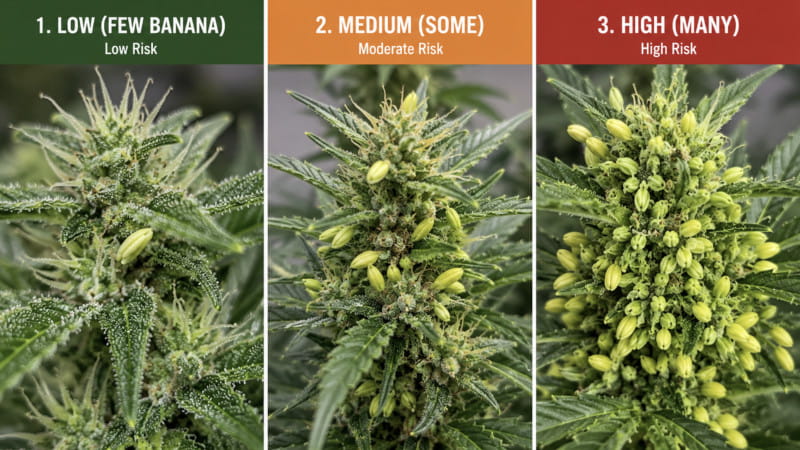
Examples of Hermaphrodite Plants
The following examples show typical forms of hermaphrodite plants. Depending on the expression, individual pollen sacs may appear among female flowers, or male flowers may grow directly from an otherwise female plant. A close look helps identify hermaphroditic traits at an early stage.
When Do Hermaphroditic Flowers Occur Most Frequently?
Hermaphroditic flowers can appear at any stage of flowering, but they are discovered particularly often at the beginning of sex expression or late in flowering.
Early male pre-flowers are more suggestive of a pronounced genetic or developmental tendency. Late individual stamens may be associated with aging, incomplete pollination, or persistent stress. There is no fixed timing rule because genotypes react differently and individual inflorescences on the same plant may be affected to different degrees.
You should be especially attentive after changes, technical malfunctions, or noticeable shifts in the plant’s condition. Examples include irregular lighting times, repeated wilting, severe temperature peaks, or major injuries. To avoid such stress factors as much as possible, a well-planned grow setup with stable lighting, climate, and watering conditions is recommended.
Why Do Cannabis Plants Become Hermaphroditic?
Cannabis plants become hermaphroditic because their sex expression is not determined solely by chromosomes, but is also influenced by gene regulation, hormonal signals, development, and the environment.
In many dioecious cannabis lines, female plants carry two X chromosomes and male plants carry one X and one Y chromosome. Genetic sex provides a strong framework, but it does not determine the visible flower type immutably in every situation. Gene-expression studies show that female plants can activate male flowering programs under certain conditions.
The plant hormone ethylene plays a central role. Strong ethylene activity tends to support female floral traits in cannabis; inhibiting ethylene signaling can induce male flowers in genetically female plants. This principle is used in controlled plant breeding. Spontaneous hermaphroditism in cultivation is more complex, however, and can rarely be traced to a single trigger.
What Role Does Genetics Play in Hermaphroditism?
Genetics plays a major role in determining how stably a cannabis plant maintains its female flowering pattern under changing conditions.
Some lines repeatedly show male structures even under good conditions. Others remain stable even under moderate stress. Scientific studies and breeding observations indicate that sex stability is a complex trait involving multiple genes and regulatory networks.
A single hermaphrodite plant still does not allow a reliable conclusion about an entire variety. Growing conditions, origin, developmental stage, and the frequency of the phenomenon must first be considered. When several genetically related plants show the same male structures under identical and otherwise unremarkable conditions, a hereditary predisposition becomes more likely.
Can Feminized Seeds Become Hermaphroditic?
Yes, plants grown from feminized seeds can also develop male floral organs, because “feminized” describes chromosomal sex and is not an absolute guarantee of stable flower expression.
Feminized seeds are usually produced by inducing a genetically female plant to form pollen and using that pollen to fertilize another female plant. Because no Y chromosome is involved, the offspring are predominantly XX. Whether these offspring develop male flowers under growing conditions depends on the selection, testing, and genetic stability of the parents as well as on environmental conditions.
Professional breeders consistently remove plants with a spontaneous tendency toward hermaphroditism and induce sex reversal only under controlled conditions for seed production. When inadequately selected starting material is used instead, the risk of unstable flower expression can increase. Even with feminized seeds, you should therefore inspect your plants regularly for male flowers or stamens.
Which Stress Factors Can Promote Hermaphroditic Flowers?
Disruptions of the dark period, major climate deviations, water stress, root damage, severe injuries, and persistent deficiencies can particularly intensify an existing tendency to form male flowers.
Not every type of stress automatically causes hermaphroditism. The intensity, duration, and timing of the stress, as well as the plant’s genetic predisposition, are especially important. Robust genetics can often tolerate brief deviations without difficulty, while more sensitive varieties may react even to recurring minor disruptions. Various plant problems, such as pests, diseases, or nutrient deficiencies, can also cause additional stress and thereby promote the formation of hermaphroditic flowers.
| Possible Stress Factor | Why It May Be Relevant | Useful Check |
|---|---|---|
| Light During the Dark Period | Interrupts the photoperiodic signal and can disrupt flower development. | Inspect the room with the grow lights switched off for light leaks, indicator lamps, and unsealed openings. |
| Irregular Timer Schedules | Recurring shifts alter the length of the light and dark periods. | Check timer equipment, power supply, and manual interventions. |
| Heat or Large Temperature Swings | Strain metabolism, water balance, and flower development. | Document the temperature trend rather than isolated readings. |
| Repeated Drying Out or Waterlogging | Causes water and root stress and impairs nutrient uptake. | Check watering intervals, substrate moisture, drainage, and root condition. |
| Severe Injuries During Flowering | Increase repair demands and can place additional strain on sensitive plants. | Avoid late, aggressive training and unnecessary interventions. |
| Pests or Diseases | Drain resources and create persistent physiological stress. | Regularly inspect leaf undersides, shoots, roots, and flowers. |
| Severe Nutrient or pH Deviations | Can significantly impair uptake processes and growth. | Evaluate measurements, fertilization, and visible symptoms together. |
Can Stray Light During the Dark Period Cause a Cannabis Plant to Become Hermaphroditic?
Recurring stray light—also known as a light leak—can disrupt flower development and promote the formation of male flowers in susceptible cannabis plants.
Photoperiod cannabis plants rely on an uninterrupted dark period to initiate and maintain flowering. Even recurring stray light can disrupt this natural rhythm. Not only brightness but also duration, light spectrum, and the regularity of exposure play a role. A brief, one-time light exposure is usually unproblematic, but persistent or regularly recurring stray light can promote the development of male flowers.
Therefore, regularly inspect your grow room in complete darkness after allowing your eyes several minutes to adjust. Pay particular attention to gaps around doors, ventilation openings, zippers, displays, and illuminated control or status indicators. Eliminate potential light sources as permanently as possible and avoid unnecessarily illuminating the plants during their dark period.
Can Heat Stress Trigger Hermaphroditism?
No, high temperatures do not automatically produce hermaphrodite plants. Persistent heat stress can, however, impair sex stability when combined with a genetic predisposition and other stressors, thereby promoting the formation of male flowers.
High temperatures increase evaporation and strain the cannabis plant’s metabolism. As a result, leaves and flowers dry out more quickly, while the roots often cannot fully compensate for the increased water demand. Our guide explains how to care for your plants optimally even in warm temperatures: Watering Cannabis Correctly. Long-lasting heat waves, very warm nights, and large temperature fluctuations are especially critical. Wind Burn can also cause additional stress and thereby promote hermaphroditic flowers in genetically susceptible plants.
Instead of searching for a fixed temperature threshold, observe the overall condition of your cannabis plants. Drooping leaves, curled leaf edges, unusually rapid drying of the substrate, or slowed growth are clear signs that the plants are suffering from heat stress and that the growing conditions should be optimized.
Can Overfertilization or Nutrient Deficiency Trigger Hermaphroditism?
Severe or prolonged nutrient problems can contribute as a stress factor, but they are not considered the sole, clearly proven cause of every case of hermaphroditism.
Excessive salt concentrations can damage roots and impede water uptake. A pronounced nutrient deficiency in turn limits photosynthesis and tissue formation. Both situations weaken the plant. Whether male flowers then develop depends strongly on genotype and developmental stage.
Correct problems step by step. Several drastic measures at the same time make diagnosis more difficult and create additional stress. Documented measurements and the progression over time are more informative than isolated leaf symptoms.
Can Heavy Pruning During Flowering Promote Hermaphroditism?
Severe interventions during flowering can place additional stress on sensitive cannabis plants and thereby promote male flower formation in genetically susceptible plants.
Removing individual diseased or dead plant parts is different from heavy defoliation, repeated bending, or extensive pruning. The later such interventions occur, the less time the plant has to recover. Major pruning measures such as topping cannabis plants should therefore already be carried out during the vegetative stage.
A direct relationship according to the formula “pruning equals hermaphrodite” has not been scientifically proven. Nevertheless, forward-looking plant management is advisable: perform shaping work as early as possible and intervene during flowering only when necessary for plant health, air circulation, or safety.
What Happens When a Hermaphrodite Plant Releases Pollen?
When pollen from a hermaphrodite cannabis plant reaches the flowers of female plants, pollination and subsequent seed formation can occur.
Cannabis pollen is very light and is spread mainly through the air. Fans, air movement, clothing, hands, tools, or simply moving a plant can all help distribute pollen throughout the grow room. After successful pollination, the plant invests part of its energy in developing seeds instead of exclusively in flower production.
Pollination is not immediately visible. Early signs may include prematurely wilting or browning stigmas and, later, swelling flower calyxes containing developing seeds. Because stigmas also change color during natural maturation, these signs are not definitive proof. Confirmation usually comes only when a firm seed actually develops inside the flower calyx.
How Strongly Does Pollination Affect Flower Quality?
Pollination primarily leads to seed formation, additional plant material, and a lower yield of seedless flowers; the extent depends on the timing and scale of fertilization.
When a cannabis plant is pollinated early and extensively, numerous seeds can develop in the flowers. When pollination occurs only late or in isolated areas, unpollinated flowers often remain. Statements such as “a pollinated plant is immediately worthless” or “every pollinated flower loses all of its potency” are therefore too sweeping. Flower quality and composition are influenced by many factors, including genetics, maturity, growing conditions, and the extent of seed formation.
Anyone who wants to harvest high-quality, seedless flowers (sinsemilla) should take even the smallest pollen source seriously. Early detection and rapid removal of hermaphroditic plants are therefore far more important than removing individual seeds from the flowers later.
Can a Hermaphrodite Cannabis Plant Pollinate Itself?
Yes, a hermaphrodite cannabis plant can self-pollinate if its male flowers produce viable pollen and that pollen reaches the female flowers.
Self-pollination is biologically possible in cannabis, even though the plant is naturally adapted primarily for cross-pollination. Scientific studies have shown that hermaphroditic cannabis plants can produce viable pollen and pollinate themselves. However, the quantity and germination ability of the pollen may be lower than in regular male plants.
Nevertheless, even a small amount of pollen may be enough to fertilize several female flowers. Therefore, do not rely on individual pollen sacs or stamens releasing “too little” pollen to cause pollination.
Are Seeds from a Hermaphrodite Plant Automatically Female?
Seeds produced by self-pollination of a genetically female XX plant generally do not carry a Y chromosome. Nevertheless, they are not recommended for further cultivation because they may pass an increased tendency toward hermaphroditism to the next generation.
The decisive question is why the mother plant formed male flowers. In professional cannabis breeding, sex reversal is performed only on carefully selected plants that have been tested for sex stability. A spontaneously hermaphroditic plant, by contrast, often has a genetic predisposition or increased sensitivity to stress.
Although such seeds may produce predominantly female plants, the risk of renewed hermaphroditism is often higher. Experienced breeders therefore advise against using seeds from spontaneously hermaphroditic cannabis plants for further cultivation or breeding. For stable results, use high-quality, professionally bred cannabis seeds instead.
What Should You Do When You Discover a Hermaphrodite Plant?
Immediately separate the plant from other flowering cannabis plants, reduce air movement, and then decide whether safely removing individual organs is realistic.
- Stay calm: Do not shake the plant or point a fan directly at the suspicious area.
- Stop air movement: Briefly switch off nearby circulation fans before moving the plant.
- Isolate the plant: Remove it from the shared flowering area as carefully as possible.
- Assess the extent: Check whether only one closed structure is present or whether there are numerous pollen sacs and stamens.
- Avoid open flowers: Already opened pollen sacs increase the risk that pollen has been distributed.
- Inspect the crop: Examine all plants systematically from bottom to top and repeat the inspection regularly.
- Look for the cause: Check lighting schedules, darkness, climate, watering, roots, pests, and recent interventions.
- Clean equipment: Clean tools and change clothing after possible pollen contact before entering other flowering rooms.
Can You Simply Remove Individual Pollen Sacs?
Individual closed pollen sacs can be carefully removed with tweezers, but this measure is defensible only when the occurrence is very limited and rigorous follow-up inspections are performed.
Lightly moisten the area around the structure because water binds airborne pollen. Grasp the pollen sac with clean tweezers without crushing it and immediately seal it in a bag or container. Avoid misting dense flowers, because persistently damp flowers increase the risk of mold.
Removal does not eliminate the cause. Additional male organs may later appear elsewhere. Inspect the plant daily and keep it separate whenever possible. When there are multiple sites, opened pollen sacs, or hard-to-reach stamens, completely removing the plant from the flowering crop is usually the lower-risk decision.
When Should a Hermaphrodite Be Removed Completely?
A hermaphrodite should be removed when numerous male organs have formed, pollen sacs have already opened, or reliable daily inspection is not possible.
The value of the remaining crop also matters. A single problematic plant can pollinate many stable plants. The risk is particularly high early in flowering because plenty of time remains for seed development.
Before transport, carefully place a sufficiently large bag over the plant and close it around the lower section. This limits the mechanical spread of pollen. Dispose of plant material in accordance with local regulations and do not compost pollen-bearing flowers directly next to a cultivation area.
How Do You Inspect the Rest of the Crop After a Discovery?
After finding a hermaphrodite, carefully inspect all flowering plants and repeat the inspection several times over the following days.
Start at the lower nodes and work your way shoot by shoot to the top. Mark plants or areas that have already been inspected so nothing is missed. Pay particular attention to small side flowers, poorly lit inner shoots, and areas where the plant was previously injured or heavily stressed.
Record the location, date, and developmental stage of the male flowers. If several plants are affected, check whether they share the same genetics or are positioned in a similar location. If hermaphroditic traits occur mainly in one particular variety, this may indicate a genetic predisposition. If they cluster in one area of the grow room, light stress, heat stress, or unfavorable air currents are more likely to point to a shared environmental cause.
How Do You Remove Cannabis Pollen from the Grow Room?
After discovering a hermaphrodite cannabis plant, thoroughly clean the grow room to remove as much remaining cannabis pollen as possible and reduce the risk of further pollination.
Cannabis pollen quickly loses its ability to become airborne when exposed to moisture. Therefore, wipe floors, walls, frames, pots, and tools with a slightly damp cloth. Avoid strong air movement or dry sweeping, as this can stir up existing pollen and redistribute it throughout the grow room. Clothing and other textiles should be changed and washed after contact with a hermaphroditic plant.
Dense flowers should not be soaked in the process. Cleaning cannot reverse pollination that has already occurred, but it reduces the risk of remaining pollen reaching additional flowers. After harvest, a thorough cleaning of the entire grow room—including the ventilation system, filter, and all equipment used—is also recommended before the next cycle begins.
How Long Does Cannabis Pollen Remain Fertile?
How long cannabis pollen remains fertile depends mainly on temperature, humidity, and storage conditions. Under warm and humid conditions, it usually loses germination capacity relatively quickly, while it can survive significantly longer when kept dry and cool.
A universally applicable time estimate is therefore impossible. Freshly released pollen poses the greatest pollination risk. High humidity can reduce the germination capacity of pollen grains, whereas dry and cool conditions can preserve their viability for longer.
After discovering a hermaphrodite cannabis plant, always assume that any existing pollen may still be fertile. Clean the grow room carefully and do not rely on the pollen becoming harmless on its own after a short time.
How Can You Tell Whether a Flower Has Already Been Pollinated?
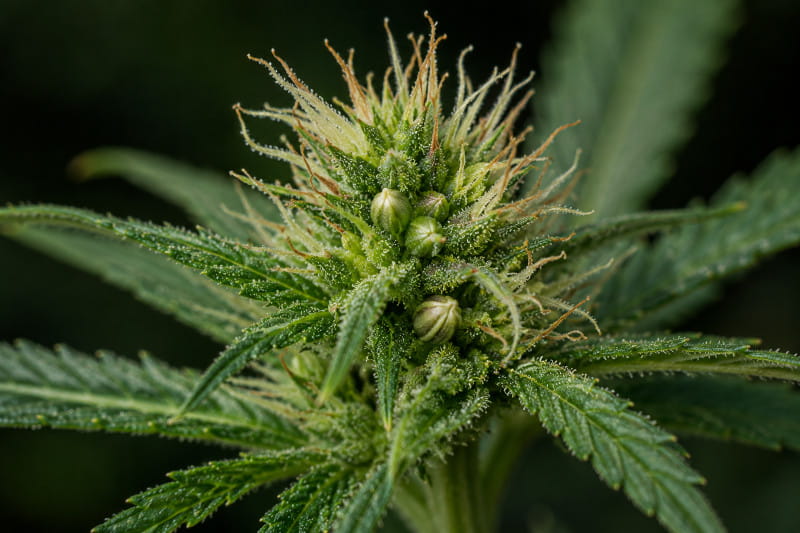
Pollination may become noticeable through stigmas that wilt or retract early and, later, through clearly swelling flower calyxes. Reliable confirmation usually comes only when a seed develops inside the flower calyx.
Brown or dried stigmas are not definitive evidence of pollination. They can also result from natural maturation, contact, heat, or low humidity. Therefore, avoid unnecessarily opening young flower calyxes, as this can damage the flowers. Instead, observe whether individual calyxes swell unusually strongly compared with the surrounding flowers.
A maturing seed becomes firm over time and usually develops a darker seed coat. Very young seeds, by contrast, are still soft and pale. Even when individual seeds form, this does not automatically mean that the entire crop has been fully pollinated.
Can a Pollinated Cannabis Plant Continue Flowering?
Yes, a pollinated cannabis plant can continue to flower and mature, but it invests part of its resources in seed development.
The plant does not die immediately after fertilization. Unpollinated flower areas can continue developing. Whether continuing the grow is worthwhile depends on the extent of pollination, maturity, and the purpose of cultivation.
Removing seed structures that have already formed does not reverse the biological shift. Therefore, avoid aggressive manipulation of the flowers and focus on stable conditions and containing additional pollen sources.
How Can You Prevent Hermaphroditism?
The most effective way to prevent hermaphroditism is to use genetically stable starting material and maintain even, low-stress conditions throughout flowering.
- Protect the dark period: Prevent stray light and irregular timer schedules.
- Keep the climate stable: Avoid severe heat, cold, and abrupt fluctuations.
- Water consistently: Do not allow the root ball to remain waterlogged or repeatedly dry out severely.
- Protect the roots: Provide sufficient substrate volume, drainage, and oxygen supply.
- Control nutrient supply: Avoid drastic overdosing and uncorrected deficiencies.
- Limit late injuries: Carry out major training measures before advanced flowering.
- Detect pests early: Inspect plants regularly before a severe infestation develops.
- Inspect flowers: Check pre-flowers and inflorescences throughout the entire flowering stage.
- Document conspicuous lines: Do not continue using plants with repeated spontaneous hermaphroditism without critical evaluation.
Which Cannabis Strains Are Considered Particularly Unlikely to Become Hermaphroditic?
No cannabis strain is completely protected against hermaphroditism. Some modern genetics are nevertheless considered particularly stable and show hermaphroditic flowers only rarely under good growing conditions. The following strains are valued by many growers for their reliable sex stability:
- Blue Dream
- Northern Lights
- Exodus Cheese
- Sweet Cinnamon
- Therapy
- Critical Kush
- Original Glue #4
- OG Kush
- Hindu Kush
- Girl Scout Cookies
- Skunk #1
- Serious Happiness
- Original Amnesia
- RS11
- Apple Fritter
- Sensi Star
Can You Make a Hermaphrodite Plant Permanently Female Again?
No, a cannabis plant that has already become hermaphroditic cannot be returned reliably and permanently to a purely female state.
You can eliminate possible stress causes and remove individual pollen sacs or stamens. This can reduce the immediate pollination risk, but the plant has already demonstrated that it can form male flowers.
Even if no new male flowers appear for several days, pollen sacs or stamens may develop again later. Therefore, inspect the plant regularly until harvest. If the crop must remain reliably seedless, isolating or removing a hermaphroditic plant is far more dependable than hoping for a permanent return to exclusively female flower expression.
Is Late Hermaphroditism Shortly Before Harvest Harmless?
No, late hermaphroditism is not harmless. Because little time usually remains until harvest, however, fewer or incompletely mature seeds often develop than after early pollination.
Individual bananas appearing only toward the end of flowering are often described as a possible emergency response by the plant to the approaching end of its life. This behavior does not occur in every cannabis strain, however, and should not be regarded as a normal part of flowering. When pollen is released, receptive flowers can still be pollinated.
Always consider the plants’ maturity, the number of pollen sacs or bananas, and their distance from other cannabis plants. When harvest is imminent, the practical risk may be lower, but visible pollen sources should still be removed whenever possible or the affected plant isolated.
What Does “Rodelization” Mean?
“Rodelization” refers to a method that is now rarely recommended, in which unpollinated female cannabis plants are deliberately left standing beyond their normal harvest time. The aim is for them to develop individual male stamens and release pollen late in flowering.
The method is based on an unreliable response to aging and stress. Whether, when, and to what extent a plant produces pollen is difficult to predict. There is also a risk that plants with an increased tendency toward hermaphroditism will be selected for further breeding. Rodelization is therefore far less reliable than established methods of producing feminized seeds with carefully selected and tested mother plants.
In a normal grow, the late appearance of bananas is not a sign of quality. If this behavior occurs, document it and consider it when selecting mother plants or seed stock for future cycles.
Are Hermaphrodite Plants Suitable for Breeding?
Spontaneously hermaphroditic cannabis plants are generally not recommended for breeding because they may pass a genetic tendency toward hermaphroditism to their offspring.
This must be distinguished from the deliberate sex reversal of genetically stable female plants. In professional feminized cannabis seed production, only carefully selected mother plants tested for sex stability are induced to produce pollen under controlled conditions. This creates feminized seeds without changing the XX genetic material of the pollen-producing plant.
Professional breeding programs test new lines for stability over several generations and under different growing conditions. The rule for hobby growers is therefore: do not use seeds from spontaneously hermaphroditic cannabis plants for further breeding. Anyone seeking stable plants over the long term with the lowest possible risk of hermaphroditism should buy cannabis seeds that come from professional breeding.
Are Hermaphrodites the Same as Male Cannabis Plants?
No. A male plant produces predominantly male flowers, whereas a hermaphrodite also carries female floral organs.
Regular male plants in dioecious lines usually carry an XY chromosome pair. A hermaphroditic plant, by contrast, may be genetically female and still develop male structures. Chromosomal sex cannot be determined with certainty from external appearance in every exceptional case.
The same caution applies to pollen prevention: both male plants and hermaphrodite plants can pollinate female flowers. The distinction is important primarily for diagnosis, breeding, and evaluating the cause.
Can Autoflower Strains Become Hermaphroditic?
Yes, autoflower strains can also develop hermaphroditic flowers because automatic flowering does not protect against genetic or stress-related sex instability.
Autoflower genetics initiate flowering mainly based on age rather than exclusively through a long dark period. As a result, classic light leaks are less directly relevant as a trigger than they are for strictly photoperiodic plants. Irregular conditions, heat, root stress, injuries, and genetic factors nevertheless remain important.
Because plants grown from autoflowering seeds have a genetically fixed and comparatively short life cycle, they often have little time to recover after major stress events. Cultivation that is as stress-free as possible outdoors and indoors is therefore especially important from the very beginning.
Can You Use Buds from a Hermaphrodite Plant?
The buds of a hermaphrodite cannabis plant are not harmful to health merely because of the plant’s sex expression. They may, however, contain seeds and be less consistent in quality and composition than seedless flowers.
Whether the flowers can be used depends primarily on their hygienic condition and intended use. Mold, rot, pests or other contaminants make plant material unsuitable. When the buds contain seeds, many users remove them before use.
Neither active-compound content nor quality can be judged reliably from appearance alone. Medical cannabis should be used only in accordance with the physician’s prescription and the pharmacy’s instructions.
How Do You Protect Your Crop from Unwanted Pollination in the Long Term?
Long-term protection is achieved through stable genetics, consistent growing conditions, uninterrupted dark periods, and a fixed routine for inspecting flowers.
No single measure prevents every case of hermaphroditism. Good starting genetics can become unstable under extreme stress, while a perfect climate cannot eliminate an inherited weakness. The interaction of selection, technology, plant observation, and rapid response is decisive.
Inspect pre-flowers early, check dense inflorescences through harvest, and document abnormalities. This allows you to recognize recurring patterns, remove pollen sources in time, and plan future cycles more precisely.
Which Misconceptions About Hermaphrodite Cannabis Plants Are Common?
Common misconceptions include the claims that stress alone causes hermaphroditism, feminized seeds can never become hermaphroditic, and a single pollen sac is always harmless.
-
“Every hermaphrodite plant was grown badly.” Genetic susceptibility can become visible even under good conditions.
-
“Only light leaks cause hermaphroditism.” Light is one possible factor among several.
-
“Feminized guarantees female flowers.” XX plants can develop male organs.
-
“Yellow bananas first have to burst open.” Exposed anthers may already release pollen.
-
“One pollen sac cannot do any harm.” Even a small amount of pollen can fertilize several flowers.
-
“Seeds from a hermaphrodite are ideal feminized seeds.” Without stable parental testing, an undesirable predisposition may be passed on.
-
“Brown hairs prove pollination.” Stigmas also darken for other reasons.
Which Checklist Helps with Weekly Inspections?
A fixed inspection routine helps you discover male structures before they open and distribute pollen throughout the crop.
- Are round structures without stigmas visible at the nodes?
- Are yellow or light-green stamens protruding from female flowers?
- Are there opened, star-shaped male flowers?
- Is the timer equipment working without interruption?
- Is the dark period free from light leaks and status lights?
- Do temperature and watering remain within the usual range?
- Do individual plants show unusual stress symptoms?
- Have severe interventions or repotting recently been carried out?
- Are pests, root damage, or signs of disease visible?
- Have all findings been documented with date, plant, and position?
Which Scientific Sources Explain Hermaphroditism in Cannabis?
The scientific basis is provided mainly by studies on sex determination, gene expression, hormonal sex reversal, pollen fitness, and spontaneous male flower formation on female plants.
Research is developing rapidly. Some common grower claims are based more strongly on experience than on controlled trials. Well-supported findings include the genetic basis of sex, the hormonal influence on flower expression, the occurrence of spontaneous male organs on female plants, and the possibility of self-pollination. Less precisely quantified is which individual environmental stressor triggers hermaphroditism in which genetics and with what probability.
- Hermaphroditism in Cannabis sativa L.: Impacts, Inducers, and Future Research Directions – current review of the causes, consequences, and state of research on sex instability.
- Hermaphroditism in Marijuana (Cannabis sativa L.) Inflorescences – study of spontaneous stamens, pollen germination ability, self-pollination, and offspring.
- Identification of Genes Associated with Sex Expression in Cannabis sativa – gene-expression analysis of different developmental stages in male and female plants.
- Comparative RNA-Seq Analysis Reveals Genes Associated with Masculinization of Female Cannabis Flowers – molecular analysis of male flowers on genetically female plants.
- Production of Feminized Seeds of High CBD Cannabis sativa L. by Manipulation of Sex Expression and Pollen Storage – study of controlled sex reversal and the production of feminized seeds.
- Cosexuality Reduces Pollen Production and Fitness in Cannabis sativa – study of pollen quantity and pollen fitness in cosexual plants.
- Optimized Guidelines for Feminized Seed Production in High-THC Cannabis – current study of standardized methods for inducing male flowers on female plants.
- Wikipedia: Dioecy – botanical classification of dioecious plants as a supplementary explanation of the term.
FAQs
Q: What is a hermaphrodite cannabis plant?
A: A cannabis plant that develops female flowers together with male pollen sacs or stamens.
Q: How do I identify a pollen sac?
A: It is round to oval, has no white stigmas, and often sits on a small stalk.
Q: What are bananas in the flower?
A: Yellowish, elongated anthers that protrude directly from a female flower and may already carry pollen.
Q: Can feminized seeds become hermaphroditic?
A: Yes. Feminized means predominantly XX offspring, not guaranteed stable female flowers under all conditions.
Q: Is hermaphroditism always a cultivation error?
A: No. Genetic predisposition and environmental conditions interact; even well-cared-for plants can be affected.
Q: Can light at night promote hermaphroditism?
A: Recurring light leaks and stray light can disrupt flowering control and promote male flowers in sensitive plants.
Q: Must a hermaphrodite plant be removed immediately?
A: When several male organs are present, pollen sacs are open, or isolation is impossible, removal is usually the safest solution.
Q: Can I remove a single pollen sac?
A: Yes, as long as it is closed and the plant is inspected daily afterward and isolated whenever possible.
Q: Does a hermaphrodite plant pollinate other plants?
A: Yes. Its pollen can spread throughout the crop through air movement, clothing, and tools.
Q: Can a hermaphrodite plant pollinate itself?
A: Yes, if its pollen is viable and reaches receptive female flowers.
Q: Are seeds from a hermaphrodite plant feminized?
A: When an XX plant self-pollinates, a Y chromosome is usually absent, but a tendency toward hermaphroditism may still be passed on.
Q: How can I recognize a pollinated flower?
A: Possible signs include stigmas retracting early and swelling seed structures; pollination is certain only when visible seed development occurs.
Q: Is late hermaphroditism less dangerous?
A: It remains a pollen source, but because less time remains, it often results in fewer mature seeds.
Q: Can autoflower plants become hermaphroditic?
A: Yes. Age-dependent flowering prevents neither genetic instability nor stress responses.
Q: Are hermaphroditic flowers poisonous?
A: No. Sex expression alone does not make flowers poisonous; hygiene, mold, residues, and legal requirements remain decisive.