Photoperiod Cannabis Seeds: What Does Photoperiod Mean?
Photoperiod Cannabis Seeds and the Meaning of the Photoperiod
Updated: September 2026 | What does photoperiod mean in cannabis? A detailed guide to photoperiod, flowering induction, light and darkness, and the differences between photoperiod, autoflowering, feminized and regular cannabis seeds.
Author: Cannapot Grow Team | Reading time: approximately fifteen minutes
The Most Important Points at a Glance
✓ Photoperiod cannabis plants respond to the daily duration of light and darkness. Changes in the photoperiod can trigger the transition from vegetative growth to flower development.
✓ Indoors, flowering is often initiated with a light cycle of 12 hours of light and 12 hours of darkness. However, 12/12 is a proven cultivation schedule rather than a fixed biological threshold that applies equally to every cannabis genotype.
✓ Outdoors, day length changes naturally over the course of the season. When a photoperiod plant begins flower development depends primarily on its genetics, location and the day length at that location.
✓ Photoperiod does not automatically mean feminized or regular. Both feminized and regular seeds can be photoperiod varieties. Feminized seeds are also available as autoflowers.
✓ Autoflowering genetics differ fundamentally from photoperiod varieties: their flower development begins largely according to age and does not require a seasonal shortening of day length as a trigger.
✓ Photoperiod plants can be kept in vegetative growth for extended periods, making them particularly suitable as mother plants and for preserving selected genetics through cuttings.
What does photoperiod mean in cannabis?
In cannabis, photoperiod means that the plant responds to the daily length of day and night. This relationship strongly influences whether it continues vegetative growth or begins flower development.
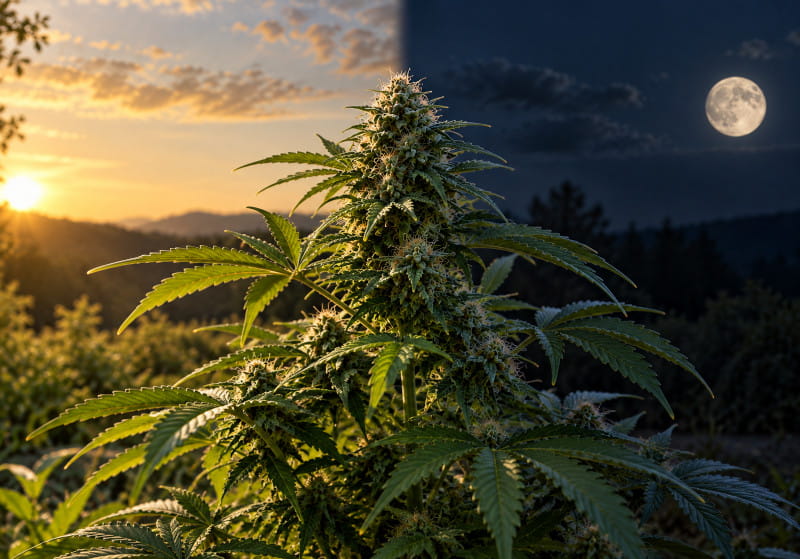
The term photoperiod refers to the duration or ratio of the light and dark periods within a day. For photoperiod cannabis plants, this information is an important seasonal signal: long days favor vegetative growth, while shortening days and longer nights can promote the transition to flowering.
In nature, this relationship changes continuously throughout the year. After the long days of summer, day length decreases and the nights become longer. Photoperiod cannabis plants can respond to this change and, depending on their genetics, begin flower development.
In short: “Photoperiod” describes neither the sex of a plant nor whether the seeds are feminized or regular. The term describes the plant’s response to the length of day and night. Therefore, both feminized and regular cannabis seeds can be photoperiod.
How does the photoperiod work in cannabis?
Cannabis is considered a quantitative short-day plant. Put simply, shortening days and sufficiently long nights promote the transition from vegetative growth to flowering in photoperiod genetics.
There is no single number of hours that represents the same biological threshold for every cannabis variety. Different genetics can respond differently to the length of day and night. Some begin flower development under comparatively long days, while others require a stronger signal from shorter days or longer nights.
Under long days, photoperiod plants generally remain predominantly in vegetative growth, producing new leaves, side shoots and roots. If the daily light period becomes sufficiently shorter while the night becomes longer, this can initiate flower development. The timing of this transition is strongly influenced by the particular genetics.
What role do light and darkness play?
The photoperiod response is not determined solely by how many hours of light a plant receives. The duration and continuity of the night also play an important role.
Cannabis plants have light-sensitive photoreceptors. These include the phytochrome system, through which plants can detect information about light conditions and the duration of the dark period. These signals are involved in regulating various developmental processes, including the transition to flowering.
The photoperiod therefore does not work like a simple switch that suddenly flips at a specific number of hours. What matters is the interaction between day and night length, genetic predisposition and the plant’s developmental stage.
Does photoperiod automatically mean 12/12?
No. A light cycle of 12 hours of light and 12 hours of darkness is often used indoors to initiate flowering. However, it is neither the biological definition of photoperiodism nor a fixed threshold that applies equally to every cannabis genotype.
Studies involving different cannabis genotypes show that plants can respond differently to the length of day and night. Some genetics begin flower development with comparatively long daily light periods, while others respond clearly only to shorter days or longer nights.
Important: 12/12 is a proven indoor schedule, but not a universal botanical threshold. What matters is the genetically determined response of a plant to the length of day and night.
When do photoperiod cannabis plants begin to flower?
Photoperiod cannabis plants begin flower development when the day and night length provides a sufficient flowering signal for their particular genetics and the plant has reached the appropriate developmental stage.
There is therefore no universally applicable point in time. In addition to genetics, the plant’s developmental stage and cultivation conditions also play a role. After flowering has been initiated, it also takes some time before the changes in the plant become clearly visible. We explain in detail how cannabis subsequently develops during the individual flowering weeks in our guide to the cannabis flowering stage.
Photoperiod plants indoors
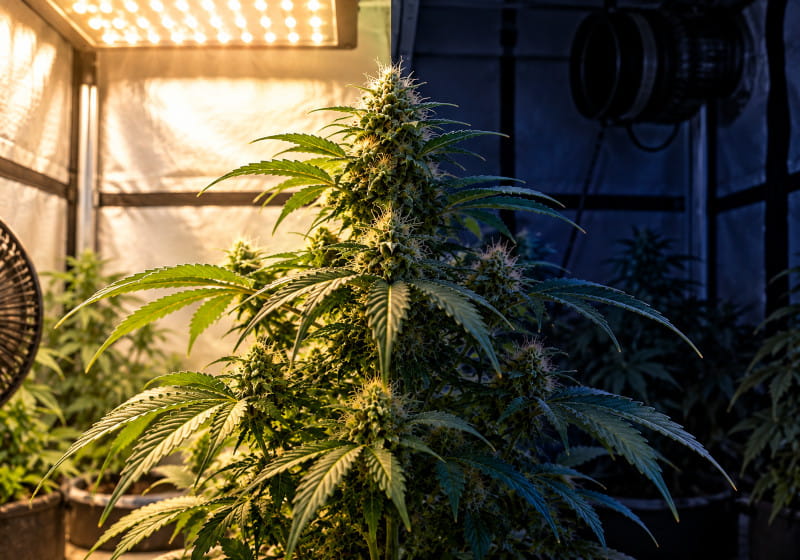
Indoors, the photoperiod can be deliberately influenced through the daily lighting duration. During the vegetative stage, photoperiod plants are kept under long light periods. To initiate the transition to flowering, the daily light duration is shortened while the uninterrupted dark period is extended.
In practice, growers often switch to a 12/12 light cycle for this purpose. This schedule provides a reliable flowering signal for many photoperiod genetics, although some varieties can respond to longer day lengths. A consistent rhythm with a dark period that remains as undisturbed as possible is also important. You can find further basics on lighting, the growing space and cultivation under controlled conditions in our guide to growing cannabis indoors.
Photoperiod plants outdoors
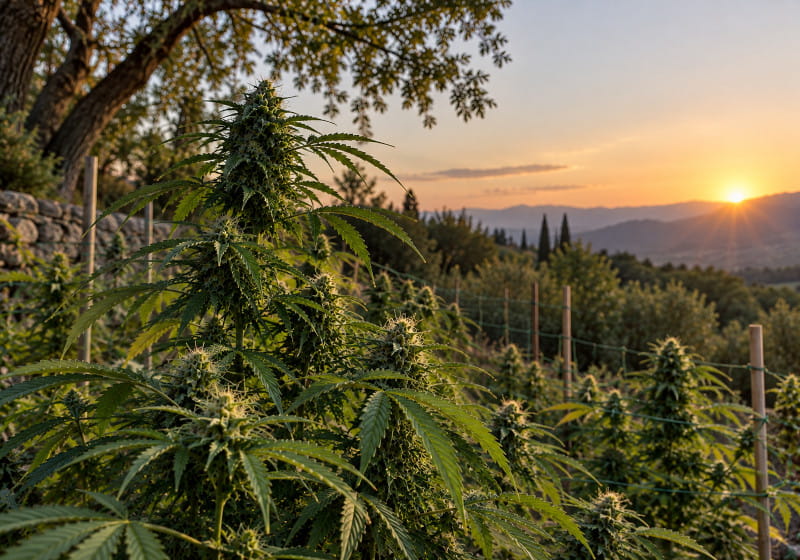
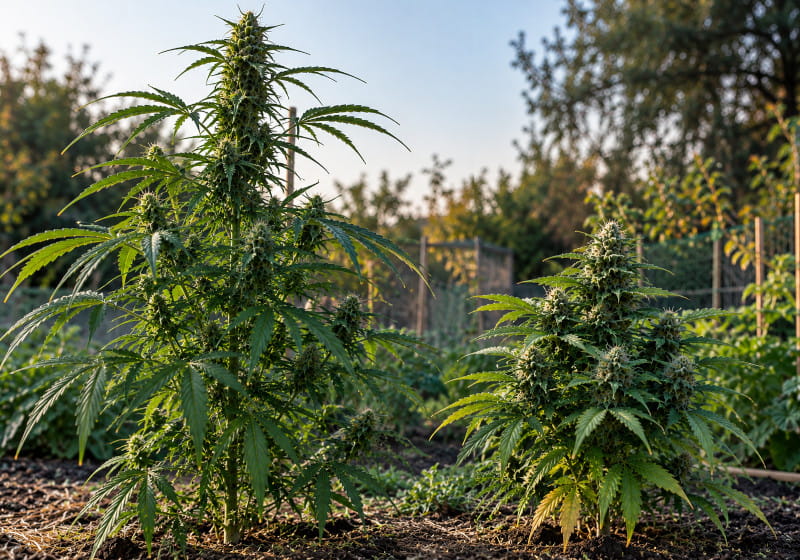
Outdoors, the photoperiod is determined by the natural changes in day length. Photoperiod cannabis plants respond to the seasonal changes in day and night.
In the Northern Hemisphere, the days gradually become shorter and the nights longer after the summer solstice. When a plant responds by beginning flower development depends largely on its genetics and the day length at the particular location. This is why photoperiod varieties do not all begin flowering at the same time.
The start of flowering and the subsequent flowering time also differ depending on genetics. Outdoor varieties that begin earlier and mature more quickly can be advantageous in regions with a shorter growing season, while late-flowering or slower-maturing genetics require correspondingly more time to reach full maturity. For seasonal planning, you can find more information in our Cannabis Grow Calendar and in our detailed guide to growing cannabis outdoors.
Photoperiod vs. Autoflower – the key differences
The most important difference between photoperiod and autoflowering plants lies in how flowering is initiated. Photoperiod genetics respond to changes in the daily light and dark periods, while autoflowering genetics begin flower development largely independently of these changes, according to their developmental age.
| Feature | Photoperiod | Autoflower |
|---|---|---|
| Flowering initiation | responds to day and night length | largely age-dependent |
| Vegetative stage | can be extended under a suitable photoperiod | timing is more strongly determined by genetic development |
| Indoor light-cycle change | commonly used to deliberately initiate flowering | not required to initiate flowering |
| Outdoor seasonality | day length influences the start of flowering | much less dependent on seasonal day length |
| Mother plant | long-term vegetative maintenance is possible | unsuitable for traditional long-term mother-plant maintenance |
| Cuttings | well suited to vegetatively preserving selected genetics | developmental age continues in the cutting |
| Flexibility | vegetative duration can be controlled more extensively indoors | more compact developmental cycle that is more strongly genetically predetermined |
Autoflowering is therefore not simply another word for feminized. Autoflower seeds can also be offered in feminized form. Their defining characteristic is that the start of flowering depends largely on developmental age rather than on a shortening of day length. The genetic basis of modern autoflower lines traces back to cannabis genetics with a Ruderalis background. We explain in detail how these varieties develop and what to consider when growing them in our guide to Autoflowering Cannabis.
Photoperiod, feminized, regular or autoflower – what does each term mean?
Photoperiod, feminized, regular and autoflower describe different characteristics of cannabis seeds. These terms are therefore not mutually exclusive and can, in some cases, be combined.
| Term | What does it describe? | Meaning |
|---|---|---|
| Photoperiod | Response to the length of day and night | The photoperiod influences the transition to flowering |
| Autoflower | Type of flowering initiation | Flowering begins largely according to age and does not require a shortening of day length as a trigger |
| Feminized | Sex expression of the seeds | The seeds are intended to develop into female plants |
| Regular | Sex expression of the seeds | The seeds can produce male or female plants |
A variety can therefore be, for example, photoperiod and feminized or photoperiod and regular. Feminized autoflower seeds also exist. The term “feminized” therefore says nothing about whether flowering is initiated by changes in the photoperiod or largely according to age.
Those specifically interested in seeds that can produce male or female plants will find a dedicated selection of regular seeds. We explain the biological and breeding-related differences in more detail in our Canna Wiki guide to regular cannabis seeds. For feminized seeds, you can find the most important basics in our guide to feminized cannabis seeds.
What advantages do photoperiod cannabis seeds offer?
A major advantage of photoperiod plants is the flexibility of their vegetative development. As long as the day and night length does not provide a sufficient flowering signal, suitable genetics can continue vegetative growth.
Indoors, this makes it possible to influence how long a plant can grow before transitioning to flowering. This provides more flexibility for adapting to the available space, different growth habits and various training techniques. Additional vegetative time can also be allowed after pruning or other interventions before flowering is initiated.
Another advantage is the broad genetic diversity. Numerous historic cannabis lines as well as modern hybrids are photoperiod. The spectrum ranges from compact, comparatively fast-flowering Indica-dominant varieties to tall Sativa lines with significantly longer flowering times.
Another advantage is the ability to preserve selected genetics vegetatively over the long term. This allows interesting plant lines to be maintained for further selection and propagation over extended periods.
No general yield rule: Photoperiod varieties do not automatically produce higher yields than autoflowering varieties. The result depends on factors including genetics, vegetative duration, plant size, light, climate, root space and the particular cultivation conditions.
What should be considered with photoperiod plants?
With photoperiod cannabis plants, the light cycle, genetics, flowering time and the respective environmental conditions should be considered together. It is particularly important that the chosen variety suits the available conditions and the time available.
Indoors, a consistent light cycle is essential. During flowering, the intended dark period should remain as undisturbed as possible, as recurring light during the night can affect the plant’s photoperiodic signals.
Outdoors, by contrast, location, season and the length of the available growing season play a central role. Genetics that begin flowering late or then require a long flowering period can be less suitable in regions with an early autumn, falling temperatures or increasing humidity. Earlier genetics can fit the available season better under such conditions.
It is also important to distinguish between flowering time and total development time. A figure such as eight or ten weeks of flowering does not describe the entire period from seed to maturity in photoperiod varieties. The preceding vegetative stage must also be taken into account, and its duration can vary depending on the cultivation method and conditions. We explain in detail how the individual developmental stages relate to one another in our guide to the growth and cultivation stages of cannabis.
Why are photoperiod plants suitable for mother plants and cuttings?
Photoperiod cannabis plants can be kept in vegetative growth for extended periods under long light periods without automatically entering flowering solely because of their age. This characteristic makes them particularly suitable for keeping mother plants and propagating through cuttings.
A selected plant can therefore continue growing vegetatively over the long term and regularly produce new shoots from which cuttings can be taken. These generally have the same genotype as the mother plant. In this way, selected genetics can be preserved and propagated vegetatively across multiple plant generations, whereas plants grown from seed each represent a new genetic combination.
We explain in detail how to select a suitable plant and keep it vegetative over the long term in our guide to the cannabis mother plant. Everything about practical vegetative propagation can be found separately in our guide to taking and rooting cannabis cuttings.
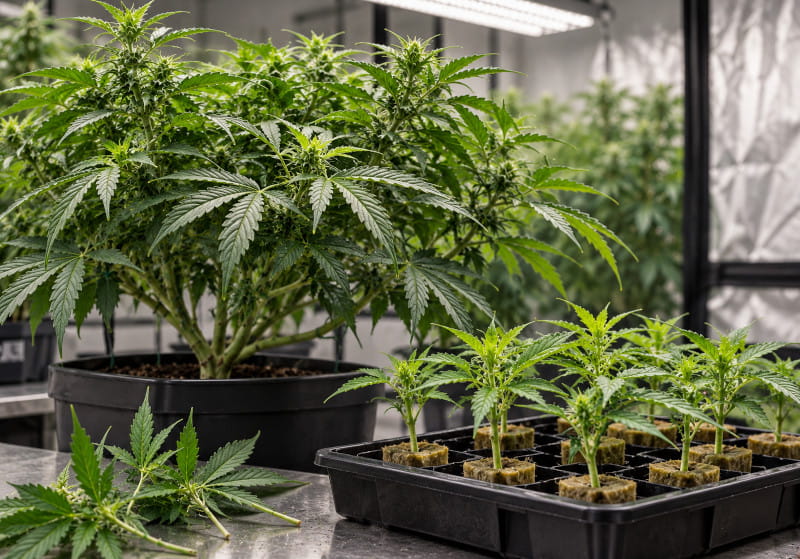
High-quality photoperiod cannabis varieties at a glance
Photoperiod cannabis varieties offer broad genetic diversity and differ significantly in growth habit, flowering time and origin. The following selection is deliberately not a ranking, but instead illustrates classic and modern genetics with different characteristics. Both feminized and regular photoperiod seeds are represented.
| Variety | Seedbank | Seeds | Genetics | Flowering time | Profile |
|---|---|---|---|---|---|
| Ayahuasca Purple | Barney's Farm | feminized | Red River Delta × Master Kush | 7 weeks | mostly Indica; indoor, outdoor and greenhouse |
| Dante’s Inferno | Enigma Genetics | feminized | Oreoz × Devil Driver | approx. 9 weeks | mostly Indica; more compact indoor profile |
| G13 Haze | Mr. Nice Seeds | regular | G13 × Haze | 9–10 weeks | mostly Sativa; classic G13/Haze line |
| Purple Kush | Kannabia Seeds | feminized | Black Domina × Purple Kush | 8–9 weeks | mostly Indica; indoor and outdoor |
| Bubba Kush | Green House Seeds | feminized | Kush line | 9–10 weeks | Indica-influenced Californian Kush genetics |
| Godfather OG | ApeOrigin | feminized | OG-oriented US genetics | 8–10 weeks | modern US genetics |
| Blueberry | Cannapot Seeds | regular | Blueberry DJ Short × True Blueberry DJ Short | 7–8 weeks | mostly Indica; classic old-school genetics |
| Frisian Dew | Dutch Passion | feminized | Super Skunk × Purple Star | 8 weeks | Sativa/Indica; pronounced outdoor profile |
| Bruce Banner #3 | Cannapot Seeds | feminized / regular | Strawberry Diesel × Bruce Banner #3 BX1 | 9–10 weeks | Sativa/Indica; modern US genetics |
| Big Bud | Sensi Seeds | feminized / regular | classic Big Bud line with Skunk and Northern Lights influences | 7–9 weeks | mostly Indica; traditional genetics |
| Monkey Glue | Growers Choice | feminized | Sour Dubb × Chem Sister × Chocolate Diesel | 8 weeks | hybrid with Indica structure; indoor and outdoor |
| Strawberry Kush | White Label | feminized | Kush hybrid with Strawberry influence | 7–10 weeks | Indica-influenced Kush genetics |
These examples show how broad the spectrum of photoperiod genetics is: short and longer flowering times, classic and modern lines, as well as feminized and regular variants can all be photoperiod. You can find a larger selection of different seedbanks and genetics at Cannapot under Cannabis Seeds.
Frequently asked questions about photoperiod cannabis seeds
What does photoperiod mean in cannabis?
Photoperiod means that a cannabis plant responds to the daily duration of light and darkness. In photoperiod varieties, this relationship is an important signal for the transition from vegetative growth to flower development.
What is the difference between autoflower and photoperiod?
Photoperiod plants respond to the length of day and night when flowering is initiated, while autoflowering genetics begin flower development largely according to age. A shortening of the daily light period is therefore not required to initiate flowering in autoflowers.
Are feminized cannabis seeds photoperiod?
Many feminized cannabis seeds are photoperiod varieties, but “feminized” and “photoperiod” describe different characteristics. There are both feminized photoperiod varieties and feminized autoflower varieties.
Are regular cannabis seeds photoperiod?
Many regular cannabis seeds are photoperiod varieties. However, “regular” describes the possible sex expression of the resulting plants, not their response to day length. Regular and photoperiod therefore refer to two different characteristics.
Do photoperiod plants need exactly 12 hours of darkness?
No, twelve hours of darkness is not a universal biological threshold for every cannabis genotype. 12/12 is a widely used indoor schedule that provides a reliable flowering signal for many photoperiod varieties. However, the actual response to the length of day and night can differ between genotypes.
Can photoperiod plants be kept as mother plants and used for cuttings?
Yes. Photoperiod cannabis plants can be kept in vegetative growth for extended periods under long light periods and are therefore suitable for traditional mother-plant maintenance. Cuttings can be taken from a selected mother plant and generally have the same genotype as the original plant.
Understanding photoperiod cannabis seeds
In cannabis, photoperiod describes a plant’s response to the daily duration of light and darkness. In photoperiod varieties, a change in this relationship is a key signal for the transition to flowering. Autoflowering genetics differ because their flower development begins largely according to age.
“Photoperiod” should not be equated with “feminized” or “regular”. These terms describe different characteristics of the seeds. A photoperiod variety can therefore be offered as either feminized or regular.
The commonly used 12/12 light cycle is not a botanical definition of photoperiodism, but rather a proven indoor schedule. How a plant responds to different day and night lengths depends largely on its genetics. Understanding these relationships makes it easier to interpret flowering-time information, indoor and outdoor suitability, and the differences between photoperiod and autoflowering varieties.
Sources and further information
- Photoperiodic Flowering Response of Essential Oil, Grain, and Fiber Hemp
- Photoperiodic Response of Cannabis sativa L. to 12, 13, and 14 Hour Photoperiods
- Short-Day Induction of Inflorescence Development in Cannabis sativa
- Night interruption and photoperiodic flowering responses in Cannabis sativa