Cannabis Guerrilla Growing Guide
Guerilla Growing: Guide, Location & Strains
Updated: July 2026 | Guerilla growing explained simply: suitable locations, outdoor strains, soil, climate, autoflowering or photoperiod plants, plus tips for healthy growth and common mistakes.
Author: Cannapot Grow Team | Reading time: approximately 18 minutes
The Most Important Points at a Glance
✓ Guerilla growing refers to cultivating cannabis in remote, discreet outdoor locations under natural environmental conditions.
✓ Location, sunlight, soil quality and microclimate are among the most important factors for healthy growth and stable yields.
✓ Robust outdoor strains with early flowering and high mold resistance are often particularly well suited to this cultivation method.
✓ Autoflowering and photoperiod strains offer different advantages and should be selected to match the regional climate.
✓ Loose, humus-rich and well-drained soil supports vigorous root growth and an even supply of water and nutrients.
✓ Weather, pests and plant diseases can only be influenced to a limited extent outdoors. Suitable genetics and an appropriate location reduce many risks in advance.
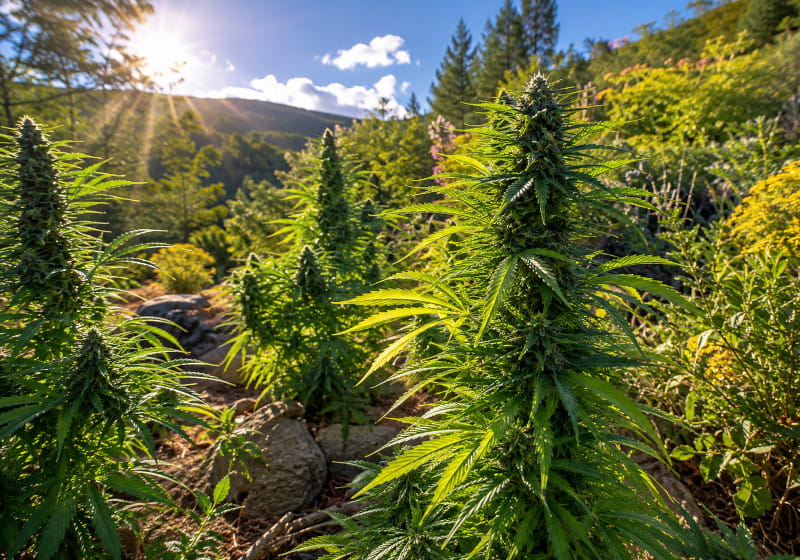
The term Guerilla Growing refers to cultivating cannabis in remote, discreet outdoor locations outside conventional growing areas. It is characterized by the use of natural environmental conditions, with sunlight, rainfall and soil providing much of the plants’ needs and care usually taking place only at longer intervals.
The successful development of the plants depends on numerous factors. These include the location, sunlight exposure, microclimate, soil conditions, water supply and the selection of suitable cannabis genetics. Climate, growing season and rainfall also vary considerably by region, which changes the requirements for cultivation. Our Cannabis Climate Map provides a useful overview of which strains thrive particularly well under specific climatic conditions.
This article explains the term Guerilla Growing, describes the most important location and environmental factors, and shows which cannabis strains and cannabis seeds are particularly suitable. It also explains the main advantages and challenges of this cultivation method as well as common mistakes.
What Does Guerilla Growing Mean?
Guerilla growing refers to cultivating cannabis in remote, discreet locations outside conventional growing areas.
The term combines the English word “growing” with the idea of a decentralized approach. It usually refers to plantings in forests, on wasteland, along embankments, in riparian zones or in other semi-natural areas. The location is selected so that the cannabis plants can grow as undisturbed as possible under natural conditions.
Compared with conventional outdoor cultivation in a garden or on permanently managed land, guerilla growing is defined above all by its remote location and the far more limited ability to influence the cannabis crop. Care, proper watering and plant inspections usually take place only at longer intervals.
Why Do Growers Choose Guerilla Growing?
Guerilla growing is often chosen to allow cannabis to grow exclusively under natural outdoor conditions.
Unlike indoor cultivation, growers rely entirely on the existing environmental conditions. Sunlight, rainfall and natural soil conditions provide much of what the plants need, so no artificial lighting system or elaborate equipment is required.
Climate, rainfall, soil quality and the length of the growing season vary considerably from one region to another. The success of this cultivation method therefore depends largely on how well the location, genetics and environmental conditions match.
Which Cannabis Strains Are Suitable for Guerilla Growing?
Guerilla growing is best suited to robust outdoor genetics that tolerate changing weather conditions, have high mold resistance and grow reliably even with limited care.
Because plants in remote locations are often checked only at longer intervals, the genetics should be as low-maintenance as possible. Strains with vigorous root growth, high vitality and good adaptability to different climate zones have proven successful. Especially in regions with wet autumns, early flowering and strong resistance to mold and powdery mildew play an important role.
The regional climate also has a major influence on strain selection. While many long-flowering sativa hybrids can reach their full potential in southern regions, early-maturing hybrids or robust indica-dominant strains are usually the better choice in Central Europe. Autoflower seeds are also becoming increasingly important because they flower independently of day length and are often ready for harvest after only a few months.
| Cannabis Strain | Breeder | Why Is It Suitable? |
|---|---|---|
| Frisian Dew | Dutch Passion | Highly mold-resistant, high-yielding and ideal for cooler climate zones. |
| Frosty's Auto Purple Freak | Khalifa Genetics | An excellent autoflowering cannabis mutant—discreet and very potent. |
| Serious 6 | Serious Seeds | Extremely early maturity and excellent mold resistance. |
| Purple Maroc | Female Seeds | Short flowering period and excellent adaptation to Central European conditions. |
| Easy Sativa | Female Seeds | Vigorous growth and a robust outdoor strain with high resilience. |
| Pine & Snow | Alpenhigh | Extremely resilient, with excellent cold and mold resistance. |
| Durban Poison | Dutch Passion | A proven landrace with high heat and drought tolerance. |
| Special Kush #1 | Royal Queen | Surprisingly robust, excellent for outdoor Kush enthusiasts, and very sweet. |
| Lebanese | ACE Seeds | Drought-resistant and ideal for warm, sunny regions. |
| Early Mexican Queen | Cannapot Seeds | Particularly early flowering, vigorous, easy to grow and extremely reliable. |
Which Location Conditions Are Ideal for Guerilla Growing?
A suitable location has a decisive influence on growth, plant health and yield. Light, climate, soil and water supply interact directly.
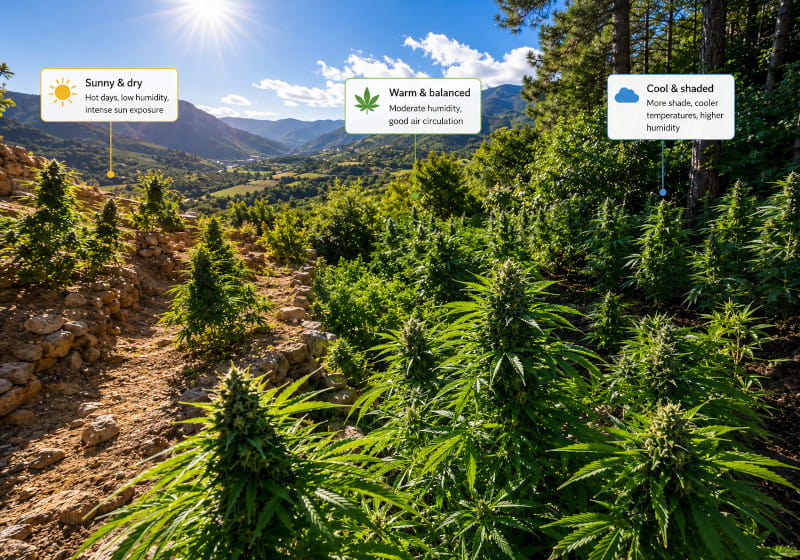
Cannabis is a light-loving plant and develops best in locations with as many hours of sunlight as possible during the growing season. At the same time, the plants benefit from good air circulation because leaves and flowers dry more quickly after rain or dew. This significantly reduces the risk of fungal diseases such as Botrytis or powdery mildew.
The microclimate is equally important. A difference of just a few meters can determine whether a plant develops optimally or remains under constant stress. South-facing slopes warm up earlier and retain heat longer, while depressions often have cooler temperatures and higher humidity. Such differences have a considerable effect on growth, the start of flowering and maturation time.
Temperature also has a major influence on the development of cannabis plants. During the vegetative phase, they grow particularly vigorously under warm and reasonably stable conditions. Late frosts, cold nights or prolonged cold periods can significantly delay growth, metabolism and both the onset and progress of flowering.
Wind also plays an important role. Gentle air movement improves plant ventilation and helps them dry quickly after rain. However, persistent strong winds increase evaporation, can cause wind burn and may damage shoots or flowers. Sunny, well-ventilated and at the same time wind-protected locations are therefore considered especially favorable for outdoor cultivation.
| Location Factor | Recommendation | Why Is It Important? |
|---|---|---|
| Sunlight | At least 6–8 hours per day | Promotes growth, flower formation and resin production. |
| Air Circulation | Light to moderate air movement | Reduces moisture on leaves and flowers. |
| Microclimate | Warm, sunny location | Improves growth and shortens drying time after rain. |
| Soil Moisture | Evenly and slightly moist | Supports a consistent water supply. |
| Wind | Sheltered but well ventilated | Prevents heat buildup and reduces mechanical stress. |
| Temperature | Warm and as stable as possible | Supports metabolism, growth and even flower maturation. |
| Growing Season | The longest possible frost-free season | Allows complete flower development. |
Which Soil Is Best Suited?
Loose, humus-rich and well-drained soil creates ideal conditions for vigorous root growth and healthy plants.
In addition to water, the cannabis root system primarily needs sufficient oxygen. Compacted soils often retain moisture, but they restrict aeration and slow root growth. Very sandy soils, by contrast, often dry out quickly and can store only limited amounts of nutrients.
Humus-rich loam soils with a loose structure are ideal. They combine good water retention with sufficient drainage and provide nutrients to the plants over a long period. Soil organisms such as earthworms, fungi and microorganisms promote humus formation, soil structure and nutrient availability. A pH value of approximately 6.0 to 7.0 allows most cannabis plants to absorb nutrients optimally.
| Soil Type | Suitability | Properties |
|---|---|---|
| Humus-Rich Loam Soil | ★★★★★ | Very good water and nutrient retention with sufficient aeration. |
| Loamy Sandy Soil | ★★★★☆ | Well drained and warms up quickly. |
| Forest Soil with a Humus Layer | ★★★★☆ | Organic, loose and rich in soil life. |
| Pure Sandy Soil | ★★☆☆☆ | Dries out quickly and stores only a small amount of nutrients. |
| Heavy Clay Soil | ★★☆☆☆ | Prone to waterlogging and poor oxygen supply. |
Autoflowering or Photoperiod Strains—Which Is Better?
Both autoflowering and photoperiod cannabis strains can be suitable for guerilla growing. Which option is better depends primarily on the climate, the length of the growing season and the desired plant characteristics.
Autoflowering strains begin flowering automatically after a few weeks, regardless of day length. This characteristic comes from their genetic share of Cannabis ruderalis and usually results in a shorter life cycle. As a result, they often reach harvest maturity significantly earlier than conventional photoperiod strains and are particularly suitable for regions with short summers or an early autumn. Their compact growth habit also makes them less vulnerable to strong wind exposure.
Photoperiod strains, by contrast, begin flowering in response to day length. They often grow considerably larger, develop stronger side branches and can produce very high yields under favorable conditions. At the same time, they need a sufficiently long frost-free growing season for the flowers to mature fully. When growing from regular seeds, timely sex identification is also important because male plants must be removed at the beginning of the flowering phase. For this reason, feminized seeds are often preferred for guerilla growing because they significantly reduce the amount of monitoring required.
| Characteristic | Autoflower | Photoperiod |
|---|---|---|
| Start of Flowering | Automatic | Dependent on day length |
| Life Cycle | Approx. 8–13 weeks | Dependent on climate and season |
| Plant Size | Usually compact | Compact to very large |
| Yield Potential | Medium | High to very high |
| Suitable for Short Summers | ★★★★★ | ★★★☆☆ |
| Suitable for Long Growing Seasons | ★★★★☆ | ★★★★★ |
| Resistance to Changeable Weather | Very good | Depends on the strain |
What Are the Advantages and Disadvantages of Guerilla Growing?
Guerilla growing uses natural environmental conditions and requires no elaborate equipment. At the same time, growth and yield depend much more heavily on weather, climate and location than with controlled indoor cultivation.
| Advantages | Disadvantages |
|---|---|
| Use of natural sunlight | Dependence on weather and climate |
| No artificial lighting required | Limited influence over environmental conditions |
| Lower technical requirements | Yields fluctuate depending on the season |
| Natural plant growth | Higher risk from mold and pests |
| Large root volume possible outdoors | Location conditions can hardly be changed |
| Very low energy costs | Less control over irrigation and nutrient supply |
Compared with indoor cultivation, sunlight, rainfall and soil provide much of what the plants need in guerilla growing. This significantly reduces energy use and technical requirements, but many environmental factors can only be influenced to a limited extent. Selecting robust genetics and a suitable location is therefore considerably more important.
Which Mistakes Do Beginners Commonly Make?
The most common problems are not caused by genetics, but by incorrectly assessing the climate, soil and location conditions.
| Common Mistake | Possible Consequences |
|---|---|
| Unsuitable strain selected | Incomplete maturation or low yields. |
| Too little sunlight | Slow growth and airy flowers. |
| Waterlogged soil | Root problems and inhibited growth. |
| Very dry soil | Water deficiency and growth stress. |
| Shady location | Delayed development. |
| Heavy clay soils | Poor root aeration. |
| Excessively humid microclimate | Increased risk of Botrytis and powdery mildew. |
| Sensitive indoor genetics | Lower resistance to weather conditions. |
| Plants spaced too closely | Poorer air circulation and a higher risk of fungal diseases. |
| Sowing too late | Shortened vegetative phase and lower yield potential. |
| Incorrect pH value | Restricted nutrient uptake. |
| Climate assessed incorrectly | Flowers may not mature completely. |
Which Pests and Diseases Commonly Occur in Guerilla Growing?
Because cannabis outdoors is continuously exposed to natural environmental conditions, various pests and plant diseases can occur. Robust genetics and suitable location conditions help significantly reduce the risk.
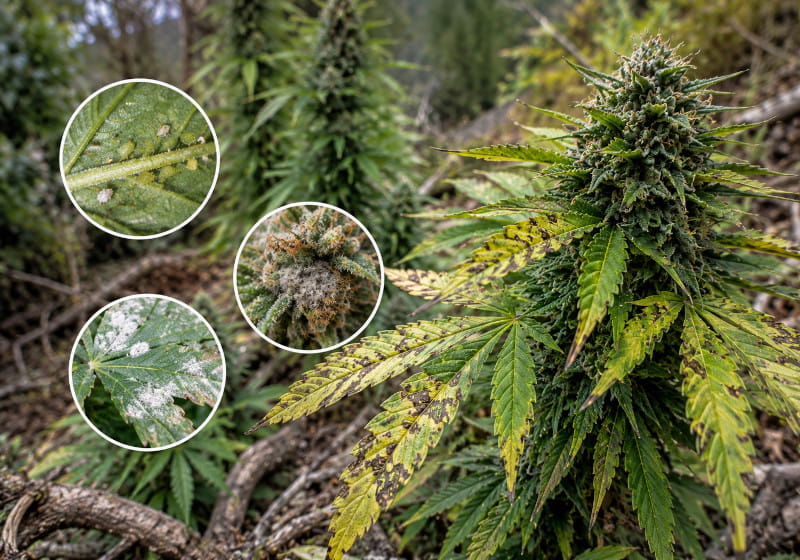
Unlike indoor cultivation, outdoor cannabis plants are exposed to natural environmental conditions throughout the growing season. Weather, wild animals and regional biodiversity directly affect growth and plant health. Wet weather primarily increases the risk of fungal diseases, while warm and dry periods can favor various pests. Which problems actually occur ultimately depends on the regional climate, the season and the specific location conditions.
| Pest or Disease | Favorable Conditions | Typical Symptoms |
|---|---|---|
| Botrytis (Gray Mold) | High humidity and prolonged rainfall | Gray mold inside dense flowers. |
| Powdery Mildew | High humidity with limited air movement | White, powdery coating on leaves. |
| Aphids | Warm temperatures and vigorous new growth | Deformed leaves and sticky honeydew. |
| Spider Mites | Dry and hot weather | Fine webbing and pale spots on leaves. |
| Caterpillars | Summer and early autumn | Feeding damage on leaves and flowers. |
| Slugs and Snails | Wet spring months | Partially eaten seedlings and leaves. |
| Wildlife Browsing | Regions with deer, hares or wild rabbits | Eaten shoot tips and young leaves. |
| Root Rot | Waterlogging and poorly drained soils | Wilting plants despite moist soil. |
Many problems can already be reduced by choosing a suitable strain. Numerous modern outdoor genetics have strong resistance to mold and changing weather conditions. Plants also benefit from well-ventilated locations because leaves and flowers dry more quickly after rain.
How Does Guerilla Growing Differ from Conventional Outdoor Cultivation?
Both cultivation methods use sunlight as their energy source. The main difference is how intensively the plants can be cared for during the growing phase.
| Characteristic | Guerilla Growing | Conventional Outdoor Cultivation |
|---|---|---|
| Sunlight | Natural | Natural |
| Irrigation | Mainly natural rainfall | Can be controlled precisely |
| Care Requirements | Low to medium | Medium to high |
| Plant Monitoring | Only occasionally | Possible at any time |
| Nutrient Supply | Primarily through natural soil conditions | Can be adjusted precisely |
| Influence over Environmental Conditions | Low | Higher |
| Yield | Highly dependent on location | More predictable |
While conventional outdoor cultivation allows regular care, irrigation and nutrient supply, guerilla grows rely mainly on natural location conditions. Climate, soil quality and the selection of suitable genetics are therefore even more important with this cultivation method.
Frequently Asked Questions About Guerilla Growing
What Is Meant by Guerilla Growing?
Guerilla growing refers to cultivating cannabis in remote locations outside conventional growing areas. It is characterized by natural site conditions and comparatively low care requirements during the growing season.
Which Cannabis Strains Are Particularly Suitable?
Robust outdoor genetics with high mold resistance, vigorous growth and good adaptability to changing weather conditions have proven successful. Particularly popular examples include Frisian Dew, Easy Sativa, Serious 6 and Early Mexican Queen.
Are Autoflowering Strains Suitable?
Yes. Autoflowering strains begin flowering independently of day length and are particularly suitable for regions with a short growing season or an early autumn.
What Role Does the Soil Play?
Loose, humus-rich and well-drained soil supports healthy root development and ensures an even supply of water and nutrients.
How Much Sun Does Cannabis Need?
For vigorous growth and good flower development, cannabis plants benefit from as many hours of direct sunlight as possible during the growing season.
What Is the Ideal pH Value?
Most cannabis strains grow best in soils with a pH value of approximately 6.0 to 7.0 because nutrient uptake is especially efficient within this range.
Which Diseases Commonly Occur?
The most common outdoor problems include Botrytis (gray mold), powdery mildew and root rot in permanently wet soils.
Which Pests Can Occur?
Depending on the region, aphids, spider mites, slugs and snails, caterpillars, and browsing by deer or hares are among the most common challenges.
Which Climate Zones Are Particularly Suitable?
In general, cannabis plants benefit from long, sunny growing seasons. However, suitable genetics should always be adapted to the respective regional climate.
What Advantages Does Guerilla Growing Offer?
This cultivation method uses sunlight and natural environmental conditions, which largely eliminates the need for artificial lighting and extensive equipment.
What Are the Disadvantages?
Climate, rainfall, soil quality and weather conditions can only be influenced to a limited extent outdoors. As a result, growth and yield can vary from season to season.
How Important Are Genetics?
Choosing the right strain is one of the most important success factors. Robust outdoor genetics usually cope much better with natural environmental conditions than sensitive indoor strains.
Can Guerilla Growing Also Work in Cooler Regions?
Yes. Early-flowering and mold-resistant strains have been bred specifically for shorter summers and changeable weather conditions and are often very well suited to temperate climate zones.
Why Does the Microclimate Play Such an Important Role?
Even small differences in sunlight exposure, wind or humidity can significantly affect growth, the start of flowering and plant health.
How Does Guerilla Growing Differ from Indoor Cultivation?
With indoor cultivation, light, temperature, humidity and irrigation can be controlled precisely. Guerilla growing, by contrast, mainly relies on natural environmental conditions.