Cannabis for Multiple Sclerosis
Effects, Risks and Current Scientific Evidence
Key Takeaways
✓ Multiple sclerosis (MS) is a chronic inflammatory disease of the central nervous system that can damage nerve structures. Cannabis cannot cure MS or demonstrably stop its progression, and it does not replace established MS treatments.
✓ Certain standardised cannabis-based medicines, such as nabiximols (Sativex), may provide short-term relief from perceived muscle stiffness and spasticity in people with MS. However, clinical studies show less consistent improvements in objective measures of spasticity.
✓ Evidence for potential benefits of cannabinoids in neuropathic pain, sleep disturbances and bladder symptoms remains limited or inconsistent. There is no convincing clinical evidence of effectiveness for MS-related fatigue (severe exhaustion) or tremor (shaking).
✓ There is no reliable clinical evidence that THC, CBD or other cannabinoids prevent MS relapses or slow disease progression. A large long-term study involving dronabinol (THC) also failed to demonstrate such a benefit.
✓ THC-containing cannabis medicines can cause dizziness, fatigue, concentration difficulties, impaired coordination and psychiatric side effects. In people with MS, potential drug interactions, an increased risk of falls and impaired driving ability require particular attention.
✓ Findings from clinical studies involving pharmaceutically standardised cannabis medicines cannot be directly applied to commercially available cannabis strains, home-grown plants or over-the-counter CBD products. Comparable effectiveness and safety in MS have not been established for these products.
What Is Multiple Sclerosis (MS)?
Multiple sclerosis (MS) is a chronic, immune-mediated disease of the central nervous system in which inflammation and damage to nerve structures can cause a wide range of neurological symptoms.
In multiple sclerosis, a misdirected immune response attacks structures within the central nervous system, particularly the brain and spinal cord. The myelin sheath, which surrounds nerve fibres and enables the rapid transmission of electrical signals, is frequently affected. Inflammatory changes can damage this protective layer and disrupt the transmission of nerve impulses. As the disease progresses, the nerve fibres themselves may also become damaged. The course of MS varies considerably between individuals: some people experience recurring relapses followed by partial or substantial recovery, while others develop a gradual progression of neurological disability.
Possible symptoms include visual disturbances, sensory changes, muscle weakness, coordination problems, spasticity, neuropathic pain, bladder dysfunction, fatigue and cognitive impairment. The symptoms experienced and their severity can vary significantly. Diagnosis is based on neurological examinations and additional investigations, particularly magnetic resonance imaging (MRI) and, where appropriate, analysis of cerebrospinal fluid (CSF). New or worsening symptoms should be assessed by a neurologist, as not every temporary deterioration represents a new MS relapse.
The treatment of multiple sclerosis involves several approaches. Disease-modifying therapies (DMTs) aim to reduce inflammatory disease activity and lower the risk of further relapses or increasing disability. Treatment may also include the management of acute relapses, medication to relieve individual symptoms, physiotherapy, occupational therapy, rehabilitation and psychosocial support. Cannabinoids may, at most, be considered as an additional option for symptomatic treatment. No proven effect on the long-term course of the disease has been established.
Why Are Cannabinoids Being Studied in MS?
Cannabinoids influence various signalling pathways in the nervous system, including those involved in muscle regulation and pain processing. However, whether these effects provide a medical benefit must be demonstrated through clinical studies.
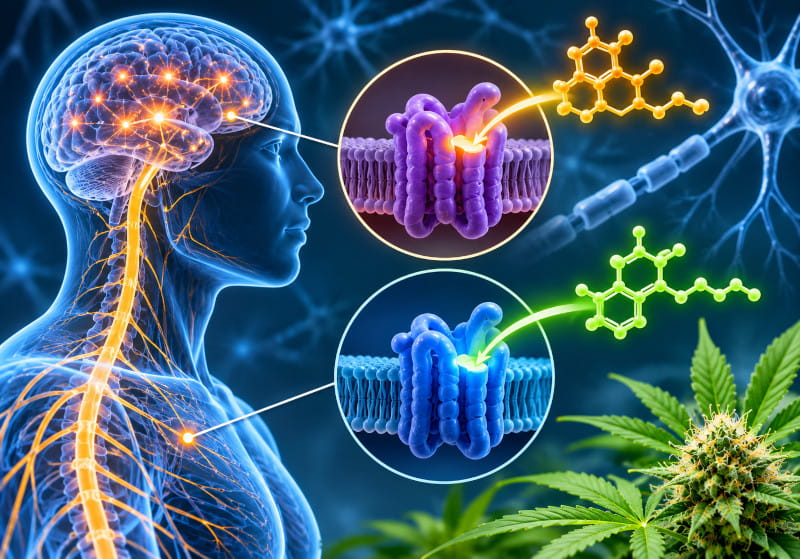
Research focuses primarily on the endocannabinoid system. This system consists of naturally occurring signalling molecules, the cannabinoid receptors CB1 and CB2, and enzymes responsible for producing and breaking down these molecules. CB1 receptors are found mainly in the central nervous system and are involved in processes such as movement control, pain perception and sensory processing. THC (tetrahydrocannabinol) activates cannabinoid receptors and can therefore influence certain neuronal processes, but it also produces psychoactive effects. CBD (cannabidiol) acts through several other molecular mechanisms and does not normally produce the intoxication typically associated with THC.
In addition to investigating potential effects on MS-related symptoms, researchers are examining whether cannabinoids can influence inflammatory processes and neurobiological mechanisms. Some laboratory and animal studies suggest that certain cannabinoids may possess immunomodulatory or neuroprotective properties. However, these experimental findings cannot be directly applied to people with multiple sclerosis. Clinical studies have not yet demonstrated that THC, CBD or other cannabinoids can prevent MS-related nerve damage, reduce disease relapses or slow the progression of the condition.
What Do Studies Show About MS-Related Spasticity?
Clinical studies suggest that standardised THC-CBD medicines such as nabiximols can provide short-term relief from subjectively perceived spasticity in people with multiple sclerosis. However, improvements in objectively measured muscle tone, mobility and everyday functioning are less consistently supported by the evidence.
Spasticity is one of the most common and burdensome symptoms of multiple sclerosis. It results from impaired regulation of muscle tone within the central nervous system and can cause muscle stiffness, involuntary contractions and painful muscle spasms. People affected may experience difficulties walking, performing everyday movements, sleeping or maintaining personal hygiene. However, increased muscle tone can sometimes provide a degree of stability in people with pronounced muscle weakness. Reducing spasticity therefore does not necessarily lead to improvements in mobility or walking ability.
An important scientific foundation is provided by the 2022 Cochrane Review by Filippini and colleagues. The researchers analysed 25 randomised controlled trials involving a total of 3,763 participants. Their findings indicate that nabiximols, a standardised medicine containing THC and CBD, probably increases the likelihood of a clinically relevant improvement in self-reported spasticity. Most of the treatment periods investigated were relatively short. Cochrane rated the certainty of evidence for this patient-reported outcome as moderate, while findings relating to other symptoms and functional improvements were less reliable. Cochrane Review 2022.
Another systematic review by Hamm-Buiar and colleagues, published in 2026, examined 27 randomised trials involving more than 3,000 participants. In a meta-analysis of seven studies, THC-CBD extracts improved patient-rated spasticity compared with placebo by an average of 0.82 points on a numerical rating scale (mean difference −0.82; 95% confidence interval −1.24 to −0.40). Although this difference was statistically significant, the average treatment effect remained modest. Due to methodological differences and potential sources of bias, the authors rated the certainty of evidence as low. The average result does not reliably predict whether individual patients might experience greater benefits. Meta-analysis 2026.
When interpreting these findings, it is essential to consider how spasticity is measured. Patient-reported scales assess the extent to which individuals experience muscle stiffness, spasms and related limitations. Clinical assessment methods, such as the Ashworth Scale, instead measure the resistance of a muscle during passive movement. These methods evaluate different aspects of the condition. Consequently, a person's subjective well-being may improve without a corresponding measurable reduction in objectively assessed muscle tone. These findings do not establish a reliable benefit for muscle strength, walking ability or long-term independence.
What Is Sativex (Nabiximols)?
Sativex (nabiximols) is a prescription oromucosal spray containing standardised amounts of THC and CBD. It is used in selected adults with moderate to severe MS-related spasticity when other antispastic treatments have not provided sufficient relief.
Nabiximols contains the two cannabinoids delta-9-tetrahydrocannabinol (THC) and cannabidiol (CBD) in a defined ratio. Unlike commercially available cannabis products, Sativex is manufactured under controlled conditions and must meet pharmaceutical quality standards. The UK Summary of Product Characteristics, revised in April 2026, describes its approved indication, contraindications, possible adverse effects and necessary precautions. An important distinction must be made: Sativex does not treat multiple sclerosis itself but may relieve certain symptoms associated with spasticity. No effect on MS relapses or long-term disease progression has been demonstrated.
In its NG144 guideline, the UK National Institute for Health and Care Excellence (NICE) recommends considering a four-week trial of THC-CBD spray under certain conditions for adults with moderate to severe MS-related spasticity. One requirement is that other pharmacological treatments have not been sufficiently effective. Continuing treatment depends on achieving a sufficiently meaningful improvement in self-reported spasticity. This recommendation applies to the UK healthcare system and does not replace national prescribing information or an individual medical assessment. NICE Guideline NG144.
The independent patient information provided by MS Trust also explains the distinction between the limited symptomatic benefits of cannabis-based medicines and the absence of evidence that cannabinoids slow MS progression. Its overview discusses mixed study findings, the specific role of Sativex in spasticity and the potential cognitive and psychiatric risks. MS Trust: Cannabis and MS.
The UK MS Society also provides information about cannabis-based treatments for MS-related symptoms. It explains that Sativex is approved for moderate to severe spasticity when other treatments have not worked, but does not benefit everyone. It also distinguishes prescribed cannabis-based medicines from commercially available CBD oils, for which effectiveness in MS has not been established. MS Society: Cannabis Treatments for MS.
Why Do Cannabis Studies Produce Different Results?
Studies investigating cannabis in multiple sclerosis sometimes produce different results because the preparations, dosages, patient populations and assessment methods vary. Studies that fail to demonstrate a benefit are also essential for a reliable scientific evaluation.
An important example is the randomised, placebo-controlled study published by Hansen and colleagues in 2023. The Danish researchers investigated the effects of THC, CBD and their combination on spasticity and neuropathic pain. A total of 134 people with multiple sclerosis or spinal cord injuries participated, including 119 individuals with MS. After six weeks, none of the active treatments demonstrated a statistically significant advantage over placebo for self-reported spasticity or neuropathic pain. The originally planned sample size was not reached, partly because of recruitment difficulties. These findings cannot be generalised to every cannabis-based preparation. Hansen et al. 2023.
Another important factor is the design of clinical studies. Some nabiximols trials use what is known as an enriched study design. In these studies, all participants initially receive the active medicine. Only those who show a noticeable improvement during this first phase are subsequently included in a blinded comparison between the active treatment and placebo. This approach helps researchers determine whether people who respond early continue to benefit. However, the results cannot be readily generalised to all patients with MS. Placebo effects, individual expectations, concomitant medication and natural fluctuations in spasticity may also influence study outcomes.
Cannabis for Neuropathic Pain and Muscle Spasms
The effectiveness of cannabis-based medicines for treating neuropathic pain in multiple sclerosis has not yet been sufficiently established. Although reducing spasticity may provide relief from painful muscle spasms, an independent pain-relieving effect has not been reliably demonstrated.
Neuropathic pain results from damage to or dysfunction of the nervous system. People with MS often describe it as burning, stabbing, electric-shock-like or shooting pain. In some cases, even light touch can become painful. This must be distinguished from pain caused by muscle cramps, spastic muscle tension, poor posture, joint strain or restricted mobility. The distinction matters because different causes of pain require different treatment approaches.
Scientific findings regarding pain relief from THC, CBD and other cannabinoids remain inconsistent in people with MS. The 2022 Cochrane Review identified only limited suitable evidence concerning substantial relief of chronic neuropathic pain. It therefore remained uncertain whether cannabis-based medicines reliably reduce pain intensity in MS. The placebo-controlled study by Hansen and colleagues in 2023 also found no statistically significant advantage. The UK NICE guideline on cannabis-based medicinal products does not generally recommend THC, dronabinol, nabilone or THC-CBD combinations for treating chronic pain in adults. This assessment must be distinguished from the specific approval of nabiximols for MS-related spasticity.
For painful muscle spasms, successful treatment of spasticity may also reduce the associated pain burden. However, this does not automatically mean that cannabinoids have a proven pain-relieving effect independent of their influence on spasticity. In cases of persistent or worsening pain, possible neurological, muscular and orthopaedic causes should therefore be investigated first. Depending on the underlying cause, established medicines for neuropathic pain, physiotherapy and other individually tailored treatments may be appropriate.
Can Cannabinoids Help with Sleep Problems, Fatigue and Tremor?
The effectiveness of cannabinoids for sleep disturbances, fatigue, tremor and bladder symptoms in multiple sclerosis has not yet been sufficiently demonstrated. Individual studies suggest possible improvements in certain symptoms, but the findings are inconsistent and supported by only limited scientific evidence.
Sleep disturbances, fatigue, tremor and bladder problems have also been investigated in cannabinoid studies. The following table distinguishes possible indications of benefit from clinically reliable evidence of effectiveness.
| MS Symptom | What Do the Studies Show? | Scientific Assessment |
|---|---|---|
| Sleep disturbances | Some studies report fewer nighttime symptoms and sleep interruptions, particularly when spasticity also improves. An independent sleep-promoting effect has not been sufficiently established in MS. | Low-certainty or uncertain evidence |
| Fatigue (exhaustion) | Convincing controlled studies demonstrating an improvement in MS-related fatigue are lacking. THC may further increase exhaustion by causing drowsiness and sedation. | Effectiveness not sufficiently established |
| Tremor (shaking) | Existing studies have not demonstrated a reliable or clinically convincing reduction in MS-related tremor. | No convincing evidence of effectiveness |
| Bladder dysfunction | Smaller studies and exploratory analyses suggest possible improvements in individual symptoms, such as urinary urgency. Reliable evidence of an overall treatment benefit is lacking. | Low- to very-low-certainty evidence |
| Walking ability and mobility | Although reduced spasticity may make certain movements easier, sustained improvements in walking ability, mobility or independence have not been reliably demonstrated. | Uncertain evidence |
| Quality of life | Some people report an overall improvement in well-being. However, studies using standardised questionnaires to assess MS-specific quality of life have not demonstrated consistent benefits. | Inconsistent study findings |
An exploratory meta-analysis published in 2026 investigated potential effects of nabiximols on sleep interruptions, bladder function, walking ability and muscle spasms, in addition to MS-related spasticity. The researchers identified indications of positive effects for certain outcomes. However, the certainty of evidence was generally rated as low to very low. Such analyses can provide important starting points for future clinical studies, but they are insufficient to justify additional medical indications or general treatment recommendations. Exploratory Meta-Analysis 2026.
A careful investigation of possible underlying causes is particularly important for sleep disturbances and fatigue. Nighttime muscle cramps, pain, frequent urination, sleep apnoea, psychological stress and certain medications can all interfere with sleep. MS-related fatigue is also a complex form of physical and mental exhaustion that differs significantly from ordinary tiredness. Although THC can cause drowsiness, it may simultaneously impair attention, concentration and coordination. A sedating effect should therefore not automatically be equated with better sleep quality or reduced fatigue.
Bladder dysfunction in multiple sclerosis should not be assessed solely in terms of symptoms. Frequent urinary urgency, incomplete bladder emptying and involuntary urine leakage can have different neurological causes. A urological or neuro-urological examination is important to identify problems such as urinary retention and urinary tract infections at an early stage. Cannabinoids do not replace appropriate diagnostic investigations or established treatment.
THC, CBD and CBG: What Does the Scientific Evidence Show in MS?
In multiple sclerosis, THC and standardised THC-CBD medicines have been studied considerably more extensively than CBD alone or CBG. Existing studies suggest potential benefits for certain symptoms, but they do not provide reliable evidence regarding the effectiveness of specific cannabinoids or cannabis strains in MS.
THC (tetrahydrocannabinol) is the main psychoactive compound in the cannabis plant. Among other effects, it activates CB1 receptors in the central nervous system and thereby influences processes involved in movement control, pain perception and muscle regulation. At the same time, THC can cause unwanted effects such as dizziness, drowsiness, concentration difficulties and impaired coordination. Clinical studies in MS have investigated both THC as a single active compound and standardised combinations with CBD. Results vary depending on the preparation, dosage and symptom being investigated. A higher THC concentration therefore does not automatically mean greater effectiveness against spasticity or a more favourable benefit-risk balance.
CBD (cannabidiol), unlike THC, does not produce comparable intoxicating effects and influences various signalling pathways in the nervous system. Medical researchers are investigating whether CBD can affect inflammatory processes and the processing of neurological signals, among other mechanisms. However, convincing clinical evidence supporting isolated CBD as a treatment for MS-related spasticity is lacking. CBD is not entirely free from adverse effects and can interact with other medicines. The approval of a purified CBD medicine for certain forms of epilepsy cannot be extended to multiple sclerosis. Commercially available CBD products should therefore not be equated with approved cannabis-based medicines for treating MS-related spasticity.
CBG (cannabigerol) is another cannabinoid investigated primarily in basic research. Laboratory and animal studies are examining its potential effects on inflammatory processes and nerve cells. However, these findings do not establish therapeutic effectiveness in people with multiple sclerosis. Reliable clinical evidence is lacking for the use of CBG to treat MS-related spasticity, prevent relapses or slow disease progression. There is also insufficient clinical evidence supporting specific terpenes or the frequently discussed entourage effect, which refers to possible interactions between different cannabis compounds, as a targeted treatment for MS. Neither individual cannabinoids nor particular aroma or strain profiles can reliably predict treatment success.
Can Cannabis Prevent MS Relapses or Slow Disease Progression?
There is currently no convincing clinical evidence that cannabis, THC, CBD or other cannabinoids can prevent MS relapses, avoid new nerve damage or slow the progression of multiple sclerosis.
When evaluating cannabis in multiple sclerosis, it is essential to distinguish between symptomatic relief and an actual effect on the course of the disease. Reduced muscle stiffness, less pain or subjectively improved sleep do not automatically mean that inflammatory MS activity has decreased. Whether a treatment influences disease progression is assessed using factors such as the frequency of new relapses, inflammatory changes detected by magnetic resonance imaging (MRI) and the long-term development of neurological disability. Convincing evidence of such a disease-modifying effect is currently lacking for cannabinoids.
An important investigation in this field is the CUPID study (Cannabinoid Use in Progressive Inflammatory Brain Disease). This large randomised, placebo-controlled trial investigated whether dronabinol, a medicine containing THC, could slow the progression of progressive multiple sclerosis. A total of 498 participants were randomised and studied over a period of up to three years. In the overall study population, the results showed no convincing advantage over placebo in terms of disability progression. No corresponding overall benefit was demonstrated for the physical consequences of the disease investigated in the study. These findings illustrate that potential neuroprotective properties observed in laboratory and animal experiments do not automatically translate into clinically effective treatment in humans. CUPID Study on MS Progression.
Disease-modifying therapies for MS pursue a fundamentally different treatment goal from cannabis-based medicines used to manage spasticity. They aim to reduce inflammatory disease activity, prevent further relapses and, depending on the form of MS, lower the risk of permanent neurological disability. Established immunomodulatory or immunosuppressive medicines are used for this purpose, with their benefits assessed through clinical trials and long-term follow-up data. Cannabis-based medicines, by contrast, may only be used as an additional option to relieve certain symptoms. They do not replace neurologically indicated immune therapies or regular medical monitoring of multiple sclerosis.
Which Side Effects and Contraindications Are Important?
THC-containing cannabis-based medicines can cause dizziness, fatigue, concentration difficulties and psychiatric side effects. These risks are particularly relevant in multiple sclerosis because they may worsen existing symptoms such as fatigue, unsteady gait and coordination problems, thereby increasing the risk of falls.
Cannabis-based medicines are not necessarily associated with only mild side effects. Their tolerability depends on factors such as the active compound, dosage, individual sensitivity and other medications being taken simultaneously. In particular, THC can affect the central nervous system and cause unwanted effects that overlap with typical MS symptoms. Careful medical assessment of the potential benefits and risks is therefore important, especially for people with existing mobility limitations or cognitive difficulties.
| Area | Possible Side Effects and Risks | Relevance to Multiple Sclerosis |
|---|---|---|
| Nervous system | Dizziness, fatigue, drowsiness, slower reactions, concentration difficulties and impaired coordination | May worsen existing fatigue, balance problems and unsteady gait while increasing the risk of falls. |
| Mental health | Anxiety, panic reactions, mood changes, confusion and, in rare cases, psychotic symptoms | Particular caution is required in people with psychiatric conditions or a relevant family history. |
| Cardiovascular system | Increased heart rate, changes in blood pressure, circulatory problems and dizziness when standing up | May create additional risks for people with existing circulatory problems, muscle weakness or limited mobility. |
| Mouth and digestion | Dry mouth, nausea, changes in taste and local irritation of the oral mucosa when using mouth sprays | May affect tolerability and create additional difficulties for people with existing swallowing or nutritional problems. |
| Dependence and tolerance | Possible development of tolerance, problematic use and withdrawal symptoms during prolonged THC use | Regular reassessment of treatment benefits and risks is advisable, even when cannabis is used medically. |
| Long-term use | Limited controlled long-term data on effectiveness, tolerability and safety in MS | Ongoing medical evaluation of benefits, side effects and treatment needs is necessary. |
In addition to potential side effects, contraindications and special precautions must also be considered. The UK Summary of Product Characteristics for Sativex contains detailed guidance on these matters, including certain psychiatric conditions and use during pregnancy and breastfeeding. Not all cannabis products have the same risk profile: THC content, composition, method of administration, treatment duration and existing medical conditions can significantly affect tolerability. Individual medical assessment is particularly important for older people, those with pronounced gait instability or those taking several medicines simultaneously. Sativex: UK Summary of Product Characteristics.
New or significantly worsening neurological symptoms should not automatically be attributed to side effects of cannabis treatment. Visual disturbances, muscle weakness or new sensory changes may also indicate an MS relapse or another medical condition and should be assessed promptly. Hallucinations, severe confusion, fainting or chest pain require urgent medical evaluation. Sudden severe neurological deficits constitute a medical emergency. During pregnancy, breastfeeding or when planning to conceive, potential risks should be discussed with the treating medical team at an early stage.
What Interactions with MS Medications Are Possible?
THC and CBD can influence the effects of other medicines and intensify certain side effects. Additional fatigue, dizziness and coordination difficulties, as well as possible changes in drug metabolism, are particularly important. The clinical relevance of individual interactions depends on the specific active compounds and their dosages.
THC and CBD are metabolised in the body through various enzyme systems, particularly in the liver. CBD in particular can affect certain enzymes involved in the breakdown of other medicines. Under some circumstances, this may alter drug concentrations and increase adverse effects. However, not every theoretically possible interaction is clinically relevant. Direct studies investigating combinations with many modern disease-modifying MS medicines remain limited. Potential risks must therefore be assessed in relation to the specific cannabis-based medicine and any other medications being taken.
Of particular importance are additive effects on the central nervous system. Muscle relaxants such as baclofen, certain pain medicines, sleeping tablets, sedatives and alcohol can increase fatigue, drowsiness and balance problems when combined with THC. In people with MS, this may worsen existing gait instability and increase the risk of falls. Closer medical monitoring may also be necessary in people with liver disease or those taking other medicines that may affect liver function.
Before starting treatment with cannabis-based medicines, all medications and preparations taken regularly or occasionally should therefore be discussed with the treating neurologist. These include prescription medicines, over-the-counter painkillers, CBD oils, herbal preparations and dietary supplements. A pharmacist's assessment of potential drug interactions may also be useful. MS medicines, baclofen and other antispastic drugs must not be discontinued or have their dosages changed independently because of suspected interactions.
Cannabis and Driving Ability in Multiple Sclerosis
THC-containing cannabis-based medicines can impair reaction time, concentration and coordination. In people with multiple sclerosis, additional neurological symptoms may further reduce driving ability. A medical prescription therefore does not automatically mean that driving is safe or legally permitted without restrictions.
THC can affect attention, reaction speed, perception and motor coordination. People with multiple sclerosis may experience additional limitations, including visual disturbances, pronounced fatigue, muscle weakness, sensory problems or spasticity. These symptoms can impair driving safety even without cannabis treatment. The extent to which THC affects driving ability depends on factors such as the preparation used, dosage, timing of administration, individual tolerance and other medications taken simultaneously. It is therefore impossible to establish a universally applicable waiting period after which driving can be considered safe again.
Particular caution is required when starting treatment with a cannabis-based medicine or following a dosage adjustment. People experiencing dizziness, drowsiness, concentration difficulties, slowed reactions or feelings of intoxication must not drive vehicles or operate dangerous machinery. Driving ability may also be impaired without an obvious feeling of intoxication. Legal regulations concerning medically prescribed cannabis vary between countries. Medical fitness to drive and compliance with statutory THC limits are not the same thing. Whether an individual can safely participate in road traffic should be assessed with the treating physician.
Medical Cannabis Medicines Compared with Other Cannabis Products
Standardised cannabis-based medicines differ significantly from commercially available cannabis products in terms of active compound content, quality control, regulatory approval and medical use. Study results for a particular medicine therefore cannot automatically be applied to CBD oils, cannabis flowers or individual cannabis strains.
The applicability of clinical study findings depends on the preparation investigated. The following table illustrates differences in standardisation, regulatory approval and medical evidence.
| Product Type | Characteristics and Differences | Medical Assessment in MS |
|---|---|---|
| Nabiximols (Sativex) | Prescription-only, pharmaceutically standardised THC-CBD oromucosal spray with a defined active compound composition and an approved medical indication. | Studied and approved for the symptomatic treatment of selected adults with moderate to severe MS-related spasticity. |
| Other prescribed cannabinoids | Medicines or compounded preparations containing defined active substances such as THC, CBD or synthetic cannabinoids, depending on national regulations. | Not automatically approved for MS. Effectiveness and safety must be evaluated for the specific preparation and medical indication. |
| Medical cannabis flowers and extracts | Products subject to pharmaceutical regulations depending on the country, with different cannabinoid profiles, administration methods and active compound concentrations. | Clinical findings concerning nabiximols cannot be directly transferred to other cannabis flowers or extracts. |
| Commercially available CBD products | CBD oils and other products with varying compositions, quality standards and controls depending on the manufacturer and legal framework. | Not a proven alternative to approved MS medicines. Reliable evidence of effectiveness against MS-related spasticity or disease progression is lacking. |
| Cannabis seeds and cultivated strains | Genetic starting material and the plants grown from it, with variable compositions depending on genetics and growing conditions. | Not standardised cannabis medicines. Medical effectiveness in MS cannot be inferred from strain names, genetic origins or stated cannabinoid concentrations. |
In addition to composition, the method of administration plays an important role. A THC-CBD oromucosal spray, orally administered cannabis extracts and inhaled cannabis products differ in terms of absorption, onset of action, duration of effects and potential adverse reactions. Smoking also produces harmful combustion products that can damage the respiratory system. Homemade cannabis preparations make it more difficult to determine the amount of active compounds actually absorbed. Controlled, medically supervised treatment is particularly important for people with existing neurological impairments.
When Might Medically Supervised Cannabis Treatment Be Considered for MS?
A time-limited treatment trial with an approved THC-CBD medicine may be considered for selected adults with moderate to severe MS-related spasticity when other antispastic treatments have not been sufficiently effective. This requires neurological assessment, clearly defined treatment goals and regular monitoring of benefits and adverse effects.
Before considering cannabinoid treatment, it is important to determine which factors may be worsening spasticity and which established treatment options have already been tried. Urinary tract infections, pain, constipation, pressure sores and poor positioning can all increase muscle stiffness and spasms. Important treatment measures include physiotherapy, targeted movement exercises, stretching and positioning techniques, suitable assistive devices and established antispastic medications. Different approaches may be appropriate for localised spasticity compared with severe spasticity affecting several muscle groups.
If a medically supervised treatment trial with nabiximols or another suitable cannabis-based medicine is being considered, specific and measurable treatment goals should be established beforehand. These might include fewer troublesome muscle spasms, reduced perceived muscle stiffness or fewer sleep interruptions caused by spasticity. At the same time, potential adverse effects such as dizziness, fatigue, concentration difficulties, psychological changes and falls must be considered. The key question is not simply whether a symptom improves subjectively, but whether the actual benefits outweigh the potential risks in everyday life.
Continued cannabis treatment should be reviewed regularly by a healthcare professional. The decisive factors are clinically meaningful symptom improvement, individual tolerability and the requirements of the relevant prescribing information. If sufficient benefit is not achieved or troublesome adverse effects occur, treatment must be reassessed. Independently adjusting the dosage or discontinuing established MS medicines is not advisable. Individual dosage and treatment decisions should be made exclusively under neurological supervision.
Which Cannabis Strains Are Discussed in Relation to Multiple Sclerosis?
In discussions about medical cannabis, particular attention is given to genetics with different THC, CBD and CBG profiles. These include CBD-rich strains, varieties bred for a balanced THC-CBD ratio and CBG-dominant genetics. However, no individual cannabis strain has been scientifically proven to reliably relieve MS-related spasticity, pain or other symptoms, or to slow the progression of multiple sclerosis.
People researching cannabis in relation to multiple sclerosis frequently encounter strain names associated with medically oriented cannabis breeding. Particularly well known are genetics with approximately balanced THC and CBD concentrations, as well as varieties selectively bred for high CBD levels and low THC content. CBG-rich cannabis genetics are also attracting increasing interest in basic research. These different cannabinoid profiles are of botanical and pharmacological interest. However, they do not provide reliable information about whether a particular strain can relieve MS symptoms.
An essential distinction must be made between standardised cannabis-based medicines and cannabis genetics grown from seeds. While clinical studies investigate defined doses of active compounds and controlled pharmaceutical products, cannabinoid concentrations can vary considerably between individual plants. Even plants belonging to the same genetic line may contain different concentrations of THC, CBD and CBG. Findings concerning nabiximols or other medical cannabinoid preparations therefore cannot be directly transferred to specific cannabis strains.
The following selection presents ten cannabis genetics with different cannabinoid profiles. These include CBD-dominant varieties, strains bred to achieve a balanced THC-CBD ratio and one CBG-rich genetic line. The examples illustrate differences between breeding objectives and cannabinoid profiles.
- Pennywise – TGA Subcool – A cross between Harlequin and Jack the Ripper. Known for its reportedly balanced THC-to-CBD ratio, according to breeder information.
- CBD Warlock – Serious Seeds – A cross between Warlock and Cannatonic. A CBD-focused development of a classic cannabis genetic line.
- CBD Nordle – CBD Crew – A Cannatonic cross bred for a cannabinoid profile with comparable proportions of THC and CBD.
- CBD Shark Shock – CBD Crew – A cross between Cannatonic and Shark Shock, bred with the aim of achieving a balanced THC-CBD profile.
- Royal Highness CBD – Royal Queen Seeds – A hybrid of Respect and Dancehall, reportedly featuring approximately balanced THC and CBD concentrations according to the breeder.
- CBD #1 – ACE Seeds – A CBD-dominant genetic line with Cannatonic ancestry, bred for substantially higher CBD than THC concentrations.
- Candy Girl CBD – Cannapot Seeds – A feminised, predominantly indica-influenced CBD genetic line with up to 14% CBD and a THC concentration below 0.3%, according to its strain description.
- Dancehall – Reggae Seeds – A cross between Juanita la Lagrimosa and Kalijah. A well-known genetic line associated with the early development of CBD-focused cannabis breeding.
- CBG Kush – Cannapot Seeds – A feminised, predominantly indica-dominant genetic line with up to 10% CBG and a total THC concentration generally below 0.1%, according to its strain description.
- CBD Therapy – CBD Crew – A CBD-focused variety illustrating the selective breeding of specific cannabinoid profiles.
The strain overview illustrates different breeding objectives and cannabinoid profiles. It provides no basis for determining an appropriate medical dosage or predicting individual treatment outcomes.
How Are Scientific Studies on Cannabis in MS Evaluated?
The scientific evaluation of cannabis in multiple sclerosis is based primarily on randomised controlled trials, systematic reviews and meta-analyses. What matters is not only whether studies report positive or negative results, but also their methodological quality, the cannabis-based medicines investigated and the actual relevance of the findings for people with MS.
Not all scientific investigations provide equally reliable evidence. Randomised controlled trials (RCTs) are considered particularly informative because participants are randomly assigned to different treatment groups. Typically, one group receives the cannabis-based medicine being investigated, while the comparison group receives a placebo. Blinding is used wherever possible to prevent participants' or researchers' expectations from influencing the results. However, this can be challenging with THC-containing preparations, as characteristic side effects such as dizziness or drowsiness may reveal which treatment a participant has received.
The size and duration of a study also influence the strength of its findings. Studies involving only a small number of participants may not reliably detect smaller treatment effects. Short studies also provide little information about long-term effectiveness and safety. Further limitations may arise from high dropout rates, different dosages or the combined analysis of different cannabis preparations. In multiple sclerosis, it is particularly important to distinguish whether researchers are investigating subjectively perceived muscle stiffness, objectively measured spasticity, pain or changes in disease progression. These outcomes are not medically equivalent.
Systematic reviews and meta-analyses aim to combine findings from several clinical studies according to predefined scientific criteria. This often allows potential treatment effects to be estimated more accurately than through individual studies alone. However, the reliability of a meta-analysis depends heavily on the quality of the included studies. Comparisons involving different preparations, patient populations or measurement methods may limit the strength of the conclusions. A larger number of studies included in an analysis therefore does not automatically mean that the results are particularly reliable.
The 2022 Cochrane Review and the more recent 2026 meta-analysis by Hamm-Buiar and colleagues provide an example. Both examine cannabinoids in multiple sclerosis but differ in their search periods, inclusion criteria, statistical methods and assessment of evidence. Their findings suggest that certain standardised THC-CBD preparations may provide a short-term benefit for subjectively perceived spasticity. However, uncertainties remain, particularly regarding the magnitude of the actual benefit, long-term treatment and potential adverse effects. The more recent meta-analysis rates the certainty of the relevant evidence as low.
Statistical significance is not the same as clinical relevance. An average benefit observed in a study provides limited information about whether individual patients actually experience fewer troublesome muscle spasms or improved mobility in everyday life.
Registry studies, observational data and personal experiences can provide additional information about the use of cannabis-based medicines in everyday clinical practice. For example, they may help identify potential side effects, treatment discontinuations or longer-term developments. However, these studies often lack a randomly assigned comparison group. Improvements may therefore also be influenced by other medications, changes in the disease, expectations or additional therapeutic measures. Such data are valuable for medical research but generally cannot establish a causal treatment effect as reliably as well-conducted randomised trials.
The following overview compares important study findings and their limitations.
| Study / Scientific Source | Key Findings | Limitations of the Evidence |
|---|---|---|
| Cochrane Review 2022 25 randomised trials |
Nabiximols probably provides short-term improvement in patient-reported spasticity. Effectiveness for other symptoms, particularly pain, remains less certain. | Predominantly short study periods, different preparations and limited evidence regarding long-term effectiveness and safety. |
| Hansen et al. 2023 Randomised controlled trial |
THC, CBD and their combination showed no statistically significant advantage over placebo for the pain and spasticity outcomes investigated. | The planned sample size was not reached. Different cannabinoid treatments were investigated in people with MS and spinal cord injuries. |
| Hamm-Buiar et al. 2026 Meta-analysis of 27 randomised trials |
Evidence suggests a small average improvement in subjectively perceived spasticity with certain standardised THC-CBD preparations. | Low certainty of evidence, differences between studies and limited long-term data. |
| Exploratory Meta-Analysis 2026 Investigation of additional MS symptoms |
Possible indications of improvements in certain sleep, bladder and walking measures with the cannabinoid treatments investigated. | Low to very low certainty of evidence. The findings are insufficient to establish effectiveness for these symptoms. |
| CUPID Study 2013 Randomised, placebo-controlled long-term trial |
Dronabinol did not demonstrate a convincing benefit in slowing disability progression in the overall study population with progressive MS. | The results relate to the investigated THC preparation and study population and do not establish the effects of every cannabinoid. |
| NICE Guideline NG144 Clinical practice recommendation |
Recommends a time-limited treatment trial with THC-CBD oromucosal spray under specific conditions for adults with moderate to severe MS-related spasticity. | The recommendation applies to defined patient groups and preparations. National approvals, prescribing information and healthcare requirements may differ. |
What Questions Remain Unanswered in Research?
Despite numerous studies, important questions about the long-term effectiveness and safety of cannabinoids in multiple sclerosis remain unanswered. These include identifying suitable patient groups, determining meaningful improvements in everyday life, assessing potential interactions with MS medications and understanding the long-term effects of cannabis treatment.
Research into cannabis in multiple sclerosis has so far focused primarily on the short-term treatment of individual symptoms, particularly spasticity. To assess medical benefits more reliably, larger, independently funded and methodologically rigorous clinical trials are needed. These should investigate clearly defined cannabis-based medicines and consider objectively measurable changes alongside subjective assessments. Relevant outcomes include mobility, muscle control, frequency of falls, concentration, sleep quality and the actual ability to perform everyday activities.
Long-term studies of effectiveness and tolerability are particularly important. Multiple sclerosis is a chronic disease that often requires treatment over extended periods. A benefit perceived in the short term may not necessarily persist. At the same time, adverse effects, interactions with other medicines or changes in individual tolerability may occur. For example, the effects of long-term treatment with THC-containing medicines on attention, memory, balance and fall risk remain insufficiently understood.
Further unanswered questions concern effectiveness for different MS symptoms. If sleep problems, pain or bladder symptoms improve during cannabinoid treatment, researchers must determine whether these changes result directly from the medicine or are merely a consequence of reduced perceived spasticity. Sufficiently robust direct comparative studies are also lacking for isolated CBD, CBG and different medical cannabis flower products. Any potential influence on the underlying course of MS would need to be demonstrated in long-term studies using appropriate MRI findings, relapse rates and measures of disability. There is currently no convincing clinical evidence that cannabis or individual cannabinoids have a disease-modifying effect.
How Can You Prepare for an Appointment with Your Neurologist?
Anyone wishing to discuss possible treatment with cannabis-based medicines for multiple sclerosis should document their symptoms, previous treatment attempts and all medications they are taking as accurately as possible. This allows the patient and their neurological care team to assess whether an additional treatment trial may be appropriate and medically justifiable.
Good preparation begins with describing symptoms as specifically as possible. Keeping a symptom diary can be helpful, recording when muscle spasms or spasticity occur, how long they last and how they affect everyday activities. Pain, nighttime sleep interruptions, falls, bladder problems, fatigue and concentration difficulties should also be mentioned. It is equally important to explain which treatments have already been tried, whether they helped and what adverse effects may have occurred.
The following questions may be helpful during a medical consultation: Has my spasticity been adequately assessed and treated? Which established treatment options are still available? Could an approved THC-CBD medicine be appropriate for my individual symptoms? What interactions might occur with my current MS medications? Which adverse effects are particularly relevant given my neurological limitations? It is also important to discuss how a meaningful treatment response would be identified and under which circumstances treatment should be discontinued.
A complete overview of all medicines and products being used is particularly important. In addition to prescription MS medicines, this includes over-the-counter painkillers, sleep aids, CBD oils and other herbal products. The aim of the consultation is an individual assessment of benefits and risks that considers not only possible improvements in specific symptoms but also mobility, independence, quality of life and everyday safety.
What Matters Most When Interpreting the Evidence?
Cannabis-based medicines may represent an additional option for treating certain symptoms in selected people with multiple sclerosis. The strongest scientific evidence suggests a limited short-term improvement in subjectively perceived spasticity with standardised THC-CBD preparations. However, cannabis does not treat the underlying cause of MS and does not replace established disease-modifying therapies.
What matters for an individual treatment decision is a meaningful benefit in everyday life. Subjectively reduced spasticity may be helpful even when objective functional measurements do not show substantial changes. However, positive individual studies must always be considered alongside negative findings.
Any potential use of cannabis-based medicines should take place exclusively as part of medically supervised treatment tailored to the individual. In addition to possible symptomatic benefits, risks such as dizziness, fatigue, concentration difficulties, psychiatric adverse effects, falls and impaired driving ability must be considered. It is particularly important to distinguish between relieving individual symptoms and actually influencing the course of the disease. Cannabis has not been clinically proven to cure multiple sclerosis, prevent new MS relapses or slow disease progression.
Cannabis strain profiles are not a basis for medical treatment decisions. The decisive factors remain an individual neurological assessment and the scientific evidence relating to the specific medicine being used.
Which Sources Reflect the Current Scientific Evidence?
The scientific evaluation of cannabis in multiple sclerosis is based on randomised clinical trials, systematic reviews, meta-analyses, medical guidelines and official prescribing information. The following sources document both potential symptomatic benefits and the limitations of current knowledge.
The reference list includes clinical studies, systematic reviews, guidelines and official medicinal product information.
- Filippini et al. (2022): Cannabis and cannabinoids for symptomatic treatment for people with multiple sclerosis. Cochrane Database of Systematic Reviews. DOI: 10.1002/14651858.CD013444.pub2
- Hamm-Buiar et al. (2026): Efficacy and safety of cannabinoids in the treatment of spasticity in multiple sclerosis. British Journal of Clinical Pharmacology. DOI: 10.1002/bcp.70719
- Hansen et al. (2023): Cannabis-Based Medicine for Neuropathic Pain and Spasticity. Pharmaceuticals, 16(8), 1079. DOI: 10.3390/ph16081079
- Zajicek et al. (2013): Effect of dronabinol on progression in progressive multiple sclerosis (CUPID). The Lancet Neurology. DOI: 10.1016/S1474-4422(13)70159-5
- SAVANT Study (2018): Investigation of nabiximols as an add-on treatment for treatment-resistant MS-related spasticity. DOI: 10.1080/00207454.2018.1481066
- Kleiner et al. (2026): Nabiximols in Multiple Sclerosis: Beyond Spasticity – An Exploratory Systematic Review and Meta-Analysis of Symptomatic Outcomes. Medical Sciences, 14(3), 346. DOI: 10.3390/medsci14030346
- National Institute for Health and Care Excellence (NICE): Cannabis-based medicinal products – Guideline NG144, Recommendations
- Sativex: UK Summary of Product Characteristics, revised April 2026
- MS Trust: Cannabis and Multiple Sclerosis – Research, Sativex, Risks and Limitations
- MS Society (UK): Cannabis Treatments and Therapies for Multiple Sclerosis
- National Center for Complementary and Integrative Health (NCCIH): Multiple Sclerosis and Complementary Health Approaches – Science
- Sativex: UK Patient Information Leaflet, revised April 2026
FAQs
Q: Can cannabis cure multiple sclerosis?
A: No. Cannabis, THC and CBD have not been shown to cure multiple sclerosis. There is also no clinical evidence that they slow disease progression.
Q: Does Sativex help with MS-related spasticity?
A: In selected adults with moderate to severe MS-related spasticity, nabiximols (Sativex) may provide short-term improvement in subjectively perceived muscle stiffness. The individual benefit must be assessed by a healthcare professional.
Q: Is CBD alone effective for multiple sclerosis?
A: There is currently insufficient reliable clinical evidence supporting isolated CBD for treating MS-related spasticity. Findings involving THC-CBD combinations cannot be directly applied to CBD alone.
Q: Can cannabis prevent MS relapses?
A: No. A relapse-preventing effect has not been scientifically demonstrated. Cannabis-based medicines therefore do not replace disease-modifying MS therapies.
Q: Does cannabis help with nerve pain caused by MS?
A: Scientific findings regarding the treatment of neuropathic pain in MS are inconsistent. Some studies suggest possible benefits, while others show no convincing improvement. General effectiveness has not been established.
Q: Can cannabis improve walking ability in people with MS?
A: A reliable improvement in walking ability or overall mobility has not been demonstrated. Individual exploratory study findings are insufficient to support a medical recommendation.
Q: Does cannabis help with fatigue or tremor in MS?
A: Convincing clinical evidence of effectiveness for fatigue and tremor is lacking. THC may even worsen tiredness, concentration difficulties and impaired coordination.
Q: Can cannabis improve bladder function in MS?
A: Some studies suggest possible changes in certain bladder symptoms. However, the existing evidence is too uncertain to support a general treatment recommendation.
Q: Which side effects are particularly problematic in MS?
A: Dizziness, fatigue, balance and coordination difficulties, concentration problems, psychiatric side effects and an increased risk of falls are particularly relevant.
Q: Can you drive while using medical cannabis?
A: Having a medical prescription does not automatically mean that a person is fit to drive. Driving is not permitted when THC or MS symptoms impair driving ability. Applicable national traffic regulations must also be observed.
Q: Are commercially available CBD oils comparable to Sativex?
A: No. Sativex is a standardised, prescription-only THC-CBD medicine. Commercially available CBD products differ in composition, quality control, regulatory approval and scientific evidence.
Q: Is there a cannabis strain particularly suitable for MS?
A: No. There is no reliable clinical evidence or scientifically supported recommendation for using any individual cannabis strain to treat multiple sclerosis.