Germinating Old Cannabis Seeds Successfully
Successfully Germinating Old and Difficult-to-Germinate Seeds – Properly Activating Cannabis, Chili, Tomato, and Exotic Seeds
Updated: June 2026 | Germinating old cannabis seeds, improving germination rates, and activating difficult seeds – methods for cannabis and other demanding seeds.
Author: Cannapot Grow Team | Reading time: approximately twenty minutes
The Most Important Things At a Glance
✓ Old cannabis seeds, chili seeds, and other seeds lose germination strength over time because cell membranes, enzymes, and energy reserves inside the seed age.
✓ Many old seeds are not automatically dead, but physiologically weakened. They need better starting conditions, more patience, and often targeted germination support.
✓ Old hemp seeds, chili seeds, chiltepin, peppers, tomatoes, palms, cacti, bonsai seeds, and exotic plant species are especially likely to germinate slowly, unevenly, or hardly at all.
✓ The Germinator Seedbooster combines GA₃, auxin, zeatin, glycine, thiamine, ascorbic acid, and humic acids to support germination and early root growth.
✓ A germination aid can activate living but weakened seeds – however, even the best seed booster cannot revive dead or severely damaged seeds.
✓ For old or rare seeds, the rule is: work cleanly, do not overwater, maintain stable warmth, and handle seedlings especially carefully after the shell cracks.
Why Old Seeds Often No Longer Germinate Reliably
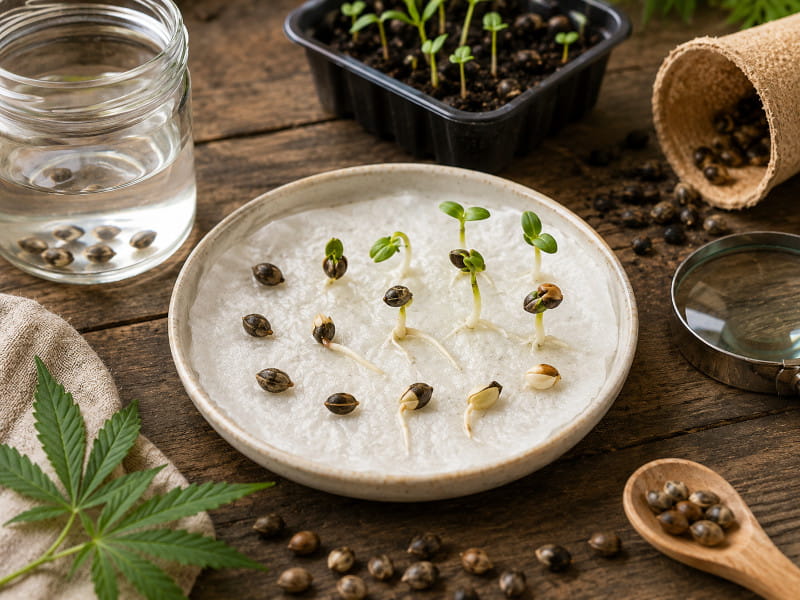
Anyone who has ever tried to germinate old cannabis seeds, chili seeds, or rare seeds from an old box, a refrigerator compartment, or a long-stored collection knows the problem: some seeds open after just a few days, others remain unchanged for weeks, and some form a tiny taproot but then immediately stop again. This is especially frustrating with rare genetics, old hemp seeds, chili seeds, limited varieties, or exotic plants that cannot simply be bought again.
The cause is not always an incorrect germination method. Seeds are living biological structures. Even when they look dry and seemingly inactive, they age during storage. The longer a seed has been stored, the more membrane structures can break down, enzymes can lose activity, oxidative damage can occur, and energy reserves can become harder to mobilize. This means the seed may still be viable, but its start into germination becomes significantly more difficult.
That is exactly why many growers and gardeners search for terms such as germinating old cannabis seeds, cannabis seeds not germinating, activating old seeds, increasing germination rate, chili seeds germinate poorly, or making old seeds viable again. Behind all these searches is the same question: how can biologically weakened or difficult-to-germinate seeds be encouraged to start reliably again?
This Canna Wiki guide explains why old and difficult seeds cause problems, which plant species are particularly affected, which methods for improving germination rates make sense, and how the Germinator Seedbooster can support old cannabis seeds, chili seeds, and other demanding seeds during the sensitive starting phase as a germination aid.
What really happens during germination
Germination is not a simple “water in, root out” process. As soon as a dry seed absorbs moisture, what is known as imbibition begins. The seed swells, cell structures are reactivated, and metabolic processes start up again. Enzymes begin converting stored reserve substances such as starches, proteins, and fats into usable energy. The embryo needs this energy to break through the seed coat and form the primary root, also known as the radicle.
With fresh, vigorous seed, this process is usually fast and uniform. With old seed, it looks different. Water uptake can be slower, cell membranes are less stable, enzymes react more sluggishly, and the young seedling has less energy for the crucial first growth spurt. That is why old seeds often seem “tired”: they take longer, germinate more unevenly, and more often produce weak seedlings.
The phase between water uptake and the emergence of the taproot is especially critical. During this window, the seed is vulnerable to rot, lack of oxygen, mold, and physiological blocks. If conditions are too wet, the seed can suffocate. If they are too dry, the germination process stops. If they are too cold, metabolism slows down considerably. If they are too warm, the risk of damage and microorganisms increases.
Why Old Cannabis Seeds Are Particularly Sensitive
Old cannabis seeds and other exotic seeds can remain viable for many years if stored well. But with every year, the risk of a declining germination rate increases. Typical aging processes in seeds stored for several years include:
- Breakdown of membrane structures – cell membranes lose stability and function less effectively after water uptake.
- Reduced enzyme activity – reserve substances are mobilized more slowly.
- Increased oxidative stress – reactive oxygen species can damage cell structures.
- Slower water uptake – the seed starts unevenly or too slowly.
- Reduced energy availability – the seedling has less strength for root formation and initial growth.
In practice, this appears in various ways: some seeds do not open at all. Others crack open but form only a tiny taproot. Still others make it into the soil but remain weak, slow-growing young plants. This is especially frustrating with old, rare, or long-stored varieties because every single seed is valuable.
It is important to note: a seed that does not germinate immediately is not automatically dead. It may simply be physiologically weakened. This is exactly where optimized germination conditions, careful pre-soaking, and a suitable germination aid can make a difference.
Cannabis Seeds Not Germinating – The Most Common Causes
When cannabis seeds or other seeds do not want to germinate, the cause is usually one of six factors: seed quality, age, storage, moisture, temperature, or hygiene. Beginners in particular often immediately suspect poor seed quality, even though germination conditions are at least just as important. By the way, for inexperienced growers, we recommend our Canna Wiki section on beginner’s guides.
|
Problem |
Typical Sign |
Possible Solution |
|
Seeds too old |
Very slow or uneven germination |
Pre-soaking, stable warmth, seed booster, patience |
|
Too wet |
Seeds become soft, dark, or smell rotten |
Work moist, but not wet; maintain oxygen |
|
Too cold |
Germination does not start or takes extremely long |
Maintain a constant germination temperature in the suitable range |
|
Too warm |
Rot, mold, weak seedlings |
No heat mat without control; do not overheat |
|
Hard seed coat |
Seeds barely swell and remain closed |
Longer observation, careful pre-treatment, scarification depending on the species |
|
Poor hygiene |
Mold in the germination medium |
Clean containers, fresh medium, keep hands and tools clean |
Cannapot Grow Tip
If old seeds are valuable, do not immediately start with aggressive methods such as cutting them open or heavy sanding. Begin with the gentlest method: controlled soaking, stable temperature, a clean medium, and a germination aid. The Seedcracker by Cannapot can also be used very successfully to crack seeds evenly. Other mechanical interventions are always riskier and should only be used in very stubborn cases and with experience.
Not Just Cannabis: Which Seeds Are Considered Difficult to Germinate?
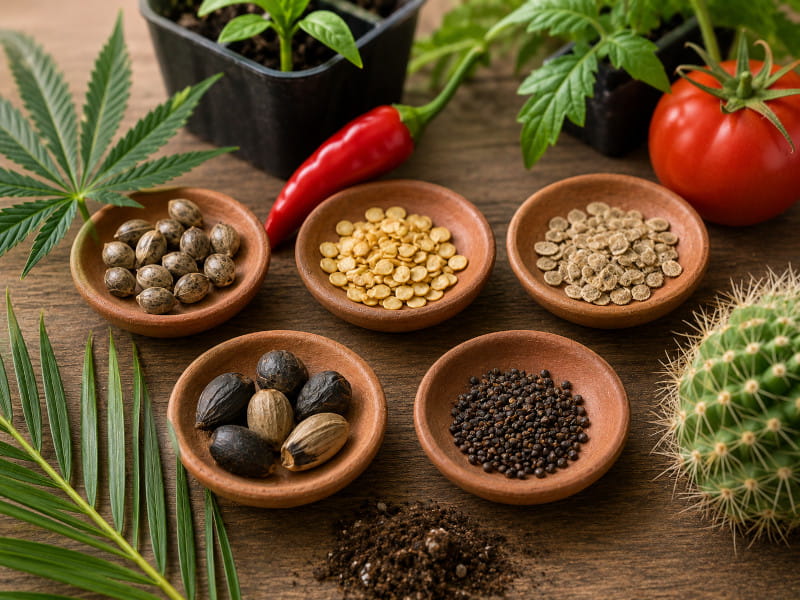
The Germinator is not only interesting for cannabis seeds. Many other plant species show similar problems: hard seed coats, dormancy, slow water uptake, sensitive embryos, or strong aging effects. This especially often affects chili, peppers, tomatoes, herbs, palms, cacti, and exotic ornamental plants.
Wild chilies and chiltepin
Wild chilies such as chiltepin, tepin, or other original Capsicum lines are notorious for slow and uneven germination. Their seeds often have a harder coat, absorb water more slowly, and may be more prone to dormancy. While modern chili and pepper varieties often germinate relatively predictably, wild forms can take several weeks.
In a practical trial with wild chili seeds, a clear difference was observed: with Germinator, the seeds began to germinate visibly after about two weeks, while untreated control groups only showed visible germination between weeks four and five. Especially with wild chilies, such a time advantage is practically relevant because long germination times increase the risk of mold, drying out, and impatience.
Old chili seeds and pepper seeds
Chili and pepper seeds also lose germination strength when stored under unfavorable conditions. Many hobby gardeners collect seeds from special varieties, store them for several years, and then discover that only a small portion still germinates. Old chili seeds benefit especially from even warmth, clean moisture, and patience. A germination booster can help support early metabolic activation.
Tomato seeds from older seed stock
Tomato seeds are generally considered relatively willing to germinate, but here too, the germination rate declines with age. Especially with old heirloom varieties or rare collector varieties, careful germination preparation is worthwhile. Anyone who has only a few seeds of an old variety should not simply place them into heavy, wet soil, but should pre-germinate them in a controlled and clean way.
Palms, cacti, and exotic plants
Many exotic species germinate slowly, unevenly, or only after specific stimuli. Palm seeds can require weeks to months. Cacti often germinate delicately and sensitively, while some hard-shelled exotics need pre-treatment. Here it is important to observe species-specific requirements: some need warmth, others temperature fluctuations, light, darkness, or a cold phase.
Bonsai seeds and woody plants
Many tree and bonsai species have pronounced dormancy. Maple, pine, juniper, and other woody plants often do not germinate directly after soaking, but require stratification, meaning a cold phase. A seed booster can support vitality here, but it does not necessarily replace species-specific dormancy treatment.
Dormancy: Why Some Seeds Do Not Germinate Despite Water
Dormancy means germination rest. A dormant seed is not dead, but blocks germination despite apparently suitable conditions. In nature, this is a survival mechanism. Seeds should not germinate after the first brief rain and then die from frost, drought, or lack of light. That is why many plant species have internal or external germination inhibitors.
There are different forms of dormancy. In physical dormancy, a hard or water-impermeable seed coat prevents water uptake. In physiological dormancy, plant hormones and biochemical signals control whether the embryo is allowed to grow. In some species, both factors work together. That is exactly why water alone is not always enough.
For growers, it is important to know: if seeds do not germinate even though moisture, warmth, and hygiene are correct, dormancy may be present. Then pre-treatments such as soaking, temperature changes, scarification, stratification, or hormonal support may become relevant. Which method is suitable, however, depends strongly on the plant species.
Methods for Improving Germination Rate
There is no single perfect germination method for all seeds. Old cannabis seeds need a different treatment than palm seeds; wild chilies need different conditions than tomatoes. Nevertheless, there are basic principles that can help with many old or difficult-to-germinate seeds.
1. Controlled soaking
Brief soaking can help old seeds absorb water evenly. For cannabis seeds, a period of several hours up to a maximum of around one day is often used. It is important that seeds do not remain in water permanently, because they need oxygen. Soaking for too long can damage seedlings or promote rot.
2. Stable temperature
Most warmth-loving seeds, including cannabis, chili, peppers, and tomato, germinate much better with even warmth than with fluctuating temperatures. Cold windowsills are a common reason for poor germination. A heat mat can help, but it should always be monitored so the medium does not become too hot.
3. Moist, but never wet
Seeds need moisture and oxygen. A completely soaked medium displaces air, encourages rot, and can suffocate the seedling. The germination medium should be evenly moist, but not dripping or standing in water. Old seeds are especially sensitive here because they remain in the medium longer and are therefore exposed to mold risks for longer.
4. Scarification for hard-shelled seeds
Scarification involves mechanically roughening or making small cuts in the seed coat to allow water to penetrate more easily. This method can be useful for very hard seeds, but it is somewhat risky. When using this method, it is best to use the Seedcracker very carefully so as not to damage the seed.
But be careful: with small or delicate seeds, the embryo can easily be damaged. With cannabis seeds, mechanical intervention should only be considered very carefully and as a last resort.
5. Stratification for cold germinators
Some seeds require a longer cold phase before they germinate. This applies to many woody plants, wild plants, and bonsai species. Without this cold period, the seed often remains dormant. A seed booster does not automatically replace this biological requirement, but it can support the starting phase after the appropriate pre-treatment.
6. Seed boosters and germination aids
Germination aids do not only address the environment, but directly target physiological processes: water uptake, enzyme activation, hormonal signaling, stress protection, and early root development. This is exactly the approach of the Germinator Seedbooster.
|
Method |
Suitable for |
Main limitation |
|
Soaking |
Many old seeds, cannabis, chili, tomato |
Do not leave in water for days |
|
Scarification |
Hard-shelled species |
Embryo can be injured |
|
Stratification |
Woody plants, bonsai, cold germinators |
Often takes several weeks |
|
Stable warmth |
Cannabis, chili, peppers, tomato |
Avoid overheating |
|
Seed booster |
Old, weakened, and difficult-to-germinate seeds |
Cannot rescue dead seeds |
How does the Germinator Seedbooster work?
The Germinator Seedbooster is a seed treatment for the germination and early growth phase. The formulation combines several plant-active substances that act at different points during germination: auxin, gibberellic acid, zeatin, glycine, thiamine, ascorbic acid, humic acid, glycerin, and potassium sorbate as a preservative. The goal is not to artificially “force” seeds, but to support weakened or slow-starting germination processes. Especially with old cannabis seeds, old chili seeds, and physiologically sluggish seeds, this combination can be relevant because it addresses several weak points at the same time.GA₃ – gibberellic acid for enzyme activation
Gibberellic acid, or GA₃ for short, belongs to the plant hormones associated with germination and elongation growth in many species. During germination, GA₃ can support the activation of hydrolytic enzymes. These enzymes help convert stored reserves in the seed into usable sugars and energy. This is especially important for old seeds because their metabolism often starts more slowly.
Auxin – support for root formation
Auxin, here in the form of indole-3-acetic acid, plays an important role in cell elongation and root development. Especially with old cannabis seeds, it is common to see the taproot emerge but then barely continue growing. Supported root elongation can help in this early phase so the seedling can make contact with the medium more quickly and stabilize itself.
Zeatin – cell division and hormonal balance
Zeatin belongs to the cytokinins. This group of substances is involved in cell division and developmental processes. In a balanced formulation, zeatin can help modulate hormonal signals during early development. Balance is important here: germination is an interaction of several signals, not the effect of a single substance.
Ascorbic acid – protection against oxidative stress
Ascorbic acid, better known as vitamin C, has antioxidant effects. Old seeds often show higher oxidative stress. Reactive oxygen species can damage cell structures and make germination even more difficult. Antioxidant protection can help stabilize sensitive structures during water uptake and reactivation.
Thiamine and glycine – metabolic support
Thiamine, or vitamin B₁, is an important component of energy metabolism. Glycine can act as an organic building block and osmoregulator. Together, these components can support the stress resistance of young seedlings – especially in the sensitive phase between seed coat rupture and the formation of the first functional root.
Humic acids – early root vitality and nutrient uptake
Humic acids are often used as biostimulants in horticulture. They can support early root development and the uptake of certain trace elements. For weakened seedlings, a strong primary root is crucial because it forms the foundation for all further young plant development.
The four key mechanisms of the Germinator
|
Mechanism |
Components |
Practical benefit |
|
Hormonal signaling |
IAA, GA₃, Zeatin |
Supports germination start, cell division, and early root development |
|
Reserve mobilization |
GA₃-mediated enzyme activation |
Helps provide energy for germination and initial growth |
|
Stress protection |
Ascorbic acid, thiamine, glycine |
Can reduce oxidative stress and metabolic weakness |
|
Root and nutrient support |
Humic acids |
Promotes early root vitality and better starting development |
Using the Germinator Seedbooster
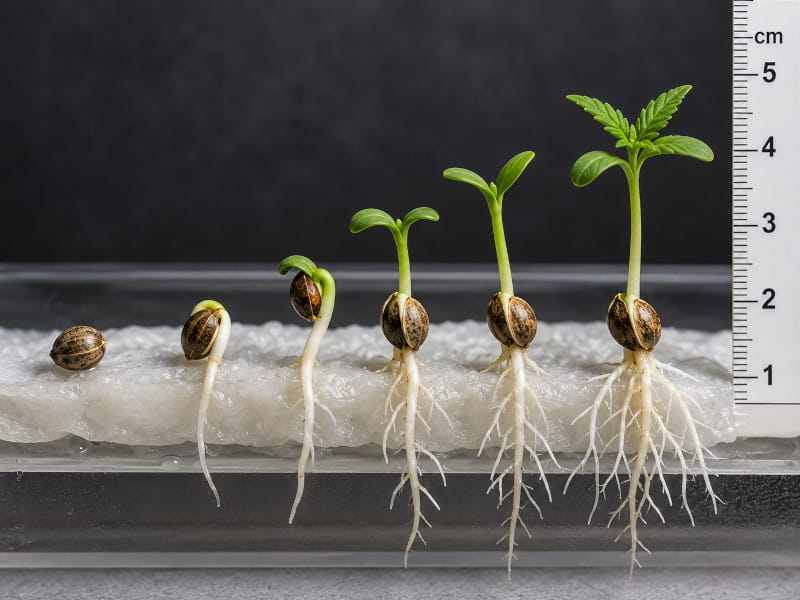
The application is deliberately simple: add seven drops of Germinator to 500 ml of water, stir well, and soak the seeds in it. Germination is then continued as usual. The bottle should be shaken well before use.
The Germinator Seedbooster is intended exclusively for the germination and early growth phase. It is not a classic fertilizer for mature plants, but a targeted germination aid for the start. Especially with old seeds, after soaking you should continue working cleanly and carefully so that the possible advantage is not lost through an overly wet medium, cold, or unclean handling.
Step-by-Step Use with Old Cannabis Seeds
- Prepare a clean work surface – wash hands, clean containers, use fresh water.
- Mix Germinator – add seven drops to 500 ml of water and stir well.
- Soak seeds – allow old cannabis seeds to swell in a controlled way, but do not leave them in water unnecessarily long.
- Continue germination – for example in a suitable propagation medium or with a clean pre-germination method.
- Control moisture – the medium should be moist, but never wet.
- Maintain stable warmth – no cold windowsill, no overheating.
- Do not disturb seedlings – old seeds often form more sensitive primary roots.
Practical finding: wild chili as an example of difficult-to-germinate seeds
Wild chili seeds, such as chiltepin, often behave in cultivation similarly to very old seeds. Their seed coat is robust, water uptake and gas exchange can be limited, and germination is often slow and uneven. For growers, this is problematic because propagation can stretch over many weeks.
In a practical comparison with wild chili seeds, it was shown that the seeds treated with Germinator began to germinate clearly after about two weeks. The untreated control groups, by contrast, showed germination only between weeks four and five, if they started germinating at all. This difference is especially relevant with difficult-to-germinate species because faster and more uniform germination reduces the risk of losses.
The finding fits the basic idea of the seed booster: a combination of hormonal activation, antioxidant protection, and metabolic support can reduce physiological barriers. This is not only interesting for cannabis, but also for chili, peppers, tomatoes, herbs, and many other exotic seed types.
Germination conditions by plant species
Even the best seed booster works optimally only when the basic conditions match the plant species. Cannabis, chili, tomato, and palms have different requirements. The following table serves as a practical guide.
|
Seed type |
Typical problem |
Recommendation |
|
Old cannabis seeds |
Slow germination, weak root, low germination rate |
Soak gently, use Germinator, germinate moist but airy |
|
Wild chili / chiltepin |
Hard coat, dormancy, very long germination period |
Keep warmth stable, be patient, use Germinator as a germination aid |
|
Old tomato seeds |
Declining germination rate in old varieties |
Pre-germinate cleanly, do not keep too wet, protect weak seedlings |
|
Palms |
Very long germination time, hard seed coat |
Species-appropriate warmth, long observation, do not discard too early |
|
Bonsai / woody plants |
Dormancy, often cold requirement |
Observe stratification, then support the germination phase |
What the Seed Booster Can Do – and What It Cannot
A good seed booster can improve the chances when seeds are still alive but weakened, old, slow, or physiologically inhibited. It can accelerate germination, improve uniformity, support early root formation, and help weakened seedlings get started. But it cannot perform miracles. If seeds have already died due to decades of warm storage, moisture damage, mold, heat, or complete cell degradation, they cannot be revived. That is why honest expectations are important: the Germinator is a germination aid for viable or partially weakened seeds – not a replacement for living seed quality.
Practically relevant advantages with older cannabis seeds
- faster and more uniform germination
- higher success rate with seeds stored for several years
- stronger primary root formation in the early starting phase
- reduced failure rate of weak seedlings
- improved starting vitality compared with untreated seeds
Common Mistakes When Germinating Old Seeds
1. Giving up on old seeds too earlyFresh seeds often germinate quickly. Old or dormancy-prone seeds need significantly longer. Chilies, palms, and exotic species in particular can require weeks. Anyone who throws everything away after five days may lose viable seeds.
2. Germination medium too wet
Many failures are caused not by dryness, but by too much water. Old seeds remain in the medium longer and therefore have a higher risk of rot. Moist is correct; wet is dangerous.
3. Constant checking and handling
Every check can damage sensitive taproots. Old cannabis seeds in particular often form delicate, slowly growing roots. Less disturbance means better chances.
4. Wrong temperature
Cold windowsills, fluctuating room temperatures, or overheated heat mats are common mistakes. Seeds do not need extreme conditions; they need stability.
5. Understanding seed boosters as a substitute for hygiene
A germination aid can support physiological processes, but it does not replace clean working methods. Dirty glasses, old kitchen paper, or compacted soil can undo every advantage.
6. Using fertilizer too quickly
Seedlings do not need a strong nutrient solution in the first days. Old or weak seedlings react especially sensitively to overfertilization. A seed booster is not an invitation to fertilize heavily right away – the germination phase and later nutrient supply are two different things.
7. Testing all valuable seeds at once
Anyone who has only a few old seeds of a rare variety should not start all of them at the same time with an untested method. It is better to begin with a small portion, observe temperature, moisture, and medium, and then optimize the method for the rest.
How to Store Seeds So They Stay Viable Longer
The best germination aid is good and correct storage before problems arise. Seeds age more slowly when they are stored cool, dry, dark, and stable. Strong temperature fluctuations, high humidity, and light accelerate degradation. Especially valuable cannabis seeds, chili seeds, or rare seeds should be stored airtight and with a desiccant.
- Store cool – constant, low temperatures extend shelf life.
- Store dry – moisture is one of the biggest enemies of seeds.
- Store dark – light can promote aging processes.
- Package airtight – protects against moisture fluctuations.
- Label – note variety, date, and origin so you later know how old the seeds are.
Cannapot Grow Tip
If you have very old or rare seeds, do not test all of them at once. Start with a small portion and optimize the method, temperature, and moisture. Once the first ones germinate successfully, you can grow the rest under better conditions.
In this context, the Germinator is the practical solution for a clearly defined area: old, weakened, slow-germinating, or difficult-to-start seeds. Anyone germinating fresh, vigorous seeds under good conditions often does not need additional support. But anyone who wants to rescue old hemp seeds, rare chili lines, or valuable collector seeds is working under different conditions. Here, every single seed counts.
Frequently Asked Questions
Can old cannabis seeds still be germinated?
Yes, old cannabis seeds can still be viable if they have been stored cool, dry, and dark. However, the germination rate declines over time. A clean germination method, controlled soaking, and a seed booster can improve the chances.
Why are my cannabis seeds not germinating?
Common reasons include seeds that are too old, incorrect storage, too much moisture, too low a temperature, lack of oxygen, or mold. Sometimes the seed is also dormant or physiologically weakened.
How long do old cannabis seeds take to germinate?
Fresh cannabis seeds often germinate within a few days. Old seeds can take significantly longer. It is important not to give up on them too early, while still avoiding rot and waterlogging.
Can Germinator revive dead seeds?
No. If a seed is biologically dead, no germination booster can revive it. Germinator can support living but old, weakened, or difficult-to-germinate seeds.
Does Germinator only help with cannabis?
No. The Germinator can also be interesting for other old or difficult-to-germinate seeds, for example chili, wild chili, peppers, tomatoes, herbs, palms, cacti, and exotic seeds.
Why do chili seeds sometimes germinate so slowly?
Chili seeds, especially wild forms such as chiltepin, can have a harder seed coat and stronger dormancy. They often need stable warmth, patience, and clean conditions.
What does dormancy mean?
Dormancy is a natural germination rest. The seed is viable, but does not germinate immediately despite seemingly suitable conditions. Depending on the species, a specific pre-treatment may be required.
Should old seeds be sanded?
Scarification can be useful for some hard-shelled species. With cannabis seeds, caution is required because the embryo can be damaged. Gentle methods should be tried first. Use the Seedcracker gently for this, and you will be on the safe side.
How can dead seeds be recognized?
Dead seeds often remain unchanged, become soft, smell rotten, or develop mold. A definite diagnosis is not always immediately possible, however, especially with slow-germinating species.
How can the germination rate of old seeds be improved?
Through good hygiene, controlled soaking, suitable temperature, a moist but airy medium, patience, and a suitable germination aid such as the Germinator Seedbooster.
How is Germinator dosed?
Seven drops of Germinator are added to 500 ml of water and stirred well. The seeds are soaked in it, and germination is then continued as usual. Shake the bottle well before use.
Can Germinator be used for tomatoes and peppers?
Yes, the Germinator is not limited to cannabis. Especially with older tomato, pepper, or chili seeds, targeted germination support can make sense if the seeds are still viable.
Which is better: germinating directly in soil or pre-germinating?
Both can work. With valuable old seeds, controlled pre-germination has the advantage that moisture, temperature, and germination progress can be observed more precisely. Direct germination in overly wet soil is riskier with old seeds.
Why does the taproot stop after emerging?
This often happens with weakened seeds. The seed manages to crack the shell, but has too little energy, unstable cell structures, or too much stress for further root growth. Good conditions and metabolic support can be decisive here.
Are old seeds automatically worse plants?
Not necessarily. If an old seed germinates successfully and develops stably, it can become a normal, vigorous plant. The risk lies primarily in the germination and early young-plant phase.
Old and difficult seeds need support, not force
Old cannabis seeds, chili seeds, and other difficult-to-germinate seeds are often not hopeless. They simply need better starting conditions than fresh, vigorous seeds. Those who combine water, warmth, oxygen, hygiene, and plant physiology correctly can significantly improve germination chances.
The Germinator Seedbooster starts exactly at this point: it supports hormonal signaling, enzyme activation, antioxidant protection, metabolic stability, and early root development. As a result, it can offer a practical advantage especially with old hemp seeds, physiologically tired cannabis seeds, wild chilies, and other demanding seeds.
Nevertheless, the most important rule remains: no product replaces living seed quality. But if seed material is still viable, the right germination aid can make the difference between a failed attempt and a strong new seedling.
Ready to bring old seeds back to life?
Whether old cannabis seeds, rare chilies, peppers, tomatoes, or exotic seeds – with patience, clean work, and the right starting helper, the chances increase significantly. The Germinator was developed exactly for this sensitive phase: the first hours and days in which active growth is meant to emerge again from an old, dormant seed.
Germinator Seedbooster
Seedcracker
New Cannabis Seeds
Alpenhigh Seeds
Related Guides
Watering Hemp Plants Correctly
Storing Cannabis Seeds Correctly
The Best Medium for Cultivation
Growth Cycle of Marijuana