Full Spectrum, Broad Spectrum or CBD Isolate – Differences
CBD Extracts Explained – Composition, THC Content and Quality
Updated: November 2026 | Full Spectrum CBD, Broad Spectrum CBD, CBD Isolate, THC Traces, Extraction, Entourage Effect, Laboratory Testing and Legal Classification.
Author: Cannapot Grow Team | Reading time: approximately eighteen minutes
Key Takeaways at a Glance
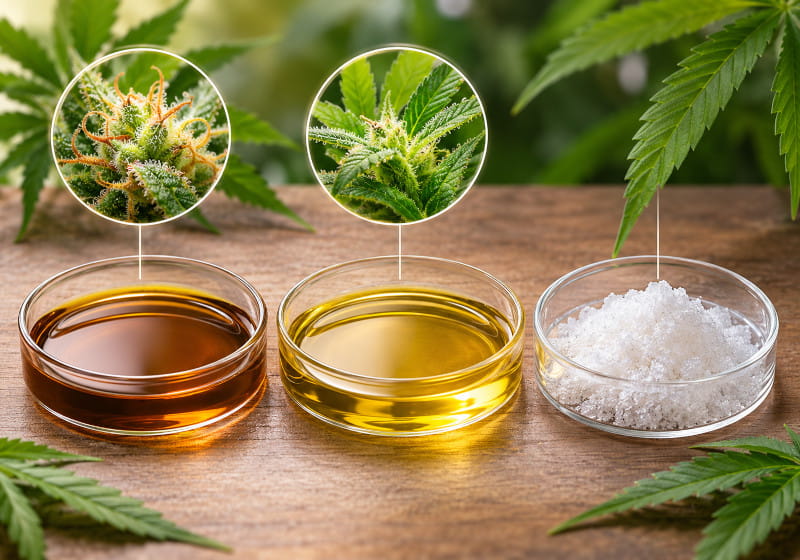
✓ Full spectrum CBD contains cannabidiol (CBD) alongside other naturally occurring compounds from the hemp plant, including additional cannabinoids and terpenes. Depending on the extract, small amounts of THC may also be present.
✓ Broad spectrum CBD also contains several cannabinoids and other plant compounds. Unlike full spectrum extracts, THC is usually deliberately reduced or removed. Whether a product is genuinely THC-free can only be assessed through appropriate laboratory testing.
✓ CBD isolate is a highly purified form of cannabidiol consisting almost entirely of CBD. Other cannabinoids and terpenes are normally absent or present only in very small amounts.
✓ The quality of a CBD product does not depend solely on the type of extract. Important factors include an independent, batch-specific certificate of analysis, the actual cannabinoid content and testing for potential contaminants.
✓ The so-called entourage effect describes possible interactions between different plant compounds. Scientific evidence is currently insufficient to establish that full spectrum CBD is generally more effective or safer than broad spectrum CBD or CBD isolate.
Anyone exploring CBD products will sooner or later encounter three terms: full spectrum CBD, broad spectrum CBD and CBD isolate. But what exactly distinguishes these types of extracts? Although all three contain cannabidiol (CBD), their compositions can differ considerably. The main differences concern which additional cannabinoids, terpenes and plant compounds are present alongside CBD, and how extensively the original hemp extract has been processed.
The differences between full spectrum, broad spectrum and isolate primarily concern THC content, manufacturing processes, purity and cannabinoid profiles. At the same time, these terms are frequently associated with marketing claims about supposedly superior effects or exceptional quality. This comparison explains what lies behind the three CBD extract types, which claims are supported by scientific evidence and what to look for in laboratory test results. For general information about CBD's effects and potential risks, visit our Canna Wiki article CBD Explained Simply.
Full Spectrum CBD, Broad Spectrum CBD and CBD Isolate Compared
The most important difference between full spectrum CBD, broad spectrum CBD and CBD isolate lies in their composition: full spectrum extracts typically contain a wide range of natural hemp compounds, broad spectrum extracts undergo targeted processing to reduce their THC content, while CBD isolate consists almost entirely of purified cannabidiol.
| Feature | Full Spectrum CBD | Broad Spectrum CBD | CBD Isolate |
|---|---|---|---|
| Composition | CBD and other natural components of the hemp extract | CBD and several additional plant compounds, usually with reduced THC content | Almost exclusively purified cannabidiol |
| Other cannabinoids | Depending on the hemp variety, compounds such as CBG, CBC or CBN | Often present, depending on extraction and purification methods | Normally absent or present only in trace amounts |
| THC content | May contain small, analytically measurable amounts of THC | THC is usually deliberately reduced or removed | Normally undetectable when purity is high |
| Terpenes | May be present, depending on the manufacturing process | May be present or added after processing | Usually absent from pure CBD isolate |
| Production | Extraction followed by varying degrees of purification | Extraction and additional processing to reduce THC | Multi-stage purification to isolate CBD as extensively as possible |
| Purity | Depends on the manufacturing process and cannabinoid profile | Depends on THC removal and further processing | Typically very high CBD purity |
| Quality assessment | Check the cannabinoid profile and contaminant test results | Check the cannabinoid profile, THC content and detection limits | Check CBD purity, identity and potential contaminants |
| Essential documentation | Batch-specific Certificate of Analysis (COA) | Batch-specific COA stating the THC detection limit | COA including purity determination and contaminant testing |
It is important to understand that the terms full spectrum, broad spectrum and CBD isolate do not, by themselves, provide reliable information about a product's quality or effectiveness. Two full spectrum extracts, for example, may contain different amounts of cannabinoids and terpenes. Similarly, extensive processing can remove a substantial proportion of the original plant compounds from a broad spectrum extract. What matters, therefore, is not the marketing terminology but the actual composition and verifiable laboratory results.
What Is Full Spectrum CBD?
Full spectrum CBD is a hemp extract that contains cannabidiol (CBD) alongside other naturally occurring compounds from the hemp plant. Depending on the raw material and manufacturing process, these may include additional cannabinoids, terpenes and other plant compounds. Unlike CBD isolate, full spectrum extracts do not isolate CBD alone but preserve a broader range of the plant's original constituents.
Full spectrum extracts are generally obtained from CBD-rich hemp plants. The compounds actually present in the finished extract depend on the hemp variety used, the time of harvest and the extraction method. Subsequent processing steps, such as filtration, distillation or the removal of unwanted substances, also influence the composition. As a result, two full spectrum CBD products may differ considerably even though they carry the same product designation.
Which Cannabinoids and Plant Compounds May Be Present?
In addition to CBD, full spectrum extracts may contain other cannabinoids, including cannabigerol (CBG), cannabichromene (CBC) and cannabinol (CBN). Depending on the raw material and processing methods, cannabinoid acids such as cannabidiolic acid (CBDA) and cannabigerolic acid (CBGA) may also be present. These naturally occurring precursors differ chemically from their neutral cannabinoid counterparts and can undergo changes when exposed to heat, for example. You can learn more about these differences in our Canna Wiki article on CBDA and CBD.
Alongside cannabinoids, full spectrum CBD extracts may also contain terpenes, flavonoids and other fat-soluble plant compounds. Terpenes are aromatic compounds that contribute to the characteristic scent of different hemp varieties. Flavonoids represent another group of naturally occurring plant constituents. However, the designation "full spectrum" alone does not reveal whether these substances are present in the finished product or in what quantities.
Processing plays a particularly important role in the preservation of terpenes. Some of these compounds are volatile and may be partially lost during extraction or subsequent purification. For this reason, some manufacturers add selected terpenes back into their products after processing. A CBD oil labelled as full spectrum therefore does not necessarily have the same terpene profile as the original hemp plant. Reliable laboratory testing is required to determine which cannabinoids and, where applicable, terpenes are actually present.
What Role Do THC and Terpenes Play?
One important difference between full spectrum CBD and other types of extracts concerns the potential THC content. Full spectrum extracts may contain small amounts of tetrahydrocannabinol (THC), as this compound occurs naturally in many hemp plants. However, the term "full spectrum" does not automatically indicate a high THC content or any specific THC concentration. The actual laboratory results for the individual product are what matter.
When assessing THC content, both the concentration and the absolute amount should be considered. A percentage stated on the label initially describes only the proportion of THC in the product. The amount of THC that could actually be consumed also depends on the quantity of product used. Even very low THC concentrations may be relevant for certain consumer groups, analytical testing or legal classification.
Terpenes and other cannabinoids are frequently mentioned in connection with the so-called entourage effect. This refers to the scientific hypothesis that different compounds found in the hemp plant may interact with one another and influence each other's biological properties. Such interactions are being investigated in scientific research. However, their clinical significance for commercially available full spectrum CBD products has not yet been sufficiently established.
The presence of several cannabinoids and terpenes therefore does not automatically mean that a full spectrum extract is stronger, more effective or safer than CBD isolate. Establishing such differences would require scientific studies directly comparing specific compositions, dosages and conditions of use. Broad marketing claims suggesting that full spectrum CBD is inherently superior should therefore be viewed critically.
What Is Broad Spectrum CBD?
Broad spectrum CBD is a hemp extract that may contain additional cannabinoids and naturally occurring plant compounds alongside cannabidiol (CBD), while tetrahydrocannabinol (THC) is usually deliberately reduced or removed. Unlike CBD isolate, a broader range of hemp compounds is therefore retained, although no specific cannabinoid or terpene profile is guaranteed.
Broad spectrum extracts are often obtained from CBD-rich hemp and subsequently processed to reduce their THC content as much as possible. Depending on the manufacturing process, other cannabinoids such as CBG, CBC or CBN, along with various terpenes, may be preserved. However, the composition of finished extracts can vary considerably. The term "broad spectrum" alone therefore does not indicate which compounds are actually present or at what concentrations.
How Does Broad Spectrum CBD Differ from Full Spectrum CBD?
The main difference between broad spectrum CBD and full spectrum CBD lies in how their THC content is managed. While full spectrum extracts typically preserve a wider range of the original hemp compounds, including possible traces of THC, broad spectrum extracts are processed with the aim of removing THC as completely as possible or reducing it to very low concentrations.
Different purification techniques can be used to reduce THC levels. These include chromatographic methods, which separate specific cannabinoids according to their chemical properties. Depending on the process, however, some other desirable plant compounds may also be partially lost. A broad spectrum extract is therefore not necessarily identical to a full spectrum extract from which only THC has been removed.
Why Does Broad Spectrum Not Automatically Mean THC-Free?
Broad spectrum CBD is frequently marketed as THC-free. From a scientific perspective, however, such a claim does not necessarily mean that absolutely no THC is present. What matters is the detection limit of the analytical method used and which THC compounds were actually tested.
A laboratory report may, for example, state "not detected" or "ND". This means that no THC above the specified detection limit was identified under the particular testing conditions. Lower concentrations may nevertheless still be present. The limit of detection (LOD) describes the concentration at which a substance can be reliably detected. The limit of quantification (LOQ), by contrast, indicates the concentration at which its amount can be measured with sufficient accuracy.
It is also important to consider which forms of THC were analysed. In addition to delta-9-THC, tetrahydrocannabinolic acid (THCA), for example, may also be relevant. Not every certificate of analysis covers all forms of cannabinoids or provides sufficiently transparent information about analytical detection limits. A general claim such as "0% THC" should therefore not be regarded as scientific proof of the absolute absence of THC.
What Is CBD Isolate?
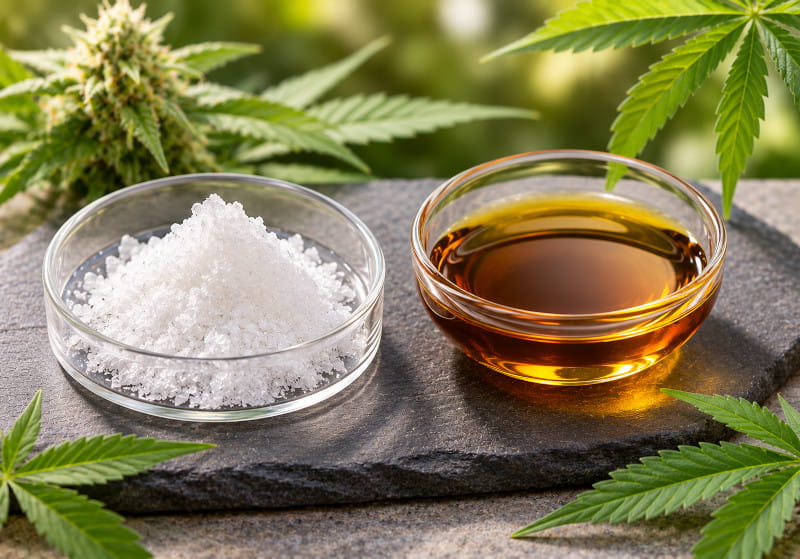
CBD isolate is a highly purified form of cannabidiol that consists almost entirely of the single cannabinoid CBD. Unlike full spectrum and broad spectrum extracts, pure CBD isolate normally contains no significant amounts of other cannabinoids, terpenes or plant compounds. It is commonly available as a white, crystalline powder.
To produce CBD isolate, cannabidiol is obtained from a starting material and subsequently purified through several processing stages. Other cannabinoids, plant waxes, pigments and additional accompanying substances are largely separated during this process. The aim is to achieve the highest possible proportion of pure CBD. However, the actual purity depends on the manufacturing process and the quality of the subsequent purification steps.
Purity, Crystal Form and Typical Properties
High-quality CBD isolate is frequently offered with a CBD purity of 98% to over 99%. These figures describe the analytically determined proportion of cannabidiol in the tested material. A purity of 99%, for example, means that approximately 99% of the material is identified as CBD according to the analytical method used. However, this figure alone does not reveal which substances make up the remaining proportion.
A high CBD content therefore does not automatically mean that the material is completely free from contaminants. Even with CBD isolate, potential pesticide residues, heavy metals, residual solvents and other impurities should be considered. Reliable quality assessment requires appropriate laboratory testing that goes beyond simply determining the CBD content.
CBD isolate is characterised by its typically white to almost colourless, crystalline appearance. Depending on processing, it may take the form of a fine powder or larger crystal structures. However, colour and crystal form alone are not reliable indicators of quality. Even material that appears extremely pure may contain unwanted residues that can only be identified through analytical testing.
Another important distinction is between plant-derived and synthetically produced CBD. CBD isolate can be obtained by extracting cannabidiol from hemp and subsequently purifying it. However, cannabidiol can also be manufactured through other processes. The chemical identity of the CBD molecule does not depend solely on its origin. Whether a particular isolate is plant-derived or synthetic must therefore be assessed using verifiable information provided by the manufacturer.
CBD Isolate as a Raw Material and an Ingredient in Finished Products
CBD isolate is frequently used as a raw material in the manufacture of various CBD products. These include oils, cosmetic formulations and other products whose legal status depends on their category, composition and intended use. Its high degree of purity makes it comparatively easy to determine the precise amount of CBD used.
However, a CBD oil made with CBD isolate does not consist exclusively of pure CBD. The isolate is usually dissolved in a suitable carrier oil, such as MCT oil or hemp seed oil. Depending on the product, flavourings, terpenes or other additives may also be present. The term "CBD isolate" therefore primarily describes the CBD raw material used, rather than necessarily indicating the complete composition of the finished product.
For quality assessment, it is therefore essential to distinguish between raw material analysis and finished product testing. A certificate of analysis may confirm that the CBD isolate used has a high degree of purity. However, it does not automatically establish that the finished, bottled CBD product is free from contaminants or contains exactly the stated CBD concentration. Additional processing steps, carrier substances, bottling and storage conditions can all influence the quality of the finished product.
How Are the Three Types of CBD Extract Produced?
Full spectrum CBD, broad spectrum CBD and plant-derived CBD isolate can initially be produced by extracting cannabinoids from hemp. The key difference arises during subsequent processing: while full spectrum extracts are intended to preserve as many natural plant compounds as possible, broad spectrum extracts undergo additional processing primarily to reduce their THC content. To produce CBD isolate, cannabidiol is separated from other compounds as extensively as possible through further purification steps.
Depending on the method used, the production of CBD extracts involves several stages, from selecting and preparing the plant material to extraction, purification and quality control. The cannabinoids, terpenes and other plant compounds present in the finished product depend largely on these processing steps. The hemp variety used and the composition of the starting material also influence the result.
Extraction Using CO₂ or Ethanol
Two commonly used methods for obtaining CBD from hemp are CO₂ extraction and ethanol extraction. Both methods allow cannabinoids and other plant compounds to be extracted from the starting material. However, they differ in the extraction agents used, their technical requirements and the composition of the initially obtained crude extract.
In CO₂ extraction, carbon dioxide is used as the extraction agent under controlled pressure and temperature conditions. Supercritical CO₂, which combines properties of gases and liquids, is particularly common. Adjusting the processing conditions makes it possible to influence which compounds are extracted from the plant material. After extraction, the CO₂ is separated from the extract by reducing the pressure.
In ethanol extraction, ethyl alcohol is used as a solvent. In addition to cannabinoids, ethanol can dissolve varying amounts of other plant compounds, including certain waxes, pigments and aromatic substances. Which compounds are actually extracted depends on factors such as temperature, the composition of the starting material and the processing conditions. The ethanol used must subsequently be removed under controlled conditions.
Neither extraction method guarantees higher CBD quality simply because of its name. Both CO₂ and ethanol extracts can be of high quality when production is carried out correctly and appropriate quality controls are performed. The most important factors include the purity of the starting material, process management, the removal of potential solvent residues and analytical testing of the finished product.
Winterisation, Distillation and Purification
Following CBD extraction, the resulting crude extract often contains not only cannabinoids but also plant waxes, fats, pigments and other accompanying substances. Additional processing steps may therefore be necessary to achieve the desired composition. Common methods include winterisation, filtration, distillation and other purification techniques.
During winterisation, the extract is usually dissolved in a suitable solvent and subsequently cooled. Under these conditions, certain waxes and other poorly soluble components may precipitate and be removed by filtration. The main purpose of this process is to reduce unwanted accompanying substances and facilitate further processing of the extract.
Distillation makes it possible to separate components according to their different physical properties or to concentrate specific fractions. When processing cannabinoid-containing extracts, vacuum distillation techniques may be used to limit thermal stress. Depending on the process conditions, this can increase the cannabinoid concentration and reduce the amount of certain unwanted accompanying substances.
However, every additional purification step also changes the chemical profile of the extract. While unwanted substances are removed, terpenes or other naturally occurring plant compounds may also be lost. More extensive purification therefore does not automatically mean better or worse quality. What matters is the composition intended for the particular product and whether it can be confirmed through appropriate laboratory testing.
THC Reduction and the Production of CBD Crystals
One of the main objectives in producing broad spectrum CBD is to reduce the THC content of the original hemp extract as much as possible while retaining at least some of the other cannabinoids and plant compounds. Special separation and purification techniques, such as chromatographic methods, may be used for this purpose.
Chromatography separates different substances according to their behaviour in relation to a stationary phase and a mobile phase. Under suitable conditions, this allows THC-containing fractions to be separated from other components of the extract. The selectivity of this separation and which additional cannabinoids are retained depend on the specific method used. However, the complete removal of all traces of THC is not automatically guaranteed.
To produce CBD isolate, cannabidiol undergoes further purification. Following suitable preliminary purification, CBD can be crystallised under controlled conditions. During this process, cannabidiol forms a solid crystal structure, while some of the remaining substances stay dissolved in the surrounding liquid. Additional purification steps can further increase the CBD purity.
The result is often a white, crystalline CBD powder with a very high cannabidiol content. However, the crystal form alone provides no information about potential contaminants. Both broad spectrum extracts and CBD isolate must therefore undergo analytical testing to verify their actual composition, purity and possible residues.
The production steps described represent typical procedures rather than a mandatory manufacturing sequence. Manufacturers may combine different technologies or omit individual steps. Whether a finished product genuinely has the characteristics of a full spectrum extract, broad spectrum extract or CBD isolate can ultimately only be determined from its verifiable composition.
What Does THC-Free Really Mean for CBD Products?
The term "THC-free" does not necessarily mean that a CBD product contains absolutely no tetrahydrocannabinol. What matters is whether THC can be detected through appropriate laboratory testing, which THC compounds were analysed and how sensitive the analytical method used is.
Broad spectrum CBD and CBD isolate, in particular, are frequently marketed with claims such as "0% THC", "THC-free" or "not detected". Although these statements may appear straightforward, they can have different meanings from an analytical perspective. To interpret laboratory results correctly, it is essential to consider the measured THC content as well as the limits of detection and quantification.
THC Content, Limit of Detection and Limit of Quantification
When testing a CBD product, its THC content is determined using an appropriate analytical method. Chromatographic techniques such as high-performance liquid chromatography (HPLC) or gas chromatography (GC) are commonly used. The suitability of a particular method depends, among other factors, on which cannabinoids are being analysed and how low their expected concentrations are.
The limit of detection (LOD) refers to the lowest concentration of a substance that can still be reliably detected under specified testing conditions. If the THC concentration falls below this limit, the laboratory cannot reliably detect the substance using the method applied. However, this does not mean that the presence of THC can be ruled out entirely.
The limit of quantification (LOQ), by contrast, describes the lowest concentration at which the amount of a substance can be measured with a specified level of analytical accuracy and precision. A substance may therefore already be detectable even though its concentration remains below the limit of quantification.
A simplified example illustrates the difference: if a method has a detection limit of 0.001% THC and a quantification limit of 0.003%, a sample containing 0.002% THC may be classified as detectable without its concentration being quantified with sufficient reliability. These figures are provided solely for illustration and do not represent universally applicable laboratory limits.
The unit used to report THC content is also important. Laboratory reports may express concentrations as percentages, milligrams per gram (mg/g) or milligrams per millilitre (mg/ml), for example. These values cannot be compared directly without the necessary conversion factors. For liquid CBD products, density and the actual quantity of product used may be particularly relevant.
A statement such as "0.0% THC" therefore provides only limited information without further details. It may, for example, be based on a rounded measurement or indicate that THC falls below a particular analytical threshold. For a transparent assessment, a certificate of analysis should clearly identify the THC compounds tested, the analytical method used and the respective detection and quantification limits.
Why Trace Amounts of THC May Be Present Despite THC-Free Labelling
Even CBD products labelled as "THC-free" or "0% THC" may contain small amounts of tetrahydrocannabinol under certain circumstances. Possible reasons include incomplete THC removal, contamination during production, differences in detection limits or inaccurate information on the product label.
During the production of broad spectrum CBD, THC is usually reduced through additional purification and separation processes. However, depending on the starting material and technology used, small residual amounts may remain. Differences between individual production batches are also possible. Consequently, the analytical results for one batch cannot automatically be applied to all products manufactured subsequently.
Another possible cause is cross-contamination during manufacturing or bottling. For example, if THC-containing and low-THC extracts are processed using the same production equipment, small amounts of substances may be transferred when cleaning procedures are insufficient. Proper manufacturing practices and appropriate quality controls are intended to minimise such risks.
Scientific investigations of commercially available CBD products have repeatedly identified differences between declared and actually measured cannabinoid concentrations. Studies involving products from the US market have also detected THC levels that were not clearly disclosed on the labels in some cases. These findings demonstrate why independent laboratory testing is important. However, they cannot automatically be generalised to all CBD products sold in Germany, Austria or other European countries. Examples can be found in analyses of commercial CBD products published in JAMA Network Open.
Why a THC Limit Does Not Automatically Determine Whether a CBD Oil Can Be Legally Sold
A low THC content does not automatically mean that a CBD oil can be legally sold in Germany, Austria or throughout the European Union. In addition to THC content, the legal assessment depends primarily on the product category, composition, intended use and applicable food and pharmaceutical regulations.
Misunderstandings frequently arise from confusing THC limits for industrial hemp with the requirements applicable to finished CBD products. Within the European Union, certain agricultural regulations establish THC requirements for approved hemp varieties. However, these requirements apply only within their respective legal scope and do not constitute general permission to market CBD oils or other cannabinoid-containing consumer products with the same THC concentration.
The European Novel Food Regulation is also relevant to CBD products intended for oral consumption. Cannabinoid-containing hemp extracts and certain CBD preparations may be classified as novel foods and therefore require appropriate authorisation before being placed on the market. Their legal classification does not depend solely on whether a product contains full spectrum CBD, broad spectrum CBD or CBD isolate.
Depending on the product, additional regulations may apply, including those governing medicinal products, cosmetics or general product safety. National legislation and the specific presentation of a product may also be relevant. The legal marketability of a CBD product should therefore always be assessed according to its actual characteristics and the legislation currently in force.
The Entourage Effect – What Does Science Actually Show?
The so-called entourage effect describes the scientific hypothesis that different compounds found in the cannabis plant may interact with one another and thereby influence their biological properties. This potential interaction between cannabinoids and terpenes is frequently cited as an argument in favour of full spectrum CBD. However, it has not been scientifically proven that full spectrum extracts are generally more effective or safer than CBD isolate.
The discussion surrounding the entourage effect plays an important role when comparing full spectrum CBD, broad spectrum CBD and CBD isolate. While full spectrum and broad spectrum extracts may contain several plant compounds, pure CBD isolate consists almost entirely of cannabidiol. This raises the question of whether additional cannabinoids and terpenes can alter the effects of CBD and whether such changes are actually significant under realistic conditions of use.
The Hypothesis of Interactions Between Plant Compounds
The cannabis plant contains numerous chemical compounds, including various cannabinoids, terpenes and flavonoids. Some of these substances can influence different molecular targets within the body. This has led to the hypothesis that certain combinations of plant compounds might produce different biological effects than the individual substances alone.
Such interactions can potentially occur in different ways. For example, individual compounds may influence the activity of certain receptors or alter the absorption and metabolism of other substances. Scientific research distinguishes between additive, synergistic and antagonistic effects. A synergistic effect occurs when the combined effect of two substances is greater than would be expected from their individual effects. In contrast, an antagonistic effect occurs when one substance reduces the effect of another.
It is important to understand that the term entourage effect does not describe a universally proven property of all cannabis extracts. Whether a particular interaction occurs depends on factors such as the substances involved, their concentrations and the biological system being studied. The mere presence of several cannabinoids or terpenes is therefore insufficient to demonstrate a clinically relevant entourage effect. A scientific review of the entourage effect discusses the current state of research and the limitations of such conclusions.
What Laboratory Studies and Clinical Research Actually Show
Scientific investigations explore potential interactions between cannabinoids and other cannabis compounds under various conditions. Laboratory studies can provide evidence of biological interactions, but they do not allow direct conclusions to be drawn about the effects of commercially available CBD products in humans.
Experiments involving isolated cells or receptor systems make it possible to investigate individual mechanisms of action in a targeted manner. However, such models can only reproduce the complex processes occurring in the human body to a limited extent. In particular, the absorption, distribution, metabolism and excretion of the substances being studied may differ considerably under real-world conditions.
Animal studies can also provide valuable insights, but their findings cannot automatically be transferred to humans. Reliable conclusions about health effects therefore require controlled clinical trials in which specific CBD preparations are investigated under clearly defined and reproducible conditions.
A particular challenge lies in the comparability of different CBD extracts. For example, if a full spectrum product and a CBD isolate contain different amounts of CBD, any observed differences cannot clearly be attributed to additional cannabinoids or terpenes. Meaningful studies would therefore need to control factors such as CBD dosage, the composition of accompanying compounds, the formulation and other potential influences.
Why Full Spectrum CBD Is Not Necessarily Better
More cannabinoids and terpenes do not automatically mean better effects, higher quality or greater safety. What matters is not the number of plant compounds present, but their actual composition, concentration and scientifically established significance.
Additional compounds may have different biological properties. Some interactions could be desirable under certain conditions, while others may have no relevant effect or potentially cause unwanted effects. A more complex cannabinoid profile alone therefore does not establish general superiority over a highly purified CBD isolate.
Safety also requires a differentiated assessment. Cannabidiol can influence certain enzymes involved in the breakdown of medicines. Under certain circumstances, this may lead to interactions with medications. Additional plant compounds do not automatically make a CBD product safer and may even make the assessment of its composition more complex.
An objective comparison of full spectrum CBD, broad spectrum CBD and CBD isolate should therefore focus on verifiable laboratory analyses, actual composition and robust scientific evidence. Anyone interested in learning more about potential risks can find further information in our Canna Wiki article on CBD and Medication Interactions.
How Can You Assess the Quality of a CBD Extract?
The quality of a CBD extract cannot be determined solely by its colour, price or designation as full spectrum, broad spectrum or CBD isolate. What matters is transparent information about its composition, verifiable manufacturing details and independent, batch-specific laboratory analyses. Particularly important factors include the actual CBD content, cannabinoid profile and testing for potential contaminants.
A high-quality CBD product should provide clear information about which compounds it contains and in what quantities. Manufacturers can document this information through a Certificate of Analysis (COA). Such a certificate makes it possible to compare the product's declared composition with the values actually measured. However, not every laboratory certificate is equally informative: the scope of testing, analytical methods and how recently the analyses were conducted all play an important role.
Cannabinoid Profile and Actual CBD Content
An important quality indicator is the cannabinoid profile of a CBD extract. It describes which cannabinoids are present in the tested product and at what concentrations they were detected. In addition to cannabidiol (CBD), laboratory testing may include cannabigerol (CBG), cannabichromene (CBC), cannabinol (CBN) or tetrahydrocannabinol (THC). Depending on the analytical method, acidic cannabinoid precursors such as CBDA and THCA may also be reported separately.
A comprehensive cannabinoid profile is particularly useful for full spectrum and broad spectrum extracts. It shows whether additional cannabinoids are actually present alongside CBD and how their concentrations compare. For CBD isolate, by contrast, the primary focus is on the identity and purity of the cannabidiol.
It is also important to distinguish between CBD content and the total amount of hemp extract. A product label stating "1000 mg hemp extract" does not automatically mean that the product contains 1000 mg of pure CBD. The extract may also include other cannabinoids, terpenes and additional plant compounds. A specific declaration of CBD content, such as milligrams per bottle, milligrams per millilitre or a percentage, is therefore more informative.
The reference quantity must also be correct. A laboratory result of 50 mg CBD per millilitre describes a concentration, while a statement of 1000 mg CBD per bottle refers to the total declared amount of CBD. For a bottle containing 20 ml, a concentration of 50 mg/ml would mathematically correspond to 1000 mg CBD. Such information should be verifiable using the product label and certificate of analysis.
For a reliable assessment, the batch number, date of analysis and type of product tested should also be provided. A laboratory report for a CBD raw material does not automatically establish the composition of the finished product manufactured from it. Likewise, older analytical results cannot necessarily be applied to a new production batch.
Understanding Laboratory Reports and Certificates of Analysis (COAs)
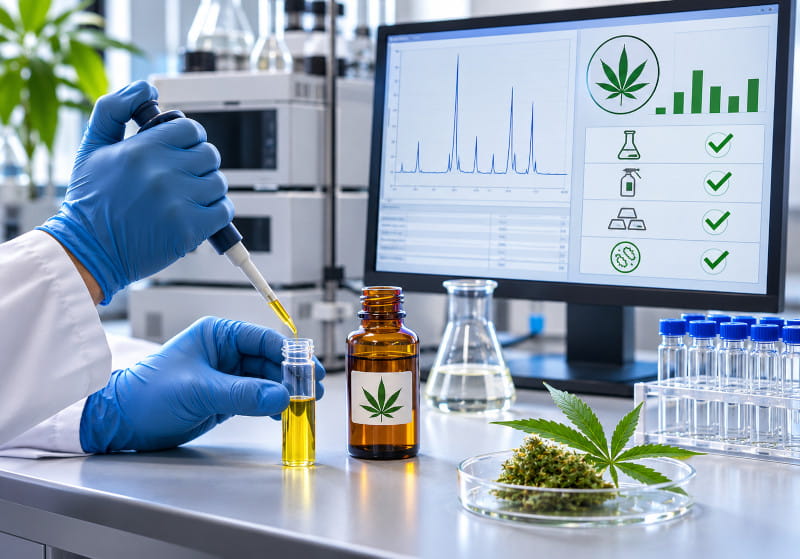
A Certificate of Analysis (COA) is a laboratory test report documenting the analytical results for a specific sample. A meaningful CBD certificate of analysis should clearly identify the product tested and provide verifiable information about the cannabinoids measured, the testing methods used and the corresponding results.
Testing by an independent laboratory accredited to ISO/IEC 17025 for the relevant analytical procedures is particularly valuable. Such accreditation confirms the laboratory's technical competence for specific testing methods. However, it does not automatically mean that every product tested meets all applicable legal requirements.
A transparent CBD laboratory certificate should include the following information in particular:
- Product and batch identification: Clear details identifying the sample tested so that the report can be matched to the correct product.
- Testing laboratory: The name of the laboratory performing the analysis and, where applicable, details of its accreditation.
- Date of analysis: The date of testing and, ideally, information about when the sample was received.
- Cannabinoid profile: Measured concentrations of CBD, THC and other cannabinoids included in the analysis.
- Analytical method and units: Information about the testing procedure used and clearly defined concentration measurements.
- Detection and quantification limits: Details of LOD and LOQ, particularly for results reported as "not detected".
- Contaminant testing: Results for relevant pesticides, heavy metals, residual solvents and, where applicable, microbiological contamination.
Caution is advisable if a certificate reports only the CBD content, omits important analytical limits or cannot be clearly linked to a specific product batch. It is also essential to distinguish between "not detected", "below the limit of quantification" and "not tested". These statements have different analytical meanings and should not be treated as equivalent.
Pesticides, Heavy Metals, Solvents and Microbiological Quality
In addition to cannabinoid content, testing for potential contaminants plays a central role in assessing the quality of CBD extracts. Hemp plants may come into contact with unwanted substances during cultivation, harvesting, processing or storage. Certain contaminants may also become concentrated during extraction alongside the desired plant compounds.
Pesticide residues may occur when crop protection products are used during cultivation or when residues from the surrounding environment reach the plant material. Which substances must be tested and which maximum residue levels apply depend on the relevant product category and applicable legislation. A meaningful laboratory report should clearly document the substances tested and their results.
Heavy metals and other elements may enter plant-based raw materials through soil, water or certain processing stages. Depending on the product and regulatory framework, particularly relevant substances may include lead, cadmium, arsenic and mercury. Since hemp can absorb certain elements from its environment, appropriate testing of both the starting material and finished extract is advisable.
Residual solvents may be particularly relevant when organic solvents such as ethanol or other suitable extraction and purification agents are used during manufacturing. These substances must be sufficiently removed during production. Appropriate laboratory testing can determine whether the solvent residues examined comply with the requirements applicable to the particular product.
Microbiological quality should also be considered. Plant material may be contaminated with bacteria, yeasts or moulds, for example. Depending on the starting material, processing methods and finished product, certain microbial toxins may also be relevant. Appropriate testing and hygienic manufacturing conditions help to control these risks.
Neither an "organic" designation nor a particularly light colour, pleasant smell or high CBD purity automatically guarantees that a product is free from unwanted residues. Similarly, laboratory results that fall within the tested limits do not mean that every conceivable contaminant has been ruled out. What always matters is which substances were actually tested, which analytical methods were used and which requirements apply to the respective product category.
| Testing Criterion | What Should You Look For? | Why Is It Important? |
|---|---|---|
| Batch number and analysis date | Clear product identification, batch number and an up-to-date test report | Ensures that the analysis corresponds to the product batch actually tested |
| CBD content | Measured CBD concentration with a clearly defined unit, such as mg/ml or a percentage | Allows comparison between the declared and actually measured CBD content |
| THC and other cannabinoids | Individual values for relevant cannabinoids, THC forms tested, and detection and quantification limits | Reveals the actual cannabinoid profile and helps interpret potential THC traces correctly |
| Terpene profile | Identified terpenes and their concentrations, provided that appropriate testing has been carried out | Makes it possible to verify claims about terpenes and aromatic plant compounds |
| Pesticide residues | List of pesticides tested, measured values and, where applicable, relevant maximum residue levels | Helps identify potential residues originating from cultivation and processing |
| Heavy metals and other elements | Testing for substances such as lead, cadmium, arsenic and mercury | Supports the assessment of potential contamination from soil, water or processing |
| Residual solvents | Testing for relevant solvents according to the manufacturing process used | Monitors potential residues from extraction and purification |
| Microbiological quality | Appropriate testing for relevant microorganisms and, where applicable, microbial toxins | Helps identify potential microbiological contamination of the product |
| Testing laboratory and analytical method | Laboratory name, testing procedures used, analytical limits and, where applicable, ISO/IEC 17025 accreditation | Improves transparency and enables a more reliable assessment of the test results |
Three Examples of How to Interpret CBD Product Claims Correctly
Product descriptions and marketing claims may contain useful information, but they cannot replace comprehensive laboratory testing. The following three examples demonstrate how typical claims about full spectrum CBD, broad spectrum CBD and CBD isolate can be assessed objectively.
- "Full spectrum CBD with 10% CBD": This statement initially describes the product's declared CBD concentration. However, it does not reveal which other cannabinoids are present or how much THC the product contains. It also provides no information about its terpene content. A reliable assessment requires a complete cannabinoid profile and, where appropriate, a separate terpene analysis.
- "Broad spectrum CBD – THC not detected": This statement means that no THC above the specified detection limit was identified using the analytical method applied. However, it does not guarantee the absolute absence of THC. The detection limit, the THC compounds tested and the link between the laboratory report and the relevant product batch are essential.
- "CBD isolate with 99% purity": A high degree of CBD purity is an important characteristic of an isolate. However, it does not automatically mean that the material is completely free from unwanted residues. The identity of the cannabidiol should also be verified, along with potential pesticides, heavy metals and relevant residual solvents.
These examples demonstrate why product designations, percentage figures and marketing promises should always be considered alongside actual laboratory results. A transparent certificate of analysis provides a much more reliable basis for assessment than the information displayed on the front of a product package.
What Are the Legal Differences Between CBD Products?
Whether a CBD product can be legally sold in Germany, Austria or another EU member state does not depend solely on whether it contains full spectrum CBD, broad spectrum CBD or CBD isolate. The decisive factors include the product category, composition, THC content, intended use and applicable legal requirements.
When assessing the legal status of a CBD product, it is important to distinguish between cannabidiol as an active substance, the hemp extract used and the finished consumer product. CBD isolate used as a raw material, for example, may be subject to different requirements than a CBD oil made from it and intended for oral consumption. Cosmetic products and medicinal products are also assessed under different legal frameworks. The term "CBD" alone is therefore insufficient to determine a product's legal classification reliably.
EU: CBD and the Novel Food Regulation
Within the European Union, the Novel Food Regulation (EU) 2015/2283 plays a central role in the regulation of CBD-containing foods and food supplements. It governs the placing on the market of novel foods for which there is insufficient evidence of significant consumption within the EU before the relevant cut-off date of 15 May 1997.
Under European food law, cannabinoid-containing hemp extracts and certain CBD preparations are generally classified as novel foods unless a relevant exemption applies. Their use in food may therefore require appropriate authorisation. This does not apply exclusively to CBD isolate: full spectrum and broad spectrum extracts may also fall within the scope of these requirements when marketed as foods or food supplements.
Novel food authorisation requires, among other things, a scientific safety assessment. This considers the characteristics of the substance or preparation concerned, potential health risks and the intended conditions of use. A low THC content or high CBD purity does not replace any required novel food authorisation. Further information is available from the European Commission on novel food procedures.
In 2026, the European Food Safety Authority (EFSA) published a provisional safe intake level for certain narrowly defined, highly purified CBD preparations. This level is 0.0275 milligrams of CBD per kilogram of body weight per day. For a person weighing 70 kilograms, this corresponds to approximately 1.9 milligrams of CBD per day. However, this value is not a general dosage recommendation and does not automatically apply to all CBD products. The information is based on the EFSA announcement published in 2026.
In particular, this provisional safe intake level must not be applied indiscriminately to full spectrum or broad spectrum extracts, whose composition may differ from that of highly purified CBD preparations. Likewise, a scientific safety assessment does not itself constitute regulatory authorisation to place a product on the market. Safety assessment, novel food authorisation and actual legal marketability are separate legal matters.
Germany and Austria: What Matters for Legal Classification
In Germany and Austria, CBD products must comply with the relevant European legislation as well as applicable national regulations. Which rules apply depends primarily on the product's composition, its intended purpose and the legal category into which it falls.
For CBD oils and other products intended for oral consumption, food law requirements are particularly relevant if they are classified as foods or food supplements. These may include novel food regulations, labelling requirements and restrictions on health claims. A CBD product cannot legally be marketed as a food supplement simply because it was produced from an approved industrial hemp variety or contains only small amounts of THC.
For CBD-containing cosmetic products, the requirements of European cosmetics legislation and, where applicable, additional substance-specific restrictions apply. Relevant factors include the ingredients used, product safety and the intended external application. Furthermore, the presentation or advertising of a cosmetic product must not imply that it has a medicinal purpose for which it has not received the appropriate authorisation.
If CBD products are advertised with claims relating to the treatment, relief or prevention of diseases, medicinal product legislation may also become relevant. Whether a product is classified as a medicinal product depends on its specific presentation and, where applicable, its pharmacological effects. Scientific research into CBD therefore does not automatically justify therapeutic claims for CBD products sold without medicinal authorisation.
Depending on the product and its composition, national regulations governing cannabis, THC and certain hemp products may also apply. The legal frameworks in Germany and Austria are not identical in every respect. Manufacturers and retailers should therefore take account of the latest regulatory classification applicable to the specific product and its intended market.
Why THC Content, Product Quality and Legal Marketability Must Be Assessed Separately
A CBD product may have a very low THC content and meet analytical quality standards without automatically being legally permitted for sale as a food. Conversely, the fact that a product belongs to a generally permitted category does not mean that every individual production batch meets the necessary quality and safety requirements.
An objective assessment therefore requires three separate questions to be answered:
- THC content: Which THC compounds are actually present, at what concentrations, and which legal requirements apply to the specific product?
- Product quality: Do the declared ingredients match the laboratory results, and has appropriate testing for relevant contaminants been carried out?
- Legal marketability: May the product be offered and sold in the relevant country, taking into account its specific composition, presentation and intended use?
These three criteria must be assessed independently. Neither a certificate of analysis nor a designation such as "THC-free", "full spectrum", "broad spectrum" or "CBD isolate" constitutes proof of legal marketability on its own.
Common Misconceptions About Full Spectrum, Broad Spectrum and CBD Isolate
Numerous claims circulate about full spectrum CBD, broad spectrum CBD and CBD isolate, often mixing scientific findings with marketing promises. Misunderstandings are particularly common when it comes to THC content, purity and the supposedly superior effects of certain extract types. The following statements should therefore be viewed critically.
- "Full spectrum CBD is always more effective than CBD isolate." There is currently insufficient scientific evidence to establish that full spectrum extracts are generally clinically superior. What matters is the actual composition, dosage and the specific effects being investigated.
- "Broad spectrum CBD is guaranteed to contain absolutely no THC." Broad spectrum extracts are generally processed to reduce or remove THC as much as possible. Whether small traces remain depends on the product and the sensitivity of the laboratory analysis used.
- "CBD isolate is always produced synthetically." CBD isolate can be obtained from hemp plants and subsequently isolated through several purification steps. The term "isolate" describes its high degree of purity, not necessarily the origin of the cannabidiol.
- "99% CBD purity means a product is completely free from contaminants." A high CBD content alone provides no information about possible pesticide residues, heavy metals or residual solvents. Additional, appropriate laboratory testing is required to assess these factors.
- "CO₂-extracted CBD is automatically higher quality." CO₂ extraction is an established method, but it does not guarantee superior quality on its own. The starting material, manufacturing conditions, purification processes and independent laboratory analyses are equally important.
- "The THC limit for industrial hemp automatically applies to CBD oils." Agricultural regulations governing hemp cultivation must not be confused with the legal requirements for finished CBD products. Depending on the product category, additional regulations and authorisation requirements may apply.
- "A certificate of analysis always proves the quality of a CBD product." Not every Certificate of Analysis is independent or comprehensive. Important factors include a suitable testing laboratory, clear identification of the production batch, transparent analytical methods and testing for relevant contaminants.
Frequently Asked Questions About CBD Extract Types
Q: What is the difference between full spectrum CBD and broad spectrum CBD?
A: The main difference lies in the THC content and the processing methods used. Full spectrum CBD contains other natural hemp compounds alongside cannabidiol and may contain small amounts of THC. In broad spectrum CBD, THC is generally specifically reduced or removed, while other cannabinoids and plant compounds are at least partially retained. The actual composition depends on the individual product.
Q: What is the difference between CBD isolate and full spectrum CBD?
A: CBD isolate consists almost entirely of purified cannabidiol, whereas full spectrum CBD also contains other hemp compounds. These may include additional cannabinoids, terpenes and various plant substances. CBD isolate typically has a very high degree of CBD purity but does not possess the broad cannabinoid profile of a full spectrum extract.
Q: Is full spectrum CBD always better than CBD isolate?
A: No, there is currently insufficient scientific evidence to establish that full spectrum CBD is generally more effective or safer than CBD isolate. The two extract types differ primarily in their composition. Whether additional cannabinoids and terpenes have a relevant influence under certain conditions must be assessed through specific scientific studies.
Q: Does full spectrum CBD always contain THC?
A: Full spectrum CBD may contain small amounts of THC, although a measurable THC concentration is not necessarily detectable in every product. The actual THC content depends on the hemp variety, manufacturing process and subsequent processing steps. Only an appropriate laboratory analysis of the respective production batch can provide a reliable answer.
Q: Is broad spectrum CBD really THC-free?
A: Broad spectrum CBD is generally produced with the aim of reducing or removing THC as extensively as possible. However, this does not automatically guarantee the complete absence of THC. Even if a laboratory report states "not detected", concentrations below the detection limit may still be present. The analytical method used and the documented laboratory results are therefore essential.
Q: Can CBD isolate still contain traces of other cannabinoids?
A: Yes, even highly purified CBD isolate may contain small residual amounts of other cannabinoids or impurities, depending on its degree of purity. A purity level of 99%, for example, does not mean that the remaining components have automatically been fully identified. Appropriate laboratory testing is required to determine their composition.
Q: What does "not detected" mean in a CBD laboratory analysis?
A: "Not detected" means that a particular substance was not identified above the specified detection limit using the analytical method applied. It does not necessarily mean that the substance is completely absent. The limit of detection (LOD) and limit of quantification (LOQ) help to interpret such laboratory results correctly.
Q: What role do terpenes play in full spectrum and broad spectrum extracts?
A: Terpenes are aromatic plant compounds that contribute to the characteristic scent of different hemp varieties. They may be present in both full spectrum and broad spectrum extracts, may be partially lost during processing or may be added afterwards. However, their presence alone does not prove any particular health benefit or a clinically relevant entourage effect.
Q: Has the entourage effect been scientifically proven?
A: The entourage effect is a scientifically investigated hypothesis, but it is not a universally proven characteristic of all cannabis extracts. Laboratory and other experimental studies provide indications of possible interactions between individual plant compounds. However, these findings do not yet provide sufficient evidence to establish that full spectrum CBD is generally clinically superior to CBD isolate.
Q: How can you recognise a high-quality CBD extract?
A: An important quality indicator is a transparent, preferably independent and batch-specific Certificate of Analysis (COA). It should document the actual CBD content, other relevant cannabinoids and appropriate testing for potential contaminants. The origin of the extract, manufacturing methods and transparent product labelling are also important assessment criteria.
Q: Can a CBD product labelled as THC-free still contain THC?
A: Yes, a CBD product advertised as THC-free may still contain small traces of THC under certain circumstances. Possible reasons include incomplete purification, differences between production batches or concentrations below the analytical detection limit. A label such as "0% THC" should therefore always be considered in conjunction with the actual laboratory results.
Q: Are full spectrum, broad spectrum and CBD isolate products legal in Germany and Austria?
A: The legal status of a product cannot be determined solely by whether it is described as full spectrum, broad spectrum or CBD isolate. Relevant factors include the product category, ingredients, THC content, intended purpose and applicable European and national regulations. In particular, CBD-containing foods and food supplements may be subject to the requirements of the Novel Food Regulation.
What Really Matters When Comparing CBD Extracts
Full spectrum CBD contains other components of the hemp extract alongside cannabidiol and may contain traces of THC. Broad spectrum CBD generally undergoes additional processing to reduce its THC content, while CBD isolate consists almost entirely of purified cannabidiol. These terms describe different compositions, but they do not establish a ranking in terms of quality, effectiveness or safety.
For an informed comparison, the batch-specific cannabinoid profile, actual CBD and THC concentrations, appropriate contaminant testing and legal classification are more important than marketing promises. You can find further information in our Canna Wiki article about terpenes and our guide to making your own CBD oil.
Scientific Sources and Further Reading
The following scientific publications and information provided by European and Austrian authorities form the basis for our assessment of CBD extract types, product quality, potential interactions between cannabinoids and legal requirements. Studies examining commercially available CBD products sometimes focus on individual national markets and are therefore not necessarily representative of all products sold within the European Union.
- Scientific review of the entourage effect and potential interactions between cannabis compounds (PubMed)
- Scientific investigation into the labelling and composition of commercial CBD products (PubMed)
- Study on the detection of THC in commercially available CBD products (PubMed)
- JAMA Network Open: Scientific analysis of the labelling and composition of CBD products
- European Food Safety Authority (EFSA): Provisional safe intake level for cannabidiol as a novel food (2026)
- Austrian Agency for Health and Food Safety (AGES): Information about cannabidiol (CBD)
- Austrian Consumer Health Portal: Cannabinoids and their legal classification in food products
- European Commission: Novel Food – Procedures, decisions and legal information