CBD for Dogs: Effects, Oil & Research
What do we know about CBD for dogs?
Updated: August 2026 | CBD for dogs: research, potential effects, safety, side effects, dosing questions, and the difference between CBD oil and hemp oil.
Author: Cannapot Grow Team | Reading time: approximately twenty-five minutes

The Most Important Points at a Glance
✓ CBD (cannabidiol) has now been investigated in dogs in several controlled veterinary studies. The research is more extensive than for many other pets, but it still does not allow blanket statements such as “CBD helps dogs with pain, anxiety, or epilepsy.”
✓ Several clinical studies are available on osteoarthritis and associated pain. Some show improvements in pain, activity, or mobility. However, a systematic review rated the scientific certainty of these results as very low.
✓ In drug-resistant idiopathic epilepsy, CBD has been studied in addition to existing antiepileptic medications. In controlled studies, seizure frequency decreased in some cases. However, CBD was used as an adjunct and not as a replacement for existing treatment.
✓ Studies on stress, separation, and car travel show possible effects on individual behavioral and stress markers. Other measurements remained unchanged. This does not support a generally calming effect of CBD in every dog.
✓ Certain THC-free CBD formulations were generally well tolerated by healthy dogs even over several months. However, researchers repeatedly observed an increase in alkaline phosphatase (ALP). Such a laboratory value should be assessed by a veterinarian in the context of other findings.
✓ CBD oil and hemp seed oil are not the same thing. Hemp seed oil is obtained from the seeds of the hemp plant and is not a relevant natural source of CBD. However, it can be used as a carrier oil for a CBD-containing product.
✓ CBD and THC must be clearly distinguished. Dogs are sensitive to THC. Ingestion can cause lethargy, impaired coordination, vomiting, tremors, hypothermia, or urinary incontinence, among other symptoms.
✓ A blanket recommendation such as “X drops of CBD oil per dog” is not reliable. CBD concentration, drop size, body weight, health status, medications, and product composition vary. The doses used in studies are therefore not a general dosing recommendation for dogs.
What is CBD and what does CBD mean for dogs?
CBD is short for cannabidiol, a naturally occurring cannabinoid found in the cannabis plant. The fundamental differences between CBD and THC include their effects and pharmacological properties. Unlike THC, CBD does not cause a typical intoxicating effect.
When people refer to “CBD for dogs,” “CBD oil for dogs,” or “CBD in dogs,” they may mean very different products. A CBD oil typically consists of cannabidiol or a cannabinoid-containing hemp extract and a carrier oil. MCT, sunflower, or hemp seed oil, for example, may be used for this purpose. Depending on the product, additional cannabinoids and other ingredients may also be present.
This distinction is crucial when evaluating studies. Results obtained with a precisely defined THC-free CBD distillate cannot automatically be transferred to a full-spectrum product, a CBD/CBDA-containing hemp extract, or a product with measurable amounts of THC. The dosage form can also influence how much CBD actually reaches the bloodstream.
Important for interpretation: “CBD oil” does not refer to a standardized study product. Concentration, extract type, carrier oil, additional cannabinoids, and possible contaminants can differ. Therefore, every study must be evaluated based on the preparation that was actually administered to the dogs.
How does CBD act in a dog's body?
Like other mammals, dogs have an endocannabinoid system. This includes naturally occurring endocannabinoids, receptors, and enzymes involved in various regulatory processes. However, the existence of this system alone does not indicate whether CBD is actually clinically effective for a particular disease in dogs.
The pharmacological action of cannabidiol is complex. CBD does not act exclusively through a single cannabinoid receptor, but can influence different receptor and enzyme systems. However, some of the known mechanisms come from laboratory studies and animal models outside canine medicine. Whether this results in a clinically relevant effect on pain, anxiety, or seizures in dogs must therefore be investigated in controlled studies for each individual application.
A mechanism of action does not prove efficacy: The fact that CBD interacts with biological signaling pathways in a dog's body does not prove a therapeutic effect. What matters are controlled studies in dogs with clinically relevant endpoints and an appropriate comparison group.
What does the research say about CBD for dogs?
Research on CBD in dogs now includes pharmacokinetics, tolerability, and several clinical applications. Osteoarthritis, idiopathic epilepsy, and various stress situations have been studied particularly often. However, many studies are small, use different CBD products, and do not investigate the same endpoints.
The evidence therefore has to be considered separately for each application. Findings on osteoarthritis, epilepsy, stress, and tolerability come from different study populations and were obtained using different preparations. A positive change in a small study using a particular extract does not mean that every CBD oil has the same effect in dogs. Likewise, good tolerability in healthy animals does not mean that the same use is equally safe in a dog with liver disease, epilepsy, or multiple medications.
| Study | Dogs / product | Investigated | Main result | Interpretation |
|---|---|---|---|---|
| Gamble et al., 2018 | Dogs with osteoarthritis; CBD-rich oil | 2 mg/kg every 12 hours in a crossover design | Improvements in several pain and activity assessments; ALP increased under CBD. | Small study; subjective endpoints and the specific study product limit generalizability. |
| McGrath et al., 2019 | 26 dogs with treatment-resistant idiopathic epilepsy | CBD in addition to existing antiepileptic medications | Seizure frequency decreased in the evaluated CBD group; there was no clear difference from placebo in the responder rate. | Small evaluable groups; CBD was used exclusively as an adjunct. |
| Verrico et al., 2020 | Dogs with osteoarthritis; free and liposomal CBD formulations | 4 weeks, randomized and placebo-controlled | Pain and mobility scores improved with certain doses or formulations. | Small clinical sample; the results are tied to the formulations studied. |
| Bradley et al., 2022 | 40 healthy dogs; THC-free CBD distillate vs. placebo | 4 mg/kg daily for 6 months | Generally well tolerated; temporary ALP increase in slightly more than half of the CBD-treated dogs. | Safety study in healthy dogs; no evidence of therapeutic efficacy. |
| Hunt et al., 2023 | 40 healthy dogs; THC-free CBD distillate | Single dose of approximately 4 mg/kg before separation or a short car journey | Some stress markers differed in favor of CBD, while others did not. | Specific stress models and only three dog breeds; authors were employed by Mars Petcare. |
| Rozental et al., 2023 | 51 dogs with drug-resistant idiopathic epilepsy | CBD as an adjunct to antiepileptic drugs; double-blind crossover study | At 9 mg/kg/day, seizure frequency decreased compared with placebo; the ≥50% responder rate did not differ significantly. | Important controlled study, but no evidence that CBD can replace antiepileptic medication. |
| Patikorn et al., 2023 | Systematic review; 5 studies with 117 dogs with osteoarthritis | Efficacy and safety of CBD for osteoarthritis | CBD might reduce pain scores; however, the evidence for clinical efficacy was rated as very uncertain. | All included studies had a high risk of bias. |
| Flint et al., 2024 | 19 dogs; THC-free CBD distillate | Daily administration for 6 months and repeated car journeys | Some behavioral and stress parameters were more favorable with CBD, while others were not. | Small group; all authors were employed by Mars Petcare. |
CBD for osteoarthritis and joint pain in dogs – what is known?
Osteoarthritis is one of the most frequently studied uses of CBD in dogs. Several small clinical studies report improvements in individual pain, activity, or mobility scores. Overall, however, the scientific evidence remains uncertain.
In a Cornell study published in 2018, dogs with osteoarthritis received either CBD oil or placebo in a randomized, placebo-controlled, blinded crossover design. At a study dose of 2 mg CBD per kg body weight every twelve hours, several veterinary and owner assessments improved. At the same time, an increase in alkaline phosphatase was observed.
Other studies produced partly similar results but used different preparations, doses, study durations, and measurement methods. These differences make it difficult to compare the results directly or transfer them to other CBD products.
A 2023 systematic review and meta-analysis summarized five studies involving a total of 117 dogs. According to the analysis, CBD might reduce certain pain scores. However, the authors rated the evidence for clinical efficacy as very uncertain. All included studies had a high risk of bias, and the products studied also differed considerably.
How to interpret the osteoarthritis evidence: The available studies provide initial clinical indications but do not justify the blanket statement “CBD works against osteoarthritis.” Osteoarthritis is a chronic joint disease that should be diagnosed by a veterinarian and treated individually. Studies have investigated CBD as a possible addition to existing treatment.
CBD for epilepsy and seizures in dogs – what do the studies show?
Several controlled studies in dogs are now available for drug-resistant idiopathic epilepsy. CBD was studied in addition to existing antiepileptic medications and not as a replacement for these drugs.
A randomized, blinded study from 2019 enrolled 26 dogs with treatment-resistant idiopathic epilepsy. In addition to their existing antiepileptic therapy, the CBD group received 2.5 mg CBD per kg body weight twice daily. After exclusions, nine dogs from the CBD group and seven from the placebo group were included in the analysis. Median seizure frequency decreased more in the CBD group. However, there was no clear difference between the groups in the number of dogs achieving at least a 50% reduction in seizure frequency.
A larger double-blind crossover study from 2023 examined 51 dogs that continued to have at least two seizures per month despite receiving at least one antiepileptic drug. An initially tested lower CBD dose met predefined criteria for insufficient effect; 9 mg/kg per day was then investigated. At this dose, seizure frequency decreased significantly compared with placebo. However, the proportion of dogs with a reduction in seizures of at least 50% again did not differ significantly between CBD and placebo.
In addition to potential effects, adverse reactions and changes in laboratory values must be considered. Among other findings, increased liver enzyme activities were observed in the epilepsy studies. At the same time, affected dogs may be receiving medications such as phenobarbital, levetiracetam, zonisamide, or other antiepileptic drugs. Veterinary monitoring is therefore particularly important.
Especially important in epilepsy: CBD should not be used on one's own initiative in place of a prescribed antiepileptic medication, and an existing medication should not be reduced or discontinued without veterinary consultation. The controlled studies investigated CBD as adjunctive therapy. Changes to epilepsy treatment belong under veterinary or neurological supervision.
Can CBD calm dogs during stress and anxiety?
Research on CBD for stress and anxiety in dogs has not yet produced a clear result. Some controlled studies show changes in individual stress markers, while other measurements remain unchanged. A reliably calming effect in every dog has therefore not been established.
In a study published in 2023, 40 healthy dogs received either placebo or a single dose of approximately 4 mg/kg of a THC-free CBD distillate. Afterwards, 21 dogs were briefly separated from a caregiver, while 19 dogs were taken on a short car journey. Some physiological and behavioral stress parameters showed differences in favor of CBD. Other measurements, including heart rate and heart rate variability, did not differ.
The study's significance is limited: the dogs lived in a research facility, belonged to only three breeds, and were not specifically selected as household dogs with diagnosed separation or travel anxiety. In addition, all authors were employed by Mars Petcare. This potential conflict of interest does not automatically invalidate the results, but it should be taken into account when evaluating them.
What is known about CBD for car travel and separation stress?
Car journeys and short separation situations have been studied directly in dogs. The findings so far suggest that CBD may influence individual stress responses. However, they do not demonstrate that CBD treats a clinical anxiety disorder in dogs.
Another study followed dogs for six months during repeated short car journeys. With a daily dose of approximately 4 mg/kg CBD, some parameters such as cortisol, whining, lip licking, and qualitative behavioral assessments were more favorable than with placebo at least at one measurement point. Other measurements, however, showed no difference. With 19 dogs, the sample was small; all authors in this study were also employed by Mars Petcare.
In cases of pronounced separation anxiety, panic during car travel, or other behavioral problems, veterinary or behavioral assessment is therefore more important than a blanket CBD recommendation. Pain, neurological disorders, or other physical causes can also trigger restlessness and behavioral changes.
How well does a dog absorb CBD after oral administration?
Orally administered CBD can enter a dog's bloodstream, but the concentrations achieved can differ considerably. Dose, feeding, carrier oil, dosage form, and the specific formulation can influence how CBD is absorbed and processed.
An older pharmacokinetic study showed low and highly variable bioavailability between individual dogs after oral administration. More recent studies using CBD-rich oils and other formulations also show substantial differences in the CBD concentrations measured. Stating a particular amount of CBD alone is therefore not enough to predict what concentration will be reached in the blood of an individual dog.
The dosage form also matters. Oil, capsule, soft chew, CBD isolate, or a cannabinoid-rich extract are not automatically pharmacokinetically comparable. When evaluating research results, the formulation used and the timing of measurements should therefore be considered alongside the mg/kg dose.
What effects does CBD have in dogs?
There is no single, universally valid scientific description of “the effect of CBD in dogs.” Whether CBD shows a measurable effect depends, among other things, on the application studied, the formulation, the dose, the duration of use, and the respective outcome measures.
The best-studied areas at present are symptoms associated with osteoarthritis, drug-resistant idiopathic epilepsy, and certain stress situations. There are also smaller studies, for example, on skin conditions or behavior. Results from these different fields of research must not be mixed together: a possible effect on osteoarthritis-related pain says nothing about whether CBD is also effective for separation stress or seizures.
Experiences reported by dog owners also cannot replace controlled studies. Expectations, medications administered at the same time, training, day-to-day condition, or natural fluctuations in a disease can influence perception. Particularly for pain and behavior, placebo groups and assessments that are as blinded as possible are therefore important for distinguishing actual effects from other influences.
What should be considered when using CBD for older dogs?
Advanced age alone is not a scientifically established indication for CBD use. In older dogs, the key considerations are which diseases are present, which medications they receive, and the condition of the liver, kidneys, heart, and musculoskeletal system.
Many studies on the longer-term tolerability of CBD were conducted in clinically healthy dogs. An older dog with osteoarthritis, heart disease, kidney disease, or several medications administered at the same time differs significantly from these study animals. In such dogs, potential interactions and monitoring of certain laboratory values may be particularly important.
Even seemingly typical signs of aging such as reduced activity, difficulty getting up, restlessness at night, or behavioral changes should not automatically be regarded as a normal consequence of age. Pain or other treatable causes may be behind them and should be assessed by a veterinarian.
CBD oil or hemp oil for dogs – what is the difference?
CBD oil and hemp seed oil are not the same thing. A CBD-containing oil specifically contains cannabidiol or a cannabinoid-containing extract. Hemp seed oil, by contrast, is obtained from the seeds of the hemp plant and is not a relevant natural source of CBD.
In everyday use, the term “hemp oil for dogs” is often used inconsistently. It may refer to ordinary hemp seed oil, a CBD-containing product using hemp seed oil as a carrier, or a hemp extract containing several cannabinoids. The name alone therefore does not reliably indicate either the CBD or THC content.
The cannabinoids a hemp plant produces are influenced, among other things, by its genetics. Specially selected CBD seeds can produce plants with CBD-dominant cannabinoid profiles. However, the CBD concentration actually contained in an oil later on also depends on the plant material, processing, extraction, and formulation of the specific product.
| Product / term | Source material | CBD | THC | Important for dog owners |
|---|---|---|---|---|
| CBD-containing oil | CBD or hemp extract plus carrier oil | intentionally included | depends on the product | CBD amount, THC content, and composition should be clearly stated. |
| Hemp seed oil | Seeds of the hemp plant | not a relevant natural source of CBD | not a relevant natural source; traces due to contamination are possible | Do not equate it with CBD oil. |
| Hemp/cannabis extract | Cannabinoid-containing parts of the plant | depends on the extract | depends on the extract | The term “hemp extract” alone says nothing about the exact amounts of cannabinoids. |
| Carrier oil | e.g. MCT, sunflower, or hemp seed oil | not necessarily present | not necessarily present | Serves as the liquid base; the type of oil can influence the formulation. |
| THC-containing cannabis oil | THC-containing cannabis extract plus carrier oil | depends on the product | intentionally present or contained in a relevant amount | Do not equate it with THC-free CBD oil; the risk profile for dogs is different. |
Does hemp seed oil contain CBD?
Hemp seeds are not a relevant natural source of CBD. Ordinary hemp seed oil should therefore not be equated with CBD oil.
Traces of cannabinoids may nevertheless occur in commercial hemp seed oils if the seeds came into contact with cannabinoid-containing plant parts during harvesting or processing. However, this does not make hemp seed oil a standardized CBD product. Whether an oil contains CBD, and in what amount, can only be assessed from the specific product declaration or an analytical test.
This should be distinguished from cannabis seeds for cultivation: their genetic characteristics help influence the cannabinoid profile that the resulting plants can develop.
Is CBD safe for dogs?
In controlled studies, certain CBD preparations were generally well tolerated by healthy dogs. However, this does not mean that every CBD product is equally suitable or harmless for every dog.
An important long-term study from 2022 examined 40 clinically healthy dogs. Twenty animals received 4 mg CBD per kg body weight daily for six months in the form of a THC-free CBD distillate, while the other twenty received a placebo. During the study, the dogs were examined regularly by veterinarians, including blood counts, blood chemistry, and urine testing. Overall, the CBD preparation used was well tolerated.
However, slightly more than half of the dogs treated with CBD temporarily showed elevated alkaline phosphatase (ALP). Other liver values examined did not simultaneously show comparable clinically significant changes. Bone-specific ALP was also elevated. An increase in ALP under CBD therefore cannot automatically be equated with liver damage.
However, these results apply to healthy dogs, a precisely defined THC-free formulation, and the dose used in the study. They do not allow a blanket assessment of other CBD products, higher doses, or longer-term use in dogs with illnesses.
What side effects of CBD have been observed in dogs?
Studies in dogs have described gastrointestinal complaints, vomiting, reduced appetite, tiredness, lethargy, ataxia, and changes in certain liver values, among other effects. Whether side effects occur and which ones appear can depend, among other things, on the dose and the preparation used.
At higher doses, adverse reactions occurred more frequently in some tolerability studies. At the same time, a CBD oil does not consist of cannabidiol alone: carrier oil, other ingredients, or undeclared amounts of THC can also play a role. Symptoms after taking any CBD product therefore cannot automatically be attributed to CBD itself.
Blood tests may also be relevant with repeated use. Several studies report an increase in alkaline phosphatase (ALP). Particularly in dogs with existing diseases or simultaneous treatment with other medications, it may therefore be advisable to have the use and possible changes monitored by a veterinarian.
What does an elevated ALP level in a dog taking CBD mean?
ALP stands for alkaline phosphatase. An elevated ALP level in a dog does not automatically mean that the liver is damaged. Other laboratory values, possible medications, symptoms, and the dog's general health must be considered when interpreting the result.
In the six-month safety study by Bradley et al., total ALP temporarily increased in some of the healthy dogs treated with CBD. At the same time, bone-specific ALP was also elevated and strongly correlated with total ALP. In contrast, no comparable clinically relevant changes were found in other liver values examined.
Elevated ALP values were also observed in studies on epilepsy and osteoarthritis. Interpretation can be particularly difficult when a dog is also receiving medications such as phenobarbital, since other drugs can also influence certain enzyme levels. A single elevated value should therefore always be considered in the context of the other findings.
An increase in ALP does not automatically mean liver damage: An elevated value should be assessed by a veterinarian. What matters is the overall picture, including other laboratory values, possible symptoms, medications, and how the values develop over time.
Why can THC be problematic for dogs?
THC and CBD must be clearly distinguished in dogs. Dogs are sensitive to THC. Results from studies using THC-free CBD preparations therefore cannot be transferred to THC-containing cannabis products.
After ingesting THC, dogs may develop lethargy, an unsteady gait or ataxia, vomiting, tremors, an unusually strong reaction to sounds or movements, urinary incontinence, a slowed heart rate, and lowered body temperature, among other symptoms. Cannabis edibles for humans may contain additional ingredients that create further risks. Examples include chocolate, xylitol, or very high-fat ingredients.
A CBD preparation that was shown in a study to contain no THC is therefore not comparable with a THC-containing cannabis oil. Products intended for humans should also not automatically be used in dogs.
In case of possible THC ingestion: If a dog shows unusual symptoms after ingesting cannabis, an edible, or a cannabinoid-containing oil, a veterinarian or veterinary emergency service should be contacted. If available, the packaging and information on ingredients and concentrations should be taken along. The approximate amount ingested can also be helpful for assessment.
Can CBD interact with medications in dogs?
Potential interactions between CBD and medications are also an important issue in dogs. However, robust clinical data are lacking for many drug combinations. It is therefore not possible to reliably make blanket statements about which combinations are generally unproblematic.
A controlled pharmacokinetic study in nine healthy Beagles investigated CBD together with phenobarbital. Under the conditions tested, no significant pharmacokinetic interactions were found. However, this does not mean that CBD can be combined with all medications without problems or that the same results apply to sick dogs and long-term use.
Laboratory studies using canine liver microsomes also show that CBD and CBDA can influence certain metabolic pathways mediated by cytochrome P450 enzymes. Such in-vitro findings do not yet prove a clinically relevant interaction in a living dog, but they provide an additional reason for caution.
If your dog regularly receives antiepileptic drugs, painkillers, sedatives, heart medications, or other long-term prescription drugs, any additional use of CBD should therefore be discussed with the treating veterinarian beforehand.
How is CBD oil administered to a dog?
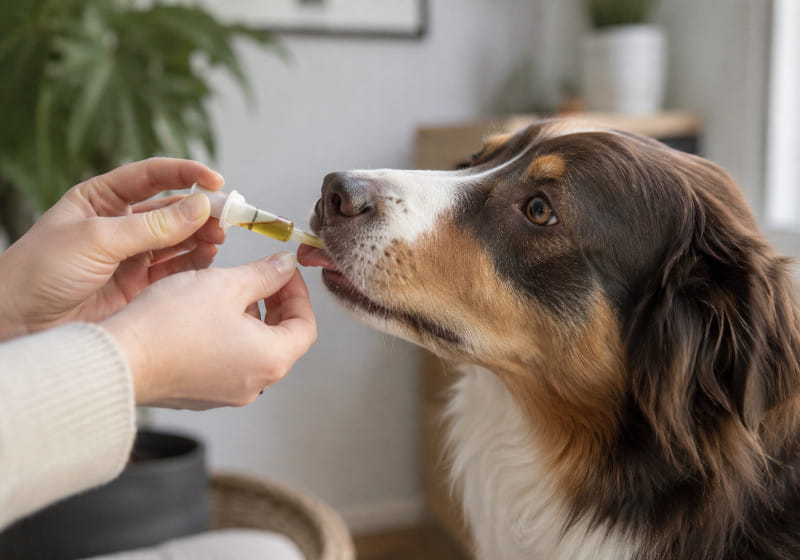
In studies with dogs, CBD has been administered orally in the form of oil, capsules, soft chews, or cannabinoid-rich extracts, among other forms. The dosage form can influence how precisely the amount can be measured and how CBD is absorbed by the body.
For liquid products, an exact volume measurement, for example in milliliters, is usually easier to interpret than a blanket number of drops. At the same time, it should be clearly stated how many milligrams of CBD are contained per milliliter. With capsules or soft chews, the amount of CBD per unit is usually clearly defined, although these products can also differ in formulation and absorption.
Feeding can also influence absorption. General information from the internet should therefore not replace either a clear product declaration or individualized veterinary instructions.
How is CBD dosed for dogs?
There is no universal, scientifically established CBD dosage for dogs. The amount used in a study depends, among other things, on the product, the application being investigated, and the respective study design. Amounts are usually expressed in milligrams of CBD per kilogram of body weight (mg/kg).
The amounts used in studies vary considerably. In osteoarthritis studies, for example, 2 mg/kg every twelve hours was used. In the epilepsy study by McGrath et al., the amount was 2.5 mg/kg twice daily, while the larger 2023 crossover study later investigated 9 mg/kg per day. Stress and long-term studies have used approximately 4 mg/kg, among other doses.
These values describe the conditions of individual studies and are not a general dosing recommendation. They do not indicate what amount would be appropriate for a particular dog with osteoarthritis, anxiety, epilepsy, or another condition. In addition, two products with the same mg/kg figure can result in different CBD concentrations in the blood because of differences in formulation.
A study dose is not a dosing recommendation: The mg/kg values mentioned are used solely to put the research into context. They are not instructions for self-treatment. Particularly in the case of illness, medication use, or abnormal liver values, possible use should be coordinated with a veterinarian.
How many drops of CBD oil should a dog get?
It is not possible to reliably specify a fixed number of drops for dogs. One drop does not correspond to a standardized amount of CBD. Depending on the bottle, dropper, oil, and concentration, the actual amount of CBD contained in each drop can vary considerably.
More important are the amount of CBD in milligrams per milliliter, the actual volume of liquid administered, body weight, health status, and possible medications. A percentage alone is less informative for many dog owners than a clear declaration in mg/ml.
A table following the pattern “5 kg = X drops, 10 kg = Y drops” would suggest a level of precision that is not supported by current research. We therefore deliberately do not provide a general drop table.
How can you identify a suitable CBD product for dogs?
With a CBD product for dogs, it should be as clear as possible what is actually contained in it. The amount of CBD, THC content, carrier oil used, other ingredients, and ideally a batch-specific laboratory analysis are particularly important.
In addition to cannabinoids, full-spectrum products and certain hemp extracts may also contain accompanying plant compounds such as terpenes. The potential significance of terpenes and CBD in combination should, however, always be considered in the context of the specific composition of the product in question.
| Check point | Why is it important? |
|---|---|
| CBD in mg and mg/ml | A specific quantity indicates how much CBD is actually contained in a particular amount of the product. |
| THC content | Dogs are sensitive to THC. The THC content should therefore be stated clearly and ideally analytically verified. |
| Batch-specific certificate of analysis | A current analysis can show whether the stated cannabinoid levels are correct and whether possible contaminants have been tested for. |
| Carrier oil | MCT, sunflower, hemp seed, and other oils differ. The carrier oil used can influence the formulation and possibly also absorption. |
| Complete ingredient list | Products intended for humans in particular may contain additional ingredients that are unsuitable or dangerous for dogs. |
| Defined dosing aid | A dosing aid with milliliter markings allows more precise measurement than a non-standardized number of drops. |
What mistakes should be avoided when using CBD for dogs?
When using CBD for dogs, misunderstandings often arise from unclear product information, blanket dosing tables, or transferring study results to completely different CBD products. CBD oil, hemp seed oil, and THC-containing cannabis oils should not be treated as equivalent either.
| Common mistake | Why is it problematic? |
|---|---|
| Treating CBD oil and hemp seed oil as the same thing | Hemp seed oil is not a relevant natural source of CBD and is therefore not automatically a CBD product. |
| Using a human product without checking it | THC content, concentration, sweeteners, and other ingredients may be unsuitable or dangerous for dogs. |
| Ignoring the THC content | THC can cause pronounced neurological and physical symptoms in dogs. |
| Interpreting a study dose as a dosing recommendation | An mg/kg dose from a study describes the conditions investigated there and is not a general recommendation for other dogs. |
| Comparing drops from different products | Drop size and CBD concentration are not standardized. The same number of drops can therefore contain different amounts of CBD. |
| Using CBD as a replacement for prescribed medication | In clinical studies in dogs, CBD was often used as an adjunct. Prescribed medications should not be reduced or discontinued on one's own initiative. |
| Automatically interpreting an ALP increase as liver damage | An elevated ALP value must be assessed together with other laboratory values, possible symptoms, medications, and its development over time. |
When should you ask a veterinarian about CBD for dogs?
Veterinary consultation is particularly important if your dog has epilepsy, chronic pain, osteoarthritis, liver or kidney disease, regularly receives medication, or develops unusual symptoms after ingesting a cannabis product.
Severe anxiety, sudden restlessness, changes in mobility, recurrent vomiting, or a clear decline in performance can also have various causes. Such symptoms should first be assessed rather than treated with CBD without a diagnosis.
If a dog may have ingested THC or an unknown cannabis product, the veterinarian or emergency service will benefit from information that is as precise as possible. This includes the product packaging, known ingredients and active substance levels, as well as the approximate amount ingested and the time of ingestion.
What questions about CBD for dogs remain unanswered?
Although considerably more studies in dogs are now available, many questions have not yet been conclusively answered. In particular, larger independent long-term studies using comparable measurement methods and precisely characterized CBD products are still lacking.
In osteoarthritis, for example, it remains unclear how large any additional benefit of CBD actually is and which formulations might be most suitable. In epilepsy, further larger studies are needed to better assess appropriate doses, possible target concentrations in the blood, and the influence of different antiepileptic drugs. For stress and anxiety, it also needs to be investigated more closely whether results obtained under controlled research conditions can be transferred to household dogs with actual behavioral problems.
Open questions also remain regarding potential interactions, long-term use in sick and older dogs, and the significance of repeatedly elevated ALP levels. In addition, CBD isolate, CBD distillate, CBD/CBDA-rich hemp extract, and full-spectrum products differ considerably in composition. A positive result with a particular preparation therefore cannot automatically be transferred to other products.
Research findings from different animal species also cannot simply be transferred from one species to another. Cats differ from dogs in metabolism and pharmacokinetics, among other aspects. We therefore consider the research specifically available for cats separately in our article on CBD for cats.
Current state of research: CBD has now been studied directly in dogs in a variety of areas. However, how meaningful the results are differs considerably depending on the application. Studies on osteoarthritis, epilepsy, stress, and safety should therefore each be considered separately.
Frequently asked questions about CBD for dogs
Is CBD suitable for dogs?
CBD has been investigated in dogs in several controlled studies. However, this does not mean that it is generally suitable for every dog. Product composition, THC content, health status, possible medications, and the reason for use are among the factors that matter.
Is CBD dangerous for dogs?
Certain THC-free CBD formulations were generally well tolerated by healthy dogs in studies. However, this does not make CBD completely risk-free. Side effects, changes in laboratory values, potential interactions, and differences between individual products must be taken into account.
What effects does CBD have in dogs?
A general therapeutic effect of CBD in dogs has not yet been established. Clinical studies have focused particularly on osteoarthritis, idiopathic epilepsy, and various stress situations. How meaningful the results are differs depending on the application and the study.
What side effects can CBD have in dogs?
Studies have described gastrointestinal complaints, vomiting, reduced appetite, tiredness, ataxia, and changes in alkaline phosphatase, among other effects. Which symptoms occur and how relevant they are can depend on the product, dose, and health status.
Can CBD help dogs with osteoarthritis?
Several small studies report improvements in certain pain, activity, or mobility scores in dogs with osteoarthritis. However, a systematic review rated the evidence for clinical efficacy as very uncertain. CBD is therefore not a scientifically established replacement for veterinary osteoarthritis treatment.
Can CBD be used for epilepsy and seizures in dogs?
In drug-resistant idiopathic epilepsy, CBD has been investigated as an adjunct to existing antiepileptic medications. Controlled studies show indications of a reduction in seizure frequency. However, they do not provide a basis for replacing prescribed antiepileptic medications with CBD on one's own initiative.
Can CBD calm dogs during stress or anxiety?
Some studies show changes in individual stress parameters, while other measurements remain unchanged. A reliably calming effect in every dog or a proven treatment for clinical anxiety disorders cannot be inferred from this.
Does CBD help dogs during car travel?
Car journeys have been investigated directly in controlled studies in dogs. CBD influenced individual physiological and behavioral stress markers. However, the studies were small and conducted with healthy dogs under research conditions. The results therefore cannot automatically be transferred to every dog with travel anxiety.
How much CBD can a dog have?
There is no universal, scientifically established CBD dose for dogs. The mg/kg values used in studies describe the respective experimental setup and are not a general dosing recommendation for your own dog.
How many drops of CBD oil should a dog get?
It is not possible to reliably specify a fixed number of drops because one drop does not correspond to a standardized amount of CBD. Important factors include the CBD content in mg/ml, the actual volume of liquid administered, body weight, health status, and possible medications.
Can you give a dog CBD oil for humans?
A CBD product for humans is not automatically suitable for dogs. THC content, concentration, carrier oil, flavorings, sweeteners, and other ingredients must be considered. Xylitol in particular can be extremely dangerous for dogs.
What is the difference between CBD oil and hemp oil for dogs?
CBD oil specifically contains cannabidiol or a cannabinoid-containing extract. By contrast, “hemp oil” often refers to hemp seed oil. Hemp seed oil is made from the seeds and is not a relevant natural source of CBD. However, it can be used as the carrier oil in a CBD product.
Is hemp oil good for dogs?
Whether hemp seed oil is useful for a dog is primarily a nutritional question and should not be equated with CBD research. Pure hemp seed oil is not CBD oil. The amount, purpose of feeding, energy content, and health status should therefore be assessed separately.
Is THC dangerous for dogs?
THC can cause pronounced neurological and physical symptoms in dogs. These include lethargy, ataxia, vomiting, tremors, hypothermia, and urinary incontinence, among others. If ingestion is suspected, a veterinarian or veterinary emergency service should be contacted.
Can CBD interact with medications in dogs?
Interactions are possible in principle and have not yet been adequately studied clinically for many medication combinations. Particularly with long-term medication or treatment with antiepileptic drugs, additional CBD use should be discussed with a veterinarian beforehand.
What does an elevated ALP value mean with CBD?
An elevated ALP level has been observed in several CBD studies involving dogs, but it does not automatically mean liver damage. Other laboratory values, possible symptoms, medications, and the development of the value over time must be considered when assessing it.
How should CBD for dogs be assessed based on current research?
CBD for dogs is now considerably better studied than it was just a few years ago. Direct studies in dogs have investigated osteoarthritis, idiopathic epilepsy, stress situations, pharmacokinetics, and longer-term tolerability, among other areas. However, this still does not result in a general recommendation for CBD for specific symptoms or diseases.
How meaningful individual results are depends heavily on the specific application, the number and selection of dogs studied, and the preparation used. A THC-free CBD distillate, a CBD/CBDA-rich hemp extract, and a full-spectrum product cannot simply be treated as scientifically equivalent. The same applies to the doses used in the studies.
For dog owners, this means above all that CBD should neither be dismissed across the board as ineffective nor regarded as a scientifically established treatment. The research to date provides interesting indications in individual areas, but it also clearly shows its limitations. Product composition, THC content, possible side effects, existing diseases, and medications administered at the same time must therefore always be taken into account.
You can find more detailed articles on cannabinoids, cannabis, and current research topics in our Canna Wiki.
Scientific sources
• Gamble LJ et al. (2018): Pharmacokinetics, Safety, and Clinical Efficacy of Cannabidiol Treatment in Osteoarthritic Dogs. Frontiers in Veterinary Science. PMID: 30083539.
• McGrath S et al. (2019): Randomized blinded controlled clinical trial to assess the effect of oral cannabidiol administration in addition to conventional antiepileptic treatment on seizure frequency in dogs with intractable idiopathic epilepsy. Journal of the American Veterinary Medical Association. PMID: 31067185.
• Deabold KA et al. (2019): Single-Dose Pharmacokinetics and Preliminary Safety Assessment with Use of CBD-Rich Hemp Nutraceutical in Healthy Dogs and Cats. Animals. PMID: 31635105.
• Verrico CD et al. (2020): A randomized, double-blind, placebo-controlled study of daily cannabidiol for the treatment of canine osteoarthritis pain. Pain. PMID: 32345916.
• Mejia S et al. (2021): Evaluation of the Effect of Cannabidiol on Naturally Occurring Osteoarthritis-Associated Pain: A Pilot Study in Dogs. Journal of the American Animal Hospital Association. PMID: 33450016.
• Doran CE et al. (2021): Drug-drug interaction between cannabidiol and phenobarbital in healthy dogs. American Journal of Veterinary Research. PMID: 34727050.
• Bradley S et al. (2022): Long-term daily feeding of cannabidiol is well-tolerated by healthy dogs. Frontiers in Veterinary Science. PMID: 36213402.
• Klatzkow S et al. (2023): Evaluation of the efficacy of a cannabidiol and cannabidiolic acid rich hemp extract for pain in dogs following a tibial plateau leveling osteotomy. Frontiers in Veterinary Science. PMID: 36686184.
• Hunt ABG et al. (2023): A single dose of cannabidiol (CBD) positively influences measures of stress in dogs during separation and car travel. Frontiers in Veterinary Science. PMID: 36908527.
• Patikorn C et al. (2023): Efficacy and safety of cannabidiol for the treatment of canine osteoarthritis: a systematic review and meta-analysis of animal intervention studies. Frontiers in Veterinary Science. PMID: 37781283.
• Rozental AJ et al. (2023): The efficacy and safety of cannabidiol as adjunct treatment for drug-resistant idiopathic epilepsy in 51 dogs: A double-blinded crossover study. Journal of Veterinary Internal Medicine. PMID: 37889215.
• Court MH et al. (2024): Cannabidiol and cannabidiolic acid: Preliminary in vitro evaluation of metabolism and drug-drug interactions involving canine cytochrome P-450, UDP-glucuronosyltransferase, and P-glycoprotein. Journal of Veterinary Pharmacology and Therapeutics. PMID: 37469115.
• Flint HE et al. (2024): Daily dosing of cannabidiol (CBD) demonstrates a positive effect on measures of stress in dogs during repeated exposure to car travel. Journal of Animal Science. PMID: 38244994.
• Merck Veterinary Manual (2026): Toxicosis in Dogs and Cats From Tetrahydrocannabinol (THC).
• Merck Veterinary Manual (2026): Toxicosis in Dogs and Cats From Cannabidiol (CBD).