CBD for Cats: Effects, Oil & Hemp Oil
What do we know about CBD for cats?
Updated: August 2026 | CBD for cats: research, potential effects, safety, side effects, dosage questions, and the difference between CBD oil and hemp oil.
Author: Cannapot Grow Team | Reading time: approximately twenty-five minutes
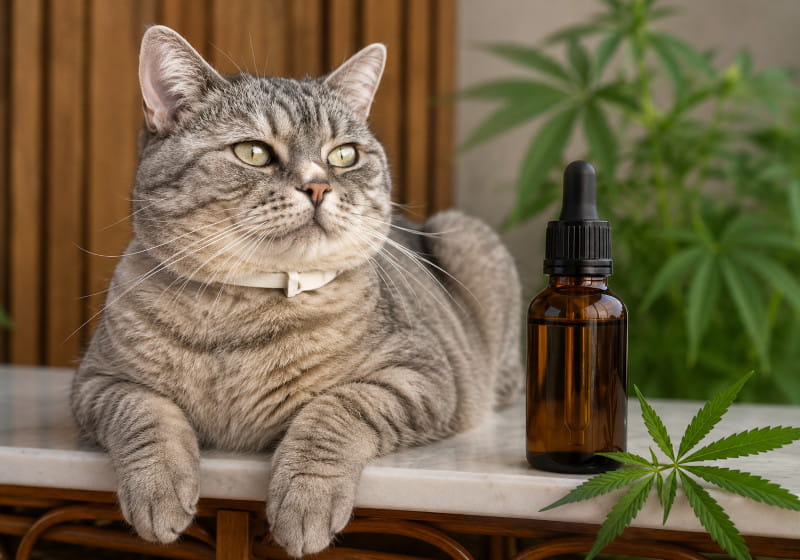
The Most Important Points at a Glance
✓ CBD (cannabidiol) is increasingly being studied in connection with cats as well. Initial veterinary studies provide important insights, but scientific evidence for specific therapeutic effects remains limited.
✓ Orally administered CBD is absorbed into the bloodstream in cats. However, the amount of CBD actually absorbed can vary considerably from one cat to another and depends, among other things, on the formulation used.
✓ Studies in healthy cats provide initial insights into the short- and longer-term tolerability of CBD. However, this does not mean that every CBD product is equally safe for every cat, at every dose, or for every medical condition.
✓ There are initial clinical data for osteoarthritis and the associated joint pain in cats. A small placebo-controlled study from 2025 showed improvements in pain and function scores, but the small number of participants and high dropout rate limit the strength of the findings.
✓ Research on stress and anxiety has not yet produced a clear picture. Small studies have reached different conclusions, so a reliable calming effect of CBD in cats is currently not considered proven.
✓ CBD oil and hemp seed oil are two different products. Hemp seed oil is obtained from the seeds of the hemp plant and is not a relevant natural source of CBD. However, it can be used as a carrier oil for a CBD-containing product.
✓ The distinction between CBD and THC is particularly important. In controlled studies, THC-containing oils were more frequently associated with lethargy, impaired coordination, hypothermia, and protrusion of the third eyelid, among other effects.
✓ A blanket recommendation such as “X drops of CBD oil per cat” is not reliable. CBD concentration, drop size, body weight, health status, and product composition can vary considerably. Dosages used in studies are therefore not general dosage recommendations.
What is CBD and what does CBD mean for cats?
CBD stands for cannabidiol (CBD), a naturally occurring cannabinoid in the cannabis plant. Unlike THC, CBD does not cause the intoxicating effects typically associated with cannabis.
When people refer to “CBD for cats” or “CBD oil for cats,” they usually mean a product in which cannabidiol is combined with a carrier oil. However, the exact composition can vary considerably. Examples include CBD isolates or hemp extracts containing various cannabinoids, as well as different carrier oils.
These differences are also important when evaluating scientific studies. Results obtained with a precisely defined THC-free CBD distillate cannot automatically be applied to another CBD oil containing additional cannabinoids. The same applies to findings from studies in dogs or humans: they can provide indications, but they are not automatically transferable to cats.
Important: Very different products can be marketed under the term “CBD oil.” CBD concentration, carrier oil, other cannabinoids, and additional ingredients can vary. Studies must therefore always be interpreted in light of the exact formulation that was investigated.
What is the difference between CBD and THC in cats?
CBD and THC are different cannabinoids and should not be equated, especially in cats. The fundamental differences between CBD and THC include their effects and pharmacological properties, among other things. Studies in cats also show that THC-containing oils have a different side-effect profile from CBD-dominant products.
In a blinded, placebo-controlled study involving 20 healthy cats, CBD-dominant, THC-dominant, and combined CBD/THC oils as well as various carrier oils were investigated. With THC-containing formulations, lethargy, ataxia – meaning impaired coordination of movement –, hypothermia, and protrusion of the third eyelid occurred more frequently. The observed adverse events were temporary under the controlled study conditions. However, this in no way means that accidental ingestion of THC is harmless for a cat.
The study also provided indications that CBD and THC may influence each other’s absorption and processing in the body when administered together. Results from a study using pure or THC-free CBD therefore cannot simply be applied to a CBD/THC product.
Can CBD be used in cats?
CBD has already been administered orally to cats in several scientific studies. As a result, there is now direct evidence about how cats absorb and tolerate CBD. However, the available clinical data are not sufficient to support a general recommendation for treating specific medical conditions.
An important distinction is necessary here: the fact that CBD is absorbed by the body and tolerated by the cats in a study does not mean that a therapeutic effect has been proven. Results from healthy study cats also cannot automatically be applied to older animals or cats with liver, kidney, heart, or other diseases.
If a cat is ill, regularly receives medication, or shows unusual symptoms, CBD should therefore never replace a veterinary diagnosis or necessary treatment. Anyone considering using CBD additionally in such a situation should discuss it with the treating veterinarian beforehand.
How does CBD work in a cat’s body?
Like other mammals, cats also have what is known as an endocannabinoid system. This endogenous signaling system consists, among other things, of endocannabinoids, receptors, and enzymes and is involved in various regulatory processes in the body.
CBD does not act like a simple switch that merely activates a particular cannabinoid receptor. Instead, cannabidiol can interact with various molecular targets. Which of these mechanisms actually have a clinically relevant effect in cats must be investigated separately for each condition.
Mechanism does not equal proof of efficacy: The endocannabinoid system explains why cannabinoids can, in principle, interact with a cat’s body. However, its existence does not prove that CBD can effectively treat pain, anxiety, osteoarthritis, or other conditions in cats.
What does research say about CBD for cats?
Research on CBD in cats has increased significantly in recent years. The absorption and tolerability of CBD are currently the best-studied areas. By contrast, there are still far fewer clinical studies on specific symptoms or diseases.
A veterinary review from 2025 reaches a correspondingly cautious conclusion: several studies are now available on the absorption and processing of CBD in cats, along with some clinical work on pain, anxiety, and stress. Overall, however, the scientific evidence for therapeutic use remains limited. In addition, different CBD products can lead to markedly different concentrations in the blood.
| Study | Cats / product | Investigated | Key finding | Assessment |
|---|---|---|---|---|
| Deabold et al., 2019 | 8 healthy cats; CBD-rich hemp product | Absorption and 12-week use | Cats reached markedly lower CBD serum concentrations than dogs; one cat showed persistently elevated ALT levels. | Small study in healthy animals; therapeutic efficacy was not investigated. |
| Kulpa et al., 2021 | 20 healthy cats; CBD, THC, and CBD/THC oils | Tolerability of increasing doses | With THC-containing oils, lethargy, impaired coordination, hypothermia, and protrusion of the third eyelid were observed more frequently, among other effects. | Important for distinguishing between CBD and THC; healthy cats were studied under controlled conditions. |
| Rozental et al., 2022/2023 | 8 healthy cats; CBD isolate in sunflower oil | Single doses of 2.5–80 mg/kg and absorption in the body | CBD was detectable in plasma after administration; exposure increased with higher doses and varied considerably between individual cats. | The study doses investigated are not general dosage recommendations. |
| Coltherd et al., 2024 | healthy cats; THC-free CBD distillate | 4 mg/kg daily; up to 26 weeks | CBD was absorbed and, under the conditions of the study, was generally well tolerated over 26 weeks. | The results apply to healthy cats and the specific CBD formulation that was studied. |
| Taylor et al., 2024 | healthy cats; THC-free CBD | Single dose of 4 mg/kg before transport and exposure to an unfamiliar environment | No significant effect of CBD was found for the stress parameters examined. | The results argue against the blanket claim that CBD reliably calms cats. |
| 2024 – Separation stress | 10 healthy cats; CBD vs. sunflower oil | 4 mg/kg/day for 2 weeks | Observed behavioral differences were interpreted as an indication of a possible anxiety-reducing effect. | Very small study; moreover, a different stress situation was investigated than in the transport study. |
| 2025 – Osteoarthritis | 26 enrolled cats; CBD/CBDA paste vs. placebo | Pain and mobility function in naturally occurring osteoarthritis | Among the cats that completed the study, the assessed pain and function scores improved compared with placebo. | Only 14 cats completed the study; the high dropout rate limits the strength of the findings. |
How well does a cat absorb CBD orally?
Orally administered CBD can enter the bloodstream in cats. However, the amount actually detectable there can vary considerably between individual animals and depends, among other things, on dose, formulation, and other factors.
In a dose-escalation study, eight healthy cats each received a single CBD dose between 2.5 and 80 mg/kg. CBD was subsequently detectable in plasma, with maximum concentration and total exposure increasing as the dose increased. At the same time, there were marked differences between individual cats. At a dose of 2.5 mg/kg, for example, the measured total exposure differed several-fold between individual animals.
An earlier study in dogs and cats also shows why results from dog studies cannot simply be transferred to cats. At comparable CBD doses, average maximum serum concentrations were considerably lower in cats than in dogs. However, this study alone does not allow a definitive assessment of which differences in absorption, distribution, and metabolism are responsible. Research specifically concerning the other species is therefore covered separately in our guide to CBD for dogs.
How does CBD affect cats?
Based on the current state of research, there is no universally applicable “effect of CBD in cats.” What matters instead is whether a specific effect has actually been investigated and demonstrated in controlled studies in cats.
Reports from cat owners can provide interesting indications, but they are not scientific proof of efficacy. Observed changes may, for example, be influenced by the natural course of a condition, other treatments, or owners’ expectations. Controlled comparison groups are therefore especially important for factors that are difficult to measure, such as pain, restlessness, or behavior.
Results from laboratory studies or studies in humans and dogs also cannot automatically be transferred to cats. Although initial clinical studies directly in cats are now available, meaningful data are still lacking for many of the commonly cited uses of CBD.
CBD for osteoarthritis and pain in cats – what is known?
There are now initial controlled clinical data in cats with osteoarthritis that suggest a possible benefit from a CBD/CBDA formulation. However, the existing evidence is still insufficient to make the general claim that CBD effectively treats osteoarthritis pain in cats.
In a randomized, double-blind, placebo-controlled crossover study published in 2025, cats with naturally occurring osteoarthritis were investigated. The animals received either a CBD/CBDA-rich hemp paste or a placebo for six weeks at a time. Among the cats that completed the study, the assessed pain and function scores improved during the CBD/CBDA phase compared with placebo.
An important limitation, however, is the small number of cats that remained in the study until the end: of the 26 animals originally enrolled, only 14 completed the study. A common reason for withdrawal was that cats would not accept the paste; vomiting was also reported as a reason for withdrawal. In a small study in particular, such a high dropout rate can substantially limit the strength of the findings.
Assessment: The osteoarthritis study provides considerably more meaningful data than individual anecdotal reports because it was randomized, blinded, and placebo-controlled. Nevertheless, it is not definitive proof of efficacy. Larger studies with more cats and different CBD formulations are needed for that.
Can CBD calm cats with stress and anxiety?
Whether CBD can reliably calm cats or reduce stress and anxiety has not yet been scientifically established. The few studies that have investigated CBD directly in cats have so far produced differing results.
In one controlled study, healthy cats received a single dose of 4 mg CBD per kg body weight before being transported in a carrier and then exposed to an unfamiliar person in an unfamiliar environment. No significant difference due to CBD administration was found in the physical and behavioral stress markers examined.
Another small study involving ten cats instead investigated short-term separation stress. After two weeks of daily administration of 4 mg CBD per kg body weight, behavioral differences were observed compared with the placebo condition. The authors interpreted these as a possible indication of an anxiety-reducing effect.
Because the two studies examined different stress situations, treatment periods, and outcome measures, their results cannot be directly compared. Statements such as “CBD calms cats” or, conversely, “CBD does not work against stress in cats” would therefore both be overly broad. The current state of research provides initial indications, but not yet reliable and generally transferable proof of efficacy.
What should be considered when using CBD for older cats?
Older age alone is not a scientifically proven reason to use CBD. In older cats, existing diseases, liver and kidney function, and medications given at the same time are much more important factors.
Many of the tolerability studies conducted so far involved clinically healthy cats. Their results therefore cannot automatically be transferred to older animals that, for example, have chronic kidney or liver disease or are being treated for several conditions at the same time. In such cats in particular, any potential use of CBD should be discussed with the treating veterinarian beforehand.
CBD oil or hemp oil for cats – what is the difference?
CBD oil and hemp seed oil are not the same. Hemp seed oil is obtained from the seeds of the hemp plant and is not a relevant natural source of CBD. CBD-containing oils, by contrast, deliberately contain cannabidiol derived from cannabinoid-rich parts of the plant or corresponding extracts.
How much CBD and other cannabinoids a cannabis plant produces depends, among other things, on its genetics. You can find an overview in our CBD-rich cannabis strains. You can find the corresponding selection of CBD seeds separately in the Cannapot Seedshop.
In everyday use, the terms “CBD oil” and “hemp oil” are often mixed up. It is therefore worth looking closely at the composition: pure hemp seed oil is, first and foremost, a plant oil made from hemp seeds. However, it can also serve as a carrier oil for a CBD product by adding CBD or a defined hemp extract.
| Product / term | Source material | CBD | THC | Important for cat owners |
|---|---|---|---|---|
| CBD-containing oil | CBD or hemp extract plus carrier oil | deliberately included | depends on the product | CBD concentration and THC content should be clearly stated and analytically verifiable. |
| Hemp seed oil | Seeds of the hemp plant | not a relevant natural source of CBD | not a relevant natural source; trace amounts possible due to contamination | Do not confuse it with a CBD-containing oil. |
| Hemp/cannabis extract | cannabinoid-containing parts of the plant | depends on the extract | depends on the extract | The term “hemp extract” alone does not indicate the actual CBD or THC content. |
| Carrier oil | e.g. MCT, sunflower, or hemp seed oil | not necessarily included | not necessarily included | Serves as a liquid base for CBD or an extract; the type of carrier oil can also be relevant. |
| THC-containing cannabis oil | THC-containing cannabis extract plus carrier oil | depends on the product | deliberately included or present in a relevant amount | Do not equate it with a THC-free CBD product; THC has a different risk profile in cats. |
Does hemp seed oil contain CBD?
Hemp seeds themselves are not a relevant natural source of CBD. Nevertheless, small amounts of various cannabinoids can sometimes be detected in commercially available hemp seed oil, for example if the seeds come into contact with cannabinoid-rich plant material during harvesting or processing.
Analyses of commercial hemp seed oils show that CBD, THC, and other cannabinoids can in fact be detected in some products. However, this does not make hemp seed oil a standardized CBD oil. The measured amounts can vary from product to product – another reason to pay attention to the exact composition and not rely solely on an imprecise term such as “hemp oil.”
Is CBD safe for cats?
Several controlled studies show that certain CBD formulations were generally well tolerated by healthy cats under the respective study conditions. However, this does not support the blanket conclusion that every CBD product is safe for every cat.
A randomized, blinded, placebo-controlled long-term study using a THC-free CBD distillate is particularly informative. Healthy cats received 4 mg CBD per kg body weight daily; in one part of the study, administration was continued for 26 weeks. The authors considered the CBD formulation investigated to be generally well tolerated under these conditions.
However, these findings have clear limitations: clinically healthy cats, a specific THC-free product, and a fixed study dose were investigated. No conclusions can therefore be drawn about the safety of arbitrary CBD products or tolerability in sick cats or cats taking medication at the same time.
What side effects have been observed in cats?
Studies of CBD in cats have reported, among other things, excessive licking, head shaking, lip smacking, increased salivation, as well as occasional gastrointestinal symptoms and changes in certain laboratory values.
However, not every one of these reactions must be a direct side effect of CBD. Head shaking, excessive licking, or lip smacking immediately after administration may, for example, also be related to the taste, the oil used, or the method of administration. The carrier oil may also play a role: in one study with increasing cannabinoid doses, gastrointestinal symptoms occurred more frequently with formulations containing MCT oil.
Changes in liver values have also occasionally been observed. In a 12-week study, one of eight cats showed persistently elevated ALT levels. In a long-term study published in 2024, ALT was elevated in the CBD group during a four-week trial phase. In the 26-week trial phase, by contrast, there were no statistically relevant differences in ALT between CBD and placebo within the predefined limits. Because the studies were small and used different study conditions, no generally applicable conclusions can yet be drawn from these findings.
We explain in detail which adverse effects of cannabidiol are known independently of the specific research in cats in our guide to side effects and risks of CBD.
Why is THC particularly important to consider in cats?
THC has a markedly different effect and side-effect profile in cats than CBD. The THC content of a product is therefore an important safety consideration and should not be judged solely by the term “CBD oil,” but checked specifically.
In a controlled study of CBD, THC, and combined CBD/THC oils, THC-containing formulations were more frequently associated with lethargy, hypothermia, impaired coordination, and protrusion of the third eyelid. Products intended for humans are therefore not automatically suitable for cats – especially if they contain THC or other ingredients whose suitability for cats has not been established.
A label stating “THC-free” is also not automatically equivalent to analytical proof. Studies of commercially available CBD products have shown that THC can sometimes be detectable despite contrary labeling. A current, batch-specific certificate of analysis can therefore be much more informative than a product or marketing claim alone.
In the event of possible THC ingestion: If a cat develops unusual neurological or physical symptoms after contact with cannabis or a cannabinoid-containing product, do not wait or experiment with additional products. Contact a veterinarian or veterinary emergency service and provide as much detail as possible about the product involved, its ingredients, concentration, and – if known – the amount ingested.
Can CBD interact with medications in cats?
Possible interactions between CBD and medications must also be considered in cats. However, such interactions have so far been inadequately studied clinically in cats, so no reliable list of safe or problematic medication combinations can be provided.
CBD can affect enzyme systems involved in the breakdown and processing of medications. The significance of this in an individual cat may depend, among other things, on the medication used, the amount of CBD, liver function, and other individual factors. Findings from studies in humans or other animal species can indicate possible interactions, but they cannot automatically be transferred to cats.
We discuss the general mechanisms and currently known findings on CBD interactions with medications in detail in a separate guide. Important: findings from human studies cannot automatically be transferred to cats.
If your cat regularly receives medication, any additional use of CBD should therefore be discussed with the treating veterinarian beforehand. This applies in particular to chronic diseases and medications whose dosage must be adjusted very precisely.
How is CBD oil administered to a cat?
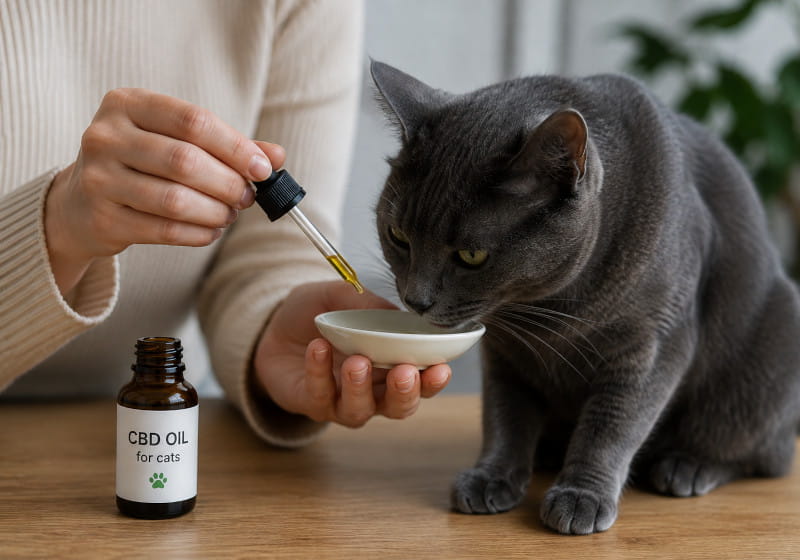
In scientific studies, CBD has been administered orally to cats in various forms, including as an oil, with a meal, or as a paste. How well a cat accepts the particular formulation can also influence how much of the administered amount is actually absorbed.
When administered directly in or around the mouth, some cats showed reactions such as head shaking, licking, or increased salivation. In one study using a CBD/THC hemp extract, individual cats showed salivation after administration and at the same time reached lower cannabinoid concentrations in the blood. An administered amount therefore does not necessarily have to be fully absorbed by the body.
When CBD is given with food, the product composition and feeding status can also influence absorption. Instructions for use of a product intended for animals and veterinary guidance should therefore not be replaced by blanket recommendations from the internet.
How is CBD dosage determined for cats?
There is currently no universal, scientifically established CBD dosage for cats that can be recommended regardless of the product, reason for use, and health status. In studies, CBD amounts are usually stated in milligrams per kilogram of body weight (mg/kg).
The amounts investigated in studies vary considerably. For example, doses between 2.5 and 80 mg/kg were examined in a pharmacokinetic single-dose study, while 4 mg/kg daily was used in a long-term study. These figures describe only the respective study design and are not a recommendation to give comparable amounts to your own cat.
Study dose ≠ dosage recommendation: A mg/kg value mentioned in a scientific study merely describes the amount the cats received under the respective research conditions. It does not indicate which dose is suitable, effective, or safe for your cat.
How many drops of CBD oil should a cat receive?
There is no reliable way to give a blanket number of CBD drops for cats. One drop does not correspond to a standardized CBD dose. Depending on the product, two drops of the same size can contain completely different amounts of CBD.
Relevant factors include the CBD concentration in mg/ml, the actual drop volume or dosing aid used, and the cat’s body weight. The exact product composition, health status, medications given at the same time, and the reason why CBD use is being considered also matter.
Percentage figures on CBD products can also easily be misunderstood. For a transparent assessment, a precise statement of the CBD amount in milligrams per milliliter and per defined serving is much more useful than a blanket recommendation along the lines of “small cat = X drops.” A body-weight-to-drops table would imply a level of precision that is not supported by current research.
How can you identify a suitable CBD product for cats?
The composition of a CBD product for cats should be as transparent and analytically verifiable as possible. A clear statement of the CBD amount, THC content, carrier oil used, other ingredients, and preferably a batch-specific laboratory analysis are particularly important.
| Checkpoint | Why is it important? |
|---|---|
| CBD amount in mg and concentration | Only a specific quantity statement makes it possible to determine how much CBD a defined amount of the product actually contains. |
| THC content | THC and CBD have different effect and side-effect profiles in cats. The actual THC content is therefore particularly relevant. |
| Batch-specific analysis | A current certificate of analysis can make the stated cannabinoid levels more verifiable and, depending on the testing performed, can also provide information about possible contaminants. |
| Carrier oil | MCT, sunflower, hemp seed, and other oils differ in composition; the carrier oil used can also be relevant to tolerability. |
| Complete ingredient list | Products for humans may contain additional ingredients and are therefore not automatically suitable for cats. |
| Clear dosing aid | A defined volume allows a more precise assessment of the amount of CBD contained than a non-standardized drop size. |
What mistakes should be avoided when using CBD for cats?
Many misunderstandings surrounding CBD for cats arise from unclear product descriptions, incorrectly interpreted dosage information, or from simply transferring findings from studies in humans and dogs to cats.
| Common mistake | Why is it problematic? |
|---|---|
| Equating CBD oil with hemp seed oil | Hemp seed oil is not a relevant natural source of CBD and therefore should not be equated with a CBD-containing oil. |
| Using a human product without checking it | THC content, CBD concentration, and other ingredients may be unsuitable for a cat. |
| Ignoring the THC content | THC-containing formulations showed a different effect and side-effect profile in cats than CBD-dominant products. |
| Comparing drops from different products | CBD concentration and drop size can vary considerably. One drop therefore does not correspond to a uniform amount of CBD. |
| Transferring dog studies to cats | Studies show that cats may absorb and process CBD differently from dogs. |
| Treating a study dose as a recommendation | An amount of CBD used in a study is not a general dosage recommendation for your own cat. |
| Replacing veterinary treatment | Pain, behavioral changes, loss of appetite, or other abnormalities can have medical causes that should be investigated and treated. |
When should you ask a veterinarian about CBD for cats?
Veterinary consultation is particularly important if your cat is already ill, regularly receives medication, is very old or weakened, or develops unusual symptoms after ingesting a cannabinoid-containing product.
Even apparently typical signs of aging, such as less movement, changes in jumping behavior, withdrawal, restlessness, or changes in appetite, can have medical causes. The use of CBD should therefore not delay a necessary examination. If a cat may have accidentally ingested THC or an unknown cannabis product, the veterinarian should, where possible, be given the packaging, the active ingredients it contains, and their concentrations.
What is still unclear about CBD for cats?
Despite new studies, many important questions remain unanswered. In particular, larger clinical studies in cats with specific diseases are lacking, as are meaningful data on different CBD formulations, long-term use in sick animals, and possible interactions with medications.
For example, it is not yet sufficiently clear what amounts of CBD might produce a clinically relevant effect in specific conditions, how strongly feeding and carrier oil influence absorption, or how CBD behaves in cats with liver or kidney disease. Sufficient clinical data are also lacking on interactions with commonly used feline medications.
In addition, the products investigated differ considerably in some cases. CBD isolate, CBD distillate, CBD/CBDA paste, and full-spectrum extract are not simply interchangeable. Positive results with one formulation therefore do not automatically mean that another CBD oil will have the same effect.
State of the evidence: It is now comparatively well established that orally administered CBD can be absorbed into the bloodstream in cats and that certain CBD formulations were generally well tolerated in small studies involving healthy cats. Far less robust data are currently available on efficacy for specific diseases or symptoms.
Frequently asked questions about CBD for cats
Is CBD suitable for cats?
CBD has already been investigated in several scientific studies in cats, but this does not mean it is universally suitable for every cat. Relevant factors include the composition of the product, THC content, the cat’s health status, medications given at the same time, and the reason for use.
Is CBD dangerous for cats?
Certain CBD formulations were generally well tolerated by healthy cats in controlled studies, but that does not mean CBD is completely risk-free. The findings apply to the specific products and conditions investigated. Additional uncertainties exist in sick cats, with concurrent medication use, or when product composition is unknown.
What effects does CBD have in cats?
There is currently insufficient scientific evidence for a general therapeutic effect of CBD in cats. Initial clinical studies have examined, among other things, osteoarthritis pain as well as stress- and anxiety-related behavior. However, the evidence base remains small and the results are partly inconsistent.
What side effects can CBD have in cats?
Studies have reported, among other things, increased salivation, excessive licking, head shaking, lip smacking, and occasional gastrointestinal symptoms. Changes in certain liver values have also been observed in individual studies. Not every reaction can be clearly attributed to CBD itself, because formulation, carrier oil, and method of administration may also play a role.
How much CBD can a cat receive?
There is currently no universal, scientifically established CBD dose for cats. The mg/kg values used in studies describe the respective study design and are not general dosage recommendations. In particular, if a cat has a medical condition or is taking medication at the same time, any potential use should be discussed with a veterinarian.
How many drops of CBD oil should a cat receive?
There is no reliable way to specify a fixed number of CBD drops for cats because one drop does not correspond to a standardized amount of CBD. CBD concentration, drop size, and product composition can vary considerably. Blanket tables based on body weight can therefore create an impression of precision that is not scientifically supported.
How quickly does CBD work in cats?
It is currently not possible to give a general answer as to when a potential effect of CBD begins in cats. In several studies, the highest CBD concentrations in the blood were measured within a few hours after oral administration. However, the time of peak concentration does not automatically indicate when or whether a particular clinical effect occurs.
Can CBD calm cats?
A reliable calming effect of CBD in cats has not yet been proven. One study found no significant effect from a single CBD dose in an acute stress situation, while a small study on separation stress found indications of behavioral changes. Further studies are needed for a clear assessment.
Can CBD be used in cats with osteoarthritis?
A small placebo-controlled study from 2025 provides initial positive indications for a CBD/CBDA paste in cats with osteoarthritis. However, because of the small number of animals fully evaluated and the high dropout rate, the study is not yet sufficient to support a general treatment recommendation. Osteoarthritis and the pain associated with it should be diagnosed and treated by a veterinarian.
Can you give a cat CBD oil intended for humans?
A CBD product intended for humans is not automatically suitable for cats. CBD concentration, THC content, carrier oil, and other ingredients must be taken into account. Products with unknown or relevant THC content in particular should not be equated with a CBD product that has been studied in cats.
What is the difference between CBD oil and hemp oil for cats?
CBD oil deliberately contains cannabidiol, whereas “hemp oil” often refers to ordinary hemp seed oil. Hemp seed oil is obtained from the seeds of the hemp plant and is not a relevant natural source of CBD. However, it can be used as a carrier oil in a CBD-containing product.
Is hemp oil good for cats?
Whether hemp oil is suitable for a cat cannot be answered generally without knowing the exact composition and intended use. Pure hemp seed oil is not CBD oil. If it is to be used as a feed supplement, the amount, nutritional purpose, and the cat’s individual health status should be taken into account.
Does hemp oil contain CBD?
Pure hemp seed oil is not a relevant natural source of CBD. Small amounts of various cannabinoids may nevertheless be detectable in commercial hemp seed oils as a result of processing or contact with other plant material. An oil deliberately containing CBD must therefore be clearly distinguished from ordinary hemp seed oil.
Is THC dangerous for cats?
THC can cause adverse neurological and physical effects in cats and must not be equated with CBD. In controlled studies, THC-containing oils were more frequently associated with lethargy, impaired coordination, hypothermia, and protrusion of the third eyelid. If accidental THC ingestion is suspected, a veterinarian or veterinary emergency service should be contacted.
Can CBD interact with medications in cats?
Interactions between CBD and medications are possible in principle, but specifically in cats they have not yet been adequately studied for all relevant medicines. If a cat regularly receives medication, any additional use of CBD should therefore be discussed with the treating veterinarian beforehand.
What can be concluded about CBD for cats?
CBD in cats is now the subject of several veterinary studies. However, there is an important difference between “scientifically studied” and “therapeutically effective.” The absorption of CBD and the tolerability of certain formulations in healthy cats are comparatively well studied so far.
For specific symptoms or diseases, the evidence is considerably more limited. For osteoarthritis, there are initial controlled clinical indications of a possible benefit from a CBD/CBDA formulation. Studies on stress and anxiety, by contrast, have not yet produced a consistent picture. Meaningful clinical data in cats are lacking for numerous other commonly advertised uses.
It is equally important to distinguish precisely between products: CBD oil, hemp seed oil, and THC-containing cannabis oil are not the same. CBD concentration, THC content, carrier oil, and other ingredients should therefore always be considered separately. Current research also does not support giving a blanket number of CBD drops for cats.
If a cat is ill, receives medication, or develops unusual symptoms after ingesting a cannabis product, a veterinarian should be consulted. CBD should not replace a necessary diagnosis or veterinary treatment.
Scientific sources
• Deabold KA et al. (2019): Single-Dose Pharmacokinetics and Preliminary Safety Assessment with Use of CBD-Rich Hemp Nutraceutical in Healthy Dogs and Cats. Animals. PMID: 31635105.
• Kulpa JE et al. (2021): Safety and tolerability of escalating cannabinoid doses in healthy cats. Journal of Feline Medicine and Surgery. PMID: 33769105.
• Rozental AJ et al. (2022/2023): Pharmacokinetics of escalating single-dose administration of cannabidiol to cats. Journal of Veterinary Pharmacology and Therapeutics. PMID: 36300854.
• Coltherd JC et al. (2024): Healthy cats tolerate long-term daily feeding of Cannabidiol. Frontiers in Veterinary Science. PMID: 38327816.
• Taylor S et al. (2024): Investigating the effect a single dose of cannabidiol has on measures of stress in cats when being transported in a carrier and meeting a novel person in an unfamiliar environment. Frontiers in Veterinary Science. PMID: 39559539.
• Is cannabidiol (CBD) effective to ease separation anxiety? (2024). PMID: 38356586.
• Field safety and efficacy study with a cannabidiol/cannabidiol acid-rich hemp paste in cats with osteoarthritic pain (2025). PMID: 41094745.
• Cital SN et al. (2025): Cats and cannabinoids: past, present and future. Journal of Feline Medicine and Surgery. PMID: 40968477.
• Lindekamp N et al. (2024): Quantification of sixteen cannabinoids in hemp seed edible oils and the influence of thermal processing on cannabinoid contents and profiles. Food Additives & Contaminants Part A. PMID: 38588664.
• Johnson E et al. (2022): cannabidiol (CBD) product contamination: Quantitative analysis of Δ9-tetrahydrocannabinol (Δ9-THC) concentrations found in commercially available CBD products. Drug and Alcohol Dependence. PMID: 35690015.