Cannabis for Cancer: Effects, Risks & Research
Cannabis and Cancer: Use, Effects, and the Current State of Research
The Most Important Points at a Glance
✓ Cannabis and individual cannabinoids may be used as supportive treatments for certain symptoms during cancer. The best-studied use is as an add-on treatment for nausea and vomiting caused by chemotherapy when standard medications do not provide sufficient relief.
✓ Cannabis is not a scientifically recognized cancer treatment. There is currently no reliable clinical evidence that THC, CBD, or other cannabis preparations consistently shrink tumors in humans, stop disease progression, or extend survival.
✓ The evidence for cancer pain, loss of appetite, sleep problems, and anxiety symptoms is inconsistent or insufficient. Use may be considered as an adjunct in individual cases, but it does not replace established oncological, supportive, or palliative treatment.
✓ THC may cause dizziness, fatigue, impaired concentration, anxiety, a racing heart, and reduced ability to drive, among other effects. CBD is not intoxicating, but it can also cause side effects and interact with medications.
✓ Cannabis products should not be added independently during cancer treatment. Medical and pharmaceutical review is particularly important with immunotherapies, targeted medicines, blood thinners, sedatives, and drugs with a narrow therapeutic range.
What Does “Cannabis and Cancer” Mean?
In medicine, “cannabis and cancer” usually refers to the controlled use of medical cannabis, cannabis-based medicines, or individual cannabinoids to relieve symptoms caused by the disease or its treatment—not to treat the tumor itself.
Many people search for terms such as “cannabis against cancer,” “THC against cancer,” or “CBD against cancer.” However, two different goals are often mixed together. One is the relief of symptoms, such as nausea, vomiting, pain, loss of appetite, or sleep problems during cancer or cancer treatment. The other concerns a direct effect against cancer, meaning a demonstrable influence on tumor growth, the risk of recurrence, or survival.
The scientific evidence for the supportive use of medical cannabis in cancer varies depending on the symptom. The best-studied use is as an add-on treatment for persistent nausea and vomiting caused by chemotherapy. By contrast, the evidence for cancer pain, loss of appetite, sleep disorders, and psychological distress is considerably weaker or contradictory. Reliable clinical proof that cannabis, THC, or CBD can cure cancer, shrink tumors, or replace cancer treatment is still lacking.
Cannabis-based medicines include standardized cannabis flowers, cannabis extracts, and medicines with defined active ingredients of pharmaceutical quality. These include dronabinol (delta-9-tetrahydrocannabinol, THC), nabilone as a synthetically produced THC-like active ingredient, and, in some countries, standardized combinations of THC and CBD. Products outside the pharmaceutical sector—such as CBD-rich cannabis plants grown from CBD seeds, over-the-counter CBD oil, or homemade cannabis products—are not automatically medicines and are often subject to different quality, dosing, and authorization requirements.
Can Cannabis Cure Cancer or Shrink Tumors?
No. Based on current knowledge, there is no scientific evidence that cannabis, THC, or CBD can cure cancer in humans, reliably shrink tumors, or replace an established cancer treatment.
In cell cultures and animal models, cannabinoids can influence various biological processes that play a role in cancer. These include cell division, programmed cell death, the formation of new blood vessels, and signaling pathways in the endocannabinoid system. Such preclinical findings provide important insights for research, but they cannot be transferred directly to humans. Active-ingredient concentrations that produce effects in the laboratory often cannot be achieved in the human body or would be associated with unwanted side effects. In addition, laboratory and animal models reproduce the complex processes within a human tumor only to a limited extent.
For this reason, the American Society of Clinical Oncology (ASCO) recommends that cannabis and cannabinoids not be used to treat cancer or enhance antitumor therapy outside clinical trials. Cannabis should therefore never replace a proven cancer treatment such as surgery, radiation therapy, chemotherapy, immunotherapy, hormone therapy, or targeted therapy.
How Do THC and CBD Work in the Body?
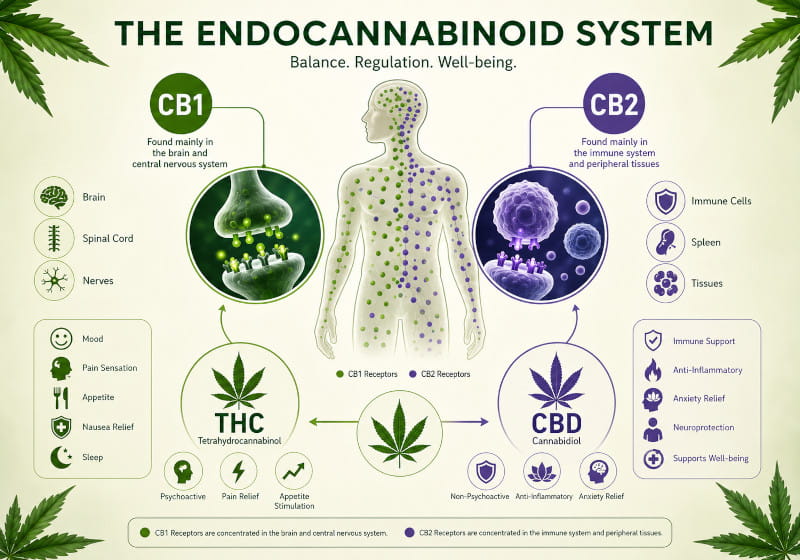
THC and CBD act in different ways in the body. THC primarily activates cannabinoid receptors and can thereby influence pain, appetite, and perception, among other things. CBD acts through various biological mechanisms without producing the intoxicating effect typical of THC.
The endocannabinoid system includes the cannabinoid receptors CB1 and CB2, naturally occurring signaling molecules, and enzymes that produce and break down these substances. CB1 receptors are found mainly in the brain and spinal cord. Their activation explains a large part of THC’s psychoactive effects as well as its influence on pain perception, appetite, and nausea. CB2 receptors are found predominantly on immune cells and in various tissues.
CBD binds only weakly to the cannabinoid receptors CB1 and CB2. Instead, it influences numerous other receptors, enzymes, ion channels, and transport proteins. The fact that CBD is involved in many biological processes does not automatically mean that it has a proven medical benefit. Whether these effects actually provide a clinical advantage for a particular condition must be demonstrated for each application in high-quality clinical studies.
For Which Symptoms Can Cannabis Be Used in Cancer Care?
A possible use primarily concerns treatment-resistant nausea and vomiting caused by chemotherapy; the evidence for pain, loss of appetite, sleep, and psychological distress is considerably weaker or contradictory.
The following overview shows the symptoms for which cannabis may be considered based on current knowledge and how well the potential benefit is supported scientifically. A possible benefit does not mean that cannabis is suitable for everyone or superior to other treatments.
| Symptom | Current Assessment | Practical Significance | Evidence |
|---|---|---|---|
| Chemotherapy-induced nausea and vomiting | THC-containing or THC-CBD preparations may help as an add-on treatment when modern standard antiemetics are insufficient. | More of a reserve or add-on option, not the first choice. | Best supported |
| Cancer pain | Studies have produced inconsistent results; a reliable benefit as a stand-alone treatment has not been demonstrated. | At most, an individual add-on option after careful assessment. | Uncertain |
| Loss of appetite and cancer cachexia | Appetite may increase subjectively, but a clear benefit for weight, muscle mass, or survival has not been demonstrated. | Nutrition-focused treatment of underlying causes remains central. | Low |
| Sleep disorders | Small studies and observations suggest possible effects, but the benefit and optimal preparations are unclear. | First assess causes such as pain, anxiety, medication, or depression. | Low |
| Anxiety, tension, and mood | THC may be relaxing, but it can also worsen anxiety, panic, or confusion. Robust oncology data for CBD are lacking. | Psychological and psycho-oncological services are better established. | Very low |
| Chemotherapy-induced neuropathy | Research is ongoing; there is currently no reliable standard recommendation. | Use preferably in a study setting or with close monitoring. | Insufficient |
How Well Does Cannabis Help with Chemotherapy-Induced Nausea and Vomiting?
When nausea and vomiting persist despite guideline-based standard treatment, cannabinoid-containing medicines may be an additional treatment option in certain cases.
Modern medicines for nausea and vomiting—including 5-HT3 antagonists, NK1 antagonists, dexamethasone, and olanzapine—are now the standard of care. Cannabinoids are generally considered only when these medicines are not sufficiently effective or are not tolerated. A randomized phase III study published in 2024 showed that adding an oral THC-CBD extract to standard therapy can improve control of persistent nausea and vomiting. However, adverse effects also occurred more frequently.
Whether cannabis treatment is appropriate should therefore always be decided individually. Potential benefits must be weighed against risks such as fatigue, dizziness, impaired concentration, anxiety, drowsiness, and an increased risk of falls. Cannabis should not replace proven medicines for preventing nausea and vomiting.
Does Cannabis Help with Cancer Pain?
It has not yet been clearly demonstrated whether cannabis can effectively relieve cancer pain. It should not be used as a replacement for established pain treatments.
Cancer pain can be caused by the tumor itself, metastases, surgery, nerve injuries, inflammation, or cancer treatments. Accordingly, the treatment options also differ. Studies of cannabinoid-containing medicines have so far produced no consistent picture: some found small improvements, while others found no clinically relevant advantage over placebo. In addition, many studies are difficult to interpret because of small participant numbers, short observation periods, different preparations, and high dropout rates.
Effective pain treatment depends on the cause and severity of the pain, as well as coexisting conditions and medications already being used. Depending on the situation, options may include non-opioid painkillers, opioids, medicines for nerve pain, radiation therapy, interventional procedures, physiotherapy, or psychosocial support. Cannabis may be considered as an add-on treatment in individual cases, but it should not replace established pain therapy.
Can Cannabis Improve Appetite or Body Weight?
THC can temporarily increase appetite in some people, but a reliable benefit against cancer-related loss of weight and muscle has not been demonstrated.
Cancer cachexia is more than a lack of appetite. It involves complex inflammatory and metabolic changes that lead to loss of muscle mass. Greater hunger therefore does not automatically result in weight gain or improved physical function. Studies of cannabinoids have so far shown no convincing benefit for these critical outcomes.
When weight loss occurs, treatable causes should be investigated: pain when eating, mucosal inflammation, nausea, constipation, changes in taste, depression, swallowing difficulties, pancreatic insufficiency, or side effects of other medicines. Early oncology nutrition counseling may be more important than a single appetite-stimulating preparation.
What Is the Significance of CBD in Cancer?
CBD is not intoxicating. Nevertheless, there is currently no convincing scientific evidence that CBD can treat cancer or reliably relieve typical cancer-related symptoms—even though advertising and personal testimonials often create a different impression.
Many laboratory and animal studies investigate the effects of CBD on tumor cells. Such findings are important for research, but they cannot be transferred directly to humans. They therefore cannot be used to derive effective doses or treatment recommendations. To learn more about CBD, cannabidiol, its effects, use, dosage, and possible side effects, you can find detailed information in our Canna Wiki. For nausea and vomiting caused by chemotherapy, the best available clinical data currently support THC-containing medicines or combinations of THC and CBD rather than CBD alone.
What Side Effects Are Possible with Cannabis-Based Medicines?
Side effects particularly affect the nervous system, circulation, mental health, and reaction time; the risk and severity depend on the THC content, dose, route of administration, age, and accompanying medication.
| Area | Possible Adverse Effects | Particularly Relevant With |
|---|---|---|
| Nervous system | Fatigue, dizziness, drowsiness, slowed thinking, and coordination problems | Risk of falls, older age, and simultaneous use of sedating medicines |
| Mental health | Anxiety, panic, agitation, depressed mood, confusion, and, rarely, psychotic symptoms | Pre-existing psychiatric conditions or high THC doses |
| Heart and circulation | Racing heart, drop in blood pressure, and circulatory problems | Cardiovascular disease, dehydration, or general weakness |
| Stomach and intestines | Dry mouth, nausea, diarrhea, and changes in appetite | CBD-containing preparations or a sensitive gastrointestinal tract |
| Liver and metabolism | Elevated liver values and altered breakdown of other medicines | Higher CBD doses, liver disease, and extensive accompanying medication |
| Long-term use | Development of tolerance, dependence, and withdrawal symptoms after abrupt discontinuation | Regular THC use over an extended period |
Severe confusion, fainting, chest pain, intense anxiety, hallucinations, or persistent vomiting require prompt medical attention. Slow dose titration can reduce side effects, but it does not replace professional monitoring.
What Interactions with Cancer Medicines Are Possible?
Cannabis, THC, and CBD can affect the action of other medicines. The full medication list should therefore be carefully checked for possible interactions before use.
THC and CBD are broken down in the liver by enzymes in the cytochrome P450 system. CBD in particular can inhibit some of these enzymes and thereby alter the breakdown of other medicines. This may cause medicines to have a stronger or weaker effect than expected. Clinical data are still limited for many individual drug combinations. Particular caution is therefore required with medicines whose dosage must be maintained within a precise range.
Possible interactions include those involving blood thinners, antiepileptic drugs, sedatives and sleeping pills, opioids, certain antidepressants, immunosuppressants, and some targeted cancer medicines. Alcohol can also intensify fatigue, dizziness, and impaired reaction time. Whether cannabis affects the effectiveness of immunotherapy is currently being investigated. However, studies to date have not produced conclusive results. The use of cannabis or CBD should therefore always be coordinated with the treating oncologist and, where possible, with a pharmacist.
Why Are the Product Form and Route of Administration So Important?
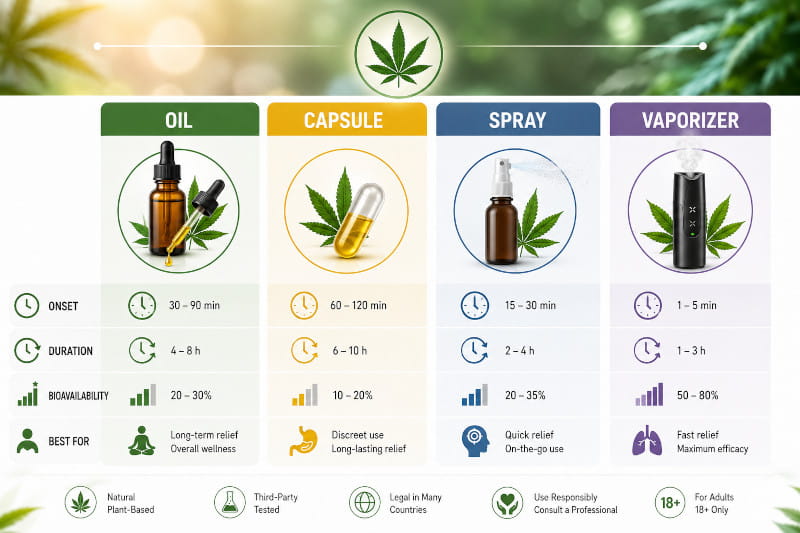
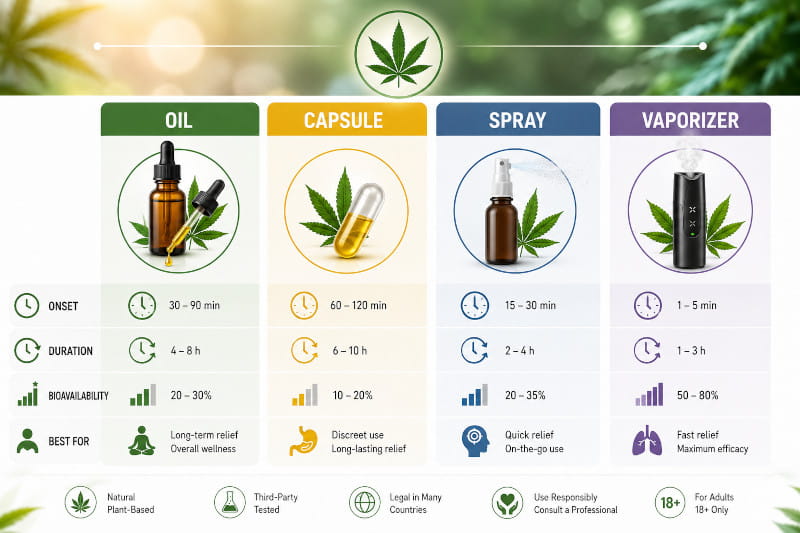
Inhaled and orally administered cannabinoids differ considerably in onset of action, duration of effect, dose control, and risk.
| Form | Onset of Action | Duration of Effect | Important Features |
|---|---|---|---|
| Inhalation with a medical vaporizer | Usually within a few minutes | Generally shorter | Rapid onset and relatively easy to control, although the dose can vary from person to person. Not suitable for every lung condition. |
| Oily solution, capsules, or oral extracts | Delayed, usually after 30 to 120 minutes | Usually longer | The effect begins later and may be stronger. Redosing too early increases the risk of overdose. |
| Oromucosal spray | Moderately fast | May last several hours | Standardized dosing; availability and authorization depend on the specific product. |
| Smoking | Fast | Generally shorter | Combustion products place strain on the airways, and smoking is generally considered less favorable from a medical perspective. |
Edible cannabis products and homemade preparations make reliable dosing difficult because the active-ingredient content and effects can vary widely. For people with cancer, standardized medicines with defined THC and CBD content are therefore better suited than products of unknown origin.
Who Should Use Cannabis Only with Particular Caution?
Particular caution is required in people with mental health conditions, cardiovascular problems, severe liver disease, a high risk of falls, pregnancy, breastfeeding, or complex accompanying medication.
THC-containing preparations can worsen psychotic symptoms or severe anxiety. In people with unstable cardiovascular disease, changes in heart rate and blood pressure may be problematic. Older, frail, or neurologically impaired people often react more sensitively to dizziness and drowsiness. Liver dysfunction can alter the way the substances are broken down.
A previous or current substance-use disorder must also be included in the benefit-risk assessment. This does not automatically exclude treatment, but it requires a clear plan for dosing, monitoring, and treatment goals.
When Can You Drive Again After Taking Medical Cannabis?
You should drive or operate machinery again only when your ability to react is fully intact. Particularly at the start of treatment, after a dose change, or when side effects such as fatigue, dizziness, or drowsiness occur, you should not participate in road traffic.
There is no general answer to when you are fit to drive again after taking medical cannabis. Important factors include the preparation used, the dosage, the time since administration, and your individual response to the medicine. Fatigue, dizziness, impaired concentration, slowed reactions, or a feeling of intoxication can affect the safe operation of a vehicle. Legal rules vary by country and may change. Discuss your individual situation with your doctor and check the regulations currently in force.
How Is Medical Cannabis Prescribed for Cancer?
A prescription is issued following an individual medical assessment when there is a reasonable treatment goal and the expected benefit, alternatives, risks, and accompanying medicines have been carefully evaluated.
In Germany, doctors can prescribe cannabis-based medicines. Whether statutory health insurance covers the costs depends on the relevant social-law requirements and the specific care situation. A good prescription does not simply specify “cannabis in general”; it defines a particular preparation together with the target symptom, starting dose, titration plan, and criteria for success.
Closer follow-up is advisable at the beginning. Symptom severity, day-to-day functioning, sleep, appetite, side effects, mood, and interactions are documented. If there is no relevant benefit or if side effects outweigh the benefits, treatment should be stopped or adjusted.
Which Cannabis Strains Are Commonly Searched for in Connection with Cancer?
There are no scientific recommendations for specific cannabis strains for treating cancer. Nevertheless, many people seek information about genetics with different THC, CBD, or CBG levels and their typical characteristics.
Whether medical cannabis is an option depends on the particular symptom profile, the medicine used, and individual tolerability—not on the name of a specific strain.
The following genetics are among the best-known cannabis strains and are frequently searched for in connection with medical cannabis, THC, CBD, or CBG:
- Original Glue #4
- Sensi Star
- CBD Jam
- Blue Dream
- Critical Mass
- Tatanka Pure CBD
- Jack Herer
- Gelato 41
- Harlequin
- Swiss Dream CBD
- CBG Kush
- Medical Mass CBD
Important: There are no clinical studies showing that any of these cannabis strains has particular effectiveness against cancer or specific types of cancer. Many of these genetics were originally bred for recreational use or home growing and are not authorized cannabis-based medicines. This selection is provided solely for information about well-known cannabis strains and their typical characteristics. It is not a medical recommendation and does not replace either medical advice or authorized cannabis-based medicines.
How Can a Meaningful Treatment Trial Be Assessed?
A meaningful treatment trial requires a specific goal, measurable criteria, a limited observation period, and clear rules for continuation or discontinuation.
| Step | Example |
|---|---|
| Define the goal | For example, less nausea, longer uninterrupted periods of sleep, or better day-to-day stamina—instead of a nonspecific goal such as “feeling better overall.” |
| Record the baseline situation | Keep a symptom diary, document a pain score, or record the number of vomiting episodes and nighttime awakenings. |
| Increase the dose slowly | Start with a low dose and increase it only gradually according to medical advice, particularly with THC-containing preparations. |
| Document side effects | Regularly note possible symptoms such as dizziness, fatigue, anxiety, confusion, falls, a racing heart, or limitations in everyday life. |
| Review the benefit regularly | Treatment should be continued only when there is a noticeable benefit in everyday life and potential risks or side effects remain acceptable. |
What Do Current Clinical Studies Show?
The best scientific evidence currently supports a limited additional benefit of cannabis for persistent nausea and vomiting despite standard treatment. By contrast, convincing clinical evidence is still lacking for a direct anticancer effect, cancer pain, cancer cachexia, or many other symptoms.
Cannabis studies are often difficult to compare. This is partly because they examine different preparations, THC-CBD ratios, doses, routes of administration, cancer types, and study outcomes. Smaller studies can provide important indications, but they are usually not sufficient on their own to establish the benefit of a treatment conclusively.
| Study or Guideline | Research Question | Key Statement | Assessment |
|---|---|---|---|
| ASCO Guideline 2024 | Use of cannabis and cannabinoids in adults with cancer | Treating cancer with cannabis is not recommended outside clinical trials. The strongest evidence concerns add-on treatment for persistent chemotherapy-induced nausea and vomiting despite standard therapy. | Leading international guideline |
| Grimison et al., phase III study (2024) | Oral THC-CBD extract in addition to standard antiemetics | Showed better control of persistent chemotherapy-induced nausea and vomiting, but also a higher rate of side effects. | Important recent evidence of effectiveness for a clearly defined indication |
| Systematic reviews (2024) | Cancer pain, appetite, mood, and other distressing symptoms | Convincing evidence exists mainly for THC-containing preparations in chemotherapy-induced nausea. For other symptoms, the evidence remains largely inconsistent. | Highlights the continuing need for research |
| NCI PDQ® (continuously updated) | Overall review of cannabis and cancer | Summarizes preclinical research and clinical studies on cancer and cancer-related symptoms, but does not classify cannabis as an established cancer treatment. | Quality-assured evidence overview from the National Cancer Institute |
Why Are Laboratory Results Against Cancer Cells Not Proof of Effectiveness?
The fact that a substance affects cancer cells in the laboratory does not automatically mean that it can effectively treat cancer in humans.
Before a medicine is authorized, it must pass through numerous stages of development. Laboratory experiments are followed by studies in animal models and clinical trials in humans, which first examine safety and dosage and then effectiveness. Many substances produce promising results in the laboratory but later fail in clinical trials.
Whether a cancer treatment truly works can be assessed only through high-quality clinical trials. These examine, among other things, whether tumors shrink, disease progression slows, patients live longer, or their quality of life improves. Statements such as “cannabinoids kill cancer cells” are therefore misleading without this context.
Which Types of Cancer Are Being Studied with Cannabinoids?
Cannabinoids are being investigated in laboratory research and early research projects involving various types of cancer. However, there is currently no generally accepted treatment with cannabis, THC, or CBD for any type of cancer.
Research includes brain tumors, breast cancer, pancreatic cancer, colorectal cancer, and blood cancers. Most studies involve cell experiments, animal models, or small early-stage trials. Such investigations can generate new research approaches, but they do not yet prove an effective cancer treatment in humans.
Cannabis for Brain Tumors and Glioblastoma
In brain tumors such as glioblastoma, researchers are studying whether cannabinoids influence biological processes in tumor cells or could be combined with existing treatments. However, the research available to date is not sufficient to recommend cannabis, THC, or CBD as an effective treatment for glioblastoma.
Cannabis for Breast Cancer
Cannabinoids are also being studied in breast cancer, mainly in laboratory and animal models. The research examines possible effects on cell division, cell death, and signaling pathways in tumor cells, among other things. Whether this results in a benefit for patients must first be clarified in meaningful clinical studies.
Cannabis for Pancreatic Cancer
In pancreatic cancer, research groups are investigating possible interactions between cannabinoids, tumor cells, and established cancer treatments. The available findings come mainly from early research phases and do not support a recommendation to treat pancreatic cancer with cannabis.
Cannabis for Colorectal Cancer
In colorectal cancer, researchers are studying how cannabinoids might influence certain cellular and inflammatory processes. The same principle applies here: findings from cell cultures or animal models cannot automatically be transferred to humans and do not prove an effective cancer treatment.
Cannabis for Leukemia and Other Blood Cancers
Experimental research on cannabinoids also exists for leukemia and other blood cancers. However, clinical evidence for safe and effective treatment with THC, CBD, or cannabis is lacking. Checking for possible interactions with chemotherapy and other cancer medicines is particularly important in this setting.
Can Cannabis Affect Immunotherapy?
A clinically relevant effect of cannabis on the effectiveness of immune checkpoint inhibitors has not yet been established with certainty, so cautious and open coordination with the oncologist is necessary.
Some observational studies found associations between cannabis use and poorer outcomes during immunotherapy. However, such data may be distorted by cancer stage, symptom burden, accompanying medicines, reasons for use, and other differences. They do not prove causation. At the same time, immunological interactions are biologically plausible enough that they should not be ignored.
Anyone receiving immunotherapy should therefore neither start cannabis independently nor stop it abruptly, but should discuss the preparation and dose with the treatment team. The individual decision may differ depending on symptom burden and available alternatives.
How Can You Recognize Reliable Information About Cannabis and Cancer?
Trustworthy information clearly distinguishes between relieving symptoms and treating cancer. It explains both the potential benefits and the limitations of current research and does not make promises of a cure.
Pay attention to the basis for the claims being made. Clinical studies in humans are far more informative than laboratory experiments, animal studies, or individual testimonials. It should also be clear which preparation the findings concern. Evidence involving standardized cannabis-based medicines cannot automatically be applied to freely available oils, flowers, or other CBD and cannabis products.
You should be skeptical when cannabis is promoted as a cure for every type of cancer, supposedly suppressed miracle remedies are advertised, people are advised to stop a proven cancer treatment, or products are sold without verifiable scientific evidence.
How Should You Prepare for a Consultation with Your Doctor?
The better informed your doctor is about your symptoms, medicines, and any cannabis products you already use, the better they can assess whether cannabis may be suitable for you.
Write down the product name, THC and CBD content, route of administration, dosage, time of use, and any effects and side effects you have observed. Also prepare a complete list of all medicines, dietary supplements, and herbal products you take. Describe as precisely as possible which symptoms are causing you the greatest burden and which treatments have already been tried.
Useful questions for the consultation include: Which treatment options may be suitable for me? What interactions with my cancer treatment are possible? How will we know whether cannabis is actually helping? When should treatment be stopped or adjusted? And what should I consider regarding driving, work, or simultaneous use of alcohol or sedatives?
Which Questions Remain Open in Cannabis Research?
To assess the benefits of cannabis in cancer more accurately, larger independent studies are needed using standardized preparations, clearly defined doses, and meaningful patient outcomes.
It remains unclear, among other things, which THC-CBD ratios are best suited to particular symptoms, which patients are most likely to benefit, what long-term risks exist, and how cannabinoids interact with modern targeted therapies or immunotherapies. High-quality studies directly comparing cannabis flowers, extracts, and individual active ingredients are also lacking.
To investigate whether cannabis can affect tumor growth, clinical studies must show whether tumors actually shrink, disease progression slows, or patients live longer. Until such evidence is available, using cannabis to treat cancer is considered experimental.
What Matters When Making the Decision?
It is important to distinguish between possible symptom relief and an unproven treatment for cancer. Whether cannabis may be appropriate should always be decided together with the treatment team on the basis of the individual benefits and risks.
Cannabis may be an additional treatment option for some people with cancer, particularly when nausea and vomiting persist despite guideline-based standard treatment. However, the expected benefit depends on the preparation used, the dose, the symptom being treated, and the person’s individual situation. The current evidence therefore does not support blanket recommendations.
For the safest possible use, symptoms should first be assessed carefully, established treatment options should be exhausted, and potential interactions should be considered. When cannabis is used, treatment should be planned and reviewed regularly together with the treatment team. Cannabis should never replace an effective cancer treatment.
Which Sources Reflect the Current State of Research?
Current guidelines, quality-assured cancer information, systematic reviews, and randomized clinical trials are particularly useful.
- American Society of Clinical Oncology: Cannabis and Cannabinoids in Adults With Cancer – guideline, 2024
- Grimison et al.: Oral Cannabis Extract for Secondary Prevention of Chemotherapy-Induced Nausea and Vomiting – randomized phase III study, 2024
- National Cancer Institute: Cannabis and Cannabinoids (PDQ), health professional version
- Cancer Information Service of the German Cancer Research Center: Cannabis and Cannabinoids in Cancer
- Hatfield et al.: Cannabinoids for the Relief of Cancer-Related Symptoms – systematic evidence review, 2024
- National Center for Complementary and Integrative Health: Cannabis and Cannabinoids – benefits, risks, and current research
FAQs
Q: Is cannabis an alternative to chemotherapy?
A: No. Cannabis is not a proven alternative to chemotherapy or other cancer-directed treatments. In selected cases, it may be used as an add-on treatment to relieve individual symptoms.
Q: Which cannabinoid has been studied most thoroughly in cancer?
A: For chemotherapy-induced nausea and vomiting, THC-containing medicines and THC-CBD combinations have been studied more thoroughly than CBD alone.
Q: Can CBD stop tumor growth?
A: There is no reliable clinical evidence of this in humans. Laboratory findings are not sufficient to recommend CBD as a cancer treatment.
Q: Does cannabis help with cancer pain?
A: The findings are contradictory. A reliable benefit as a stand-alone pain treatment has not been demonstrated; in individual cases, a doctor may assess whether add-on use is appropriate.
Q: Can medical cannabis cause dependence?
A: With prolonged use, THC-containing preparations can cause tolerance, dependence, and withdrawal symptoms. The risk depends on the dose, duration, and individual factors.
Q: Are over-the-counter CBD oils suitable for cancer patients?
A: Not automatically. Potency, purity, and labeling may vary, and interactions remain possible. A product should be used only after consultation with the treatment team.
Q: Can cannabis be taken together with immunotherapy?
A: The data are inconclusive. Because of possible immunological and pharmacological interactions, an individual medical assessment is required.
Q: When is cannabis considered for chemotherapy-related nausea?
A: Primarily when guideline-based medicines for nausea and vomiting do not work sufficiently and the potential additional benefit outweighs the risks.
Q: Is inhalation better than oil?
A: Inhalation acts faster, while oral preparations usually last longer. The more suitable form depends on the treatment goal, lung function, dose control, and risk of side effects.
Q: Do I need to tell my oncologist that I use CBD?
A: Yes. CBD can affect drug metabolism and should be included in the medication list like any other pharmacologically active preparation.