Cannabis Mutants: Genetics, Strains & Freaks
Cannabis Mutants: Extraordinary Genetics and Leaf Shapes
Updated: October 2026 | Leaf morphology, ABC, Freakshow, Ducksfoot, SWAG and genetic selection
Author: Cannapot Grow Team | Reading time: approximately nineteen minutes
Key Takeaways
✓ Cannabis mutants are cannabis genetics with unusual leaf shapes or growth patterns, some of which are inherited across several generations. However, not every unusual trait can be traced to a scientifically verified genetic mutation.
✓ Australian Bastard Cannabis (ABC), Freakshow, Ducksfoot and SWAG are among the best-known cannabis mutants. They differ primarily in their unusual leaf shapes, leaf margins and growth characteristics.
✓ AD and GPP are names for distinctive traits found in specialized cannabis breeding programs. They do not denote separate botanical species or subspecies.
✓ An unusual appearance does not automatically mean that a cannabis line has been stabilized. What matters is whether its defining traits are reliably passed on to offspring over several generations.
✓ Frosty’s Purple Freak and Frosty’s Auto Purple Freak from Khalifa Genetics illustrate how distinctive freak traits can be introduced into modern cannabis genetics and combined with other strain characteristics.
✓ Cannabis mutants broaden genetic diversity and create interesting opportunities for plant breeding. However, unusual leaf shapes do not reliably indicate THC content, resistance, yield or quality.
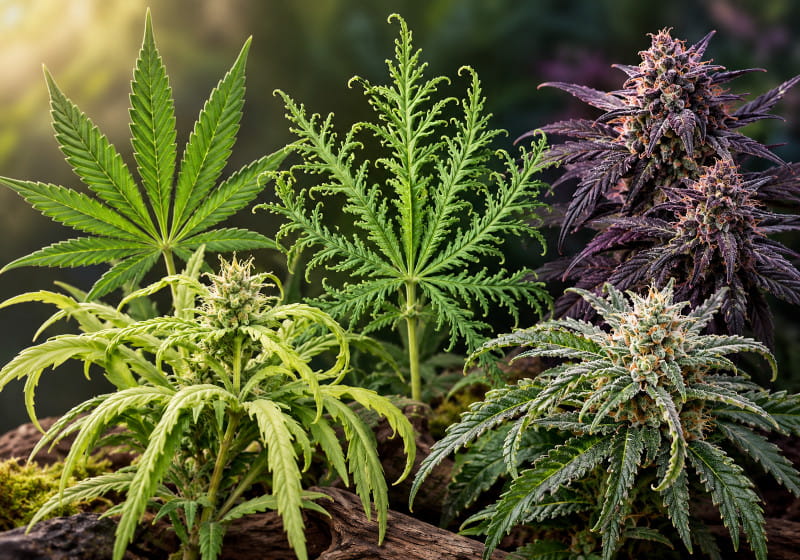
Cannabis can look very different from the familiar plant with its palmately arranged, serrated leaves. Some genetic lines develop small, heavily curled leaves; others resemble ferns or have unusually smooth leaf margins. These striking forms are often grouped under the term cannabis mutants. The term encompasses a variety of genetic characteristics, distinctive leaf shapes and, in some cases, decades of breeding history.
Some of these unusual characteristics occur not only in individual plants but have been deliberately selected by breeders over several generations and crossed into new cannabis lines. This has produced distinct breeding lines with traits that can, in some cases, be inherited reliably. However, the genetic changes responsible for their unusual appearance have not been scientifically established for every line. This article examines the best-known cannabis freaks, their origins, distinctive characteristics and significance for modern cannabis breeding. Readers interested in the range of available genetics as well as the botanical background can explore different cannabis seeds for sale.
What Are Cannabis Mutants?
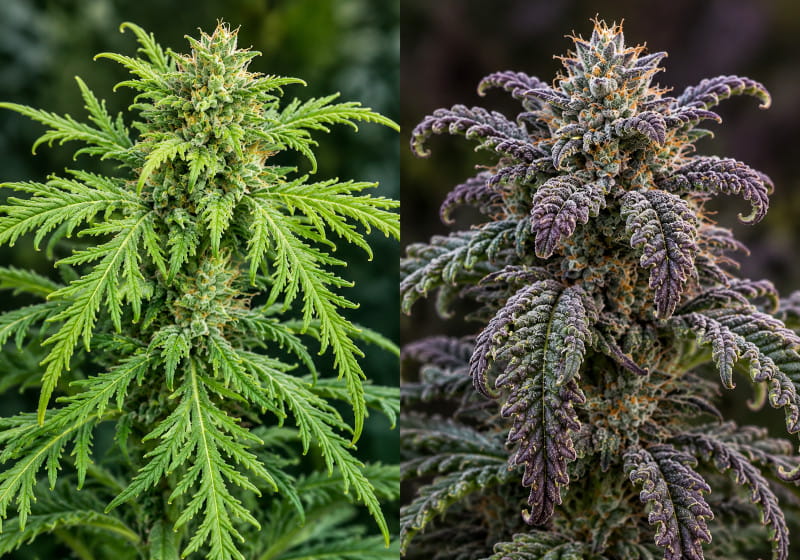
Cannabis mutants are plants and breeding lines that differ from typical cannabis plants in their unusual leaf shapes or growth patterns. The term is used primarily by breeders and covers a range of genetic peculiarities. Scientifically, however, a mutation must be distinguished from an unusual phenotype: a mutation is a permanent change in the DNA sequence, whereas a phenotype describes the observable characteristics of a plant. The underlying cause cannot be determined from leaf shape alone.
Cannabis naturally displays considerable diversity in leaf shapes and growth habits. The number, length, width and serration of leaflets can vary between genetic lines and even within the same plant. Developmental stage and environmental conditions also affect appearance. An isolated unusual leaf therefore does not automatically indicate a distinct mutant line. The key question is whether its defining traits recur and can be inherited across generations.
Distinguishing Mutations, Phenotypes and Breeding Lines
The genotype refers to a plant’s genetic makeup, while the phenotype describes its visible and measurable characteristics. Whether an unusual trait is heritable can be established by examining several generations of offspring. The gene responsible does not necessarily need to have been identified. A stabilized breeding line is one in which particular characteristics are passed on with high reliability over several generations. Such stability applies only to the traits examined and does not mean that all offspring are genetically identical.
For many historical cannabis mutants, available information comes mainly from breeder reports, documented plant characteristics and experience from subsequent breeding. Scientific studies conclusively identifying the DNA changes responsible for individual freak lines remain limited. Claims about a specific “freak gene,” fixed inheritance ratios or supposedly fully stabilized traits should therefore be evaluated against verifiable breeding records.
How Do Unusual Cannabis Traits Develop and Pass to Offspring?
Unusual leaf shapes and growth patterns can arise from genetic changes, recombination of existing gene variants or differences in the regulation of plant development. Leaves develop from specialized growth tissues called meristems. Their final shape is determined by processes including cell division, cell growth and the development of the leaf blade. A scientific study modeling cannabis leaf shape was published by Balant et al. (2024). Changes in these developmental processes can produce unusually divided, curled, fused or fern-like leaves. However, the genes responsible in a particular cannabis mutant cannot be identified from its appearance alone.
Dominant, Recessive and Complex Inheritance
Unusual cannabis traits can follow different inheritance patterns. Under a simple Mendelian model, a recessive trait becomes visible only when a plant carries two corresponding alleles. Dominant traits, by contrast, can be expressed with just one relevant gene variant. Incomplete dominance and complex traits involving several genes also occur. Interactions between genes and environmental factors can further influence how strongly an unusual leaf shape is expressed. An overview of the genomic challenges of cannabis breeding is provided by Kovalchuk et al. (2020). Historical breeder claims about dominant or recessive freak traits therefore do not automatically constitute scientifically confirmed evidence of inheritance.
When evaluating a cannabis mutant line, the central question is whether its characteristic traits recur consistently and verifiably in offspring. If a fern-leaf line produces similar leaf shapes over several generations, this supports a heritable basis. However, the reliability of transmission depends on the genetic background and the particular cross. Combining different cannabis lines can change both the frequency and intensity of trait expression.
Leaf Shape Does Not Determine Cannabinoid Profiles
Neither THC nor CBD content can be reliably inferred from unusual leaf morphology. Morphological traits and chemical profiles must be investigated separately. For genetic context, see the study of commonly assumed phenotypic associations (2021) and the study of morphology and cannabinoid profiles (2022). Similarly, two plants with similar leaves do not necessarily share ancestry, terpene profiles or comparable cannabinoid levels. This distinction is especially important when historical mutant traits are combined with modern hybrid lines.
Major Cannabis Mutants and Their Genetic Families
The following names do not all refer to the same kind of genetic peculiarity. Some identify historically known lines, while others primarily describe distinctive leaf morphologies or particular breeding families. The classification therefore follows observable traits and the available documentation.
Australian Bastard Cannabis (ABC): Origins and Unusual Leaf Shape
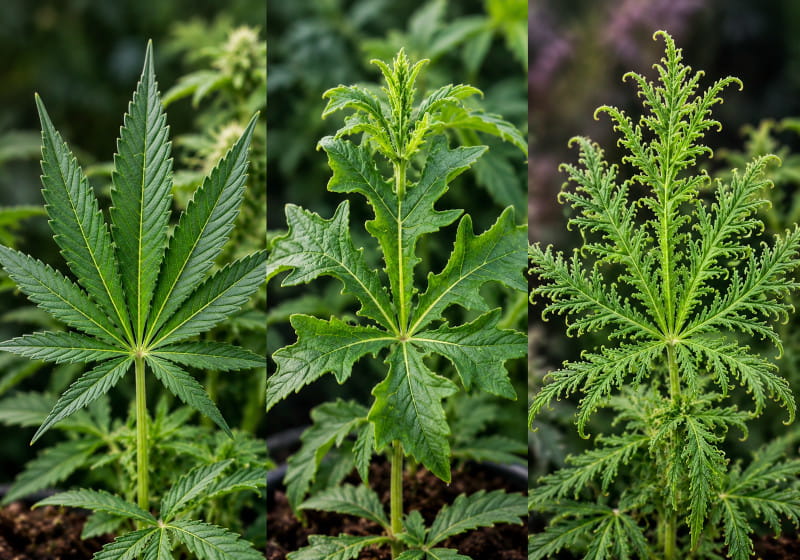
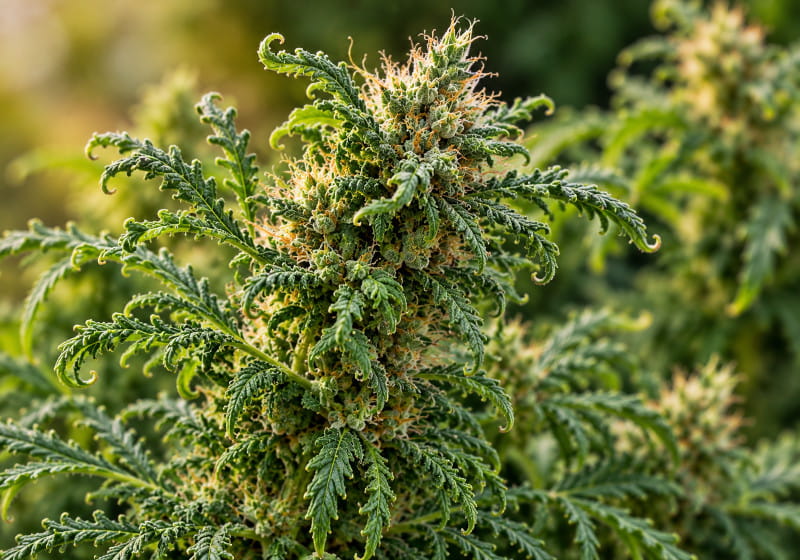
Australian Bastard Cannabis (ABC) is among the best-known cannabis mutants and stands out for its highly unusual leaf structure. Instead of typical palmate cannabis leaves, ABC develops small, often curled and irregularly shaped leaves whose edges and segmentation differ markedly from ordinary cannabis forms. These plants can resemble an herbaceous plant more than conventional cannabis. The prominence of these features depends on the particular genetics, developmental stage and growing conditions.
The history of ABC cannabis is closely associated with Australian cannabis collectors and breeders. However, accounts of its original discovery site, the first documented plants and its early distribution differ and cannot all be independently verified. ABC is sometimes described as an Australian landrace, but sufficiently robust botanical and population-genetic evidence is lacking. It is therefore more accurate to describe it as a historically known cannabis line with unusual leaf morphology and an origin story largely preserved in breeders’ accounts.
ABC is of particular interest to modern cannabis breeding because of its distinctive, partly heritable leaf shape. Through selective breeding, breeders have maintained corresponding traits in different offspring populations and combined them with other cannabis genetics. In such crosses, however, the typical ABC leaf shape need not be visible in every offspring. Its expression may vary with the genetic background and breeding line. A single scientifically confirmed inheritance mechanism therefore cannot automatically be applied to every genetic line currently described as ABC.
Freakshow and Fern-Leaf Cannabis: Fern-Like Leaf Structures
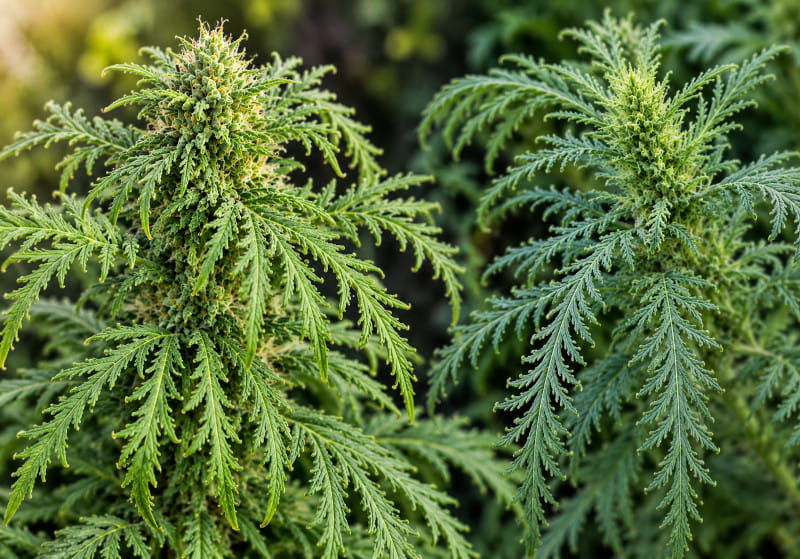
Freakshow cannabis is particularly notable for its exceptionally deeply divided leaves. Its narrow, repeatedly subdivided segments resemble fern fronds and differ markedly from the small, irregularly curled leaves of many ABC lines. The term Fern-Leaf generally describes a fern-like leaf shape, whereas Freakshow also refers to a specific breeding line. Plants that look similar therefore do not necessarily share the same ancestry.
The development of the well-known Freakshow line is closely associated with the breeder Shapeshifter. The distribution of its seeds brought this unusual leaf morphology to international attention. Other breeders subsequently incorporated fern-like traits into additional cannabis genetics. Whether different Fern-Leaf lines share the same underlying DNA change remains unresolved; establishing a common genetic cause would require further research.
Frosty’s Purple Freak and Frosty’s Auto Purple Freak as Modern Examples
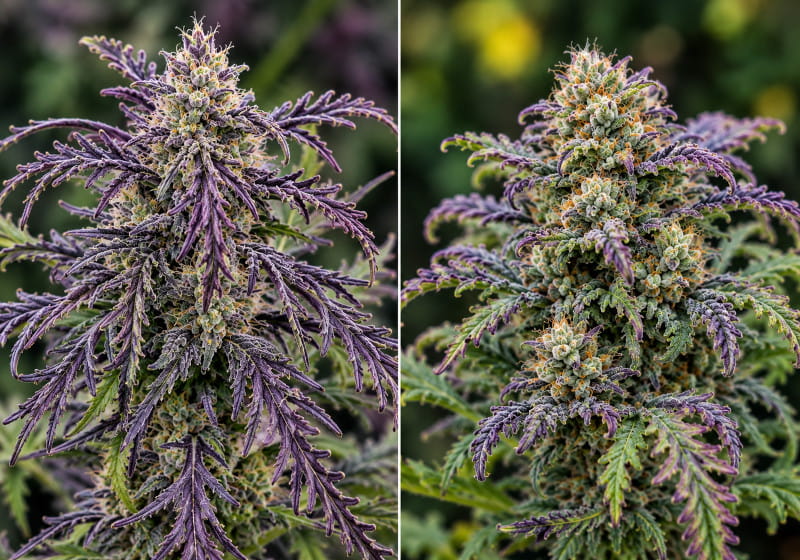
Frosty’s Purple Freak by Khalifa Genetics illustrates how fern-like leaf traits can be combined with other strain characteristics. Its stated parentage is Black Kush × Berry Freak (F5). According to the breeder, the strain combines distinctive Freak leaf structures with possible purple pigmentation. Khalifa Genetics refers to a collaboration with Califrosty Seedbank during its development. These statements document the reported breeding history but do not replace independent genetic analysis.
Frosty’s Auto Purple Freak, also offered by Khalifa Genetics, is described as a cross of Guavalato Auto × Frosty’s Purple Freak. It combines characteristic Freak morphology with an autoflowering breeding background. Such crosses belong to the broader field of autoflowering genetics, also represented in the autoflowering seeds category. The comparison illustrates that leaf shape and flowering behavior are separate traits: breeders can combine both without this implying a shared genetic control mechanism.
Both strains demonstrate how unusual leaf traits can be incorporated into newer breeding projects. However, how frequently a particular leaf shape occurs among offspring and how consistently other traits are inherited can only be assessed using sufficiently documented progeny data.
Ducksfoot: Fused Leaflets
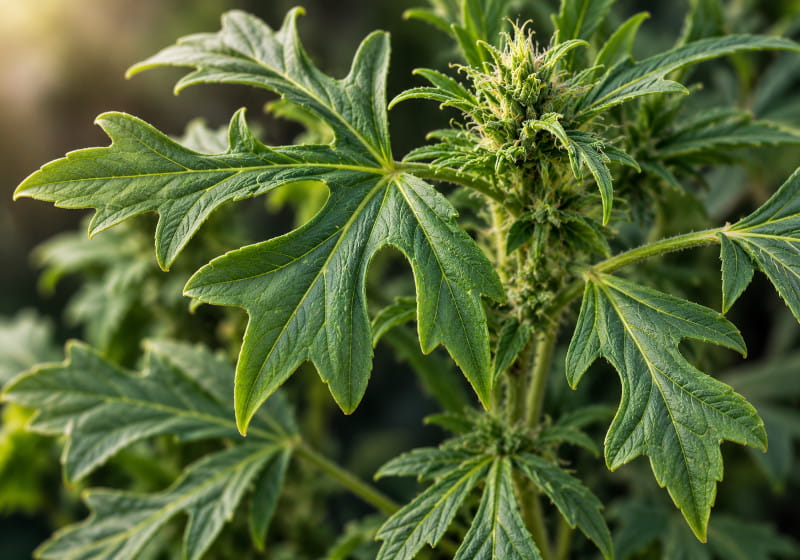
Ducksfoot cannabis, also called Duckfoot, has a particularly striking leaf structure: leaflets that would normally be separate are partly joined together. This produces a broader, webbed-looking leaf surface resembling a duck’s foot. Unlike Freakshow, the leaves are not finely divided; Ducksfoot also differs clearly from the small, curled leaves of ABC.
The Australian breeder Wally Duck, who developed and distributed corresponding lines, is closely associated with Ducksfoot’s popularity. Breeding projects featuring unusual leaf shapes, including those related to Ducksfoot, can also be found among outdoor cannabis seeds. This does not, however, mean that he was the first person to observe such a leaf shape. It is important to distinguish the historically known Ducksfoot breeding line from other cannabis genetics that develop superficially similar, partly fused leaflets.
The degree of characteristic leaflet fusion can vary with genetics and developmental stage. Several fully developed leaves should therefore be examined for a meaningful comparison. Individual young leaves are not sufficient to assess the typical morphology of an entire line reliably.
SWAG and PAC: Unusual Smooth-Edged Leaf Morphologies
In specialist breeding projects, SWAG and related terms such as PAC refer to cannabis lines with unusually shaped leaves. Some display broad leaf surfaces with little serration or almost smooth edges, bearing little resemblance to conventional cannabis leaves. Because expression varies between lines, these are breeder and trait designations rather than uniformly defined botanical categories.
KalySeeds in particular is associated with the development and distribution of these genetics. Claims about parent lines, crosses and the distinctions between individual SWAG or PAC variants should nevertheless be checked against the original breeding documentation. Ancestry and inheritance patterns must be documented separately for each line.
AD Lines: Reduced Leaf Division and Smooth Edges
The designation AD is used, among others, in the context of TerpyZ Mutant Genetics for cannabis lines with distinctive leaf morphology. Common features include reduced leaf division and weakly serrated to smooth leaf edges. Some traits may resemble SWAG-related forms. It is therefore important to distinguish a specific AD breeding line from a merely similar-looking leaf shape.
AD is not a scientifically recognized cannabis subspecies. Nor does the designation alone establish a uniform origin or a particular inheritance pattern for all plants marketed under it. Verifiable ancestry and progeny data would be required.
GPP Lines: Single-Bladed, Often Serrated Leaves
In specialist mutant breeding, GPP describes lines with distinctive, often single-bladed, lanceolate leaves whose margins may remain clearly serrated. In typical descriptions, this distinguishes them from smoother-edged AD forms. The designation is associated with breeding work involving Giant Pur Pur; the precise origin of individual lines should be evaluated using the relevant breeder’s information.
Single-bladed leaves are not inherently unusual in cannabis: young plants naturally produce simple leaves at first. A divergent leaf shape becomes meaningful as a breeding-line trait only when it remains characteristic on later-developed plant parts and reappears among offspring.
Comparing the Mutant Families
|
Family |
Distinctive trait |
Classification |
|
ABC |
Small, curled and atypically segmented leaves |
Historically documented line |
|
Freakshow / Fern-Leaf |
Deeply incised, fern-like leaf segments |
Specific line and broader morphotype |
|
Ducksfoot |
Partly fused leaflets |
Well-known breeding line and trait |
|
SWAG / PAC |
Often smooth-edged, atypical leaf shapes |
Breeder-defined family designations |
|
AD |
Reduced division, often smooth leaf margins |
Specialist breeding-line designation |
|
GPP |
Often single-bladed, serrated leaves |
Specialist breeding-line designation |
The table summarizes the most important visible differences. It is not a genetic classification: similar leaf shapes can have different causes, and a breeding name does not automatically establish a scientifically verified inheritance pattern. A separate overview of different cannabis mutants presents relevant genetics in the Cannapot range. This Canna Wiki article focuses on their botanical classification and breeding history.
Other Unusual Traits in Cannabis Breeding
Variegation and Leaf Color Patterns
Beyond unusual leaf shapes, cannabis mutants may also display distinctive color patterns. Variegation can produce green, pale yellow or almost white areas on leaves. Several mechanisms may be involved, including changes in genetic makeup, chloroplast-related differences or tissues containing genetically distinct cell lines. An unusual leaf pattern alone therefore does not establish a specific DNA mutation or a particular mode of inheritance.
For plant breeding, the key question is whether the characteristic color pattern can be maintained and passed on to offspring. Some forms of variegation persist through vegetative propagation but do not reliably reappear in seed-grown plants. Others may be genetically inherited. Variegation must also be distinguished from purple pigmentation: Purple or reddish cannabis leaves often result from the accumulation of anthocyanins and do not necessarily indicate areas with reduced chlorophyll or variegation.
Leaf Division, Leaf Margins and Plant Architecture
Other traits of interest to breeders include the number, shape and fusion of leaflets, the structure of leaf margins and the plant’s overall growth architecture. Examples include unusual branching patterns, different leaf arrangements and particularly compact or highly divided growth forms. Such traits can occur together within a breeding line without necessarily sharing the same underlying genetic changes. As breeding traits, they are most informative when their repeated expression and possible heritability have been documented.
Another area of modern plant breeding is polyploidy, in which a plant has more than two complete sets of chromosomes. This can influence various developmental and growth characteristics but does not necessarily produce unusual leaf shapes. Polyploidy must therefore be distinguished from familiar cannabis mutants such as ABC, Freakshow and Ducksfoot. A polyploid plant need not develop fern-like or fused leaves, and chromosome number alone does not make it a separate freak family.
How Are Cannabis Mutants Genetically Stabilized?
Discovering a plant with unusual traits does not mean a stable cannabis mutant line already exists. Only repeated selection of suitable parent plants and examination of their offspring can show whether a trait is passed on reliably. The intensity of a trait in one individual is not the only consideration. Equally important is how often and in what form it reappears in subsequent generations. Traceable breeding records are therefore essential for assessing genetic stability.
Selection Across Multiple Generations
Through selection over multiple generations, genetic variants contributing to a desired leaf shape may become more common within a breeding population. Other characteristics may nevertheless remain variable. Selecting for fern-like leaves, for example, does not automatically make plant height, flowering time or cannabinoid profiles uniform. Stabilization applies to the particular traits being selected and must not be confused with complete genetic uniformity among offspring.
Terms such as F1, F2 and later filial generations describe the generational sequence of particular crosses; they do not, by themselves, indicate the quality or stability of a cannabis line. In the F2 generation, different trait combinations may become visible as alleles inherited from the parents segregate. Further selection can consolidate desired traits under suitable genetic conditions. The outcome depends on the inheritance pattern, the genetic diversity of the starting population and the offspring examined. The complex genetic architecture of cannabis traits is examined, among other research, in a genome-wide association study (2024).
Backcrossing, Inbreeding and Progeny Testing
Backcrossing and repeated mating of related plants are also methods used in conventional plant breeding. When working with regular cannabis seeds, breeders can consider male and female plants when selecting suitable parental lines. Backcrossing may help introduce or retain particular traits in a chosen genetic background. Repeated inbreeding often increases the proportion of homozygous variants, but it may also reveal undesirable recessive traits and reduce genetic diversity. Neither method automatically guarantees a completely uniform line. Systematic examination of offspring and transparent documentation of inherited traits remain decisive.
The Cannapot Canna Wiki explains the selection of individual plants in developing new cannabis genetics in greater detail in its article on phenotype hunting. This distinction is particularly important for cannabis mutants: when an unusual leaf shape is crossed with another genetic line, the original trait may appear at different intensities, only at later developmental stages or in only some offspring. Repeated observations across generations are therefore much more informative than judging individual unusual plants.
Why “Stable” Does Not Mean “Genetically Identical”
A stabilized cannabis breeding line reliably passes selected traits on to offspring over multiple generations. This does not mean all plants are genetically identical. Even lines with uniform leaf morphology may retain different alleles at numerous other loci or remain heterozygous. Considerable genetic diversity may persist, especially when historical cannabis lines have been crossed with modern hybrids. What matters is which traits were stabilized and how consistently they appear in the offspring generations examined. Equating trait stability with genetic identity would therefore be misleading.
What Role Do Mutants Play in Modern Cannabis Breeding?
Cannabis mutants broaden the genetic and morphological diversity available to breeders. Their unusual leaf and growth forms demonstrate that natural and selectively preserved variation extends far beyond the familiar distinction between narrow and broad cannabis leaves. Such lines can provide a foundation for conserving rare traits and combining them with other genetic backgrounds. They are also scientifically relevant, raising questions about leaf development, inheritance and the genetic basis of unusual plant forms.
The significance of these genetics does not automatically lie in higher yields, increased cannabinoid content or improved resistance. Their primary value is the conservation and expansion of rare trait combinations. Unusual leaf morphology may coexist with very different chemical, physiological and agronomic characteristics. Whether particular mutant lines offer additional practical advantages can only be determined through targeted studies and documented comparisons. Leaf shape alone cannot reliably predict such properties.
Another important consideration is the long-term preservation of historical and rare cannabis genetics. Lines such as Australian Bastard Cannabis, Freakshow and Ducksfoot represent distinct breeding histories and forms of plant diversity. If these lines disappear, rare genetic variants and little-studied trait combinations may be lost as well. Careful documentation of their origins, traceable pedigrees and descriptions of their actual variation are therefore especially valuable. By preserving unusual cannabis forms, breeders and collectors also provide a foundation for future genetic and botanical research.
10 Unusual Cannabis Mutant Strains at a Glance
The following ten strains illustrate different breeding approaches involving unusual leaf traits. These brief descriptions identify their distinguishing characteristics, whose expression may vary within a line.
|
01. Frosty’s Purple Freak
Strain name: Frosty’s Purple Freak Breeder: Khalifa Genetics Genetic distinction: Freak-type leaf morphology with striking purple pigmentation. Product link: Frosty’s Purple Freak – view strain |
|
02. Freaky Fast F1 BX
Strain name: Freaky Fast F1 BX Breeder: Doctor’s Choice Genetic distinction: Freak-focused breeding line; individual leaf shapes may vary between plants. Product link: Freaky Fast F1 BX – view strain |
|
03. Mentha de Croco Fern BX1 F2
Strain name: Mentha de Croco Fern BX1 F2 Breeder: TerpyZ Mutant Genetics Genetic distinction: Fern-leaf breeding background with unusually divided leaves. Product link: Mentha de Croco Fern BX1 F2 – view strain |
|
04. Freaky Ryder Auto
Strain name: Freaky Ryder Auto Breeder: Doctor’s Choice Genetic distinction: Autoflowering line from freak-oriented breeding with atypical leaf morphology. Product link: Freaky Ryder Auto – view strain |
|
05. Frosty’s Auto Purple Freak
Strain name: Frosty’s Auto Purple Freak Breeder: Khalifa Genetics Genetic distinction: Autoflowering variant with freak-type leaves and possible purple pigmentation. Product link: Frosty’s Auto Purple Freak – view strain |
|
06. Auto Duck
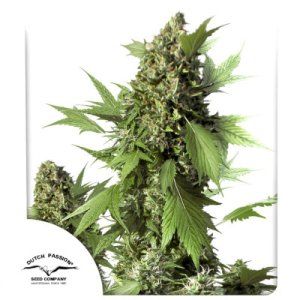
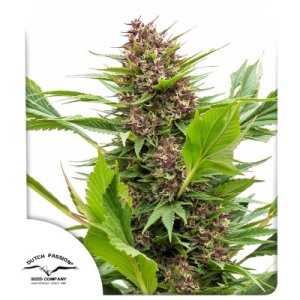
Strain name: Auto Duck Breeder: Dutch Passion Genetic distinction: Autoflowering Duck line with characteristically fused leaflets. Product link: Auto Duck – view strain |
|
07. Fast Crazy Bastard
Strain name: Fast Crazy Bastard Breeder: Doctor’s Choice Genetic distinction: Breeding line from the Bastard/ABC group with an unusual leaf form. Product link: Fast Crazy Bastard – view strain |
|
08. Frisian Duck
Strain name: Frisian Duck Breeder: Dutch Passion Genetic distinction: Duck-type leaf morphology with partially fused leaflets. Product link: Frisian Duck – view strain |
|
09. Blueberry Lime Kush AD
Strain name: Blueberry Lime Kush AD Breeder: TerpyZ Mutant Genetics Genetic distinction: AD breeding background with reduced leaf division and sometimes smoother leaf margins. Product link: Blueberry Lime Kush AD – view strain |
|
10. Korean BBQ GPP
Strain name: Korean BBQ GPP Breeder: TerpyZ Mutant Genetics Genetic distinction: GPP breeding background with often single-bladed, serrated leaves. Product link: Korean BBQ GPP – view strain |







Which Well-Known Breeders Work with Cannabis Mutants?
The history of cannabis mutants is closely linked to the work of independent breeders, dedicated collectors and specialist seedbanks. Many unusual leaf forms have been preserved, selected and incorporated into new cannabis genetics over the years. It is important to distinguish between the original discovery of an unusual plant, the deliberate further development of its traits and their subsequent use in new crosses. A breeder working with a particular mutant line is therefore not necessarily the person who first discovered it.
Among the best-known names is Shapeshifter, whose breeding work is closely associated with the development of Freakshow cannabis. Australian breeder Wally Duck played a major role in bringing the characteristic Ducksfoot line to wider attention and distributing it. KalySeeds works with unusual cannabis forms such as SWAG and PAC, alongside other distinctive leaf morphologies. Khalifa Genetics also incorporates these traits into modern breeding lines. One example is Frosty’s Purple Freak, which, according to the breeder, was developed in collaboration with Califrosty Seedbank.
Another specialist is TerpyZ Mutant Genetics. This breeding project works with various unusual cannabis morphologies and lines associated with ABC, SWAG, AD and GPP. Its particular focus includes atypical leaf division, unusual leaf margins and rare growth forms. However, these line designations should not be equated with scientifically recognised botanical subspecies. Similar leaf structures do not necessarily indicate a shared genetic origin either. Reliable pedigree information, documented selection stages and observations of offspring remain essential for assessing individual strains.
Frequently Asked Questions About Cannabis Mutants
Q: What are cannabis mutants?
A: In breeding terminology, cannabis mutants are plants and breeding lines with unusual leaf or growth characteristics. Examples include ABC, Freakshow and Ducksfoot. However, the term does not automatically mean that a specific DNA mutation has been scientifically demonstrated for every one of these forms.
Q: Are unusual cannabis leaf shapes always heritable?
A: No. An unusual leaf shape alone does not prove genetic inheritance. Only repeated observations across different generations of offspring can show whether a particular trait is passed on and how reliably. Genetic background and developmental conditions can also influence its visible expression.
Q: What is the difference between Freakshow and Australian Bastard Cannabis?
A: Freakshow cannabis is known for its deeply divided, fern-like leaves. Australian Bastard Cannabis (ABC), by contrast, generally develops small, curled and irregularly segmented leaves. Both are among the best-known unusual cannabis forms, but their leaf morphology and breeding histories differ considerably.
Q: Are Ducksfoot and SWAG the same mutation?
A: No identical genetic cause has been demonstrated. Ducksfoot is characterized primarily by leaflets that are partly joined together, resembling a duck's foot. SWAG, on the other hand, refers to certain breeding lines with unusual leaf shapes, often with smooth margins. Similar outward characteristics are not sufficient evidence of the same genetic change.
Q: Do cannabis mutants automatically have different THC or CBD levels?
A: No. An unusual leaf structure does not allow reliable conclusions about THC or CBD content. The cannabinoid profile depends on additional genetic and biological factors and must be examined independently of the plant's outward appearance. For the complex inheritance of cannabinoid traits, see Campbell et al. (2020). Claims about yield or resistance likewise cannot be inferred from leaf shape alone.
Q: Can Freak traits be combined with autoflowering?
A: Yes. According to breeder information, modern projects such as Frosty’s Auto Purple Freak from Khalifa Genetics combine unusual Freak leaf morphology with autoflowering characteristics. These are distinct groups of traits. Their combination does not mean that leaf shape and age-dependent flowering onset are controlled by the same genetic mechanism.
Scientific Sources and Further Reading
- Balant et al. (2024): Intra-leaf modeling of Cannabis leaflet shape. New Phytologist.
- Widely assumed phenotypic associations in Cannabis sativa lack a shared genetic basis (2021).
- Genetic insights into agronomic and morphological traits of drug-type cannabis revealed by genome-wide association studies (2024).
- Analysis of Morphological Traits, Cannabinoid Profiles, THCAS Gene Sequences, and Photosynthesis (2022).
- Kovalchuk et al. (2020): Potentials and Challenges of Genomics for Breeding Cannabis Cultivars.
- Campbell et al. (2020): Cannabinoid Inheritance Relies on Complex Genetic Architecture.