CBD Effects: Nervous System, Mind & Sexuality
CBD Effects on the Nervous System, Mental Health and Sexuality
Updated: August 2026 | CBD effects on the nervous system, mental health, stress, sleep, pain, inflammation and sexuality, as well as scientific evidence and safety aspects
Author: Cannapot Grow Team | Reading time: approximately twenty-five minutes
The Most Important Points at a Glance
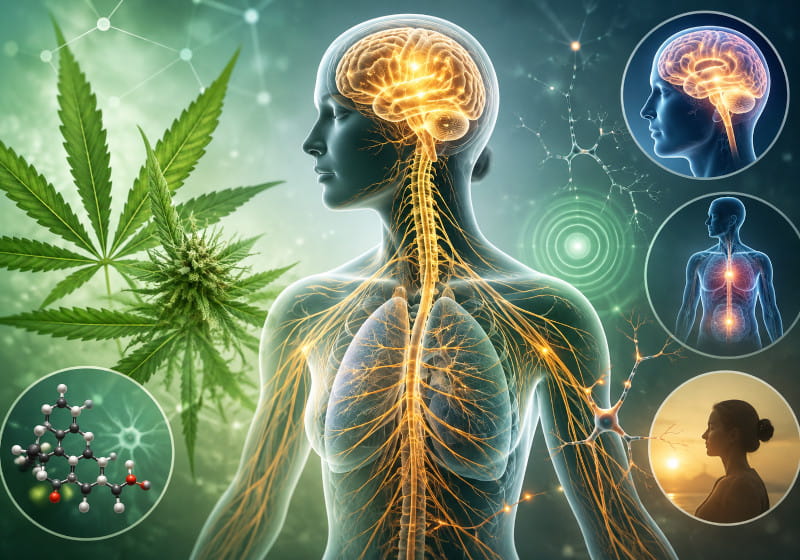
✓ CBD (cannabidiol) is a cannabinoid found in the cannabis plant that, unlike THC, does not produce a typical intoxicating high. Its effects arise from the interaction of various receptors, enzymes, ion channels and the body's own signaling pathways.
✓ The effects of CBD on the nervous system are complex. Cannabidiol influences the endocannabinoid system mainly indirectly and interacts with additional target structures involved, among other things, in neuronal excitability, pain processing and stress responses.
✓ There are initial clinical indications regarding the effects of CBD on mental health, particularly in connection with anxiety and stress. However, the current evidence is not sufficient to recommend CBD generally for the treatment of mental disorders.
✓ Purified pharmaceutical cannabidiol has been particularly well studied scientifically for certain rare forms of epilepsy. These clinical findings cannot simply be transferred to over-the-counter CBD products or other areas of use.
✓ Meaningful human studies using isolated cannabidiol are still lacking regarding the effects of CBD on sexuality, libido, erection and orgasm. Results from studies on cannabis or THC cannot automatically be transferred to CBD.
✓ Whether and how CBD is perceived can depend, among other things, on the dose, method of administration, metabolism and medications taken at the same time. CBD can cause side effects and interact significantly with medicines.
Which CBD effects are the focus of this article?
The focus is on scientifically studied effects of cannabidiol on the nervous system, mental health, stress, sleep, pain processing, inflammatory processes and sexuality, as well as the question of how robust the respective findings in humans are.
CBD has a complex pharmacological profile and can influence various receptors, ion channels, enzymes and neurotransmitter systems. We explain in detail what cannabidiol is, how it is formed, how CBD differs from THC and other cannabinoids, and what role the endocannabinoid system plays in our basic article What is CBD? Effects, Risks & Differences.
This article deliberately takes a different focus: What matters is not merely whether CBD influences biological processes in cell or animal models, but which effects have actually been studied in humans and how meaningful the results are. Human studies, clinical endpoints and the limitations of the current evidence therefore take center stage. You can find more topics related to cannabidiol in our CBD Overview.
CBD Effects on the Nervous System: What Happens in the Brain and Nerve Cells?
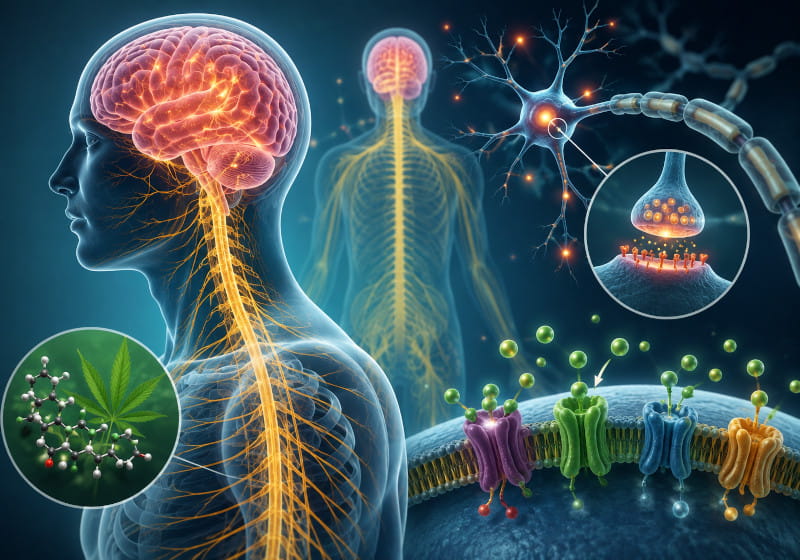
CBD influences the nervous system through several signaling pathways that can, among other things, alter the excitability of nerve cells and the processing of neuronal signals; the clinical significance varies greatly depending on the condition and dose.
The search query “CBD effects nervous system” covers very different levels. In experimental models, cannabidiol can act on receptors and ion channels in the brain and spinal cord that are involved in excitability, synaptic signal transmission, pain processing and stress responses. Possible indirect effects via the endocannabinoid system are also involved.
The strongest clinical evidence of a relevant effect in the central nervous system comes from epilepsy research. Purified cannabidiol is approved in the EU as a medicine for certain rare epilepsy syndromes. This approval shows that CBD can have a demonstrable neurological effect in precisely defined conditions and at pharmaceutically controlled doses. However, it does not prove that over-the-counter CBD products generally “calm the nervous system” or treat neurological disorders.
Undesired effects are also part of the effects on the nervous system. Drowsiness and fatigue are known possible side effects of pharmaceutical cannabidiol. Anyone using CBD together with sedating medicines must also take possible interactions into account.
CBD Effects on Mental Health: What Do Human Studies Show?
CBD can influence processes in the brain associated with stress, anxiety and emotional processing. Human studies provide initial indications, but clinical evidence is still limited for many mental health complaints.
The effects of CBD on mental health have been studied particularly often in connection with anxiety. Systematic reviews and meta-analyses show partly positive results, although the studies differ considerably in dosage, preparation, duration of use, symptoms investigated and number of participants. While some controlled studies observed a reduction in anxiety symptoms, the overall results are not yet consistent.
When interpreting the evidence, it also matters exactly what was studied. A single dose of CBD before an experimentally induced stressful situation, for example, does not allow direct conclusions about long-term use in a diagnosed anxiety disorder. Results concerning anxiety likewise cannot automatically be transferred to depression, post-traumatic stress disorder or other mental disorders.
For CBD for Depression the evidence is even weaker. Results from laboratory and animal studies provide interesting avenues for research but do not prove an antidepressant effect in humans. The clinical data available so far are also insufficient to classify CBD as an established treatment for depression.
Can CBD Influence Anxiety and Stress?
Studies provide indications that CBD can influence anxiety and acute stress responses. However, it is not yet possible to clearly determine how reliably and over what period these effects occur or what dosage is suitable.
In humans, CBD has been studied, among other things, in social anxiety, anxiety symptoms and experimentally induced stressful situations. In some studies, participants reported less anxiety or tension, while other studies showed no clear effects. Overall, the number of high-quality studies remains limited, and differences in dosage, duration of use and participant groups make direct comparisons difficult. You can learn more about the current state of research in our article on CBD for Stress.
How CBD might influence anxiety and stress is not yet fully understood. Researchers are examining, among other things, interactions with the serotonin system as well as changes in brain regions and neural networks involved in processing anxiety and stress. However, these possible mechanisms do not allow predictions about whether or how strongly CBD will work in an individual person.
How Does CBD Affect Sleep and Fatigue?
CBD can cause fatigue and drowsiness. Whether cannabidiol also reliably improves falling asleep or sleep quality in people with sleep problems has not yet been sufficiently clarified scientifically.
Fatigue and drowsiness are among the known side effects of pharmaceutical cannabidiol and occur particularly at higher doses or in combination with certain medications. However, this does not automatically mean that CBD has a targeted sleep-promoting effect. So far, it has not been clearly demonstrated that cannabidiol shortens the time it takes to fall asleep, reduces nighttime awakenings or sustainably improves sleep quality in people with sleep disorders.
In addition, the studies conducted so far differ considerably in dosage, preparation and participant groups. People were often studied who, in addition to sleep problems, also suffered from anxiety, stress, pain or other complaints. It is therefore not always clear whether observed changes in sleep are directly attributable to CBD or are related to changes in other symptoms. We discuss the state of research in more detail in our guide on CBD for Sleep Problems.
Does CBD Have an Effect on Pain?
In laboratory and animal studies, CBD influences various processes involved in the development and processing of pain. However, whether pure CBD can reliably relieve pain in humans has not yet been sufficiently demonstrated.
When evaluating the evidence, the type of pain plays an important role. Neuropathic pain, inflammatory complaints, osteoarthritis, back pain or acute pain after surgery have different causes and are not necessarily influenced in the same way. Results from one of these areas therefore cannot simply be transferred to other forms of pain.
In addition, studies do not always examine pure cannabidiol. In some cases, cannabis preparations or combinations of CBD and THC are used. Since THC itself can influence pain perception, such results cannot be attributed to CBD alone. For the question of CBD's effects on pain, studies in which cannabidiol was specifically examined separately from THC are therefore particularly relevant.
Can CBD Influence Inflammatory Processes?
Laboratory and animal studies show that CBD can influence various processes involved in inflammatory responses. However, whether this results in a relevant anti-inflammatory effect in humans has not yet been sufficiently demonstrated.
Researchers have examined, among other things, how cannabidiol affects pro-inflammatory signaling molecules, immune cells and oxidative stress. These findings help improve our understanding of possible mechanisms of action of CBD. However, they are not sufficient to derive a proven effect in human inflammatory diseases.
In addition, inflammation can have very different causes. An autoimmune disease, for example, differs fundamentally from an acute infection or a local inflammatory response following an injury. The frequently used statement “CBD is anti-inflammatory” is therefore too general without further context.
Which CBD Effect Is Scientifically Proven in Epilepsy?
The best-established medical effect of cannabidiol to date concerns certain severe forms of epilepsy. An approved prescription medicine containing purified cannabidiol is available for this purpose in the EU.
The cannabidiol medicine Epidyolex is approved in the European Union as adjunctive therapy for seizures associated with Lennox-Gastaut syndrome and Dravet syndrome in conjunction with clobazam, as well as for tuberous sclerosis complex under the respective specified conditions. The approval is based on clinical studies using standardized and purified cannabidiol.
These results cannot be transferred to other areas of use or over-the-counter CBD products. The clinical studies used precisely defined doses and pharmaceutically controlled preparations under medical supervision. This differs significantly from commercially available CBD products. You can find more scientifically contextualized topics in our section Cannabis Medicine & Health.
How Quickly Do the Effects of CBD Begin?
How quickly CBD works depends mainly on the method of administration, the amount absorbed, food intake and individual differences in metabolism. A fixed period therefore does not apply to every person and every CBD product.
With orally ingested CBD, cannabidiol must first be absorbed through the gastrointestinal tract and is then metabolized, among other places, in the liver. How much CBD actually reaches the bloodstream and how quickly the concentration rises can vary considerably. Meals can also influence absorption. With other methods of administration, CBD may in turn be absorbed more quickly or differently.
It is also important which effect is being considered. A change perceived in the short term must be assessed differently in terms of timing than a possible effect that is only studied after repeated use. General statements such as “CBD always works after 20 minutes” are therefore not scientifically justified.
How Long Do the Effects of CBD Last?
How long the effects of CBD last cannot be stated in general terms. Method of administration, amount of CBD, metabolism, regular or one-time use and individual differences can influence the duration.
A distinction must be made between how long cannabidiol remains in the body and an effect that is actually perceived. CBD can still be present in the body even when no clear effect is perceived anymore. Regular use can also produce different patterns than a single dose. Fixed statements such as “CBD works for six hours” therefore have only limited validity.
Why Doesn't CBD Affect Everyone in the Same Way?
The effects of CBD can vary from person to person. Important factors include the amount absorbed, method of administration, metabolism, diet, medications taken at the same time and the composition of the CBD product used.
Personal factors can also play a role. How quickly CBD is absorbed and processed in the body varies from person to person. At the same time, expectations can influence how changes in stress, pain or sleep are perceived. Placebo-controlled studies are therefore important in order to distinguish actual effects from subjective expectations as well as possible. We discuss which factors play a role in CBD Dosage in detail in a separate guide.
|
Influencing factor |
Why it can change the effects of CBD |
| Dose | Different amounts of CBD can influence the effects and the risk of side effects. |
| Dosage form | Absorption rate and bioavailability differ. |
| Food | Meals can significantly influence oral absorption. |
| Medications | Interactions can alter CBD or medication levels. |
| Liver function | CBD is metabolized to a significant extent in the liver. |
| Product quality | Declared and actual CBD content can differ in non-standardized products. |
CBD Effects on Sexuality: What Is Scientifically Proven?
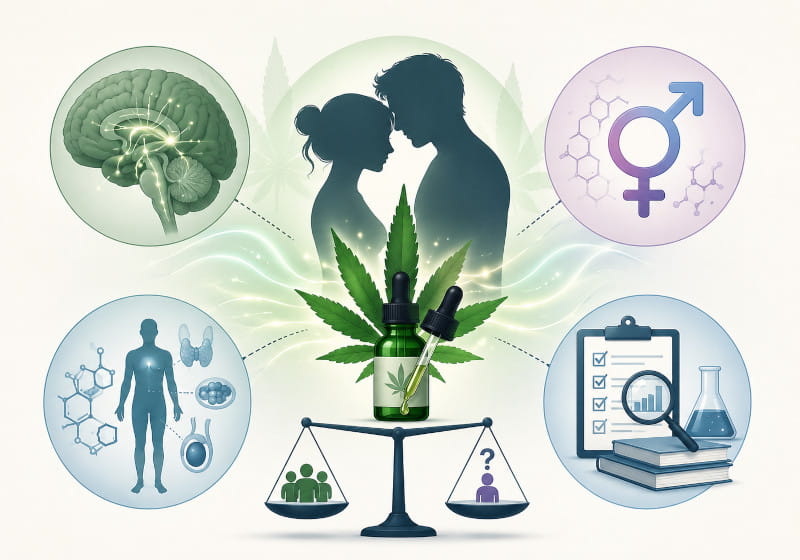
Whether CBD influences sexuality, libido, arousal, orgasm or erectile function cannot currently be answered reliably. Sufficiently meaningful human studies using isolated cannabidiol are lacking to demonstrate either a positive or negative effect.
Research to date on cannabinoids and sexuality has focused mainly on cannabis, THC or the endocannabinoid system as a whole. However, this does not allow clear conclusions about the effects of CBD on sexuality. In addition to CBD, cannabis often contains THC and other cannabinoids such as CBG or THCV. These substances have their own biological properties and can influence the results of studies using cannabis.
Some studies on cannabis report changes in sexual desire, arousal or subjective sexual experience. Factors such as dose, frequency of use and the composition of the cannabis product used play a role. However, such results are not evidence that CBD increases libido, improves potency or enhances sexual desire. Convincing clinical data on pure CBD are still lacking for these frequently claimed effects.
Possible effects on fertility and reproduction are also being studied scientifically. The focus includes hormones, sperm and other functions of the male and female reproductive systems. However, the current evidence does not allow simple conclusions about CBD. Here too, distinguishing between isolated cannabidiol, THC and cannabis containing several different cannabinoids is particularly important.
Can CBD Increase or Decrease Libido?
A reliable increase or decrease in libido caused by pure CBD has not been demonstrated in humans.
Libido is influenced by many factors: psychological stress, relationship circumstances, sleep, hormones, medications, illnesses and general well-being. If someone notices a change in sexual interest after taking CBD, controlled studies are needed before concluding that cannabidiol directly changed libido.
Theoretically, indirect changes could play a role. For example, if stress or fatigue is perceived differently, sexuality may also change. However, such an indirect explanation is not evidence of an aphrodisiac effect of CBD.
Does CBD Have an Effect on Erection, Potency or Orgasm?
Whether CBD can influence erection, potency or orgasm has not yet been sufficiently studied. Robust clinical studies supporting a targeted improvement in sexual function through cannabidiol are lacking.
An erection results from a complex interaction of blood vessels, the nervous system, hormones and psychological factors. Medications, illnesses and general physical condition can also influence erectile function. Although the endocannabinoid system is involved in various processes in the body, this does not allow an inference that CBD has a potency-enhancing effect.
Convincing human data are also lacking for a direct effect of CBD on orgasm or sexual sensation. If erectile problems appear for the first time or persist over a longer period, medical evaluation is advisable because vascular, metabolic or hormonal problems, among other factors, may play a role.
What Side Effects Can CBD Have?
CBD can cause side effects. These include fatigue, drowsiness, gastrointestinal complaints and changes in appetite. At higher medical doses, elevated liver enzyme levels can also occur.
The most extensive safety data come from clinical studies using pharmaceutical cannabidiol. Possible side effects and changes in laboratory values were systematically monitored in these studies. However, these results cannot be fully transferred to over-the-counter CBD products, which are often used in significantly lower amounts. You can find a detailed overview of possible CBD Side Effects and Risks in our separate guide.
Particular attention is advisable when medications are taken at the same time. CBD can influence enzymes in the liver that are involved in the breakdown of various medicines. This can change how quickly certain active substances are broken down in the body and how strongly they act. Anyone who takes medication regularly should therefore discuss possible interactions with a doctor or pharmacist.
How Safe Is CBD According to the Current European Assessment?
In 2026, EFSA established a provisional safe intake level for the daily consumption of CBD as a novel food for the first time. However, it applies only to adults and certain highly purified CBD food supplements and is expressly not a dosage recommendation for achieving a particular effect.
The provisional safe intake level established by EFSA is 0.0275 mg of CBD per kilogram of body weight per day. For an adult weighing 70 kg, this corresponds to approximately 2 mg of CBD daily. This assessment applies exclusively to food supplements containing at least 98% pure CBD, without nanoparticles and subject to additional conditions specified by EFSA. The stated amount describes a safety limit and not the amount of CBD required for a particular effect.
For people under 25, pregnant women, breastfeeding women and people taking medications, EFSA was unable to establish the safety of CBD on the basis of the available data. Data gaps also remain regarding possible effects on the liver and on the hormonal, nervous and reproductive systems.
Can CBD Interact With Medications?
Yes, CBD can influence the effects and breakdown of certain medications. How relevant an interaction is depends, among other things, on the specific medicine, the amount of CBD and individual factors.
Enzymes in the liver that are involved in the breakdown of numerous medicines play an important role. CBD can influence some of these enzymes and thereby alter how quickly certain active substances are processed in the body. An interaction with the epilepsy medicine clobazam, for example, is well documented. Interactions may also be relevant with other medicines, although the risk cannot be inferred solely from the fact that CBD and a medication are processed via the same enzyme system.
Spacing the intake of CBD and a medication apart does not generally prevent such interactions. Anyone who regularly takes prescription medication should therefore discuss the combination with a doctor or pharmacist and should not independently change the use of prescribed medicines. Detailed information on known mechanisms and medication groups can be found in our guide on CBD Interactions With Medications.
Why Can Different CBD Products Have Different Effects?
The effects of different CBD products are not automatically comparable because concentration, purity, dosage form, accompanying substances and the actual amount of CBD absorbed can vary considerably.
An approved cannabidiol medicine has an exactly defined composition, is used at clinically tested doses and is subject to pharmaceutical quality standards. In over-the-counter products, concentration, labeling accuracy and accompanying substances may vary more widely. Therefore, the statement “CBD was effective in a study” is incomplete without specifying the product and dose.
Full-spectrum products must also not be equated with isolated cannabidiol. They can contain additional plant constituents and, depending on the product, traces or relevant amounts of other cannabinoids. If effects are observed, it is not always clear which component was responsible.
How much CBD a cannabis plant can produce and the ratio in which the various cannabinoids occur are largely determined by its genetics. We show which CBD Strains and CBD Genetics are characterized by different cannabinoid profiles in our detailed strain guide. A selection of different CBD Seeds is also available in our corresponding category.
Which Effects of CBD Are Scientifically Proven?
How well a CBD effect is scientifically established varies considerably depending on the area of use. Cannabidiol has been particularly well studied for certain rare forms of epilepsy, whereas much less meaningful data are available for many other commonly claimed effects.
|
Topic |
State of research |
Assessment |
| Certain rare epilepsy syndromes | Well established | Purified cannabidiol is approved as a medicine for certain forms of epilepsy. |
| Anxiety | Initial indications | Several human studies show possible effects, but the results are not yet consistent. |
| Sleep disorders | Limited | CBD can cause drowsiness, but a reliable improvement in sleep disorders has not been sufficiently demonstrated. |
| Pain | Limited and inconsistent | Sufficiently convincing clinical data for pure CBD are still lacking. Studies involving THC or cannabis must be distinguished from this. |
| Inflammatory processes | Primarily laboratory and animal studies | There are indications of possible mechanisms of action, but a general anti-inflammatory effect in humans has not been sufficiently demonstrated. |
| Depression | Insufficient | An antidepressant effect of CBD in humans has not yet been sufficiently demonstrated. |
| Sexuality and libido | Insufficient | Meaningful human studies on pure CBD concerning libido, erection, orgasm and sexual function are lacking. |
Why Can't Laboratory Studies on CBD Effects Automatically Be Applied to Humans?
Laboratory and animal studies can show how CBD influences certain biological processes. However, they do not automatically demonstrate that the same effects also occur in humans.
In cell cultures, for example, CBD concentrations can be studied that are not reached in the human body with usual intake. Animal studies also provide important indications of possible mechanisms of action, but metabolism, bodily functions and responses can differ substantially from those in humans.
Clinical studies are therefore particularly important for evaluating possible CBD effects in humans. Meaningful studies compare CBD under controlled conditions with a placebo or comparison treatment where possible and include a sufficient number of participants, clearly defined doses and measurable outcomes. Positive results from laboratory or animal studies are therefore initially a basis for further research and not yet proof of a corresponding effect in humans.
Who Should Exercise Particular Caution With CBD?
Particular caution is advisable, among other things, for people who regularly take medication, have existing liver disease, are pregnant or breastfeeding, or are younger, because important safety questions have not yet been sufficiently clarified for these groups.
Anyone who takes medication regularly should consider possible interactions. CBD is processed, among other places, in the liver and can influence enzymes that are also involved in breaking down various medicines. Elevated liver enzyme levels have also been observed at higher medical CBD doses. In the case of existing liver problems or regular medication use, prior consultation with a doctor or pharmacist is therefore advisable.
There are also insufficient data to reliably assess the safety of CBD during pregnancy and breastfeeding. In 2026, EFSA also concluded that, based on the available data, no safe intake level could be derived for pregnant women, breastfeeding women, people under 25 and people taking medications.
How Can You Recognize a Reliable Statement About CBD Effects?
Reliable statements about CBD effects take into account what was actually studied: which CBD preparation, what amount, which group of people and what type of study. It is equally important to consider how clear the results are and which questions remain unanswered.
Caution is warranted with sweeping promises that CBD can cure certain diseases, replace medications or reliably help with numerous complaints. Such statements are not supported by current research. What matters instead is whether a possible effect has so far only been observed in the laboratory, whether initial human studies are available, or whether larger controlled studies have already been conducted.
It is equally important to distinguish between CBD and cannabis. Results from studies using THC-containing cannabis cannot automatically be transferred to cannabidiol. Especially with topics such as mental health, pain or sexuality, mixing these up can lead to incorrect conclusions about the actual effects of CBD.
What Does Current Research on CBD Effects Mean in Practice?
CBD can demonstrably influence biological processes in the body. However, how well a specific effect in humans is established differs considerably between individual areas of use.
This is particularly clear with certain severe forms of epilepsy, for which purified cannabidiol is approved as a medicine. For many other frequently claimed effects of CBD, however, research has not yet progressed far enough to allow similarly clear conclusions. Initial positive findings are therefore interesting but cannot be equated with a proven medical benefit.
When interpreting studies, it is therefore worth taking a close look: Was pure CBD studied, or a cannabis product containing additional cannabinoids? Did humans participate in the study, or do the results come from laboratory or animal experiments? What amount of CBD was used, how many people were studied, and was there a comparison group? Only such information shows how meaningful a result actually is and whether it can be transferred to other CBD products or areas of use.
Which Sources Help With the Scientific Assessment of CBD Effects?
How well a particular CBD effect is scientifically established can best be assessed using clinical studies, systematic reviews and assessments by medicines and health authorities.
The following sources provide important scientific foundations for the topics covered in this article. When interpreting the results, it is crucial to consider what was actually studied: pure cannabidiol, a CBD-rich extract or a cannabis product that also contains THC and other cannabinoids.
- European Medicines Agency: Epidyolex – approval and product information on cannabidiol
- EFSA 2026: Provisional safe intake level for CBD as a novel food
- EFSA 2026: Updated scientific opinion on the safety of cannabidiol
- Systematic review of CBD for anxiety disorders
- Meta-analysis of the therapeutic potential of CBD for anxiety
- Systematic review of the efficacy and safety of CBD outside seizure disorders
- Cochrane Review 2026: cannabis-based medicines for chronic neuropathic pain
- Randomized study of 150 mg CBD and sleep-related endpoints
- Review of cannabis and human sexuality – important for distinguishing CBD-specific claims
- Review of cannabidiol and the male reproductive system
- Human study on cannabinoids, the gonadotropin axis and semen parameters
- CDC: Cannabidiol – effects, risks and distinction from THC
Frequently Asked Questions About CBD Effects
Q: What is the most important effect of CBD?
A: There is no single CBD effect. Cannabidiol influences various biological signaling pathways in the body. Its best-established scientific effect is in certain rare forms of epilepsy, for which purified cannabidiol is approved as a medicine.
Q: How does CBD affect the nervous system?
A: CBD influences various receptors, ion channels and neurotransmitter systems involved in signal processing by nerve cells. The resulting effects in humans depend, among other things, on the condition studied, the amount of CBD and individual factors.
Q: How does CBD affect mental health?
A: CBD can influence processes in the brain associated, among other things, with stress, anxiety and emotional processing. There are initial indications from human studies regarding anxiety, but the evidence remains limited for many other mental health complaints.
Q: Does CBD have a calming effect?
A: Some studies provide indications that CBD can influence anxiety and acute stress responses. However, it is not possible to predict generally whether a calming effect will occur or how strong it will be.
Q: Does CBD work against pain?
A: Whether pure CBD can reliably relieve pain in humans has not yet been sufficiently demonstrated. Results from studies using THC-containing cannabis or combined cannabis preparations cannot be attributed to CBD alone.
Q: Is CBD anti-inflammatory?
A: Laboratory and animal studies show that CBD can influence various processes involved in inflammatory responses. However, a general anti-inflammatory effect in humans has not yet been sufficiently demonstrated.
Q: Does CBD help with sleep?
A: CBD can cause fatigue or drowsiness. Whether cannabidiol also reliably improves falling asleep or sleep quality in people with sleep problems has not yet been sufficiently clarified scientifically.
Q: How quickly does CBD work?
A: How quickly a CBD effect begins depends, among other things, on the method of administration, the amount absorbed, food intake and individual metabolism. A fixed period therefore does not apply to every person and every CBD product.
Q: How long does CBD work?
A: How long the effects of CBD are perceived cannot be stated in general terms. Method of administration, amount of CBD, metabolism and one-time or regular use can influence the duration.
Q: What effect does CBD have on sexuality?
A: Whether CBD influences sexuality, libido, arousal or orgasm has not yet been sufficiently studied. Meaningful human studies on pure CBD that reliably demonstrate either a positive or negative effect are lacking.
Q: Does CBD increase libido?
A: A direct increase in libido caused by pure CBD has not been scientifically demonstrated. Results from studies using cannabis or THC cannot automatically be transferred to cannabidiol.
Q: Can CBD improve potency?
A: Whether CBD can improve potency or erectile function has not yet been sufficiently studied. Robust clinical studies demonstrating such an effect are lacking.
Q: Can CBD cause side effects?
A: Yes. Possible side effects include fatigue, drowsiness, gastrointestinal complaints and changes in appetite. At higher medical doses, elevated liver enzyme levels can also occur.
Q: Can CBD interact with medications?
A: Yes. CBD can influence the breakdown and effects of certain medicines. Anyone who regularly takes medication should therefore discuss possible interactions with a doctor or pharmacist.
Q: Is more CBD automatically more effective?
A: No. A larger amount of CBD does not automatically produce a stronger or better effect. As the dose increases, the risk of side effects and interactions may also increase.
Q: Are CBD testimonials proof of an effect?
A: No. Testimonials describe personal perceptions but cannot show whether a change was actually caused by CBD. Expectations, other medications, existing complaints and natural fluctuations in symptoms can also influence personal experience.