Ruderalis Cannabis: Meaning, Origins & Autoflowering
Cannabis Ruderalis Explained: Origins, Characteristics and Its Role in Autoflower Strains
Updated: November 2026 | Cannabis Ruderalis: Origins, Botany and Scientific Classification
Author: Cannapot Grow Team | Reading time: twenty-six minutes
Key Takeaways
✓ Cannabis Ruderalis refers to wild-growing and feral forms of cannabis primarily associated with Eastern Europe, Russia and Central Asia. Scientists differ in their assessment of whether Ruderalis represents a separate cannabis species or a subgroup within Cannabis sativa.
✓ The best-known characteristic associated with Ruderalis is autoflowering. Unlike photoperiod-dependent cannabis strains, certain plants can begin flowering without requiring a reduction in day length. However, not all populations classified as Ruderalis necessarily share the same flowering characteristics.
✓ Modern autoflower strains were developed through the deliberate crossing and selection of self-flowering cannabis lines. They combine this flowering characteristic with traits from other genetic backgrounds, including growth structure, flower development and cannabinoid profiles. Modern autoflower strains are the result of independent breeding programmes.
✓ Autoflowering has a genetic basis. Research has identified genes such as CsPRR37 and CsFT1, along with associated genomic regions, as potential factors influencing the onset of flowering. The genetic changes involved may differ between cannabis lines.
✓ Ruderalis does not automatically mean low THC or high CBD. THC, CBD and other cannabinoid concentrations, as well as terpene profiles, vary according to genetic background and plant lineage. The designation Ruderalis alone therefore cannot reliably predict chemical composition or specific plant characteristics.
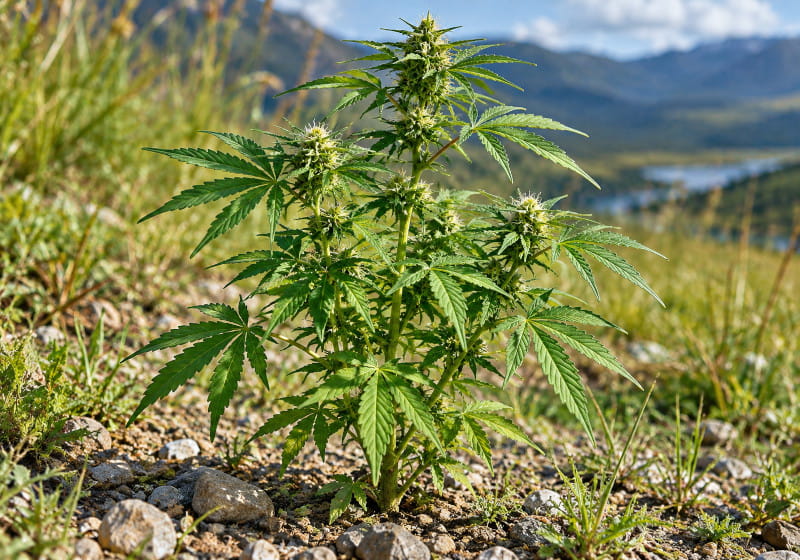
Cannabis Ruderalis refers to historically described forms of cannabis from Eastern Europe, Russia and Central Asia, often characterised by compact growth, a short developmental cycle and particular adaptations to different day lengths. Ruderalis became especially well known through its association with autoflowering: certain plants begin flowering regardless of whether the days become shorter. This characteristic has had a lasting influence on modern cannabis breeding and represents an important genetic foundation for numerous contemporary autoflower strains.
However, Ruderalis is much more than the original foundation of self-flowering cannabis strains. Behind the name lies a fascinating botanical history, a variety of wild-growing and feral populations, and scientific questions concerning the ancestry and classification of cannabis. Frequently cited characteristics, such as short plant height, narrow leaves or low THC concentrations, do not necessarily apply to every population. It is therefore essential to distinguish between historical Ruderalis plants, their genetic characteristics and modern autoflower hybrids.
What Does Cannabis Ruderalis Mean?
The name Ruderalis is derived from the botanical term "ruderal". This describes plants that typically grow on disturbed or human-influenced land, such as roadsides, abandoned plots, railway embankments or areas near former agricultural sites. These habitats are often characterised by changing environmental conditions, exposed soil and relatively limited competition from other plants.
The scientific name Cannabis ruderalis dates back to the Russian botanist Dmitri Janischewsky, who described corresponding forms of cannabis in 1924. His research focused on wild and feral plants that differed in certain characteristics from the cultivated hemp varieties known at the time. The term Ruderalis therefore does not simply refer to any cannabis plant growing in the wild; it has a specific historical and botanical background.
Many cannabis guides present Sativa, Indica and Ruderalis as three separate species. Although this classification is widespread, it does not represent a universally accepted botanical system. Depending on the scientific approach, different forms of cannabis are classified either as separate species or as subgroups within Cannabis sativa. The term Ruderalis therefore remains useful, but it should not be equated with a clearly defined genetic ancestry.
Is Cannabis Ruderalis a Separate Species?
Whether Cannabis Ruderalis is a separate species remains a matter of scientific debate. Some botanical classification systems recognise Cannabis ruderalis as a distinct species, while others place these plants within Cannabis sativa. One well-known example is the classification proposed by Ernest Small and Arthur Cronquist in 1976, which describes cannabis as a single, variable species containing several subgroups.
Distinguishing between these groups is particularly difficult because humans have cultivated, distributed and selectively bred cannabis for thousands of years. Different forms of cannabis can also interbreed, and many regions contain feral populations that originally descended from cultivated plants. As a result, visible characteristics such as plant height, leaf shape or flowering time cannot always be assigned unambiguously to a particular botanical group.
Modern genetic studies provide a much more detailed understanding of the relationships between different cannabis populations. They reveal differences between the lineages examined and offer valuable insights into the development of particular traits. However, classification also depends on which populations are compared and which taxonomic model is applied. So far, these findings have not established a universally accepted division into exactly three species: Sativa, Indica and Ruderalis.
An important distinction is therefore essential when understanding Ruderalis: botanical classification, genetic ancestry and autoflowering are three different things. A small cannabis plant is not automatically Ruderalis. Growth characteristics and flowering behaviour must also be considered separately when determining botanical classification.
Origins, History and Geographical Distribution
Eurasian Populations and the History of the Name
Cannabis Ruderalis is primarily associated with Eastern Europe, Russia and Central Asia. Cannabis populations have been described in these regions that differed considerably in some respects from traditionally cultivated fibre and industrial hemp plants. They grew on abandoned land, along roadsides and in other open habitats, often without deliberate human care. Their relatively compact growth, early development and adaptation to regional environmental conditions were of particular interest.
The history of these populations is closely connected to the cultivation and distribution of cannabis over thousands of years. Hemp was grown across large parts of Eurasia as a source of fibre, oil and other useful materials. Seeds reached new regions through trade, agriculture and human migration. Feral populations could develop from former cultivation sites, surviving for many generations without human care. Consequently, it is not always possible to determine whether a present-day population was originally wild or descended from formerly cultivated plants.
When the Russian botanist Dmitri Janischewsky described Cannabis ruderalis in 1924, his work focused primarily on visible plant characteristics, habitat conditions and developmental differences. Modern DNA analysis was not yet available. The historical designation therefore arose from botanical observations rather than the type of genetic differentiation that is possible today. For this reason, Ruderalis should not automatically be associated with a single, clearly defined region of origin.
Wild, Feral or Landrace: Three Different Terms
When examining the origins of Ruderalis, it is particularly important to distinguish between wild populations, feral cannabis populations and landraces. These terms describe different histories of origin and development, even though their boundaries may overlap in practice.
Wild-growing cannabis populations grow without direct human cultivation. However, this alone does not establish whether they genuinely descend from originally wild ancestors. Feral populations, by contrast, originate from formerly cultivated plants whose descendants can reproduce independently over several generations. Landraces are regionally developed cannabis populations that have often been shaped over long periods by traditional use, local environmental conditions and agricultural selection.
This distinction is especially difficult in Eurasia, where cannabis has been cultivated and distributed for thousands of years. A plant growing wild today may descend from historical hemp crops, while a regional landrace may share genetic characteristics with neighbouring feral populations. Such overlaps make clear classification more difficult, but they also make research into the history of cannabis particularly interesting.
You can learn more about the development, origins and genetic diversity of traditional cannabis lines in our Canna Wiki article on Cannabis Landraces and Their Genetic Significance.
What Does Adaptation to Short Growing Seasons Mean?
In parts of Russia, Eastern Europe and Central Asia, summers can be short even though daylight hours remain particularly long during the warmer months. For annual plants such as cannabis, it is important under these conditions to develop flowers and seeds before low temperatures bring growth to an end. Flowering that begins late and is triggered exclusively by shorter days can be a disadvantage in these regions.
This provides one possible explanation for the development of largely daylength-independent flowering, which is associated with certain Ruderalis lines. Plants that can begin flowering after reaching a particular developmental stage depend less heavily on the seasonal shortening of daylight hours. Under suitable conditions, this may allow them to complete their life cycle within a short frost-free period.
This adaptation is considered a plausible explanation for the significance of self-flowering cannabis forms in northern regions. However, it does not prove that all Ruderalis populations possess the same genetic changes or that autoflowering evolved only once during the evolutionary history of cannabis.
Botanical Characteristics: Growth, Leaves and Life Cycle
Which Characteristics Are Traditionally Associated with Ruderalis?
Ruderalis plants are traditionally described as relatively small, compact and early flowering. Many historical descriptions depict plants with a strong main stem, limited lateral branching and an overall less expansive growth habit than numerous cultivated cannabis lines. These characteristics are frequently associated with the short growing seasons and changing environmental conditions of their reported regions of origin.
Certain differences are also mentioned regarding the leaves. Plants attributed to Ruderalis are sometimes described as having relatively narrow leaflets and smaller leaves. However, leaf shape in cannabis is highly variable. It changes not only between different genetic lines but also throughout the development of an individual plant. Light conditions, nutrient availability and environmental factors can additionally influence its appearance.
Another frequently mentioned characteristic is early flower development. In certain Ruderalis-associated lines, the transition to flowering can occur largely independently of a reduction in day length. This characteristic is particularly important for modern autoflower breeding. However, it should not be equated with short plant height or a particular leaf shape, as these traits are influenced by different genetic and developmental processes.
Can You Identify Ruderalis by Its Leaves?
No, Cannabis Ruderalis cannot be reliably identified by its leaves alone. Although many botanical illustrations depict Ruderalis with narrow leaflets and a compact plant structure, these characteristics also occur in other cannabis lines. Conversely, plants historically classified as Ruderalis can look different depending on their origin and growing conditions.
The familiar comparisons between Sativa, Indica and Ruderalis therefore provide only simplified guidance. For a well-founded classification, documented origin, breeding history, flowering behaviour and, where available, genetic analyses are considerably more informative than individual external characteristics. Particularly in modern hybrids, ancestry cannot be reliably determined from leaf shape.
Ruderalis, Indica and Sativa Compared
Ruderalis, Indica and Sativa are frequently described as three different cannabis species. In reality, however, these terms have botanical classifications and modern uses that do not always correspond. The following table presents the characteristics traditionally attributed to these groups and their main differences. It is intended as a guide and does not represent a scientifically undisputed division into three separate species. You can also find detailed information in our Canna Wiki articles about Sativa Cannabis and Indica Cannabis.
| Characteristic | Ruderalis | Indica | Sativa |
|---|---|---|---|
| Botanical classification | Historically described form of cannabis; status as a separate species is disputed | Historical botanical designation; also widely used today as a strain category | Recognised botanical species name Cannabis sativa; also widely used as a strain category |
| Geographical association | Primarily Eastern Europe, Russia and Central Asia | Historically associated with certain Asian cannabis forms | Historically associated with cultivated hemp and various regional cannabis forms |
| Typical growth habit | Frequently described as small, compact and sparsely branched | Traditionally rather stocky, bushy and heavily branched | Traditionally taller with a more elongated growth habit |
| Leaf shape | Variable; smaller or narrower leaflets are frequently described | Often broader leaflets | Often narrower and longer leaflets |
| Flowering behaviour | Certain lines exhibit largely daylength-independent flowering | Many traditional lines respond to shorter days | Many traditional lines respond to shorter days |
| THC and CBD content | Depends on the specific genetics; no fixed values | Depends on the specific genetics; no fixed values | Depends on the specific genetics; no fixed values |
| Importance for breeding | Particularly associated with the development of autoflowering cannabis lines | Various growth, flowering and chemical characteristics | Various growth, flowering and chemical characteristics |
The differences shown in this table describe traditional characteristics and common associations, not unchangeable traits. Many modern cannabis strains originate from different genetic lines and therefore cannot always be clearly assigned to one of these groups. In particular, the widespread assumption that Indica is always relaxing, Sativa is stimulating and Ruderalis automatically contains high levels of CBD is not scientifically supported. The chemical profile of a strain is primarily determined by its specific genetics and the cannabinoids and terpenes actually present.
Autoflowering vs. Photoperiodism: What Is the Difference?
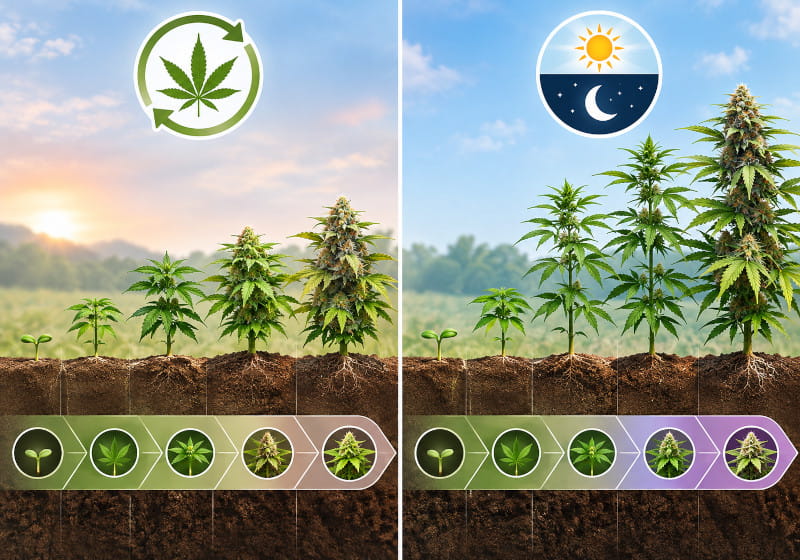
The main difference between autoflowering and photoperiod-dependent flowering lies in what triggers the transition from vegetative growth to flowering. Many traditional cannabis lines respond to changes in day and night length. Autoflowering plants, on the other hand, can begin flowering after reaching a particular developmental stage without necessarily requiring shorter days. This characteristic is known as autoflowering or largely daylength-independent flowering.
Autoflowering is frequently associated with Ruderalis and has significantly influenced the development of modern autoflower strains. However, autoflowering describes only the flowering behaviour of a plant, not a separate cannabis species. The decisive factor in distinguishing these strain types is therefore how the onset of flowering is regulated.
How Do Photoperiod Cannabis Plants Respond to Day Length?
Photoperiod cannabis plants use the duration of daily light and dark periods as an important signal for the onset of flowering. In many cannabis lines, flower formation is promoted by shorter days or longer, sufficiently uninterrupted nights. This behaviour allows plants to synchronise their reproduction with seasonal changes.
The response to day length is controlled by an interaction between various biological processes. These include light-sensitive receptors, the internal biological clock and genes involved in regulating flower development. The day length that promotes flowering can differ between cannabis lines. The age and developmental stage of a plant also play a role.
In autoflowering cannabis lines, this dependence on day length is considerably reduced or largely eliminated. However, this does not mean that light is unimportant for autoflower plants. Light remains essential for photosynthesis, growth and numerous developmental processes. The difference primarily concerns the regulation of flowering onset rather than the plant's fundamental need for light.
You can find a detailed explanation of the relationships between light duration, dark periods and flower development in our Canna Wiki article What Does Photoperiodic Mean in Cannabis?.
Is Autoflowering the Same as Early Flowering?
No, autoflowering and early-flowering cannabis strains are not the same thing. An early-flowering photoperiod strain still responds to day and night length but may begin flowering under longer daylight conditions than other photoperiod lines. Certain strains can also complete flower development particularly quickly. Both characteristics are sometimes grouped together commercially under terms such as Early Flowering or Fast Flowering, even though they describe different traits.
Autoflower strains are primarily distinguished by their largely daylength-independent flowering. They can transition to flowering after reaching a particular developmental stage without requiring a reduction in day length. An early-flowering photoperiod strain, by contrast, remains fundamentally dependent on the relevant light signals. The terms "early flowering", "fast flowering" and "autoflowering" should therefore not be treated as interchangeable.
| Characteristic | Photoperiod Strain | Early-Flowering Strain | Autoflower Strain |
|---|---|---|---|
| Flowering trigger | Depends on suitable day and night lengths | Still photoperiod-dependent, often responding earlier | Largely independent of a reduction in day length |
| Onset of flowering | Depends on day length, genetics and developmental stage | May begin earlier under comparable conditions | Primarily influenced by developmental stage and specific genetics |
| Duration of flower development | Depends on the strain and environmental conditions | Often deliberately shortened in Fast Flowering lines | Depends on the strain and environmental conditions; not necessarily shorter |
| Botanical classification | Not a separate botanical species | Not a separate botanical species | Not a separate botanical species |
| Genetic ancestry | Depends on the specific breeding line | Depends on the specific breeding line | Not automatically attributable to an original Ruderalis population |
Are All Autoflower Strains Ruderalis Crosses?
No, not every autoflower strain can be clearly traced back to a historical Ruderalis population. Cannabis lines associated with Ruderalis played an important role in the development of commercial autoflower strains. Through deliberate crosses and subsequent selection, breeders were able to combine largely daylength-independent flowering with characteristics from other cannabis lines.
Modern genetic research also shows that different genes and genetic variants can be associated with photoperiod sensitivity. The ability to autoflower therefore does not necessarily originate from the same genetic change in every cannabis line. Claims such as "10% Ruderalis" or "20% Ruderalis" are also of limited significance without verifiable ancestry data. Autoflower primarily describes a genetically determined flowering characteristic rather than a clearly defined botanical origin.
Which Genes Control Autoflowering in Cannabis?
The ability to autoflower is one of the most interesting genetic characteristics of cannabis. While photoperiod-sensitive lines closely link their flower development to day and night length, autoflower lines can initiate this transition largely independently of such changes. This is caused by genetic differences in the biological signalling pathways that regulate the onset of flowering.
The internal biological clock, the perception of light signals and genes involved in regulating flower development play important roles in this process. Recent scientific studies have identified several genetic factors associated with reduced sensitivity to day length. Of particular interest are the genes CsPRR37 and CsFT1, along with related genomic regions. The findings suggest that autoflowering in cannabis does not necessarily result from a single genetic change shared by all lines.
CsPRR37: The Connection Between the Internal Clock and Flowering Behaviour
A scientific study published in 2024 by Leckie and colleagues provided important insights into the genetic basis of autoflowering in cannabis. The researchers compared photoperiod-sensitive cannabis lines with lines exhibiting largely daylength-independent flowering. They identified a genetic change in the CsPRR37 gene that was associated with the loss of photoperiod sensitivity in the plants examined.
CsPRR37 belongs to the family of so-called pseudo-response regulators. These proteins are involved in regulating biological daily rhythms. The internal clock enables plants to detect recurring changes between light and darkness and coordinate important developmental processes over time. This includes the regulation of signalling pathways that influence the transition to flowering.
The scientists described a change at a splice site in the CsPRR37 gene. During the process known as splicing, newly produced RNA is processed before its genetic information is used to produce a protein. If a mutation alters this process, different RNA and protein variants may result. The investigated change was associated with impaired CsPRR37 function and altered regulation of flower development.
Of particular interest was the flowering-related gene CsHd3a, which belongs to a group of genes involved in promoting flower development. The study suggests that changes in regulation by CsPRR37 may allow corresponding flowering signals to become active even under long-day conditions. This provides a molecular genetic explanation for the largely daylength-independent flowering behaviour of certain cannabis lines.
However, the scientific context is important: The findings relate to the genetic backgrounds examined in the study. They do not prove that all modern autoflower strains carry the same CsPRR37 mutation. The gene should therefore not be universally described as a "Ruderalis gene".
Scientific source: Leckie et al. (2024), The Plant Journal – Loss of daylength sensitivity by splice site mutation in Cannabis pseudo-response regulator.
CsFT1 and Other Autoflower Loci
In addition to CsPRR37, scientists have identified other genetic regions associated with largely daylength-independent flowering in cannabis. A study published in 2024 by Dowling and colleagues investigated this characteristic in fibre hemp and described a genomic region known as Autoflower2. This region, spanning approximately 0.5 megabases, contains the gene CsFT1, which has been associated with the regulation of flower development.
CsFT1 belongs to the family of FLOWERING LOCUS T-related genes. This gene family plays a central role in regulating the transition from vegetative to reproductive development in numerous flowering plants. FT-related proteins are involved in transmitting flowering-promoting signals and help connect information about developmental stage and environmental conditions with the initiation of flower formation.
The researchers identified differences in DNA sequences, the number of certain gene copies and gene activity among the cannabis lines examined. These differences were associated with variations in flowering behaviour. CsFT1 is therefore considered an important candidate for the genetic regulation of autoflowering. However, such an association does not automatically mean that every observed change is directly responsible for the trait. A genetically mapped region may contain several genes and regulatory elements whose precise functions require further investigation.
Of particular interest is that the study provided evidence of different genetic mechanisms underlying autoflowering. In addition to Autoflower2, the previously investigated Autoflower1 region was also considered. The findings show that largely daylength-independent flowering in cannabis can arise from different genetic backgrounds. This demonstrates that several genetic pathways may lead to similar flowering behaviour.
More recent genetic studies, including a study published in 2026 on Iranian cannabis genotypes, have reported additional genomic regions and potential candidate genes associated with flowering time. Such findings expand our understanding of genetic diversity but still require confirmation in independent populations and functional experiments.
Scientific source: Dowling et al. (2024), The Plant Journal – A FLOWERING LOCUS T ortholog is associated with photoperiod-insensitive flowering in hemp.
How Is Autoflowering Inherited?
The inheritance of autoflowering in cannabis depends on which genetic variants are involved in the trait. Autoflowering is often described as a simple recessive characteristic. This means that a plant needs two corresponding copies of a genetic variant for the trait to become apparent. This model can explain certain crosses but cannot be applied universally to all cannabis lines.
Scientific crossing experiments have shown that different genomic regions may exhibit different inheritance patterns. For the region known as Autoflower1, a recessive inheritance pattern was described in certain crosses examined. For Autoflower2, however, researchers found evidence of a dominant effect of the corresponding genetic variant. In this case, a single copy of a particular variant may be sufficient to influence flowering behaviour.
These differences do not represent a scientific contradiction. Instead, they demonstrate that similar visible characteristics can arise through different genetic mechanisms. Interactions between several genes and environmental factors may also influence when a plant produces its first flowers and how its subsequent development progresses. The onset of flowering, the duration of flower development and the complete life cycle are not necessarily regulated by identical genetic mechanisms.
For cannabis breeding, this means that the inheritance of autoflowering can only be reliably assessed using specific parental lines and traceable crossing data. General statements such as "autoflowering is always recessive" are therefore oversimplified. What matters is which genetic variants are actually present and how consistently the desired trait is passed on over several generations.
We explain the fundamentals of different crossing generations and breeding methods in detail in our Canna Wiki article Cannabis Genetics Explained – F1, F2, BX, S1 & IBL.
What Do We Still Not Know?
Although the genetic basis of autoflowering is now much better understood, important questions remain unanswered. Researchers have not yet sufficiently established how frequently the genetic variants identified so far occur in different cannabis populations. Most studies focus on selected genotypes, crossing populations or commercial breeding lines. Their findings therefore cannot automatically be applied to the entire genetic diversity of cannabis.
Of particular interest is the interaction between multiple genes in regulating the onset of flowering. Different genetic changes may produce similar flowering characteristics, while their actual effects can be influenced by the rest of the genome and environmental factors. It also remains unclear for some of the genomic regions examined which changes are directly responsible for autoflowering and which are merely inherited alongside the decisive variants.
Further genetic mapping, gene expression studies and functional experiments are needed to better understand these relationships. Comparisons between historical, wild-growing, feral and modern cannabis lines are equally important. Only such research can help clarify the evolutionary origins of different autoflowering traits. One unresolved question is how these genetic variants spread throughout the evolutionary history of cannabis.
THC, CBD and Terpenes: What Does Cannabis Ruderalis Contain?
Cannabis Ruderalis does not have a uniform THC, CBD or terpene profile. Although certain historically described Ruderalis populations are frequently associated with comparatively low THC concentrations, this cannot be generalised to all plants. Chemical composition can vary considerably between different populations and genetic lines.
The widespread assumption that Ruderalis always contains little THC and particularly high levels of CBD is therefore an oversimplification. Autoflowering and cannabinoid production are separate genetic characteristics. A plant that flowers independently of day length may exhibit different chemical profiles. Likewise, the designation Ruderalis cannot reliably predict a particular CBD concentration or characteristic aroma.
Why Are Cannabinoid Profiles Not Botanical Labels?
The cannabinoids produced by a cannabis plant depend largely on its genetic background and the metabolic pathways involved. Enzymes responsible for the formation of THCA and CBDA play an important role. These two compounds are the naturally occurring acidic precursors of THC and CBD, respectively, and can be converted into their neutral forms through heating, for example.
In scientific research, cannabis lines are classified partly according to their chemotypes. Some plants predominantly produce THCA, others contain a higher proportion of CBDA, while others exhibit different ratios of the two compounds. These chemical characteristics cannot be reliably inferred from traditional designations such as Ruderalis, Indica or Sativa. Even two plants with similar appearances may have significantly different cannabinoid profiles.
In addition to genetics, developmental stage, plant tissue, environmental conditions and analytical methods also influence measured cannabinoid concentrations. Scientifically meaningful comparisons must therefore consider sample origin, the genotypes examined and the analytical procedures used. Individual laboratory results or manufacturer specifications do not justify general conclusions about all Ruderalis populations.
You can find further information about cannabis lines with different CBD characteristics, along with a selection of corresponding genetics, in our CBD Seeds category. However, a particular CBD concentration is not a botanical identifying characteristic of Ruderalis.
Are Certain Terpenes Typical of Ruderalis?
There is no scientifically established terpene profile that is characteristic of all Ruderalis populations. Terpenes are natural plant compounds that contribute significantly to the smell and aroma of cannabis. Frequently studied compounds include myrcene, limonene, α-pinene and β-caryophyllene. However, their occurrence is not restricted to any particular traditional cannabis group.
The composition and concentration of terpenes are influenced by specific genetics, developmental stage and various environmental conditions. Processing and storage of plant material can also alter the aroma profile measured later. Consequently, the designation Ruderalis does not allow a particular smell or characteristic combination of terpenes to be reliably predicted.
When evaluating a particular cannabis line, traceable information about its genetic origin and, where available, analytically determined cannabinoid and terpene profiles are considerably more informative than broad categories such as Ruderalis, Indica or Sativa. This is especially true for modern autoflower hybrids, whose chemical characteristics can vary significantly as a result of selective breeding.
Ruderalis in Modern Cannabis Breeding
The greatest significance of Cannabis Ruderalis for modern breeding lies in the development of autoflowering cannabis strains. Historically described Ruderalis lines were associated with flowering behaviour that depended less strongly on day length. Through crosses with other cannabis lines and subsequent selection, breeders were able to combine this characteristic with different growth habits, flower characteristics and chemical profiles.
Over several generations, these breeding efforts led to the development of a distinct group of modern autoflower hybrids. They can differ considerably in plant height, developmental duration, branching and cannabinoid composition. Their main shared characteristic is largely daylength-independent flowering. Their other characteristics depend on the parental lines used and their respective breeding histories.
Why Are Modern Autoflower Hybrids Not Original Ruderalis Populations?
Historical Ruderalis populations developed under particular geographical, ecological and sometimes human-influenced conditions. Modern autoflower hybrids, by contrast, are the result of deliberate crosses and repeated selection. Plants with desirable characteristics are selected and bred over several generations.
Even if an early parental line was originally described as Ruderalis, the genetic composition of its descendants may change considerably through subsequent crosses. A modern autoflower strain can therefore combine the self-flowering characteristic of such a line with numerous traits from other cannabis genetics. Documented breeding steps are particularly informative when assessing its background.
Fast Buds as an Example of Modern Autoflower Breeding
A well-known example of specialisation in autoflowering cannabis strains is Fast Buds. This breeder focuses on modern autoflower genetics and illustrates how far this breeding segment has developed beyond the originally described Ruderalis populations. Today, autoflower breeding encompasses numerous different genetic lines whose characteristics have been further developed through deliberate crossing and selection.
It is important to distinguish between traceable breeding information and simplified descriptions of origin. Claims about the exact ancestry of individual lines should be supported by documented parental lines or genetic studies. You can learn more about the breeder and its autoflowering strains in our Canna Wiki article Fast Buds Seeds – Genuine Fast Buds Autoflower Genetics.
Regular Seeds, Crossing Generations and Pheno Hunting
In cannabis breeding, flowering behaviour, sex distribution and genetic ancestry must be distinguished from one another. The term autoflower describes largely daylength-independent flowering. Regular cannabis seeds, on the other hand, are produced without deliberate feminisation and can develop into male or female plants. These two characteristics are not mutually exclusive: autoflowering cannabis lines can also be available as regular seeds.
Regular seeds play a role in various breeding programmes because they allow the selection of male and female parent plants. You can find further information in our Regular Cannabis Seeds category.
Another important aspect of breeding is phenotype selection, commonly known as Pheno Hunting. Plants are compared based on their observable characteristics. In autoflower lines, breeders may examine how consistently flowering behaviour is expressed within a group of offspring. Such observations help identify genetic differences between individual plants and assess breeding lines over several generations.
Lowryder: A Milestone in Modern Autoflower History
Lowryder is one of the best-known early commercial autoflower genetics and played an important role in the spread of self-flowering cannabis strains. The line is particularly associated with the breeder Joint Doctor and introduced the concept of compact cannabis hybrids with largely daylength-independent flowering to a wider audience.
Historical breeder information describes Lowryder as the result of several crosses combining autoflowering characteristics with traits from other cannabis lines. However, its exact genetic origins cannot be independently verified in every detail. Much of the available information is based on later breeder accounts rather than genetic studies published at the time.
The particular significance of Lowryder therefore lies less in scientifically proving the ancestry of all modern autoflower strains and more in popularising a new breeding concept. Autoflowering cannabis lines were increasingly combined with other genetics, considerably expanding the diversity of modern autoflower hybrids.
You can find further information and corresponding genetics in our Autoflower Seeds category.
Advantages and Limitations of Ruderalis-Associated Genetics
Flowering Behaviour as an Independent Breeding Trait
Largely daylength-independent flowering is the most important characteristic that makes Ruderalis-associated genetics interesting for modern cannabis breeding. Plants with this trait can begin their reproductive development without depending on the shortening days typically required by many photoperiod-sensitive lines. This creates differences in developmental patterns and the timing of flowering initiation.
However, autoflowering does not automatically mean that a plant remains particularly small, reaches full maturity more quickly or produces higher yields. Growth habit, total development time, flower characteristics and resilience are additional traits influenced by specific genetics and various environmental factors. They must be considered independently of the autoflowering characteristic.
Climate Adaptation, Outdoor Conditions and Guerrilla Growing
Historically described Ruderalis populations are frequently associated with regions where the frost-free growing season is relatively short. The ability to begin flowering even under long summer days can provide a biological advantage under such conditions. However, this does not mean that all Ruderalis plants or modern autoflower hybrids are inherently more cold-resistant, drought-tolerant or resistant to diseases.
The actual adaptability of a cannabis line depends on numerous characteristics, including its genetic origin, response to temperature differences and sensitivity to various environmental stresses. Autoflowering and general resilience should therefore not be considered equivalent.
You can find further information about regional conditions and different growing environments in our Outdoor Cannabis Seeds category and in our Canna Wiki articles Cannabis Climate Map and Guerrilla Growing.
What Are the Limitations of Interpretation?
The term Ruderalis genetics is used differently in botanical, scientific and commercial contexts. It may refer to historically described populations, specific inherited characteristics or a simplified description of modern autoflower ancestry. These meanings should not be confused.
Claims about supposedly precise Ruderalis percentages should be treated with particular caution. Without documented parental lines, traceable crossing generations or suitable genetic comparison data, such percentages cannot be reliably verified. Likewise, compact growth, narrow leaves or early flowering do not, by themselves, prove a particular Ruderalis ancestry.
Common Myths About Cannabis Ruderalis
Myth: Ruderalis is unquestionably the third cannabis species. Its botanical classification remains scientifically disputed. Depending on the classification system, Ruderalis is considered either a separate species or part of Cannabis sativa.
Myth: Every autoflower strain is a Ruderalis plant. Autoflowering describes largely daylength-independent flowering. Modern autoflower hybrids are deliberately bred lines and should not be equated with historical Ruderalis populations.
Myth: All autoflower strains carry the same Ruderalis mutation. Scientific studies have identified different genetic regions associated with autoflowering. A single universal mutation has not been demonstrated across all autoflower lines.
Myth: Ruderalis always contains high levels of CBD and very little THC. Cannabinoid concentrations differ between genetic lines. Reliable THC or CBD values cannot be determined from the botanical designation alone.
Myth: Ruderalis can be identified by having three or five leaflets. The number and shape of leaflets change during plant development and vary between cannabis lines. They are not reliable evidence of genetic ancestry.
Myth: Ruderalis is resistant to every climate and all pests. Adaptation to particular environmental conditions does not imply universal resilience. Cold tolerance, drought tolerance and disease resistance are separate characteristics.
Myth: Lowryder is the proven ancestor of all autoflower strains. Lowryder played an important role in popularising modern autoflower genetics. However, a shared ancestry of all contemporary autoflower lines originating from Lowryder has not been established.
Selected Autoflower Strains and Their Genetics
Modern autoflower strains demonstrate how the flowering characteristics originally associated with Cannabis Ruderalis have been developed in many different directions through selective breeding. While early commercial autoflower lines were primarily known for their compact growth, today's selection includes numerous strains with different aromas, growth habits and flower characteristics.
The following selected autoflower genetics come from different seed banks and illustrate the diversity of modern self-flowering cannabis strains. From fruity dessert aromas and classic Haze and Diesel profiles to lines bred with short development times in mind, the selection covers a broad range. It also demonstrates how breeding objectives can differ within this strain category.
Jelly Donutz Auto – Humboldt Seed Company: Jelly Donutz Auto by Humboldt Seed Company represents a sweet, dessert-oriented aroma profile with fruity and pastry-like nuances. The strain illustrates how modern autoflower breeding places emphasis not only on self-flowering behaviour but also on distinctive aromatic characteristics.
Lemon Cherry Gelato Auto – 00 Seeds: Lemon Cherry Gelato Auto by 00 Seeds draws on the popular Lemon Cherry Gelato aroma profile. Citrus fruits, cherries and creamy dessert notes characterise the strain concept. It demonstrates how well-known modern aroma families are also available as autoflowering varieties.
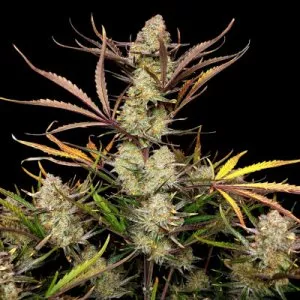
Apple Strudel Auto – Fast Buds: Apple Strudel Auto by Fast Buds is a dessert-oriented autoflower genetic line with an aroma reminiscent of sweet apples and pastries. It adds a fruity, spicy profile to the selection and highlights the diversity of contemporary self-flowering strain concepts.

Glue Auto – BSF Seeds: Glue Auto by BSF Seeds belongs to the well-known Glue strain family, associated with strong, earthy and resinous aromatic impressions. Compared with sweet dessert genetics, this strain emphasises a distinctive, classic aroma character.
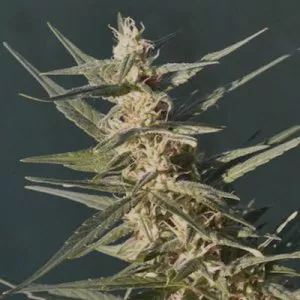
Amnesia Auto – Auto Monkey Seeds: Amnesia Auto Fem by Auto Monkey Seeds draws on the well-known Amnesia aroma family, frequently associated with fresh citrus notes and spicy nuances. As a feminised autoflower, it combines two different characteristics: seed production aimed at female plants and largely daylength-independent flowering.
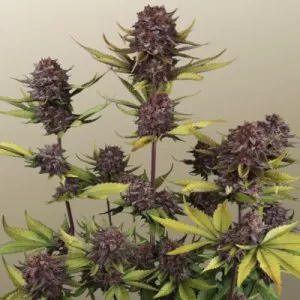
Purple Lemonade Auto RF3 – Fast Buds: Purple Lemonade Auto RF3 by Fast Buds combines a citrus-focused aroma profile with the purple colouration associated with this strain family. It illustrates how breeders selectively consider appearance and aroma alongside autoflowering. RF3 is part of the strain name and does not, by itself, provide evidence of a particular crossing scheme.
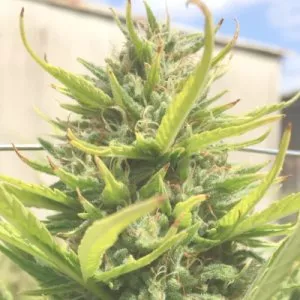
Lemon Haze Auto – Auto Monkey Seeds: Lemon Haze Auto Fem by Auto Monkey Seeds follows the popular Lemon Haze aroma profile, featuring pronounced citrus notes and a fresh, spicy character. The strain is an example of combining classic Haze-oriented strain concepts with autoflowering characteristics.
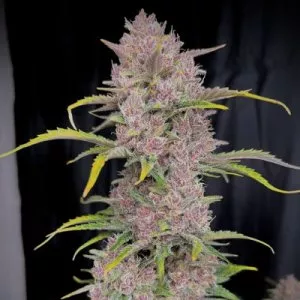
Banana Purple Punch Auto – Fast Buds: Banana Purple Punch Auto by Fast Buds belongs to the fruit-focused autoflower genetics. Its aroma profile is associated with banana, sweet berries and tropical fruits. It demonstrates how widely the scent and flavour profiles of modern self-flowering cannabis lines can vary.

+Speed Auto – Sweet Seeds: With +Speed Auto by Sweet Seeds, a short developmental cycle is central to the strain concept. This strain highlights an important distinction: autoflowering concerns the dependence of flowering initiation on day length, while the overall development time is an additional breeding characteristic.
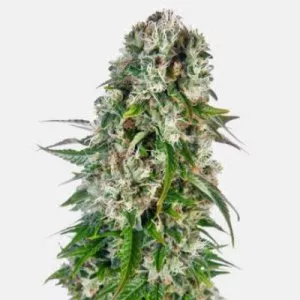
Big Bud Automatic – Sensi Seeds: Big Bud Automatic by Sensi Seeds adapts the well-known Big Bud strain concept into an autoflowering variety. The strain family is primarily associated with substantial flower development. It therefore represents a different breeding focus from predominantly aroma-oriented dessert lines.
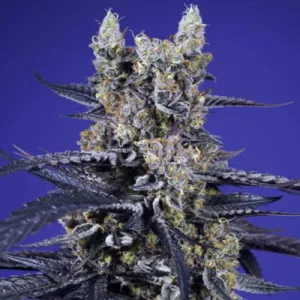
Super Boof XL Auto – Sweet Seeds: Super Boof XL Auto by Sweet Seeds belongs to the newer generation of self-flowering strain concepts. The designation XL highlights a size or growth characteristic but is not a botanically standardised category. The strain demonstrates that autoflowering does not automatically mean particularly small plant growth.
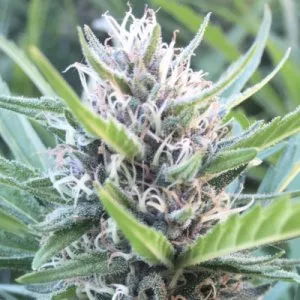
New York City Diesel Auto – Auto Monkey Seeds: New York City Diesel Auto Fem by Auto Monkey Seeds draws on the well-known Diesel aroma family, frequently described as featuring citrus notes, spicy accents and fuel-like aromatic nuances. This feminised autoflower variety expands the selection with a distinctive aroma character beyond sweet dessert profiles.
What Do These Autoflower Strains Demonstrate? Modern autoflower breeding combines self-flowering characteristics with different aroma profiles, growth habits and breeding objectives. However, a clearly defined Ruderalis ancestry cannot automatically be established for individual strains on this basis.
Frequently Asked Questions About Cannabis Ruderalis
What is Cannabis Ruderalis?
Cannabis Ruderalis is a historically used botanical designation for certain forms of cannabis, often associated with parts of Eurasia. The name is frequently linked to compact growth and reduced photoperiod sensitivity. Its exact taxonomic status is disputed, and the designation does not provide definitive evidence of a particular genetic ancestry.
Is Ruderalis a separate cannabis species?
Not according to all taxonomic interpretations. Some classifications recognise several cannabis species, while others place the diversity within a broadly defined species, Cannabis sativa. The division into Indica, Sativa and Ruderalis should therefore not be presented as an undisputed scientific consensus.
Where does Cannabis Ruderalis originate?
Historical descriptions of Ruderalis are particularly associated with Eastern Europe, Russia and parts of Central Asia. The spread of cannabis through human activity makes it difficult to distinguish between original wild populations, feral cultivated forms and regional landraces. A single, clearly defined region of origin cannot be universally established.
What does a typical Ruderalis plant look like?
Common descriptions include relatively short plants with limited branching and variable, palmately divided leaves. These characteristics are not reliable identifying features. Habitat, developmental stage and genetic background can significantly influence appearance.
Is Ruderalis always autoflowering?
Ruderalis has historically been strongly associated with flowering that is less sensitive to photoperiod. However, the name does not guarantee a particular flowering phenotype in every population. Any specific assessment must be based on the line examined and its actual behaviour.
What does autoflowering mean in cannabis?
Autoflowering describes flowering behaviour in which a plant does not necessarily depend on the shortening days typically required by many cannabis lines. This regulation is genetically influenced and may differ between lines. The characteristic alone reveals nothing about THC content or taxonomic origin.
Are all autoflower strains crossed with Ruderalis?
This cannot be universally demonstrated. Historically, lines attributed to Ruderalis were used in autoflower breeding. However, modern autoflower hybrids may have different genetic backgrounds. A specific Ruderalis percentage should only be stated when reliable documentation is available.
Which genes are involved in autoflowering?
Research has associated variants involving CsPRR37 and FT-related genomic regions such as CsFT1 with reduced photoperiod sensitivity. Additional candidate genes are being investigated. The genetic architecture may vary between populations, and not every association has yet been confirmed as a fully established causal mechanism.
Does Cannabis Ruderalis generally contain low THC and high CBD?
No. The designation Ruderalis alone does not indicate fixed THC or CBD concentrations. Chemical composition depends on genotype, population and other factors. Anyone requiring specific cannabinoid information should consult documented analyses of a particular line or sample.
What is the difference between Ruderalis and Lowryder?
Ruderalis is a historical botanical designation. Lowryder, by contrast, is the name of a well-known early commercial autoflower breeding line. Its importance lies in the development and popularisation of modern self-flowering hybrids; this does not make it equivalent to an original Ruderalis population.
Is Ruderalis more resilient than Indica or Sativa?
This cannot be stated universally. Historical populations may be adapted to particular local conditions, but tolerance to cold, drought or disease is not a universal characteristic of Ruderalis. Meaningful comparisons require studies of specific genotypes under defined conditions.
Why is Ruderalis important for cannabis breeding?
Its historical importance lies particularly in its association with flowering forms that are less strictly dependent on day length. This characteristic could be combined with other traits and contributed to the development of modern autoflower hybrids. However, the precise genetic history of individual strains must still be documented separately.
Scientific Sources and Further Reading
- Small, E. & Cronquist, A. (1976): A Practical and Natural Taxonomy for Cannabis. Taxon.
- Hillig, K. W. & Mahlberg, P. G. (2004): A chemotaxonomic analysis of cannabinoid variation in Cannabis (Cannabaceae). American Journal of Botany.
- Genomics-based taxonomy to clarify cannabis classification (2023). Genome.
- Loss of daylength sensitivity by splice site mutation in Cannabis pseudo-response regulator (2024). The Plant Journal.
- A FLOWERING LOCUS T ortholog is associated with photoperiod-insensitive flowering in hemp (2024). The Plant Journal.
- Integrating temporal morphophysiological and genomic markers for precise classification of flowering time in cannabis (2026). Scientific Reports.
- USDA GRIN Taxonomy: Cannabis ruderalis Janisch. – taxonomic database entry.