Sativa Cannabis Explained: Meaning, Origins, Effects
Sativa Cannabis Explained: Meaning, Origins, Effects, and What “Sativa” Really Means Today
Updated: December 2025 | Sativa Cannabis: Meaning, Effects & Reality – fantastic cannabis strains
Author: Cannapot Grow Team | Reading time: approximately ten minutes
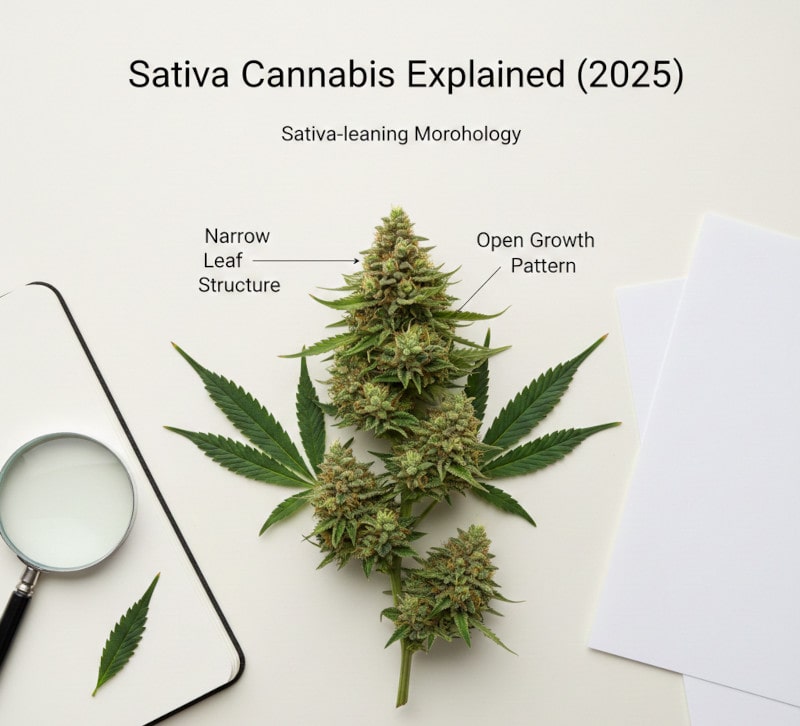
Key Takeaways
✓ “Sativa” can refer to both a botanical cannabis classification and a modern market label connected to more cerebral or uplifting effects.
✓ Many people associate sativa strains with clearer, more active and daytime-friendly experiences — but effects are never guaranteed.
✓ Modern cannabis genetics are heavily hybridized, which makes indica/sativa labels less reliable than many people assume.
✓ Cannabinoid balance, terpene profile, dosage and personal sensitivity usually matter more than the word “sativa” itself.
If you ask ten people what sativa means, you’ll get ten different answers.
Some will tell you it’s “uplifting” weed. Others will point to tall plants with narrow leaves. A few will bring up Cannabis sativa as a scientific name. And honestly, all of those answers can be partly true… while still missing the point.
This guide is here to make the word sativa usable again. Not as a myth. Not as a marketing label. As something you can actually understand and apply.
What does “sativa” mean in cannabis?
“Sativa” shows up in cannabis in two different ways, and mixing them up causes most of the confusion.
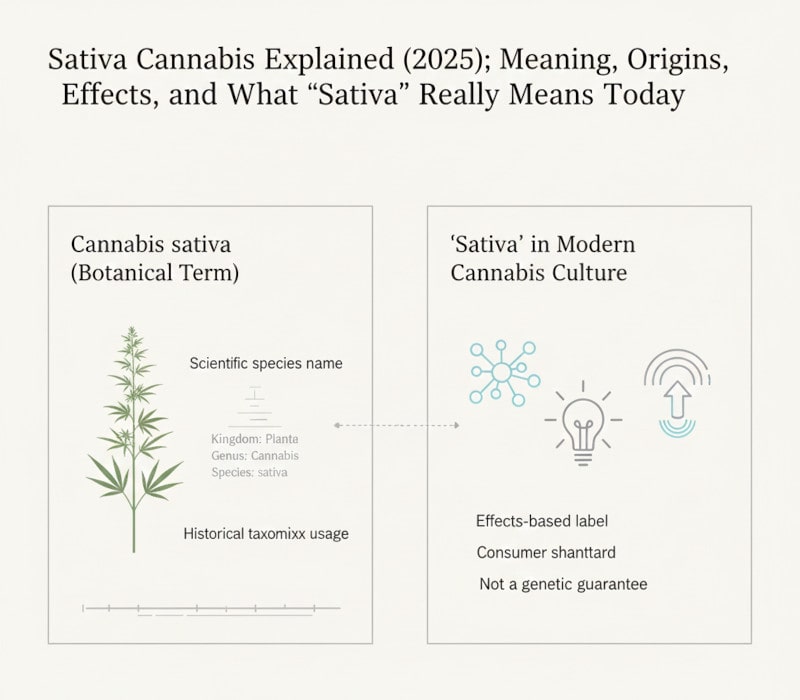
1) Cannabis sativa (botanical / taxonomy meaning)
In taxonomy, Cannabis sativa is a scientific name used historically going back to Carl Linnaeus (1753), and the word sativa comes from Latin meaning roughly “cultivated / sown.”
That’s the “plant classification” side.
2) “Sativa” as a label in modern cannabis culture
In day-to-day cannabis culture, “sativa” is commonly used as shorthand for a more cerebral, upbeat, daytime-leaning experience.
That’s the “effects label” side.
These two meanings overlap sometimes, but they are not the same thing. A modern product labeled “sativa” is not guaranteed to be botanically “pure sativa,” and the effects are not guaranteed either.
The quick truth: is sativa a strain, a species, or a “type”?
Sativa is not one strain.
It can be:
-
a scientific species label used in plant classification contexts
-
a plant growth style (taller, more open structure)
-
a market label that suggests certain effects
So when someone says “I like sativas,” they usually mean “I like a certain kind of experience,” not “I only use genetically sativa plants.”
Where the “sativa vs indica” split came from
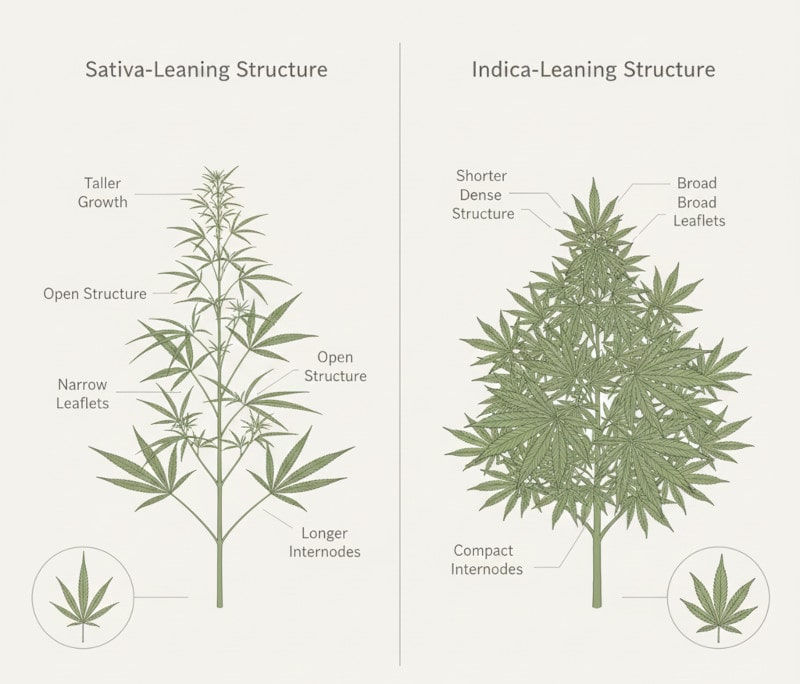
The original sativa/indica split was largely about plant morphology and geographic adaptation, not about a guaranteed effect. Would you like to learn more about the differences? Then also take a look at our Canna Wiki article "Indica Cannabis: Meaning, Origin and Effects".
A simplified version:
-
Sativa-leaning plants: often taller, narrower leaves, more open spacing, longer flowering
-
Indica-leaning plants: often shorter, broader leaves, denser structure, typically faster finishing (as commonly described in mainstream explainers)
That framework helped growers talk about what plants looked like and how they behaved.
Where it gets messy is when people assume:
“Sativa look = sativa effect.”
That doesn’t reliably hold up.
Why indica/sativa labels can be unreliable today
Modern cannabis is heavily hybridized. Even when a cultivar is sold as “sativa,” it may contain a mix of lineages that don’t map cleanly to an old-school category.
Research discussed publicly by Dalhousie University summarizes findings that indica/sativa labels can be “largely meaningless” in terms of consistent genetic separation in commercial labeling.
What this means in practice:
-
Two “sativa” products can feel totally different.
-
One “indica” can feel more alert than another “sativa.”
-
The label is a starting guess, not a guarantee.
This is not a “gotcha.” It just reflects the reality of breeding, naming, and marketing.
What people usually mean by “sativa effects”
Even though labels can be inconsistent, the idea behind “sativa effects” is still meaningful to many users.
“Sativa effects” typically means:
-
more head-focused and mental
-
lighter body heaviness (not always none)
-
a sense of alertness or motion
-
a more social, talkative, or “busy brain” vibe
Healthline and similar explainers often point out that the common rule (“sativa energizing, indica relaxing”) is a rough guideline at best. The key word is rough.
What actually drives effects more than the word “sativa”
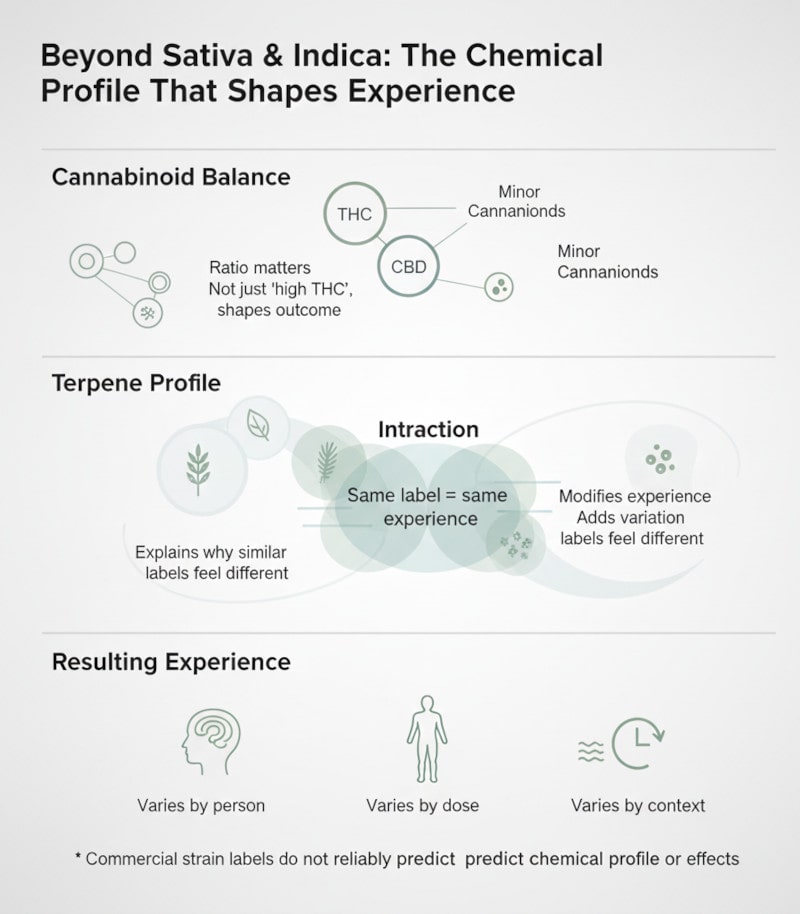
If you want a better predictor than the label, look at:
1) Cannabinoid balance
Not just “high THC.” The ratio and the overall profile matter. (Also: higher THC doesn’t always mean “more functional.”)
2) Terpene profile
Many consumer guides now emphasize terpenes as part of why experiences differ.
Terpenes aren’t magic, but they can help explain why two “sativas” don’t feel the same.
3) Dose and context
Same plant, different dose = different outcome.
Also: tired vs rested, stressed vs calm, alone vs social. This matters more than people like to admit.
4) Your own sensitivity
Some people feel “energized.” Others feel anxious. Same label, different nervous system.
What sativa plants typically look like
If we talk about “sativa” in the plant-structure sense, common traits include:
-
taller growth
-
more open branching
-
longer internodal spacing
-
narrower leaflets
-
longer flowering (especially in older, equatorial-leaning lines)
This is why classic sativa lines can be challenging in small spaces. They don’t naturally stay compact.
Why classic (near-landrace) sativas often take longer to finish
Many traditional sativa-leaning genetics trace back to equatorial regions, where long seasons and stable daylight cycles shaped plant behavior over time.
So you often see:
-
longer flowering windows
-
heavier stretch after flowering begins
-
lighter, airier flower structure compared to many indica-leaning cultivars
This is one reason modern breeders created sativa-leaning hybrids: to keep some sativa character while making plants finish in more “normal” timelines.
“Sativa-leaning hybrids” vs “classic sativa”
This one distinction alone can make your content feel more credible than most ranking pages.
Classic sativa (closer to old equatorial lines)
-
longer flowering
-
bigger stretch
-
more variability
-
often more demanding in space and patience
Sativa-leaning hybrid (what most “sativas” are today)
-
shorter flowering than classic sativas
-
more manageable height
-
more uniform outcomes
-
effect may be “sativa-like,” but not always identical
A practical way to choose “a sativa” without getting fooled by the label
Here’s a simple checklist that actually helps readers:
If you want the classic “sativa-style” experience, look for:
-
descriptions that mention clarity / cerebral / social / creative
-
aroma families that lean citrus / herbal / pine / spice (not a promise, just a clue)
-
product/strain notes that describe the experience as “lighter on the body”
-
your own past winners (keep a tiny list; patterns show up)
Red flags that the label may not help:
-
a product labeled sativa but described as “heavy couch” or “sleepy”
-
no terpene/cannabinoid info at all (just hype)
-
a strain name doing all the work, with no real description
Common myths about sativa
Myth 1: “Sativa = no body effects”
Not true. Many sativa-leaning cultivars still have noticeable body relaxation. The difference is often how it presents, not whether it exists.
Myth 2: “Sativa is always good for daytime”
For some people, yes. For others, it can be too sharp, too busy, or anxiety-prone. The label can’t predict your reaction.
Myth 3: “You can identify sativa by leaf shape alone”
Leaf shape helps describe growth style, but it doesn’t reliably predict chemistry or effects in modern hybrids.
FAQs
Q: What is sativa cannabis?
A: “Sativa” can refer to Cannabis sativa in taxonomy and also to a cannabis category used in modern culture, often linked to more uplifting or cerebral effects.
Q: Is sativa really energizing?
A: Sometimes, but not always. Many guides note the “energizing vs relaxing” split is a simplification and effects vary by chemical profile and individual response.
Q: Are indica and sativa labels accurate?
A: They can be inconsistent. Research summaries report that commercial indica/sativa labels often don’t map cleanly to genetics.
Q: What matters more than the label?
A: Cannabinoid balance, terpene profile, dose, and your personal sensitivity usually predict experience better than the word “sativa.”