Trusted Cannabis Seed Banks 2025
Top 9 Most Trusted Cannabis Seed Banks in 2025
Updated: December 2025 | Top 9 Seed Banks – best seed producer in 2025
Author: Cannapot Grow Team | Reading time: approximately twelve minutes

Key Takeaways
✓ A truly trustworthy seed bank delivers stable genetics, predictable growth behavior, and consistent results across multiple grows.
✓ Long-established breeders like Brothers Grimm, Dutch Passion and Serious Seeds are widely respected because their genetics have been tested and refined over decades.
✓ Beginner growers usually get better results with stable, well-documented strains instead of chasing hype genetics or limited-drop releases.
✓ Genetics set the maximum potential of a cannabis plant — even a perfect grow setup cannot fully compensate for unstable seeds.
✓ Proper storage conditions, original packaging, and reliable sourcing often influence germination rates and genetic quality more than many growers realize.
How to spot real genetics, avoid the hype traps, and pick the right breeder for your grow
A lot of “top 9 seed bank” lists are basically the same thing. A quick table, a few brand blurbs, and some generic lines like “premium genetics” and “award-winning.” It looks neat, but it doesn’t actually help you choose seeds that match your space, your patience level, or your goals.
This guide is built for a different kind of reader. Someone who wants to understand what a seed bank really does, how to tell quality apart from noise, and which breeders tend to deliver the most predictable results in real-world grows.
Also, quick note: seed banks and breeders get mixed up online. Some brands are true breeders. Some are distributors. Some do a bit of both. For this article, I’m using “seed bank” the way most growers do in conversation: the brand behind the genetics you buy.
Quick answer first: what makes a seed bank “top” in 2025?
A top seed bank in 2025 usually has at least a few of these traits:
-
Stable genetics (plants don’t vary wildly from seed to seed)
-
Good selection work (not just “cool names,” but real breeding consistency)
-
Strong germination reputation (real-world feedback stays steady over time)
-
Predictable growth behavior (stretch, structure, flowering window)
-
A clear identity (classic lines, sativa work, autos, CBD lines, etc.)
-
Time in the game (many top breeders have been proven for years, not months)
And one thing growers learn eventually:
You can have a perfect setup and still get a weird run if the genetics are sloppy. Genetics sets the ceiling. Your environment just decides how close you get to it.
Why seed banks matter more than ever (and why the market is messy)
Cannabis is way more mainstream now than it was even 10–15 years ago. That’s good in a lot of ways. More access, more education, more research, more standards.
But there’s a downside too: there are more fast-release brands than ever, and not all of them do long-term selection. Some are basically marketing projects. New strain name, flashy description, limited run, gone next season. That can be fun if you’re hunting novelty, but it’s frustrating if you want predictable plants.
So yeah, seed banks are not just “shops.” The good ones are closer to:
-
genetic archivists
-
breeders running multi-step selection programs
-
teams stabilizing traits over generations
-
curators who decide what gets released and what gets scrapped
That’s the difference between a strain that grows the same way every time, and a pack where every plant feels like a different species.
How to recognize quality (the checklist that actually works)
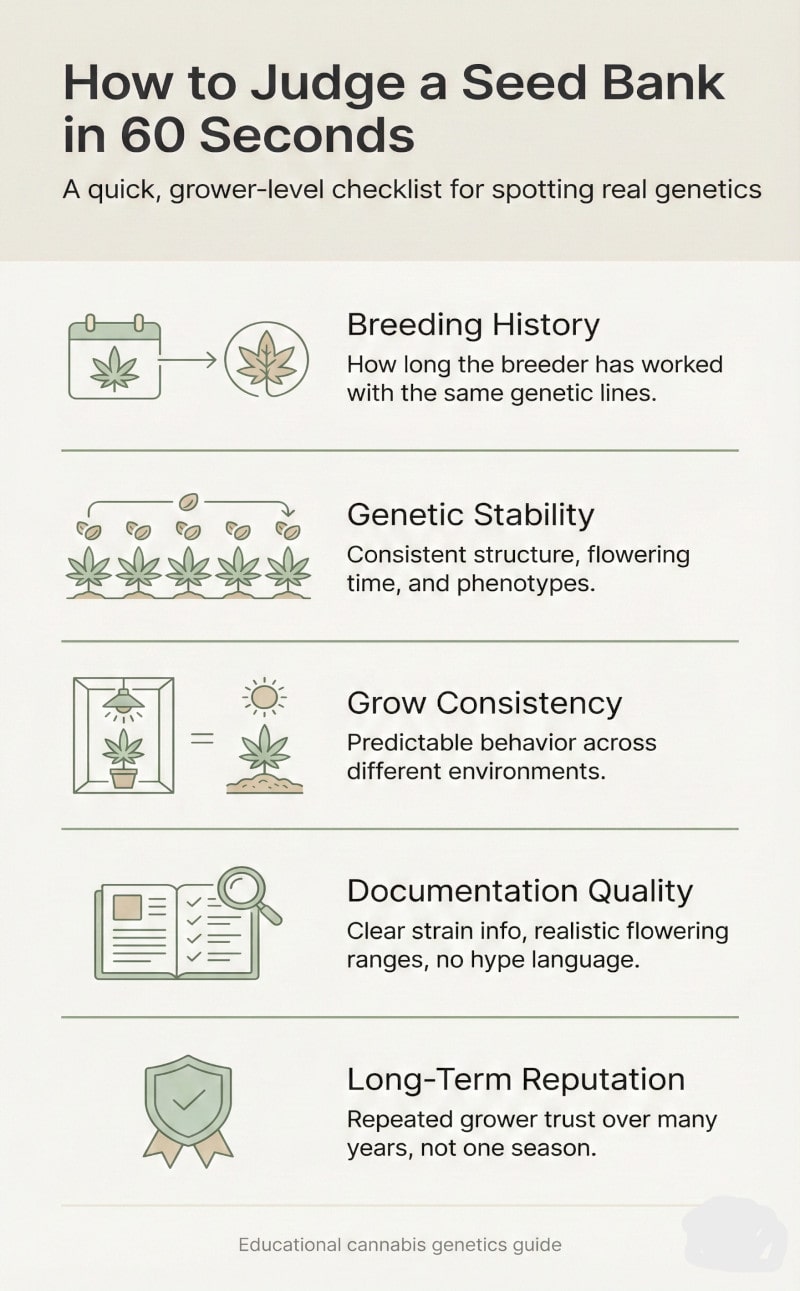
Here’s what usually separates trustworthy breeders from “quick profit” genetics.
Breeding history that makes sense
If a brand has been around for years and people still grow their lines, that matters. Not because “old = better,” but because unstable genetics don’t survive long-term. Growers stop buying.
Genetic stability (phenotype consistency)
This is the big one. A stable line means:
-
similar height
-
similar leaf structure
-
similar flowering window
-
similar bud structure
-
fewer random herm traits
You’ll still get variation. It’s cannabis. But it shouldn’t feel chaotic.
Real-world grow behavior
A good breeder’s strains tend to have predictable patterns:
-
how much they stretch
-
how they branch
-
how they stack flowers
-
whether they tolerate training well
-
how sensitive they are to stress
Awards and reputation (useful, but not perfect)
Awards can be a signal, but not a guarantee. Cups can favor hype strains. Also, judging changes over time. Still, when a breeder has years of awards and respected classics, that usually means something.
Clear strain documentation
Good breeders tend to document:
-
flowering range
-
general structure
-
climate suitability
-
type (auto, fem, regular)
-
what the plant tends to do in common setups
The 5 “types” of seed banks you’ll see in 2025

Type A: Legacy foundation breeders
Classic genetics, stable lines, decades of influence.
Type B: Modern mainstream breeders
Big catalogs, lots of popular hybrids, generally reliable.
Type C: Stability-first specialists
Smaller catalogs, heavy selection work, predictable results.
Type D: Autoflower-focused breeders
Autos behave differently. The best auto breeders focus on consistency and speed.
Type E: Flavor / terp-driven breeders
These chase aroma identity and modern terp profiles, sometimes with more variation.
Most growers end up mixing types over time. But beginners often do better starting with A, B, or C.
Top 9 Most Trusted Seed Banks in 2025 (Cannapot + legacy context)
|
Rank |
Seed Bank |
Founded |
Base / Roots |
Known For |
Best For |
|
#1 |
1985 |
Amsterdam |
foundational classics |
old-school stability lovers |
|
|
#2 |
2007 |
Amsterdam / Barcelona |
beginner-friendly modern lines |
first-time growers |
|
|
#3 |
1980s |
Amsterdam |
potency + global genetics |
modern hybrid fans |
|
|
#4 |
1987 |
Amsterdam |
feminized pioneers |
predictable grows |
|
|
#5 |
1985 |
Amsterdam |
sativa hybrids, strain hunting |
terp + sativa lovers |
|
|
#6 |
1994 |
Amsterdam |
F1 hybrid vigor |
clean modern structure |
|
|
#7 |
2005 |
Valencia |
flavor + autos |
aroma chasers |
|
|
#8 |
1995 |
Amsterdam |
extreme stability |
“no surprises” growers |
|
|
#9 |
2004 |
Amsterdam / LA |
US-style hybrids |
modern dessert/gas fans |
Now let’s go breeder by breeder.
1. Sensi Seeds

Why they’re still the “foundation” name
Sensi Seeds is one of those brands where even people who don’t run them anymore still respect them. Not because every strain is trendy, but because their work shaped the classic genetic base used across the world.
What Sensi has always represented is old-school catalog strength:
-
classic lines
-
long-term selection
-
genetics that don’t “drift” every season
-
a sense that strains are preserved, not constantly rebranded
Who this is best for
-
growers who want classic behavior and structure
-
people who value stability more than novelty
-
anyone building a “core library” of genetics
Who might skip it
-
growers who only want the newest hype flavors
-
people chasing “fresh drop” culture
Explore the Sensi Seeds genetics available at Cannapot.
2. Royal Queen Seeds

The modern “starter-friendly” giant
Royal Queen Seeds got popular fast for a reason. Their catalog is broad, their strain info is easy to understand, and the genetics tend to be forgiving in normal indoor grows.
You’ll see them recommended a lot to beginners, and honestly it’s not bad advice.
Why growers keep buying them
-
broad catalog means you can test styles (auto, fem, CBD-leaning)
-
strains are generally consistent
-
documentation is usually clear
-
they sit in that “it works” zone for most people
Best for
-
first-time growers
-
people who want simple, reliable seeds
-
growers who want choice without overthinking
Not ideal for
-
collectors hunting rare genetics
-
people who want very narrow, boutique lines
Explore Royal Queen Seeds strains at Cannapot.
3. Barney’s Farm

Potency, yield, and modern crowd-pleasers
Barney’s Farm is known for building strong modern hybrids, often with high resin production and heavy bud structure when your environment is dialed in.
A lot of their popularity comes from growers who want:
-
strong results
-
bold terp profiles
-
“wow factor” buds
-
modern hybrid behavior
What to expect
-
generally strong vigor
-
plants that respond well to training
-
some strains may need airflow attention late flower because density is real
Best for
-
intermediate growers
-
people who want modern hybrids without gambling on unknown brands
Not ideal for
-
growers who want ultra-light, minimal-feeding runs
-
people who hate dense-bud humidity management
Explore Barney’s Farm strains at Cannapot.
4. Dutch Passion

The feminized seed pioneers (and still reliable)
Dutch Passion is one of those breeders that feels “boring” until you grow them and realize boring is good. Predictable. Repeatable. Less drama.
They’re historically tied to early feminized seed development, but what keeps them relevant now is simple: the genetics tend to behave consistently.
Best for
-
people who want predictable structure
-
growers who like stable catalogs over trend chasing
-
indoor growers who want less guesswork
Explore Dutch Passion strains at Cannapot.
5. Green House Seed Co.

Sativa hybrids, global genetics, and strong terp identity
Green House became famous not just for strains, but for the whole “strain hunting” approach—collecting and preserving genetics worldwide, then refining them.
Their catalog tends to appeal to growers who want:
-
more expressive terp profiles
-
sativa-leaning effects (general, non-medical)
-
genetics with a bit of story behind them
Best for
-
growers who love sativa structure and terp diversity
-
people who like classic-to-modern crossover lines
Not ideal for
-
tiny tent growers who can’t handle stretch unless trained
Explore Green House Seed Co. strains at Cannapot.
6. Paradise Seeds

The “quietly serious” F1 hybrid breeder
Paradise Seeds tends to appeal to growers who want clean, vigorous plants without chaotic phenos. Their focus on hybrid vigor and refinement usually results in plants that feel “well made.”
Best for
-
growers who want strong structure and predictable behavior
-
people who like modern hybrids without constant rebranding
Explore Paradise Seeds strains at Cannapot.
7. Sweet Seeds

Flavor-first genetics and a strong auto presence
Sweet Seeds is one of those breeders people remember because the aroma and color can be very distinctive depending on the line.
They’re also known for autos and sweet terp directions.
Best for
-
growers who care about aroma and bag appeal
-
people who like modern sweet/fruit profiles
-
auto growers who want a brand that actually focuses on autos
Explore Sweet Seeds strains at Cannapot.
8. Serious Seeds

“Quality over quantity” in real life
Serious Seeds is the opposite of most modern breeders. Small catalog. Deep refinement. Very stable lines.
This is the breeder you pick when you want:
-
predictable phenos
-
stable structure
-
strains that behave the same year after year
Best for
-
growers with limited space who need predictability
-
people who hate surprises
-
anyone who values consistency as a “feature”
Explore Serious Seeds strains at Cannapot.
9. DNA Genetics

US-style hybrids with a strong reputation
DNA Genetics sits in that zone where Dutch and US breeding styles overlap. They’ve had strong influence on modern hybrid trends and still hold a reputation for quality.
Best for
-
growers chasing modern terp profiles
-
people who like bold hybrid lines
-
intermediate growers who want something modern but still reputable
Explore DNA Genetics strains at Cannapot.
The most common mistakes people make when choosing seed banks
Mistake 1: Buying by strain name only
A “Gelato” from one breeder can be totally different from another. Same name, different behavior.
Mistake 2: Ignoring stretch and structure
People buy “sativa vibes” and then panic when the plant doubles in size. That’s not the plant’s fault.
Mistake 3: Mixing too many breeders in one run
It sounds fun. But it makes it hard to learn. Start with one breeder, one style. Then branch out.
Mistake 4: Thinking nutrients fix genetics
They don’t. They can help a good plant perform, but they won’t turn unstable seeds into stable plants.
Indoor vs outdoor: which seed banks make life easier?
Indoors
Most growers do better with:
-
stable structure
-
predictable flowering windows
-
good training response
Seed banks that often fit indoor runs well:
Sensi, Dutch Passion, Serious Seeds, Royal Queen, Barney’s (depending on density)
Outdoors
Outdoor success often comes down to:
-
climate match
-
finishing window
-
mold resistance traits in dense lines
-
stretch management
Green House and Paradise lines are often used outdoors depending on region, and Dutch Passion has a long outdoor-friendly history too.
Final thoughts
The best seed banks in 2025 aren’t the ones with the flashiest strain names. They’re the ones that keep producing seeds that behave predictably, smell the way they should, and don’t leave you guessing every run. If you want a safe path: start with a proven breeder, learn how their plants behave, then expand. That’s how most skilled growers build a stable rotation over time.